Ross Clark

Ross Clark

Ross Clark is a leader writer and columnist who has written for The Spectator for three decades. He writes on Substack, at Ross on Why?

How to warm your mansion with other people’s money

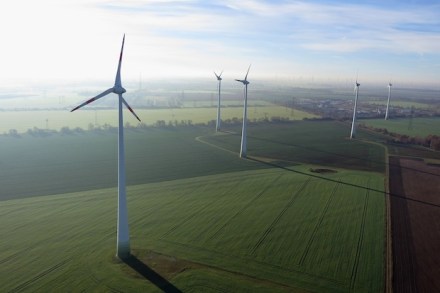
Let no one say this is not a redistributive government. It is taking benefits away from the poor and giving them instead to people with large houses and a bit of spare capital. How? Through a great green energy scam, originally devised by Labour, which could not be better designed to penalise the poor and reward the rich. In fact, the government might just as well have come up with Spat Credits or a Top Hat Top-Up Allowance. Here is a brief guide to benefits for the better-off. Got a roof space the size of half a football pitch? You can coin it by covering it with 4kW worth of photo-voltaic panels, thereby qualifying you for a 41.3p handout from your electricity company for every kilowatt-hour of electricity you produce.

Carbon captives

While waiting for the comprehensive spending review, I passed the time watching two clips from British Pathé newsreels of the late 1940s. One featured Welsh housewives moaning about Stafford Cripps’s budget — one so angry at the cut in cheese rations that she threatened to shoot the Labour chancellor. The other clip, in characteristically uplifting tones, unveiled the Bristol Brabazon — the elephantine passenger plane with wings longer than Waterloo Bridge which was supposed to bolster the British aeronautical industry. A single phrase stands out as the camera fixes on mechanics carefully removing the chocks for its maiden flight: ‘You don’t take any chances with £12 million of taxpayers’ money.’ It is a laughable untruth.

Waving while drowning

With or without global warming, Britain is disappearing into the sea. We must invest more in coastal and river defences I have an idea for saving public money: replace the Department for Energy and Climate Change with one man and a sandwich board carrying the words: 'Prepare to Meet Thy Doom'. It shouldn't cost much more than £40 a day to pay for him to pace up and down Oxford Street. And it would achieve exactly the same as DECC: constantly reminding us of the grim warnings regularly put out by ministers - while doing sweet Fanny Adams to save us. Maybe that is just a tad unfair. We do, after all, have the new Committee of Climate Change, established by the Climate Change Act 2008, which last week published its report 'How Well Prepared is the UK for Climate Change?

Don’t bet the house on a property plunge

The bubble may have burst, says Ross Clark, but a crash looks unlikely. For now, property remains a sensible investment — better than sticking cash in a low-interest account I’m getting fed up with my 2.5 per cent Northern Rock Super-Sucker’s Account. It was OK when it was paying 6 per cent and Alistair Darling was promising by the hairs on his chinny-chin-chin to repay every penny in the event of the bank going belly-up. But I can’t see the point now: why risk your capital for some measly little apology for interest which isn’t even keeping up with inflation? I keep wanting to hook out the money and put it into something solid: gold or property.

Train à Grande Vexation

The marvels of French rail travel are a myth, says Ross Clark. Travelling by TGV is a rip-off — and the customer service is appalling Which Ryanair passenger, left fuming by lousy service and lashed by Michael O’Leary’s tongue, hasn’t opined that, if only they had more money and a bit of extra time, they could glide to their holiday destination on a French TGV? Why do we insist on subjecting ourselves to the torture of budget airlines when down there, at ground level, we could be travelling on the fastest and most envied railway system in the world and one that is, according to the marketing bumf, ‘high-speed and hassle-free’? I’ll give you a good reason: because the customer service on French Railways (SNCF) is no better than on Ryanair.

What did Nick Clegg get up to at Cambridge?

I am not sure that I quite envy James Delingpole, cast as a teddy bear-carrying social climber in When Boris Met Dave, Channel 4’s drama-documentary about the future Tory leader’s time at Oxford. But I do feel a bit peeved that my generation is about to seize power and I can’t even claim a bit part. If Channel 4 were minded to delve into Nick Clegg’s time at Cambridge I wouldn’t even make that — for the simple reason that in the three years I spent there with him I failed even to hear of him. Failing to meet the man who this time next week may be power-broking the next government of the United Kingdom might be understandable had I spent more time in libraries and laboratories. But I was fascinated by politics at the time.

Thank God for the NHS

American healthcare makes our system look good, writes Ross Clark. But however revolutionary Barack Obama’s health reforms are, Americans will still pay through the nose Had I a more devotional attachment to free-market economics I suppose I would be joining all those Republicans condemning Barack Obama’s health reforms. I have written enough about the failings of the NHS over the years to fill an entire symposium at a Washington think-tank. How tempting, then, to echo the sentiments spewing out of Fox News, predicting US bankruptcy and state-sponsored euthanasia. ‘Say no to totalitarianism,’ appealed Republican congressman Devin Nunes, not content with the charge of mere ‘socialism’ made by many of his colleagues.

Time for the dynamic state

A visitor returning to Britain after 30 years could easily be fooled — by the sight of privatised buses and by the replacement of heavy nationalised industries by hi-tech business parks — into thinking that Britain has been transformed from a sub-socialist society into a dynamic free enterprise economy. In some ways that may be true, yet paradoxically the public sector is actually larger relative to the rest of the economy than it was in the dying days of the last Labour government. In 1979 the government accounted for 45 pence in every pound spent in the UK economy. This financial year it will be 47.5 pence. What are public sector workers doing if they are no longer mining coal, driving buses or making steel?

How Essex betrayed its residents

Ross Clark on a supposedly ‘model’ Tory authority which has, behind the scenes, left elderly homeowners to suffer at the hands of private contractors For an idea of what public services might look like in Cameron’s Britain we are encouraged to look at Essex County Council. Along with Hammersmith & Fulham it is held up as a ‘flagship’ Conservative authority, showing what can be achieved if councils become more businesslike. Essex it was that in December signed a five-year, £5.4 billion deal with IBM to manage and provide public services such as management of schools, maintenance of highways and organisation of social care.

China’s new political model

There has been one thing missing from the debate between Google and the People’s Republic of China. The decommunisation of the world was not supposed to happen this way. Countries which dismantled their systems of oppression and fear were supposed to prosper economically; while any who declined to do so would remain in economic permafrost. Instead, it is becoming increasingly clear that the former communist country which has prospered most in the past 20 years has been the one which crushed its revolution beneath the wheels of tanks. No matter that it continues to oppress its people, China is an economic powerhouse whose growth will dominate the global economy for the next decade.

Has Dave abandoned the self-made man?

Cameron’s inclinations are to help the rich and the ‘romantic’ poor and do little for those who’ve bettered themselves, says Ross Clark. But can he rely on the middle-class vote? There may be no big idea but there is an important concept lurking on the back page of the Conservatives’ draft manifesto on health. And if party strategists want to get through the election campaign without offending a large sector of its core vote, they had better make sure it stays there. The idea is worded thus: ‘we will weight public health funding so that extra resources go to the poorest areas with the worst health outcomes through a new health premium’.

The billion-pound hole where Chelsea Barracks used to be

Ross Clark says it’s not so much the Prince of Wales who has put the mockers on this controversial Qatari-backed development, but the grim economics of the credit crunch Gordon Brown is well known for his bad timing in selling off half the nation’s gold reserves at the bottom of the market in 1999. But with the sale of the Chelsea Barracks site in 2007 the government could not have timed it better, picking up nearly £1 billion at the peak of the property boom, just before the credit crunch and before the intervention of the Prince of Wales sent the scheme into a tailspin of litigation and anti-royal fury.

We have become a nation of shysters

Power cuts and uncollected rubbish form most people’s memories of the economic debacle that was the 1970s. But for me, a quite different story sums up the lack of business sense that distinguished the British at the time. My mother had gone into a village shop in Kent to buy some bacon, which the affable shoplady found some pretext to give to her for free. While she was there another customer came in and tried to buy a tin-opener. ‘Oh, you don’t want one of them, they’re rubbish,’ said the shoplady, scathingly. ‘Why don’t you borrow mine? If you go upstairs it’s in my kitchen drawer. But do please shut the kitchen door when you go out.’ I do wonder whether she ever took a penny. Of course, Britain is not like that any more.

There’s never been a better time to join Labour

Labour had a good night on Sunday. Not Gordon Brown, not Ed Balls, not the Milibands, nor any other of the other ministers who will have been bundled out of office within the next 12 months. They are, of course, doomed. For them ahead lies nothing but months of humiliation, followed, for many of them, by unemployment. But for the Labour party as an institution it is another matter. In spite of suffering an even heavier drubbing in the local and European elections than had been predicted, the Labour party on Sunday ensured its survival and recovery to power some time in the 2020s. I am so sure of this that I would advise anyone in their twenties who is contemplating a political career to join up at once.

The monetary policy committee

I’m your man for the job, Chancellor HM Treasury has placed an advert in the Economist looking for a new external member of the Bank of England’s Monetary Policy Committee, the body that sets UK interest rates, to succeed David Blanchflower. I have decided that it is my duty to apply and have therefore sent this letter to Alistair Darling, who will make the decision. Dear Mr Darling, I would like to apply for the vacant post of external member of the Bank of England’s Monetary Policy Committee. Admittedly, beyond a grade A at ‘O’ level, I don’t have any formal qualifications in economics, but your advert does not specify these as essential.

The only tax-cutting Tory in town

Ross Clark says that we mustn’t underestimate Boris’s greatest achievement: to have frozen the GLA precept without affecting services is a triumph It is hard to remember the horrors of the London inherited by new Mayor Boris Johnson a year ago. It was a city gridlocked with traffic, with unaffordable housing, and where you couldn’t get a table in a decent restaurant without booking six months in advance. Now, the roads run freely, property is much cheaper and a seat for this evening at London’s finest restaurants is only a phone call away. Admittedly, these improvements are less the work of the Mayor than a consolation for the deepest recession in living memory. What a time it was to take control of the world’s unofficial financial capital!

The G20 summit is lousy value for money. Cancel it

Ross Clark looks ahead to Gordon Brown’s summit at which he will try to revive his own political fortunes, found a new global economic order and stage a Bretton Woods for our times. No chance: the whole thing is an expensive sham It is difficult to look at the photographs of the world’s finance ministers, bank chiefs and assorted hangers-on assembled at a hotel in West Sussex last weekend without thinking of those old BT ads with the slogan, ‘Why not change the way we work?’ Has anything come out of the meeting of G20 finance minsters in Horsham, or will come out of the follow-up heads-of-government summit in Docklands on 2 April, which could not have been achieved by phone, email or video-conference?

Want a big bonus? Get yourself a public sector job

Gordon Brown and Alistair Darling rail against bankers’ bonuses. But, says Ross Clark, the really appetising salaries, perks, expense packages and pensions are to be found in the public sector. A terrible reckoning lies ahead for the last fat cats Imagine for a moment that you are a banker in one of the bailed-out banks. You have seen a few of your colleagues disappear into the lift with a bin bag and every time you wander past a pub you have had to endure the thought that there may be drinkers inside demanding you be sentenced to cruel and more unusual punishments. Yet, for all the angst of the past year, you may be just beginning to wonder: will life in the public sector really be so bad after all?

Insolvency

The Insolvency Service has sent me a questionnaire seeking my views on bankruptcy. At first, I was enthused by this chance to say what I think about Gordon Brown’s reforms which have led to an explosion in personal bankruptcies — a record 200 of them per day in the last quarter of 2008 — and the growth of a culture in which the feckless walk away from their debts. Unfortunately, the more I worked my way through the multiple-choice questions, the more I realised it was not going to allow me to state what I really think. In fact, it was clearly designed to help the government work out how it might get away with making bankruptcy even easier. So instead of completing the questionnaire, I am sending this letter: Dear Insolvency Service, Thank you for your questionnaire.

A boom market in economic nonsense

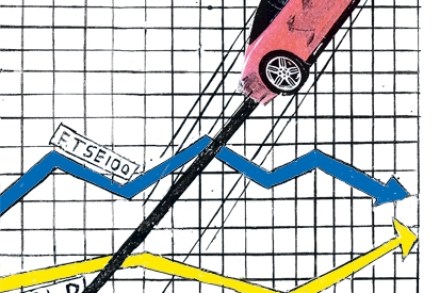
The government recently proposed that schoolchildren be given lessons in personal finance. Can I ask that, alongside the Lower Fourth, room be made in the classes for the AA spokesman who recently said this: ‘People wanting to get high-aspiration vehicles at an affordable price will have been hit by the crash in [the cars’] value.’ Yes, this remark really is as stupid as it seems, but first a little context. He was talking about a form of hire purchase called ‘Personal Contract Purchase’, whereby a motorist pays a deposit, followed by two years of monthly payments. At the end of this period, the buyer has two options: he can either pay a lump sum to purchase the car outright, or he can return it to the finance company which organised the deal.