Rory Sutherland

Rory Sutherland

Why I’m not on board with quiet carriages

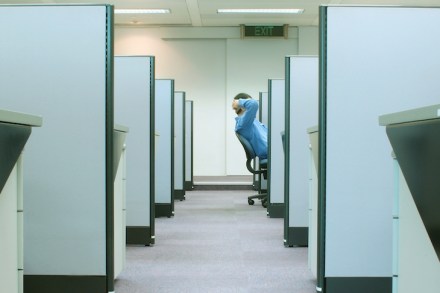
Every now and then I try to invent a new scientific unit. I’ll never come up with anything as good as the millihelen — a unit of beauty sufficient to launch one ship — or the Sheppey, which is a distance of approximately seven-eighths of a mile defined as ‘the minimum distance at which sheep remain picturesque’. But I do have hopes for the tedion, which measures the half-life of boredom: it denotes the time you must spend in a location to enjoy a 50 per cent chance of overhearing someone say something interesting or funny. On a train to Cardiff or Manchester, a tedion is probably around five to ten minutes. On a Home Counties commuter train it runs into days — or in London, the conversational nadir of the UK, weeks.

Reducing activities to their core misses the point

There may be a very simple evolutionary reason why water does not really taste of anything, as I learned from the psychophysicist Mark Changizi. Pure water has no taste because our taste buds have been calibrated, very sensibly, not to notice it. For a few million years, the most important contribution taste buds made to survival were to detect things in water that weren’t water: the very things, in short, which might indicate that the water wasn’t safe to drink. If we had evolved perception so that water tasted like Rioja or Dr Pepper, the sensory overload might have overpowered that hint of dead sheep from a rotting carcass 100 yards upstream: our taste buds are calibrated with water as the base line, the better to notice things which shouldn’t be in it.

The Presidents Club was on to something

There exist in the annals of salesmanship certain ideas that are both highly immoral and wickedly clever. Before P. T. Barnum attached his name to circuses, he ran Barnum’s American Museum in Manhattan. From 1841 until its destruction by fire in 1865, this received more than 38 million visitors, each paying 25c. The entry fee entitled visitors to stay all day; congestion often prevented new paying visitors from being admitted, so to hasten traffic to the exits, Barnum placed signs throughout reading ‘To The Egress’ or, according to some reports, ‘The Great Egress’. Enticed by the prospect of seeing what they imagined was some exotic bird, less literate guests followed these signs through a door and promptly found themselves locked out on the street.

We can have an efficient health service or one no one complains about. We can’t have both

This piece first appeared in this week's Spectator magazine.  Recently the NHS postponed a large number of non-urgent operations to cope with what is known as the ‘annual winter crisis’. Naturally, this outcome was treated as a scandal in the press, and there were predictable calls for Jeremy Hunt to resign. But the fact that non-urgent operations are postponed is not by definition bad. It might be evidence that the NHS is working well. Or at least that it is doing what it is supposed to do, which is to deploy necessarily finite resources on the basis of patient need, rather than some other criterion — such as profitability or ability to pay. Making people wait for less urgent operations isn’t a bug of the NHS; it’s a feature.

A nice, cuddly NHS would be bad for us

Recently the NHS postponed a large number of non-urgent operations to cope with what is known as the ‘annual winter crisis’. Naturally, this outcome was treated as a scandal in the press, and there were predictable calls for Jeremy Hunt to resign. But the fact that non-urgent operations are postponed is not by definition bad. It might be evidence that the NHS is working well. Or at least that it is doing what it is supposed to do, which is to deploy necessarily finite resources on the basis of patient need, rather than some other criterion — such as profitability or ability to pay. Making people wait for less urgent operations isn’t a bug of the NHS; it’s a feature.

How to make economists fight like ferrets in a sack

One of the funniest passages of writing I have read in the past few years appears within the pages of Richard Thaler’s memoir Misbehaving. He describes what happens when the University of Chicago economics faculty moves to a new location. The economists simply have to agree among themselves who will occupy each office in the new building. Now in theory, at any rate, this should be a breeze. You have a group of people who should be among the most rational in the world; their discipline, economics, defines itself as dedicated to the study of the ‘allocation of resources under conditions of scarcity’: here is a problem tailor-made for economists to solve. It was, as you can imagine, a fiasco.

Design for the disabled and you can’t go wrong

About 30 years ago, BT introduced a telephone handset with enormous keys. It was intended for people with serious visual impairment. Unexpectedly, it became their bestselling phone. There is a reason for this. The millions of people who wear spectacles or contact lenses typically remove them at night, making the normal tiny keys impossible to read on a bedside phone. Things designed specifically for people with disabilities often end up being valuable to many more people than originally planned. Most of us are effectively disabled some of the time. Wheelchair ramps at airports and stations are not only useful if you are in a wheelchair, they are also useful for wheeling heavy luggage.

These inventions will change your life

At last. And just what you’ve been waiting for. The official Wiki Man guide to the best gadgets and gizmos for giving this Christmas. The Philips AirFryer, from £70-ish. Spectator readers may remember a craze for cooking things via a French method called sous-vide. Using this senseless technology, you could cook soggy food for days at low temperatures by warming it gently in a colostomy bag; handy if you fancied a couple of days off work with botulism, but frankly bugger all use for anything else. The AirFryer is the opposite of sous-vide: it isn’t French and is actually useful. It quickly makes food hot and crispy as God intended, not with fat but with superheated air. Everyone who buys one becomes an evangelist. Available from Amazon and some tax-compliant retailers.

What we need is a Freedom of Uninformation Act

One dietary fad that never made sense to me was the campaign against the consumption of eggs. Now call me an old Darwinist, but here we are having spent a few million years evolving into a bald monkey with prehensile thumbs, perfectly optimised as an egg-stealing machine, and yet the digestion of an omelette somehow came as a horrible shock to our cardiovascular system. What next, I wondered. Perhaps they’ll discover that 45 per cent of cows are allergic to grass, or that sharks are largely sea-food intolerant. And it seems that the opprobrium directed at eggs was mostly wrong. It was based on the assumption that, since some cholesterol is bad, and since eggs contain it, ergo the consumption of every single egg was a stepping-stone to the grave.

Too many facts get in the way of truth

One dietary fad that never made sense to me was the campaign against the consumption of eggs. Now call me an old Darwinist, but here we are having spent a few million years evolving into a bald monkey with prehensile thumbs, perfectly optimised as an egg-stealing machine, and yet the digestion of an omelette somehow came as a horrible shock to our cardiovascular system. What next, I wondered. Perhaps they’ll discover that 45 per cent of cows are allergic to grass, or that sharks are largely sea-food intolerant. And it seems that the opprobrium directed at eggs was mostly wrong. It was based on the assumption that, since some cholesterol is bad, and since eggs contain it, ergo the consumption of every single egg was a stepping-stone to the grave.

The wisdom of the skies

It took a spate of air disasters in the late 1970s, in particular the Portland crash of United Airlines Flight 173, for aviation experts to pay attention to something called Crew Resource Management. This is a set of procedures first conceived by Nasa with the aim of minimising human error in flight. UA173 — where the pilots had spent so long fixated with a dodgy landing wheel that they failed to notice they’d run out of fuel — was one of a growing number of incidents in which disaster arose from failures in crew interaction. As with the Tenerife airport disaster and the Air Florida crash in 1982, there was no shortage of experience on the flight deck. The root cause lay not in the behaviour of the individuals but in the interplay between them.

Perception vs objective reality

I hate to tell you this, but every time you watch television you are being duped. In fact there are only three accurate things you will ever see on television. These are the colours red, green and blue. Each pixel on a screen can transmit three colours only. If blue alone is illuminated, the screen is blue. And it really is blue. But TV yellow is a big fat lie. It looks yellow. But it isn’t really yellow. It’s a mixture of red and green light which hacks our optical perception so we think we are seeing yellow. That’s because humans, indeed all higher apes, are mostly trichromats. We have three different types of cones in the retina, each sensitive to a different part of the colour spectrum.

Raising the threshold crappiness

I love anything open late at night. Never mind ‘the sigh of midnight trains in empty stations’; even mundane activities like filling up with petrol become enjoyably Edward Hopperish after midnight. Often the places are so quiet you wonder why they bother opening at all. But it is a strange psychological fact that opening a shop 24 hours a day often pays, even if nobody ever buys anything between 1 a.m. and 6 a.m. Somehow the knowledge that the shop never closes means people are far more likely to shop there at conventional times. This quirk also explains why the most successful coach firm between Oxford and London runs services all night: not because people really want to travel between 2 a.m. and 5 a.m., but because they like to know that they can.

iAddicts

For many years The Spectator employed a television reviewer who did not own a colour television. Now they have decided to go one better and have asked me to write a piece to mark the tenth anniversary of the iPhone. I have never owned an iPhone. (In the metropolitan media world I inhabit, this is tantamount to putting on your CV that you ‘enjoy line dancing, child pornography and collecting Nazi memorabilia’). But, even though I’m a diehard Android fan, I still cannot help paying attention to every single thing Apple does and says. I don’t think this happens in reverse. I doubt Apple owners pay any attention to the next phone announcement from LG or Nokia — any more than Anna Wintour lies awake wondering what Primark’s autumn season has in store.

Make life easier and all else will follow

You can try to change people’s minds, but this is difficult. You can bribe people to change their behaviour, but it’s expensive. Far simpler is to make the new behaviour easy and enjoyable in and of itself. Recently, colleagues of mine were asked how to promote the habit of recycling domestic refuse. They explained there was no need to mention the environmental benefits at all. ‘Just make sure everyone has two pedal bins, not one.’ Regardless of people’s attitudes to the environment, what really matters, as Martin Luther King might have said, is not the colour of their politics but the contents of their kitchen. To encourage pension saving, the government spends more than £20 billion annually in tax rebates.

Migration is complicated. Don’t pretend it’s not | 10 September 2017

I expect you’ve already noticed it, but in case you’ve been living in a cave or an economics faculty for the past ten years, I’ll repeat it. Goods are not like people. Goods only move wherever they are needed. They don’t come laden with an attachment to a homeland or a social network. Your Bosch dishwasher doesn’t pine for its washing-machine mates back in Stuttgart. Your Ikea sofa doesn’t claim benefits. If you buy a Mercedes, you don’t suddenly find two Audis and a Volkswagen turning up on your drive claiming to be close relatives and demanding to live in your garage. So, looked at dispassionately, the principle that the free movement of goods is somehow linked with the free movement of people is quite an odd idea.

Migration is complicated. Don’t pretend it’s not

I expect you’ve already noticed it, but in case you’ve been living in a cave or an economics faculty for the past ten years, I’ll repeat it. Goods are not like people. Goods only move wherever they are needed. They don’t come laden with an attachment to a homeland or a social network. Your Bosch dishwasher doesn’t pine for its washing-machine mates back in Stuttgart. Your Ikea sofa doesn’t claim benefits. If you buy a Mercedes, you don’t suddenly find two Audis and a Volkswagen turning up on your drive claiming to be close relatives and demanding to live in your garage. So, looked at dispassionately, the principle that the free movement of goods is somehow linked with the free movement of people is quite an odd idea.

Want greater diversity? Try being less fair

In its hasty dismissal of James Damore, Google showed a worrying disregard for one of the most important freedoms within a company — the freedom to ask: ‘What if we’re wrong?’ A business culture that can attract and accommodate people with complementary talents benefits everybody. So even if you don’t believe Damore’s theories (in which case you probably shouldn’t hire any systems geneticists), he’s surely right to speak up if he believes the complex question of diversity has been hijacked by wishful dogma. It should be the province of first-rate scientific inquiry, not second-rate social theory. If the diversity agenda is pursued badly, the cure may well be worse than the disease.

Sutherland’s Law of Bad Maths

Imagine for a moment a parallel universe in which shops had mostly not yet been invented, and that all commerce took place online. This may seem like a fantastical notion, but it more or less describes rural America 100 years ago. In 1919 the catalogues produced by Sears, Roebuck & Company and Montgomery Ward were, for the 52 per cent of Americans who then lived in rural areas, the principal means of buying anything remotely exotic. In that year, Americans spent over $500 million dollars on mail order purchases, half through the two Chicago companies. Yet in 1925, Sears opened its first bricks and mortar shop. By 1929, the pair had opened a further 800. So Amazon’s purchase of Whole Foods Market may be history repeating itself.

The right kind of dumbing down

Thanks to meteoric advances in computational power, it is now possible to take abundant data from a wide range of sources, and use statistical modelling to prove… um, whatever bullshit conclusion you hoped to prove in the first place. For all the excitement of the information age, we must remember that self-serving delusions like nothing better than large quantities of information. The internet was a gift to conspiracy theorists, for instance. But confirmation bias is also more pronounced among the educated. (No one measures the negative consequences of higher education, but a naïve faith in universals has to be one of them.) Back in the analogue age, people couldn’t avoid exposure to shades of opinion.