Roger Kimball

Roger Kimball

Roger Kimball is a US columnist for The Spectator, the publisher of Encounter Books and the editor and publisher of the New Criterion.

The complicated history of English wine

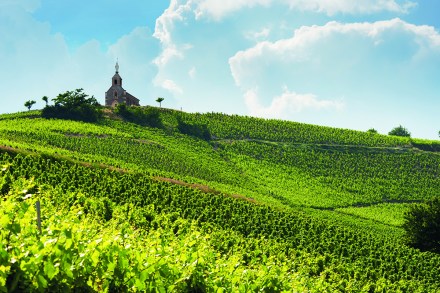
Hugh Johnson’s classic World Atlas of Wine, first published in the early 1970s, is now up to its eighth edition. My edition, the sixth, was published in 2007. It is 400 pages long and has exactly one page devoted to the wine of the United Kingdom. The latest edition is 16 pages longer but it, too, devotes only one page to British wine. Wine has a long history in the British Isles. Like so many good things (q.v. Monty Python’s Life of Brian), wine was brought by the Romans, who planted vines wherever they could grow (and some places they couldn’t). The Domesday Book, William the Conqueror’s big tax-planning guide, lists 40 vineyards in England.

Where is the FBI’s Rubicon?

From our US edition

Everyone knows that in January 49 BC Julius Caesar, about to lead part of his army across the Rubicon river, said “Alea iacta est,” “the die is cast.” Except that, according to Plutarch, what he really said was “Ἀνερρίφθω κύβος,” “let the die be cast,” and he did not so much say it as quote it, since the already-proverbial line came from the Greek playwright Menander. Anyway, in bringing an army across the stream that separated cis-Alpine Gaul from Italy proper, Caesar had committed treason. In crossing the Rubicon he had crossed a line, sparking the civil war that engulfed Rome and formalized the end of the Republic that had, as Caesar himself noted, been dead in all-but-name-only for decades.

fbi rubicon

The great White House replacement

From our US edition

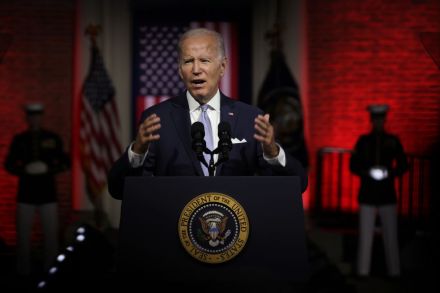
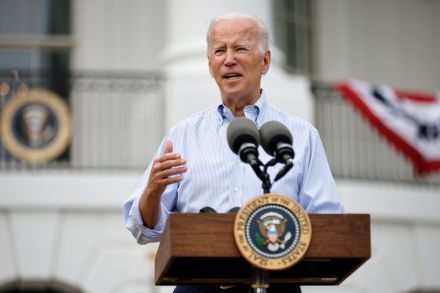
I like it when I can endorse the other side. It makes me feel like I’m part of the big happy family of man instead of just another snarling partisan. So it was with gratitude that I absorbed David Axelrod’s recent observation about Joe Biden on CNN. Pay attention now: Axelrod was the chief strategist for Barack Obama’s presidential campaign and what he doesn’t know about the emotional weather of the left is not worth knowing. “There is this sense that things are kind of out of control,” quoth Axelrod when asked about the Big Guy™, “and he’s not in command.” Right you are, Dave! My only question is: what took you so long? Of course, Axelrod’s devastating admission was not a disinterested or impartial judgment. Nothing Obama’s main men say is that.

biden

Bring on the Democrats’ ‘ultra MAGA’ strategy

From our US edition

You know the old expression “too clever by half?” It’s not a compliment. And though I am loathe to describe Democratic strategists as “clever,” I grudgingly acknowledge that they exhibit a certain low cunning that, on occasion, can be effective. We saw it on full display early on in the 2016 presidential election campaign when clever Dems were falling all over themselves to support the ridiculous candidate Donald Trump. He could never win, of course, but the ploy was good for a laugh and would hurt whatever serious candidates were running against Hillary. To almost everyone’s surprise, things didn’t work out quite as expected that time. But old habits are hard to break.

democrats midterm strategy

The Ivy League scolds come for Amy Wax

From our US edition

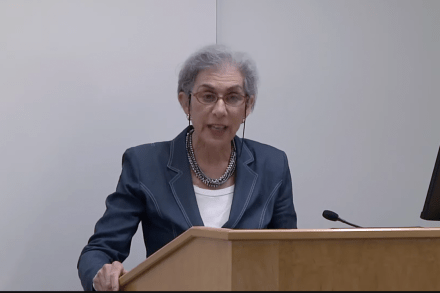
I have always admired the tag corruptio optima pessima: the corruption of the best is the worst. Take the Ivy League. These super-rich, super-prestigious institutions are so wealthy and so beguiling because, once upon a time, they represented and — more to the point — successfully transmitted to their students the prime civilizational values of our culture. We’re told, and I have no reason to disbelieve it, that the light we see from distant stars is very old and, in some cases, is light from stars that were long ago extinguished. It is same with the Ivy League and their near competitors. Today, they are utterly bankrupt — not financially, of course. No, in a good old greedy capitalist sense, they are filthy, stinking rich.

amy wax

Tolosa Winery: my latest discovery

From our US edition

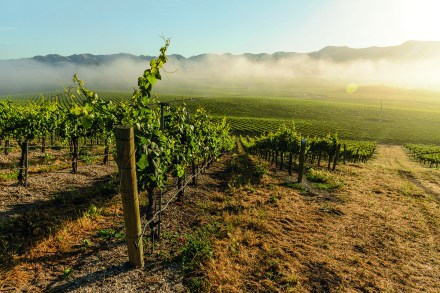
Writing about and — the necessary preliminary — drinking wine is a voyage of discovery. I won’t say that any new vineyard has made me feel quite like “stout Cortez” who, according to Keats, “star’d at the Pacific — and all his men/ Look’d at each other with a wild surmise—/ Silent, upon a peak in Darien.” But wine is in a deep sense about more than the fermented juice of the grape. It is about place — terroir, of course, but also place in a larger sense: place as habitation, place as community, which means place as the stage whereon manners, romance, technique and custom perform for the gods of pleasure. It is also about history and personality and their distillate: money, which ushers in snobbery and its accoutrements.

tolosa
inflation

Taking a page from Lenin’s playbook

From our US edition

I have often been struck by the number of pithy observations — revelatory, pointed or simply true — that were not said by the person to whom they are attributed. Vladimir Lenin apparently never said (in Russian or in English) that “the way to crush the bourgeoisie is to grind them between the millstones of taxation and inflation.” Mark Twain, to whom many amusing remarks have been falsely attributed, apparently did not contend that reports of his death had been greatly exaggerated. Edmund Burke neither said nor wrote that evil would triumph if good men did nothing.

boris johnson trade

Why we’ll all miss Boris

From our US edition

I think that Thomas Babington Macaulay had the last word about Boris Johnson’s forced resignation as prime minister of the UK: “We know no spectacle so ridiculous,” Macaulay wrote, “as the British public in one of its periodical fits of morality.” Macaulay’s line needs to be slightly adjusted, it is true, because, ridiculous though public displays of puritanical moralism are, in this case it was mostly Boris’s colleagues in Parliament, not the public at large, that suffered that unbecoming fit of morality. Indeed, throughout it all, Boris — a politician with more élan than any prime minister since Margaret Thatcher — remained popular with the public. He was especially popular, I think, with the American public. And why not?

The sequel to January 6

From our US edition

Although the public has other things to worry about — like runaway inflation and a collapsing stock market — there has been a lot of static about the January 6 show trials that opened last Thursday on location in Washington, DC. I’ve contributed to the cacophony myself, though not without misgivings. As rumors swirl about important changes in the cast next year — Liz Cheney, for example, is said to be returning to her real constituency in Georgetown — a friend writes to remind me that the entire show may be eclipsed by a new kid on the block: the June 8 House Select Committee to investigate the plot to assassinate Supreme Court Justice Brett Kavanaugh at his home in a partially disclosed, insecure location.

january 6 kavanaugh

The learned drinkers

From our US edition

Some of my readers may be unfamiliar with Athenaeus of Naucratis, a shadowy Egyptian-born Greek who floruit somewhere in the Roman Empire during the reigns of Marcus Aurelius, Commodus and Septimius Severus, i.e., around 200 AD. Athenaeus was a rhetorician, grammarian and epicure. But he is known to posterity primarily as the author of The Learned Banqueters (Δειπνοσοφισταὶ), a sprawling, miscellaneous work that touches on, well, just about everything: food, philosophy, fermentation, fabulation and many other subjects, not all of which begin with the phoneme “f.” Henry James called the three-volume Victorian novel a “loose baggy monster.” None was so loose or so baggy as Athenaeus’ compendium. There is a bit of Petronius’s Satyricon (c.

athenaeus
woke

Woke is truly going broke

From our US edition

It looks like Susan Sontag was ahead of her time. Back in 1966, she (in)famously wrote that “the white race is the cancer of human history.” (After her own bout with cancer a few years later she emended that statement, noting that, on reflection, she thought it was unfair — to cancer.) Back then, such statements were “provocative,” a euphemism for outrageously mendacious. But it wasn’t long before lots of white liberals, abetted by sundry black race-hustlers, got in on the game. To accompany its 1993 biennial exhibition, the Whitney Museum of American Art passed out little pins that said, “I Can’t Imagine Ever Wanting to Be White.

We must stand up for private rights

From our US edition

By disposition, conservatives distrust government. They are for “limited government” and worry about the coercive power of the state intruding upon individual liberty. But these days, some conservatives tell us that, when they finally get their hands on the levers of power, they will be energetic in exercising them to achieve their (presumably conservative) ends. Is that a contradiction or indication of hypocrisy? Maybe. Or maybe it is just a sign of how deeply anti-conservative sentiment has burrowed into the tissues of our society. No doubt I would prefer the policies promulgated by a conservative administration to the policies we are saddled with now. But my low opinion of human nature inclines me to distrust government power no matter who is in charge.

rights

Bargain Brazilian wines

From our US edition

Some people think that wine is a serious business. I am often tempted to think that myself, but then I remember an amusing cartoon by James Thurber called “The Wine Snobs.” It shows four people sitting around the dinner table, each holding up a glass of wine. There is an air of resigned dubiousness emanating from the table as whole. But the W.S. himself sports a big smile and says enthusiastically “It’s a naive domestic Burgundy without any breeding, but I think you’ll be amused by its presumption.” Been there, done that. We’ve tasted some pretty fancy wines together in this column, and I hope there will be plenty more to come. At the end of the day, though, wine for most of us is chiefly about pleasure and camaraderie, not connoisseurship.

brazilian

Tastes of paradise

From our US edition

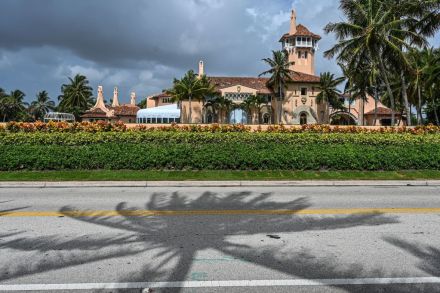
What’s in a name? Sometimes, quite a lot, especially when seen through the benign lens of sentiment. By the time you read this, April, which is not the “cruellest month,” will be upon us and the morning mercury will be edging upward, coaxing forth the crocuses and daffodils. But in the last several days, dawn has come to where I live in Connecticut accompanied by temperatures in the teens and twenties. March has entered clad in its traditional lion’s mane. I feel especially grateful, therefore, that duty called me and a handful of colleagues to Palm Beach, just as February gave way to March, on behalf of the New Criterion, the magazine I edit, and Encounter Books, the other phalanx in my campaign for world conquest.

palm beach wine champagne

Why not Trump in 2024?

From our US edition

I see that my National Review friends are writing their letters to Santa a bit early. Some, like Rich Lowry's recent paean to Ron DeSantis, are asking for that shiny new firetruck all the cool kids want. Others, like Charles Cooke’s febrile King Lear-like anti-Trump expostulation (“never, never, never, never, never”) hearken back to NR’s infamous "Against Trump" issue and are mostly negative: “No coal, please, Santa, and especially No More Trump!” I remember when I first heard the expression that Donald Trump “lived rent-free in the heads of his opponents.” “Vivid,” I thought, “and quite right.” Jennifer Rubin, Bill Kristol, Max Boot — the list of people obsessed with the forty-fifth president of the United States is long.

truth social

Kamala Harris laughs at a war

From our US edition

It’s nice to be prescient. On Thursday, in a column titled “Kamala Invades Poland,” I introduced the world to “cackle diplomacy.” “Silly partisan hyperbole!” I nearly heard as the social media-ites had their say. But then the vice president of the United States did me proud. Just a few hours after my column posted, there she was, holding a press conference with Polish President Andrzej Duda. Some say the people who run our government sent Kamala Harris to Eastern Europe in order to give her a chance to shine in the sphere of international relations. Watch her performance and tell me what you think. “I am here, standing here. On the northern flank...on the eastern flank...talking about what we what we have in terms of the eastern flank and our NATO allies.

Kamala invades Poland

You can tell that the Biden administration is getting serious. They have unleashed their ultimate weapon, cackle diplomacy. The warhead is nicknamed Harris, and it is now in Poland cackling away, endeavouring to assemble the high-level Pierogis before Russia flattens Kiev or Putin decides to go nuclear – and by 'go nuclear', alas, I mean 'go nuclear'. Some observers say that sending Kamala Harris on this mission will give her a chance to 'burnish' her foreign policy credentials. Cynical folks – and I would include myself in that group – think it is just another emission of fog by America’s first certifiably senile administration.

The Ukraine debacle showcases Joe Biden’s many failures

From our US edition

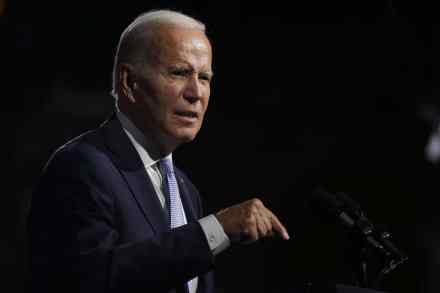
Snap quiz: who was president when Vladimir Putin gobbled up Crimea? If you said Barack Obama, go to the head of the class. What countries did Putin invade while Donald Trump was president? If you said “None,” you get to stay at the head of the class. This is a harder one: who was president when Putin once again violated Ukraine’s borders, sending in Russian troops to two breakaway regions in Eastern Ukraine? I say that this is harder because the obvious answer — “Joe Biden” — is not really, or not wholly, correct. Joe Biden is an empty shell. On good days, he looks like a mannequin. Really, though, he is a puppet, a creature controlled by others. I have called those others “The Committee.

biden ukraine

The heady reds of Avignon

From our US edition

To you and me, “Châteauneuf-du-Pape” means the bold, dark, spicy red wine from the Rhône region of southeastern France, a bit north of the town of Avignon, with bottles usually featuring a glass-embossed representation of the keys of St. Peter. If you were Jacques Duèze, known to history as Pope John XXII, second and longest reigning (1316-34) of the Avignon popes, Châteauneuf-du-Pape meant first of all that “new castle of the pope” he built on the hill overlooking the town. After the popes left, it fell into desuetude and was raided for stone by local builders. During the Revolution, all the buildings except the great tower or donjon were sold off. During World War Two, the Germans attempted to dynamite the structure but succeeded in destroying only the northern half.

Châteauneuf-du-Pape

Little Justin and the secession of the plebs

From our US edition

Justin Trudeau, still the prime minister of Canada, is the first person in history to invoke the Emergencies Act, a law enacted in the 1980s to allow the government to take special, temporary action to deal with an “urgent and critical situation” that “seriously endangers the lives, health or safety of Canadians.” Little Justin is embarrassed by the thousands of truckers in Canada who are protesting, first of all, the country’s vaccine mandate but, more to the point, the government’s intrusion into the lives and livelihoods of the people. Justin is embarrassed. That’s the real national emergency. In response, Trudeau is transforming Canada into a police state. People with tow trucks, he said, will be “coerced” into moving the rigs of recalcitrant truckers.