Roger Kimball

Roger Kimball

Roger Kimball is a US columnist for The Spectator, the publisher of Encounter Books and the editor and publisher of the New Criterion.

Just because Biden thinks he’s running again doesn’t mean he is

Tom Wolfe invented Al Sharpton in his 1987 novel The Bonfire of the Vanities. In the novel, he was called Reverend Bacon. In a splendid case of life imitating art, Sharpton took his place as a fixture in the metabolism of Democratic politics that same year when he hitched his star to the case of Tawana Brawley, then fifteen, who falsely claimed she had been abducted and raped by six white men, some of whom, she said, were police. For reasons that are part of the inscrutable workings of the universe, Sharpton’s histrionic fabrications in that case catapulted him to a position of tribal leadership among Democratic presidential candidates.

biden al sharpton running

Donald Trump is looking forward

Some people are expending a lot of emotional energy on the excerpt in the Atlantic from Maggie Haberman’s new book Confidence Man: The Making of Donald Trump and the Breaking of America. It’s anti-Trump, of course, so it feeds a certain well-formed habit. But it strikes me as pretty thin gruel. The essay is based on three interviews that Haberman, White House correspondent for the New York Times, conducted over the spring and summer of 2021, the first two at Mar-a-Lago, Trump’s Palm Beach Residence, the third at his golf course in Bedminster, New Jersey. A tag line for the Atlantic excerpt tells readers that the former president “tried to sell his preferred version of himself, but said much more than he intended.” Did he? A lot has been made of two statements.

trump

An American remembrance of the Queen

I write as an American patriot who is also a confirmed Anglophile. So when I got the sad news this morning that the Queen’s health had taken so dangerous a turn that the palace had summoned her family to Balmoral, I steeled myself for bad news. Alas, the bad news has now been confirmed. Queen Elizabeth II has died. It says a lot that when I say “the Queen” even American readers know I can mean only one person. The ninety-six-year-old had just celebrated her platinum anniversary this summer — seventy years on the throne, the longest of any English monarch. Elizabeth was far and away the most admired head of state in the world. Her good sense, her generosity of spirit, her thoughtful but active reticence have made her one of the most successful monarchs in history.

Biden declares war on half the country

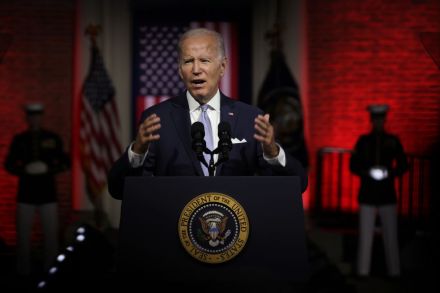
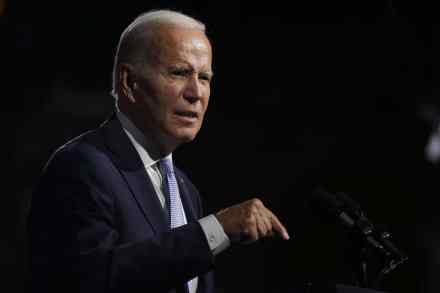
Joe Biden’s speech at Philadelphia’s Independence Hall on Thursday was one of the most remarkable in living memory. By “remarkable,” I hasten to add that I do not mean “good.” On the contrary, it was a breathtaking act of what the psychoanalysts call “projection,” blaming others for the bad things you do yourself. The speech itself was a malignant act of demagoguery that will have colonels and generalissimos everywhere catching their breath with envy. The neo-totalitarian stage set, replete with red lighting effects and military personal flanking the shouting, gesticulating Biden, was right out of central casting. Next time, perhaps Biden will wear epaulettes along with his signature aviators. The speech was billed as a reflection on the “soul of the nation.

The bucolic Beaujolais

To every thing, saith the Sage of Ecclesiastes (and Pete Seeger), there is a season. There is a time for white tie and tails, footwear by Lobb, and the impeccably tailored business suit or long satin frock with appurtenances from Tiffany. There is also a time for lounging about in loose-fitting cotton trousers and boat shoes. You have on your artfully battered panama hat and sunglasses, and that book you are reading, while full of pictures and conversations, as Alice would have demanded, boasts charm, not charts or spreadsheets. Its story will not be on the test. It’s the same with wine. There is a time for the exquisite Montrachet or Cheval Blanc, the Bollinger RD, Krug, or Dom Pérignon.

Beaujolais

Liz Cheney: the self-appointed moral center of the GOP

I was hoping that I wouldn’t have to write about Liz Cheney again. After she was crushed by the Trump-endorsed Harriet Hageman last week in the Wyoming GOP primary, I figured the self-obsessed crusader would retreat to her boudoir to dress up in top hats once worn by Abraham Lincoln while guzzling a brand of whiskey favored by Ulysses S. Grant, both of whom she invoked in her petulent non-concession concession speech. But Cheney is not quite done making a spectacle of herself. A couple of weeks ago, the Trump-deranged congresswoman sniffed that she would find it “very difficult” to support Ron DeSantis because he had aligned himself with Donald Trump. That remark garnered some portion of the contempt it deserved, but it was nothing to her latest foray on to the public stage.

liz cheney

The real motivation for the FBI raid

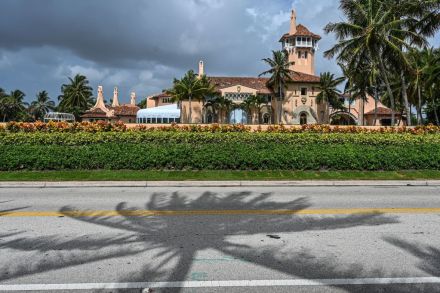
I write a day after the FBI, without warning, raided Mar-a-Lago, Donald Trump’s home in Palm Beach. According to Trump, agents even broke into his safe and made off with who-knows-what documents. They also rifled through Melania Trump’s wardrobe. Maybe they were looking for classified lingerie. Who knows? As many commentators pointed out immediately, this assault on a former president of the United States by what amounts to the Democratic Party’s secret police was unprecedented. Never before in our history has a former president been subject to the mafia-busting, terrorist-crushing might of state police power directed by the opposing party. That’s just in our history, though. Elsewhere the story is not so cheery.

raid

Donald Trump has enemies everywhere

I think that Michael Anton is correct that “the people who really run the United States of America have made it clear that they can’t, and won’t, if they can help it, allow Donald Trump to be president again.” “The people who really run the United States”: that would be denizens of the Swamp, the bureaucratic elite, their media and academic mouthpieces, worker bees in the ambient welfare jelly and the nomenklatura who win elections and circulate in and out of the corridors of power. It’s a powerful, nearly monolithic force, a monument to special privilege and two-tier justice — and the prospect of dismantling it is daunting to say the least.

peter navarro donald trump enemies

The complicated history of English wine

From our UK edition

Hugh Johnson’s classic World Atlas of Wine, first published in the early 1970s, is now up to its eighth edition. My edition, the sixth, was published in 2007. It is 400 pages long and has exactly one page devoted to the wine of the United Kingdom. The latest edition is 16 pages longer but it, too, devotes only one page to British wine. Wine has a long history in the British Isles. Like so many good things (q.v. Monty Python’s Life of Brian), wine was brought by the Romans, who planted vines wherever they could grow (and some places they couldn’t). The Domesday Book, William the Conqueror’s big tax-planning guide, lists 40 vineyards in England.

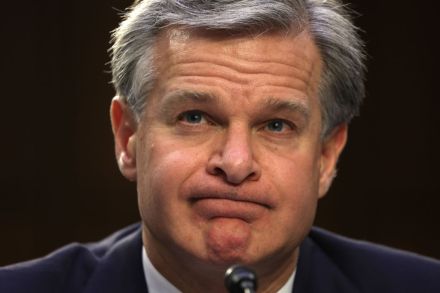
Where is the FBI’s Rubicon?

Everyone knows that in January 49 BC Julius Caesar, about to lead part of his army across the Rubicon river, said “Alea iacta est,” “the die is cast.” Except that, according to Plutarch, what he really said was “Ἀνερρίφθω κύβος,” “let the die be cast,” and he did not so much say it as quote it, since the already-proverbial line came from the Greek playwright Menander. Anyway, in bringing an army across the stream that separated cis-Alpine Gaul from Italy proper, Caesar had committed treason. In crossing the Rubicon he had crossed a line, sparking the civil war that engulfed Rome and formalized the end of the Republic that had, as Caesar himself noted, been dead in all-but-name-only for decades.

fbi rubicon

The great White House replacement

I like it when I can endorse the other side. It makes me feel like I’m part of the big happy family of man instead of just another snarling partisan. So it was with gratitude that I absorbed David Axelrod’s recent observation about Joe Biden on CNN. Pay attention now: Axelrod was the chief strategist for Barack Obama’s presidential campaign and what he doesn’t know about the emotional weather of the left is not worth knowing. “There is this sense that things are kind of out of control,” quoth Axelrod when asked about the Big Guy™, “and he’s not in command.” Right you are, Dave! My only question is: what took you so long? Of course, Axelrod’s devastating admission was not a disinterested or impartial judgment. Nothing Obama’s main men say is that.

biden

Bring on the Democrats’ ‘ultra MAGA’ strategy

You know the old expression “too clever by half?” It’s not a compliment. And though I am loathe to describe Democratic strategists as “clever,” I grudgingly acknowledge that they exhibit a certain low cunning that, on occasion, can be effective. We saw it on full display early on in the 2016 presidential election campaign when clever Dems were falling all over themselves to support the ridiculous candidate Donald Trump. He could never win, of course, but the ploy was good for a laugh and would hurt whatever serious candidates were running against Hillary. To almost everyone’s surprise, things didn’t work out quite as expected that time. But old habits are hard to break.

democrats midterm strategy

The Ivy League scolds come for Amy Wax

I have always admired the tag corruptio optima pessima: the corruption of the best is the worst. Take the Ivy League. These super-rich, super-prestigious institutions are so wealthy and so beguiling because, once upon a time, they represented and — more to the point — successfully transmitted to their students the prime civilizational values of our culture. We’re told, and I have no reason to disbelieve it, that the light we see from distant stars is very old and, in some cases, is light from stars that were long ago extinguished. It is same with the Ivy League and their near competitors. Today, they are utterly bankrupt — not financially, of course. No, in a good old greedy capitalist sense, they are filthy, stinking rich.

amy wax

Tolosa Winery: my latest discovery

Writing about and — the necessary preliminary — drinking wine is a voyage of discovery. I won’t say that any new vineyard has made me feel quite like “stout Cortez” who, according to Keats, “star’d at the Pacific — and all his men/ Look’d at each other with a wild surmise—/ Silent, upon a peak in Darien.” But wine is in a deep sense about more than the fermented juice of the grape. It is about place — terroir, of course, but also place in a larger sense: place as habitation, place as community, which means place as the stage whereon manners, romance, technique and custom perform for the gods of pleasure. It is also about history and personality and their distillate: money, which ushers in snobbery and its accoutrements.

tolosa
inflation

Taking a page from Lenin’s playbook

I have often been struck by the number of pithy observations — revelatory, pointed or simply true — that were not said by the person to whom they are attributed. Vladimir Lenin apparently never said (in Russian or in English) that “the way to crush the bourgeoisie is to grind them between the millstones of taxation and inflation.” Mark Twain, to whom many amusing remarks have been falsely attributed, apparently did not contend that reports of his death had been greatly exaggerated. Edmund Burke neither said nor wrote that evil would triumph if good men did nothing.

boris johnson trade

Why we’ll all miss Boris

I think that Thomas Babington Macaulay had the last word about Boris Johnson’s forced resignation as prime minister of the UK: “We know no spectacle so ridiculous,” Macaulay wrote, “as the British public in one of its periodical fits of morality.” Macaulay’s line needs to be slightly adjusted, it is true, because, ridiculous though public displays of puritanical moralism are, in this case it was mostly Boris’s colleagues in Parliament, not the public at large, that suffered that unbecoming fit of morality. Indeed, throughout it all, Boris — a politician with more élan than any prime minister since Margaret Thatcher — remained popular with the public. He was especially popular, I think, with the American public. And why not?

The sequel to January 6

Although the public has other things to worry about — like runaway inflation and a collapsing stock market — there has been a lot of static about the January 6 show trials that opened last Thursday on location in Washington, DC. I’ve contributed to the cacophony myself, though not without misgivings. As rumors swirl about important changes in the cast next year — Liz Cheney, for example, is said to be returning to her real constituency in Georgetown — a friend writes to remind me that the entire show may be eclipsed by a new kid on the block: the June 8 House Select Committee to investigate the plot to assassinate Supreme Court Justice Brett Kavanaugh at his home in a partially disclosed, insecure location.

january 6 kavanaugh

The learned drinkers

Some of my readers may be unfamiliar with Athenaeus of Naucratis, a shadowy Egyptian-born Greek who floruit somewhere in the Roman Empire during the reigns of Marcus Aurelius, Commodus and Septimius Severus, i.e., around 200 AD. Athenaeus was a rhetorician, grammarian and epicure. But he is known to posterity primarily as the author of The Learned Banqueters (Δειπνοσοφισταὶ), a sprawling, miscellaneous work that touches on, well, just about everything: food, philosophy, fermentation, fabulation and many other subjects, not all of which begin with the phoneme “f.” Henry James called the three-volume Victorian novel a “loose baggy monster.” None was so loose or so baggy as Athenaeus’ compendium. There is a bit of Petronius’s Satyricon (c.

athenaeus
woke

Woke is truly going broke

It looks like Susan Sontag was ahead of her time. Back in 1966, she (in)famously wrote that “the white race is the cancer of human history.” (After her own bout with cancer a few years later she emended that statement, noting that, on reflection, she thought it was unfair — to cancer.) Back then, such statements were “provocative,” a euphemism for outrageously mendacious. But it wasn’t long before lots of white liberals, abetted by sundry black race-hustlers, got in on the game. To accompany its 1993 biennial exhibition, the Whitney Museum of American Art passed out little pins that said, “I Can’t Imagine Ever Wanting to Be White.

We must stand up for private rights

By disposition, conservatives distrust government. They are for “limited government” and worry about the coercive power of the state intruding upon individual liberty. But these days, some conservatives tell us that, when they finally get their hands on the levers of power, they will be energetic in exercising them to achieve their (presumably conservative) ends. Is that a contradiction or indication of hypocrisy? Maybe. Or maybe it is just a sign of how deeply anti-conservative sentiment has burrowed into the tissues of our society. No doubt I would prefer the policies promulgated by a conservative administration to the policies we are saddled with now. But my low opinion of human nature inclines me to distrust government power no matter who is in charge.

rights