Richard Bratby

Richard Bratby is the chief classical music critic of The Spectator

A dancing, weightless garland of gems: Stephen Hough’s piano concerto reviewed

Stephen Hough’s new piano concerto is called The World of Yesterday but its second ever performance offered a dispiriting glimpse into the world of tomorrow. A couple of minutes into the finale Hough stopped playing and the orchestra fell silent. ‘I’m very sorry,’ he explained. ‘My iPad is going crazy.’ A murmur of sympathy, mingled with laughter; then Hough signalled to the conductor Mark Wigglesworth and the Bournemouth Symphony Orchestra and they carried on, this time without mishap. But we’d seen it happen, and until last week I’d have told you it was inconceivable. This wasn’t some rash experiment: professional musicians have been using electronic scores for well over a decade, generally without problems.

Spreads emotions like jam: Festen, at the Royal Opera House, reviewed

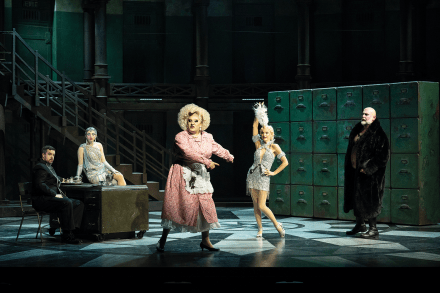
Mark-Anthony Turnage’s new opera Festen opened at Covent Garden earlier this month, and reader, I messed up. I broke my own golden rule with new operas: don’t do any homework, don’t try to memorise the plot, and whatever you do, don’t revisit the source material. The aim is to experience the new work on its own terms. That’s hard enough, given the PR onslaught that precedes any Royal Opera première – the way the classical establishment circles the wagons, and the unspoken consensus that certain living composers (including Adès, Benjamin and Turnage, though not Judith Weir, curiously) are simply too big to fail. But no: I rewatched Thomas Vinterberg’s 1998 Dogme movie, twice, and it was the wrong decision. Inevitably, and unfairly, you cross-reference.

Regents Opera’s Ring is a formidable achievement

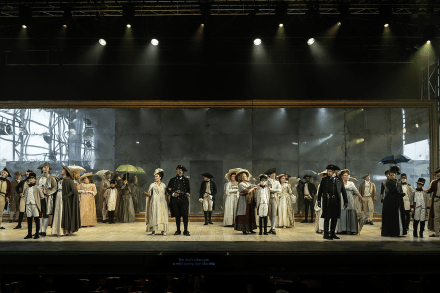
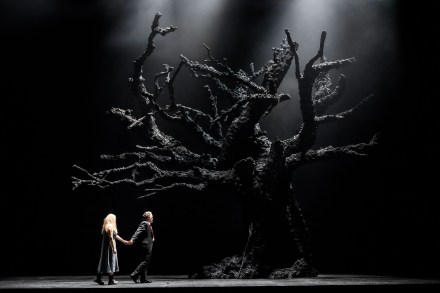
I saw the world end in a Bethnal Green leisure centre. Regents Opera’s Ring cycle, which began in 2022 in Freemasons’ Hall in Covent Garden, has found its culmination and completion at York Hall, a rundown public bath better known for championship boxing. Tower Hamlets security staff scan you for concealed weapons on the way in, which is not exactly typical at the opera. Still, the Ring is not a typical opera – and isn’t art supposed to feel dangerous? But once you’re inside – and as long as you’re not seated within earshot of the bar staff, who clatter and chatter throughout – Caroline Staunton’s scaled down production transfers seamlessly; in fact, the sightlines are better.

Want to understand a conductor? Listen to their Haydn

Grade: B When a music-lover is tired of Haydn’s London symphonies, they’re tired of life. It’s not just the sheer creative verve of these 12 symphonies by a composer in his sixties. It’s the generosity of spirit. Beethoven demands a battle of wills; Mozart a near-impossible grace. But a conductor can run straight at a London symphony and Haydn will show us, with a smile, exactly who they are. Beecham is urbane, Bernstein camps it up; Abbado is trim and impeccably turned out. Eugen Jochum (a belated discovery) is just very, very German. Haydn’s still bigger than all of them. Paavo Jarvi has reached the second volume of his London symphonies with the Bremen-based Deutsche Kammerphilharmonie, and he’s surely never been anyone’s idea of a ray of sunshine.

The thankless art of the librettist

Next week, after the première of Mark-Anthony Turnage’s new opera Festen, the cast and conductor will take their bow. All being well, there’ll be applause; and then a brief lull as the creative team takes the stage. There’s often a ripple of curiosity in the audience at this point, because it’s rare that we get to see just how many people it really takes to make an opera. Standing near the composer will be Lee Hall, the writer of Billy Elliot and The Pitmen Painters, and now part of the most maligned – and indispensable – profession in all of music. He’s the librettist. In short, Hall wrote the words, and in the world of opera there’s no more thankless task. ‘There’s this snobbery about it, an English snobbery, I suppose,’ he says.

Opera North’s Flying Dutchman scores a full house in cliché bingo

The overture to The Flying Dutchman opens at gale force. There’s nothing like it; Mendelssohn and Berlioz both painted orchestral seascapes but no one before Wagner had flung open the sluices and let the ocean roar into the opera house with quite such elemental power. Garry Walker and the orchestra of Opera North dived into it headfirst, while images of waves were projected on the curtain. If you believe that opera audiences can’t handle an overture without visual distraction (and most opera directors do appear to think this) it’s as good a solution as any. A strong start for a new production. Then the curtain rose and we were in the Home Office.

Classical music has much to learn from Liverpool

They do things their own way in Liverpool; they always have. In 1997 the Royal Liverpool Philharmonic Orchestra launched a contemporary music group called Ensemble 10:10 (the name came from the post-concert time-slot of their early performances). For a decade now, they’ve also administered the Rushworth Prize, an annual competition for young composers based in the north-west. And while classical fads and crises have come and gone, the RLPO has held its friends close and tended its garden. The result? The kind of artistic self-assurance that lets you put your chief conductor in charge of a première by a novice composer, and then call in a Barenboim to guarantee a full house.

A committed performance of Lerner and Weill’s flop: Opera North’s Love Life reviewed

Once upon a time on Broadway, Igor Stravinsky composed a ballet for Billy Rose’s revue Seven Lively Arts. After the first night, Rose felt that Stravinsky’s efforts might benefit from the attention of Robert Russell Bennett – the king of Broadway orchestrators, who’d collaborated with Cole Porter and the Gershwins. ‘YOUR MUSIC GREAT SUCCESS,’ he telegrammed to Stravinsky. ‘COULD BE SENSATIONAL SUCCESS IF YOU WOULD AUTHORISE ROBERT RUSSELL BENNETT RETOUCH ORCHESTRATION.’ Stravinsky wired straight back: ‘SATISFIED WITH GREAT SUCCESS.’ If you’re mad enough to revive Love Life, you have to commit. Opera North did There were moments in this revival of the Lerner and Weill flop Love Life when I wondered whether Weill, too, might have profited from a Bennett makeover.

The stupidity of the classical piano trio

It’s a right mess, the classical piano trio; the unintended consequence of one of musical history’s more frustrating twists. When the trio first evolved, in the age of Haydn, the piano (or at any rate, its frail domestic forebear) was the junior partner, and the two string instruments, violin and cello, were added to make the silly thing audible. Then the piano started to evolve, while its partners – give or take the odd tweak – really didn’t, much. The end result, by the second half of the 19th century, completely reversed the original balance of power, leaving the two string instruments thrashing for dear life against the onslaught of that glossy, black, all-devouring monster, the modern concert grand.

Our verdict on Pappano’s first months at the London Symphony Orchestra

Sir Antonio Pappano began 2024 as music director of the Royal Opera and ended as chief conductor of the London Symphony Orchestra. Around the middle of the year, there was a sort of retrospective; a stock-taking, if you like, as he made the transition to this third act of his career. Warner Classics released a box set of Pappano’s recordings with the Santa Cecilia Orchestra in Rome, where he held the top job from 2005 to 2023. And Pappano published a memoir, My Life in Music – a masterclass in diplomacy. No beans were spilled, and they were never likely to be. You don’t survive 22 years in an international opera house without learning discretion; not, that is, if you intend to remain sane.

A miracle at the RSC: genuinely funny Shakespeare

Dost thou think, because thou art virtuous, there shall be no more cakes and ale? Most subsidised theatres hanker for political relevance. Even so, when the Royal Shakespeare Company planned its new production of Twelfth Night, they can hardly have expected that by Christmas 2024 we’d have Malvolio as prime minister. The curious thing is that, as portrayed by Samuel West, Shakespeare’s eternal killjoy cuts rather a sympathetic figure. He’s elegant in dress and carriage, with a shadow of a northern brogue to suggest that this is a man who has strived hard for his status and sees himself as upholding values that have a real, and higher, worth.

Meet the king of comic opera 

John Savournin has been busy. That comes with the territory for a classical singer – things often get a little hectic as the music world barrels towards Christmas. But with Savournin, it’s sometimes hard to keep track of which theatre – which city – he’s in on any given night. ‘This week has been Pirates of Penzance rehearsals at English National Opera,’ he says: we’re a fortnight away from opening night, and he’s playing the Pirate King. ‘On Thursday I was bobbing up to the Lowry in Salford for Ruddigore with Opera North.’ He’s been swirling his cape as Sir Despard Murgatroyd since late October. ‘And yeah – whenever I can, I’ve been checking in on panto rehearsals.

Vivid, noble and bouyant: AAM’s Messiah reviewed

More than a thousand musicians took part when Handel’s Messiah was performed in Westminster Abbey in May 1791. It wasn’t the only item on the bill, either; it was part of a day-long blow-out that lasted from 11 a.m. to 5 p.m. and also included the whole of Handel’s Israel in Egypt. The crowd came prepared. According to Adalbert Gyrowetz, a Bohemian composer then living in London, the audience munched on ‘hard-boiled eggs, ham and roast meat’ during the intervals. ‘One had almost to wade through a mass of eggshells and other rubbish on the way out of the church,’ he noted.

Spellbinding: Herbert Blomstedt’s Mahler 9 reviewed

Ivor Cutler called silence the music of the cognoscenti. But there’s silence and there’s silence, and a regular concertgoer hears a fair bit of both. The ability to fold silence into a musical line – to create the impression that a conductor is somehow sculpting a sound which doesn’t exist – is an indicator of high artistry on the podium. This was real: the concentrated hush of 2,700 people listening as if the silence was part of the symphony Conversely, there’s the embarrassing strained silence when, at the end of a work, a conductor decides to keep the baton raised and see how long he can hold back the tide of applause. It’s spray-on sublimity; an attempt to force the illusion of shared transcendence. It’s the musical version of faking an orgasm.

A keeper: ENO’s new The Elixir of Love reviewed

There was some light booing on the first night of English National Opera’s The Elixir of Love, but it was the good kind – the friendly kind, aimed not at the baritone Dan D’Souza but his character, the caddish charmer Belcore. In other words, it was what opera snobs call ‘pantomime booing’, and which, as a peculiarly British phenomenon, they affect to deplore. If it happened in Munich or Milan they’d brandish it as evidence of an advanced opera-going culture – proof that an audience has been so completely transported by a performance that they’re reluctant to step out of its world. But any singer who’s remotely familiar with British theatrical traditions knows that it’s a compliment, and D’Souza beamed. It had been a thoroughly good-natured evening all round.

Fails to ignite: Royal Opera’s Tales of Hoffmann reviewed

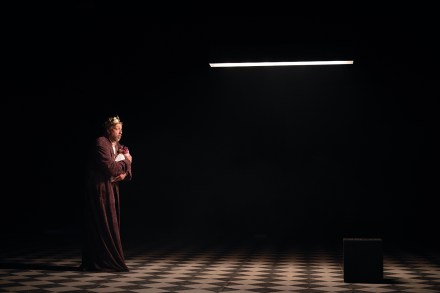
I couldn’t love anyone who didn’t love Offenbach’s The Tales of Hoffmann. Everything – everything – is stacked against this opera. Offenbach left the score unfinished when he died, tormented with gout and pilloried by bores, at the age of 61. Some of its best-loved numbers were upcycled from his earlier hits, and at least one isn’t by him at all. Yet somehow, it lives. More than that, it soars: a tale of disillusion that glows with wonder and hope; a hymn to the sweetness of life and the miracle of art, held together against all logic by the sheer charisma of a composer who shot for the moon and fell among the stars. ‘Opéra fantastique’ was Offenbach’s own description, and he’s not wrong. I’m not saying that Michieletto doesn’t care about this opera.

One beauty – one turkey: Wexford Festival Opera reviewed

‘Theatre within Theatre’ was the theme of the 2024 Wexford Festival and with Sir Charles Villiers Stanford’s The Critic, that’s exactly what you get. Conor Hanratty’s production showed the interior of an 18th-century theatre, viewed from the stage. In the second act it flipped around to reveal the audience’s perspective. Were we now the audience? Clearly we were; which was awkward because where does that leave a critic? Obviously, one can’t be the critic because there’s already one on stage (the clue’s in the title), and as it turns out, The Critic isn’t really about critics, at all. Whatever – you get the picture. It’s all very meta; and more than a bit silly.

The striking musical world of Welsh composer Grace Williams

Grade: A- There are neglected composers, and then there are Welsh composers. It’s just a question of geography. When Grace Williams’s Fairest of Stars was played at the Proms a few years back, it was hailed as a major rediscovery. That raised a few eyebrows in the Principality, where her music has long been standard repertoire. I grew up 20 minutes from the border and I’d played three of her orchestral works before I turned 30. Still, there’s always more to discover, and this new disc breaks over you with the force of a Snowdonia rainstorm. The BBC Philharmonic lives up to its reputation as the most brilliant of the BBC’s English orchestras, and the conductor, John Andrews, is the man behind recent recordings of operas by Ethel Smyth and Malcolm Arnold.

A lively and imaginative interpretation of an indestructible Britten opera

Scottish Opera’s new production of Albert Herring updates the action to 1990, and hey – remember 1990? No, not particularly, and I suspect that’ll be a common reaction if you were actually around back then. The director Daisy Evans was a toddler at the time and she imagines a gaudy, tawdry small-town world of bum-bags, WeightWatchers and decrepit gas heaters. Loxford Village Hall looks like it hasn’t been redecorated since the year the opera was composed, 1947, and that certainly rings true. Blancmange for the May Day feast, though? I’m pretty sure that even under John Major, blancmange was a throwback. But Evans has a show to put on after all, and a pink wobbling gelatine-based dessert is more theatrical than a bowl of Monster Munch.

You’re unlikely to see a better case made for this Bernstein double bill 

It’s rare nowadays to see a new opera production that’s set in the period that the composer and librettist intended, but they do occasionally come along. In the case of Leonard Bernstein’s operas Trouble in Tahiti and A Quiet Place, the time and place are basically the whole plot. Trouble in Tahiti dates from 1951; a sassy little one-act satire on America’s postwar consumer idyll. It’s practically perfect. A Quiet Place is from 1983 and it’s a sequel, set 40 years later – post-Vietnam and post-Woodstock, with the nuclear family in full meltdown. These performances, and this production, provoke thoughts that might rob you of sleep It’s a bit of a mess, in other words, and Bernstein never really made the pairing work.