Richard Bratby

Richard Bratby is the chief classical music critic of The Spectator

Model villages aren’t just for kids

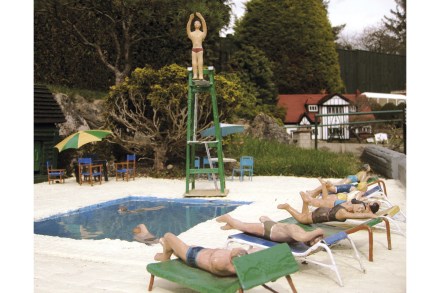
When you leave Bekonscot, the world looks different. The semis and grass verges of suburban Beaconsfield seem slightly wrong: too large, too assertive. It takes a minute or two to adjust your perspective — to size yourself up, or bring the surrounding houses down. In that moment, you experience the sensation described by Will Self in Scale, his morphine-addled hymn to Britain’s most celebrated model village: ‘Some people lose their sense of proportion; I’ve lost my sense of scale.’ Well, supply your own lockdown metaphor.

Portrait of the Royal Liverpool Philharmonic – Britain’s oldest and ballsiest orchestra

Liverpool’s last ocean liner lies half a mile inland, on the crest of a hill. The Philharmonic Hall, home of the Royal Liverpool Philharmonic Orchestra, sits between two cathedrals on Hope Street, its towers jutting over the city like twin prows. It’s an unavoidable metaphor: when you enter the Hall on a concert night, the first thing you see is a bronze memorial to the musicians of the Titanic. Everything about the Hall — the grand staircase; the long curving corridors; the art deco auditorium that looks like something from Alexander Korda’s Things to Come — suggests that you’re about to steam off on some fantastic voyage. I’ve heard concerts all over the world, but when I dream about music, it’s always at the Liverpool Phil.

The musical event of the year: Wigmore Hall BBC Radio 3 Special Broadcasts reviewed

Remember when 2020 was going to be Beethoven year? There were going to be cycles and festivals, recordings and reappraisals; and if you weren’t actively promoting old Ludwig Van there was money to be made whinging about overkill. So was Stephen Hough’s decision to end his Wigmore Hall recital last Monday with Schumann’s Fantasie in C — a work conceived at least partly in homage to Beethoven, which opens with a fragmented musical landscape that Schumann at one point called ‘Ruins’ — a conscious reflection of the musical world’s changed circumstances? Or would that be reading too much into a situation in which a once-routine lunchtime concert suddenly feels like the musical event of the year?

I’m still not wholly convinced by Kirill Petrenko: Berlin Phil’s Digital Concert Hall reviewed

At the start of Elgar’s Second Symphony the full orchestra hovers, poised. It pulls back; and then, like a dam breaking, the music surges forward in wave upon wave of golden sound. ‘Rarely, rarely, comest thou, Spirit of Delight!’ writes Elgar, quoting Shelley, at the top of the score, and you won’t hear that spirit captured more exuberantly than in a performance from May 2009 by the Berlin Philharmonic under its future music director Kirill Petrenko. The violins gleam, the horns swell and every player is audibly leaning into the music. Under Petrenko, Elgar’s leaping compound rhythms almost seem to dance.

Drunk singers, Ravel on film and prime Viennese operetta: the addictive joys of classical YouTube

The full addictive potential of classical YouTube needs to be experienced to be understood. And let’s be honest, there are only so many lockdown videos the human spirit can take. Which is why, on a sunny spring afternoon, in the prime of life and health, I find myself watching the late John Cage stroking bits of wire with a feather. The haircuts suggest that we’re in the early 1980s, and a Ron Burgundy type is floating across the screen in a little box. ‘It’s been said that listening to John Cage’s music is like chewing sand,’ he explains, unhelpfully. It seems that we’ve also been watching a live performance by the German artist Joseph Beuys. And that we’re now going over to a firework display at the Pompidou Centre.

It costs a lot of money to look this cheap: Metropolitan Opera’s At-Home Gala reviewed

Desperate times call for desperate measures. With the world’s opera houses currently dark, the New York Metropolitan Opera tackled the crisis the way it knows best — by assembling the most glamorous possible list of vocal megastars and presenting them at astronomical expense. But dollars can’t get around social distancing, and in lockdown even the greatest voice is only as good as the mic on a smartphone. Cue four hours of free-to-view party pieces from 43 of the world’s greatest singers, broadcast live from their homes without orchestra, without editing and without excuses.

From Middlemarch to Mickey Mouse: a short history of The Spectator’s books and arts pages

The old masters: how well they understood. John Betjeman’s architecture column ran for just over three years in the mid-1950s. Yet during that short run he experienced the moment that comes, sooner or later, to every regular writer in The Spectator’s arts pages. ‘It is maddening the way people corner one and make one discuss politics at the moment,’ he wrote on 23 November 1956, clearly as bored of the Suez crisis as the rest of us were, until recently, by Brexit: Because I write in this paper, people assume that I share its Editor’s views about Suez… But I don’t know what the views of this paper about Suez are, because I never read the political stuff in front.

The marvel of Mozart’s letters

It’s 1771, you’re in Milan, and your 14-year-old genius son has just premièred his new opera. How do you reward him? What would be a fun family excursion in an era before multiplexes or theme parks? Leopold Mozart knew just the ticket. ‘I saw four rascals hanged here on the Piazza del Duomo,’ wrote young Wolfgang back to his sister Maria Anna (‘Nannerl’), excitedly. ‘They hang them just as they do in Lyons.’ He was already something of a connoisseur of public executions. The Mozarts had spent four weeks in Lyons in 1766 and as the music historian Stanley Sadie points out, Leopold had clearly taken his son (ten) and daughter (15) along to a hanging ‘for a jolly treat one free afternoon’.

The joy of Haydn’s string quartets – here are the best recordings

As Joseph Haydn was getting out of bed on the morning of 10 May 1809, a cannonball landed in his back garden. Napoleon’s armies were closing on Vienna, and Haydn’s suburban home was in the line of fire. His valet recorded that the bedroom door blew open and every window in the house rattled. Shaking violently, the 77-year-old composer’s first thought was for his household, which at that point comprised six servants and a talking parrot who addressed him as ‘Papa’. ‘Children, don’t be afraid, for where Haydn is, nothing can happen to you,’ he shouted. This was nothing particularly new. Over a long life Haydn survived smallpox, saw his house burn down (twice) and narrowly escaped castration at the hands of an overenthusiastic choirmaster.

Bleak humour, resourcefulness and wit: Budapest Festival Orchestra’s Quarantine Soirées reviewed

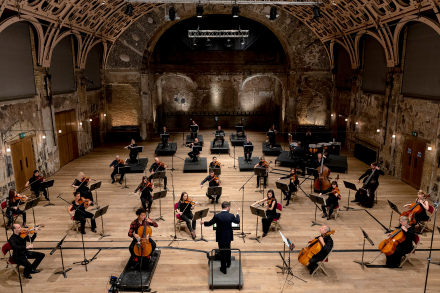
There’s a certain merit in bluntness. ‘Quarantine Soirées’ was what the Budapest Festival Orchestra called its response to the crisis, and if the name conveyed a certain bleak Magyar humour, the resourcefulness couldn’t be faulted. Elsewhere, orchestras were still talking optimistically about broadcasting concerts from empty halls, and (even more optimistically) about persuading online viewers to pay for them. Realising that any activity that brings 90 musicians into close proximity was probably running out of road, the BFO’s music director Ivan Fischer announced that ‘this is not the time for orchestral music’ and launched a programme of chamber recitals by the orchestra’s players, livestreamed from their rehearsal hall.

Bigamists, lunatics and adventurers: the raucous world of 19th century British music

For a patriotic German in the decades before Bismarck, Britain’s power was an object of envy. But there was one thing, at least, that you could always hold over the Anglo-Saxons on their foggy little island. On 1 January 1837, Robert Schumann sat down in Leipzig to hear a new piano concerto by the 20-year-old William Sterndale Bennett. ‘An English composer; no composer,’ commented his neighbour, smugly, before the music started. Few 19th-century German music-lovers failed to point out that the land of Shakespeare had somehow failed to produce a single really significant composer since the late 17th century. We know how that story ended; and if you want to explore the flowering of the British musical renaissance, it’s never been easier.

If your instinct is to undermine Beethoven, you’re directing the wrong opera: Fidelio reviewed

‘People may say I can’t sing,’ said the soprano Florence Foster Jenkins, ‘but no one can ever say I didn’t sing.’ There were groans of dismay as an official walked out before the start of the Royal Opera’s new Fidelio: Jonas Kaufmann was not feeling on top form, but he was going to perform the role of Florestan regardless, and begged our indulgence. The mind plays tricks and after an announcement like that it’s hard to be entirely sure whether you’re hearing a skilfully proportioned interpretation or a singer dialling it down. But let the record show that Kaufmann did sing, and if you’ve booked for this production on the strength of that magic name alone, you can breathe easy.

Eurotrash Verdi: ENO’s Luisa Miller reviewed

Verdi’s Luisa Miller is set in the Tyrol in the early 17th century, and for some opera directors that’s a problem. After all, they’re busy people. They probably never had time to read Wolf Hall, or to speak to any of the 100 million people worldwide who watched Game of Thrones. It’s self-evident to them that modern audiences will be unable to empathise with anything involving swords, castles or feudal hierarchies. Which is why they work hard to imagine new contexts that can make these hopelessly dated dramas address contemporary life as we live it, right here, right now. Counts, village maidens and men in ruffs? Baffling. But a clown strapped to a gyrating crucifix being stabbed with arrows by a group of dancers in flesh-coloured swimming caps and black fetish wear?

Weill’s Broadway opera is made for telly: Opera North’s Street Scene reviewed

It’s a sweltering night in Manhattan, circa 1947, and on the doorstep of a brownstone tenement three women are waiting for their menfolk to return. There’s plenty to gossip about. The Hildebrands upstairs are being evicted tomorrow, and the Buchanans are expecting a baby. And what’s the deal with Mrs Maurrant and Steve the milkman? Old Mr Kaplan reads the newspaper and denounces the bourgeoisie. A kid cadges a dime and big, kind Lippo Fiorentino arrives home from work with ice creams for everyone. At which point it becomes fairly safe to conclude that the America of Kurt Weill’s Street Scene is not the America of his Mahagonny. Forget the acid harmonies and hard-left caricatures of his Berlin collaborations with Bertolt Brecht.

Are we going to have to start taking Calixto Bieito seriously? ENO’s Carmen reviewed

Calixto Bieito’s Carmen: three words to make an opera critic’s heart leap. Until quite recently, Bieito was the operatic provocateur of the century — the director who opened Verdi’s Un ballo in maschera with a row of men defecating on stage, and who presented Mozart with a side order of torture porn. Veterans of his Carmen told of fellatio and gratuitous nudity; it all sounded very promising. Add the malicious pleasure of seeing what unrevivable horrorshow ENO had lumbered itself with now — what steaming paella of body fluids it was about to dish up to an audience who’d paid for an evening of good tunes and sultry senoritas — and the review practically writes itself.

Inspired programming and a proper celebration: Barbican’s Beethoven Weekender reviewed

Beethoven wears a feather boa and pink shades. He wrangles an electric guitar. A red lightning flash streaks across that familiar, scowling face. ‘Genius before Elton. Radical before Prince. Iconic before Bowie’ proclaimed the posters for the Barbican’s Beethoven Weekender, and apparently there’ve been complaints about them, which probably means that they’ve got the tone about right. Two hundred and fifty years after his birth, Beethoven still has a way of driving all the right people round the bend. US campus musicologists have called for his music to be suppressed (you’d think that champions of inclusion would support a year-long celebration of a disabled composer, but it seems not. Wrong chromosomes).

The joy of Radio 3’s Building a Library

So, you’ve fallen in love with a piece of classical music and you want to buy a recording. The problems begin when you hit Amazon. Any reasonably established classic will have been recorded numerous times: do you go for the performer you’ve already heard of? The crackly vintage recording with the gushing five-star reviews? Or the budget-priced unknown with the vaguely Slavic name; after all, it’s the same music. Isn’t it? Radio 3’s Building a Library sorts it out so you don’t have to. Tucked away within Record Review each Saturday morning, the format is simple: every week, the BBC details a critic to listen to as many recordings of a given work as is humanly possible.

The audience were in tears: Christian Gerhaher/Gerold Huber at the Wigmore Hall reviewed

‘Popular’ classical music is a relative term. Show me someone who thinks Beethoven is surefire box office, and I’ll show you someone who’s never tried to sell tickets for the Op. 9 string trios. Even Mahler, the blockbuster concert phenomenon of the past four decades, has his limits. Audiences love him, sure. But in 2011, when several orchestras performed complete Mahler cycles, the limits of that love became embarrassingly clear. The Second and Eighth symphonies — roof-raising choral spectaculars — promptly sold out. The gentle Fourth and the knotty, reconstructed Tenth: not so much. As for his songs, forget it. Well, that’s lieder for you.

Warmth, energy and gripping momentum: Stephen Hough’s Wigmore Hall residency reviewed

In the summer of 1878 Johannes Brahms finally succeeded in growing a beard. It was his third attempt. ‘Prepare your wife for the grisly spectacle, for something so long suppressed cannot be beautiful,’ he wrote to a friend, and by all accounts he wasn’t wrong. Clara Schumann pleaded with him to shave it off. She’d have remembered Brahms as the golden-haired 20-year-old who had arrived on her doorstep in September 1853, glowing with genius; in the words of her husband Robert, ‘a young blood at whose cradle graces and heroes stood guard’. For modern listeners, though, the beard has long since conquered — as if, like one of Philip Pullman’s daemons, it somehow embodies Brahms in his gruff and hairy definitive form.

Beer, sweat and jockstraps: the real history of the CBSO

In childhood, the theme tune to The Box of Delights was the sound of Christmas. The melody was ‘The First Nowell’ but that wasn’t what cast the spell. It was the way the harp glinted and pealed, and the eerie wisp of the ‘Coventry Carol’ that drifted through on muted violins: a masterclass in orchestration for a BBC teatime audience. After inquiries at Circle Records in Liverpool (this was pre-Amazon), my father established its identity: the Carol Symphony, by a composer with the pleasingly Edwardian name of Victor Hely-Hutchinson. And that was that, for me anyway, until three decades later, rifling through the archive of the City of Birmingham Symphony Orchestra, I noticed the initials ‘VHH’ on files from the 1940s.