Richard Bratby

Richard Bratby is the chief classical music critic of The Spectator

For fans of neglected, niche and uncool music, lockdown has been a blessing

When this whole mess is over, there’ll be a shortish MA thesis — or at least a blog post — to be had from analysing classical music’s evolving response to the crisis. Already, looking back, distinct phases are emerging from the viral fog. Phase One: the Banana Bread Apocalypse — that first lockdown, when Jamie Oliver was telling us to smoosh up frozen peas and pretend it was pesto, and phonecam footage of a cellist playing Bach in the spare bedroom felt like a kind of miracle. Phase Two: orchestras working out what they could actually do while socially distanced and audienceless. Cue a spike in online performances of works for small (or spaced-out) orchestra. Lots of Tallis Fantasias and Siegfried Idylls.

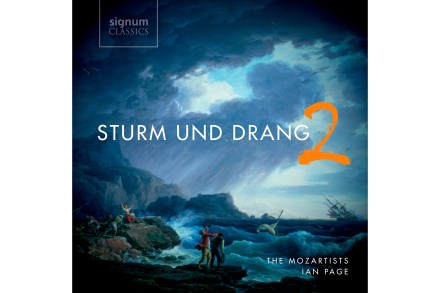
Are Mozart’s forgotten contemporaries worth reviving?

There are worse fates than posthumous obscurity. When Mozart visited Munich in October 1777, he was initially reluctant to visit his friend, the Bohemian composer Josef Myslivecek. Myslivecek was in hospital, undergoing treatment (as he told it) for a facial cancer brought on by a recent coach accident. But this being the 18th century, and Myslivecek having a reputation as a gallant, Mozart suspected venereal disease. When he finally appeared at Myslivecek’s bedside, he was appalled by what he saw: ‘The surgeon, that ass, has burned off his nose! Imagine the agony he must have suffered.’ Within four years, the luckless — and noseless — Myslivecek had died in poverty, aged 43. His music effectively died with him.

The Mozarts of ad music

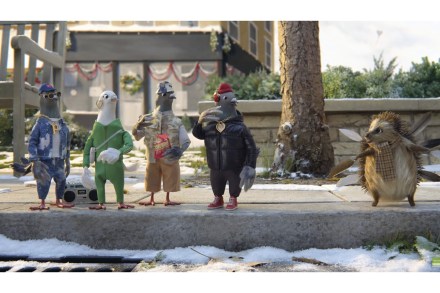
It’s Christmas 2020 and Kevin the Carrot is on a mission. Snow swirls, ice glistens and roast turkeys and cold cuts wait on the table, bathed in cosy firelight. The visual symbols of Christmas are all present and correct in the big Aldi seasonal advert, but what pulls them together is the music. A hint of John Williams on a solo horn, a burst of swashbuckling rhythm; symphonic strings as our vegetable hero makes it home. It’s all there, sumptuously scored and precisely gauged to make you feel that in 30 seconds, you’ve experienced an epic. And then, of course, to go out and buy parsnips. ‘I was lucky, because the mood had already been chosen,’ says Guy Farley, the composer who wrote that score.

How real is the performing arts exodus?

Think back 12 months to when you first felt the pandemic. Not when you first read about Covid-19, but the moment of impact — the lurch in the stomach as it hit you that this time, it really wasn’t going to be OK. For Emma Cook, a freelance stage manager on the John Cleese farce Bang Bang!, the moment came during a rare week off. ‘I was sitting in a restaurant near the Bush Theatre in London, waiting to go and see The High Table, and I got a message from a friend who had just flown back from overseas: “Why are the theatres all closed?”. I thought, no they’re not, I’m about to see a show. So I walked over to the theatre and they told us: “No, sorry. We’ve had to stop everything.” And that was when Covid suddenly became big and real.

Three new releases that show the classical recording industry is alive and well

Rachmaninov’s First Symphony begins with a snarl, and gets angrier. A menacing skirl from the woodwinds, a triple-fortissimo blast from the brass, and then the full weight of the strings, hammering out one of those doomy Russian motto-melodies like lead boots dragging you to the bottom of the Neva. ‘Vengeance is mine; I shall repay’ glowers the epigraph that Rachmaninov inscribed at the top of the score, and you’d better believe it. The symphony’s première in 1897 was a disaster that stunned the 23-year-old composer into near-silence.

Perfect English songs in fresh new colours: Roderick Williams sings Butterworth

Another week, another online concert; and since orchestral music seems likely to be confined to screens and stereos for a while longer, one might as well try and experience something new. But not too new — I’ve pretty much had it up to here with the present. The Hallé orchestra is currently streaming a collection of Shropshire Lad songs by George Butterworth, conducted by Sir Mark Elder and sung by the baritone Roderick Williams in orchestral versions of his own creation. That seems ideal: music by the most perfect of English classical songwriters, in fresh and unfamiliar new colours. And time spent with an artist as likeable and intelligent as Williams is never wasted.

The two composers who defined British cinema also wrote inspired operas

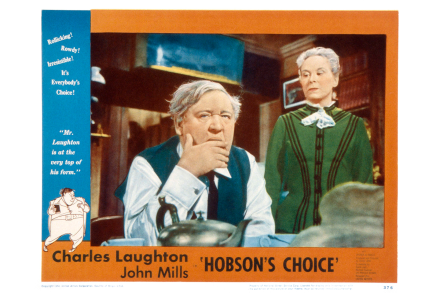
It’s my new lockdown ritual. Switch on the telly, cue up the menu and scroll down to where the vintage movies gather — Film 4, or the excellent Talking Pictures TV. Then search through their early-hours offerings, and press ‘record’ more or less at random. Gainsborough costume flicks; Rattigan adaptations; anything with John Mills in a submarine — it’s all good. Then, next day, trawl through the catch to see what’s surfaced, and who wrote the music. On a good night you might get Vaughan Williams in 49th Parallel, Richard Rodney Bennett in Billy Liar or — bewilderingly — the fire-breathing serialist Elisabeth Lutyens, keeping herself in cigarettes and brandy with scores for The Skull or Dr Terror’s House of Horror.

From bad joke to 21st-century classic: the best recordings of Korngold’s Violin Concerto

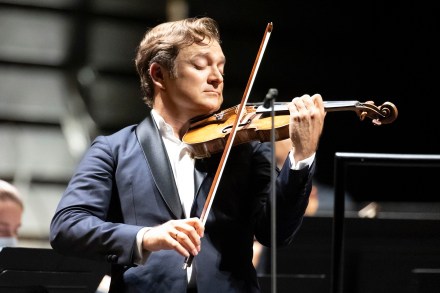
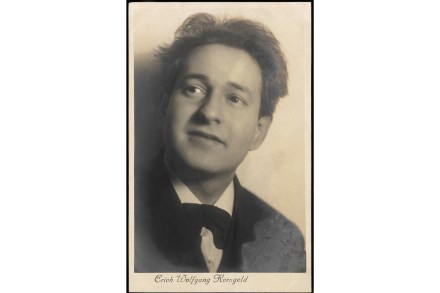
Erich Korngold was what you might call an early adopter. As a child prodigy in Habsburg Vienna, he’d astonished the world: a schoolboy composing orchestral scores that made Elektra sound tame. Jump ahead three decades, and Korngold, in his fashion, was still ahead of the curve. He was one of the first residents of Toluca Lake, North Hollywood, to buy a television. There wasn’t much to watch in 1947, but (according to Korngold’s biographer Brendan Carroll) Jascha Heifetz would drive over anyway from Beverly Hills, and the two exiles — the former protégé of Gustav Mahler, and the greatest violinist on earth — would sit there glued to the live wrestling.

The music we need right now: James MacMillan’s Christmas Oratorio reviewed

The two most depressing words in contemporary classical music? That’s easy: holy minimalism. I know, I know. Lots of people love the stuff, and I wish them joy. But the notion that one simply jettisons the whole western tradition of struggle, of purpose, of wholehearted emotional argument — and that the greatest and most crucial of human questions can be answered by a mush of soothing stylistic mannerisms — well, I’ve tried and so far I just can’t do it. I can’t simply tune in and drop out amid a haze of Yankee Candle harmonies. I hear those static choral clusters and watery melismas, and it feels like being suffocated in velvet. Silently, the spirit begins to scream.

There’s no better sonic hangover cure: New Year’s Day Concert reviewed

The best moment in the Vienna Philharmonic’s annual New Year’s Day Concert comes after the end of the advertised programme. The conductor gives a tiny gesture, the violins start a shimmer of tremolando, and a ripple of applause spreads through the hall. At this point, if you’re watching with first-timers, they’ll look at you, surprised. Why have they stopped? And you smile, because you know what the conductor knows, what the orchestra knows and what even the audience in the Musikverein — those bejewelled Eurostiffs in their £1,000 seats — knows. We’re about to hear The Blue Danube, and music doesn’t get any better than that. Well, that’s how it feels to me, anyway.

Hear the greatest Parsifal of our time sing like a Muppet: Jonas Kaufmann’s Christmas album reviewed

In classical music circles, Christmas arrives with the overture to Handel’s Messiah. Or so they’ll tell you. In truth, festivities kick off when you hear a ping from your phone and glance down at your inbox: OMG — you have to hear this! There follows, as tonic follows dominant, a link to YouTube and the 2014 Christmas in Vienna Medley — the occasion, still barely fathomable to anyone who believes that we share a common European culture, when a quartet of opera singers in full evening dress, and shimmying on the spot like a vicar at a Sunday School disco, attempted to cover George Michael’s ‘Last Christmas’. But not this year. Oh no.

Refined and dreamy: CBSO centenary concerts reviewed

For an orchestra to lose one anniversary concert may be regarded as unfortunate. To lose two? Welcome to 2020. The City of Birmingham Symphony Orchestra gave its first ever concert on 5 September 1920. But that was only a warm-up, a sort of soft opening if you like. The big public fanfare came two months later, on 10 November 1920, when the all new ensemble descended on Birmingham Town Hall for an inaugural gala conducted by Sir Edward Elgar. The plan in Birmingham this year was to recreate both events, in lavish style. Well, life comes at you fast, doesn’t it?

The beautiful, haunted symphonies of Franz Schmidt

The sounds that Franz Schmidt made while learning the trumpet were pretty much unbearable, or so the story goes. In order to practise he would leave his home in the Lower Austrian town of Perchtoldsdorf and walk up to the heath, a grassy hillside above the town. There, far from unappreciative neighbours, and looking down towards the spires of Vienna, a few miles north and east, he could crack notes to his heart’s content — in perfect isolation. Some artists hand you their metaphors on a plate. Schmidt spent his career trying to escape the suburbs of central European music, dogged by private grief and professional frustration. ‘Someone with a name like Schmidt should never become an artist,’ declared his piano teacher.

Turn it up and feel the walls shake: John Wilson’s Respighi reviewed

Grade: A The strings rear up, there’s a flash of steel from the trumpets, and ten seconds into Respighi’s Feste Romane, you can already tell that things are about to get physical. It’s the heft of the sound that floors you — the gut punch of a 100-piece orchestra darting through Respighi’s Technicolor sonorities with the silken grace of a puma. The percussion sizzles and stings, the strings have a Mantovani shimmer. It’s sensuous, it’s lurid, it’s almost hyper-real: imagine if Fellini had written his own film scores. Orchestra nerds have fantasised for years about gathering the best freelance players in London into one super-orchestra.

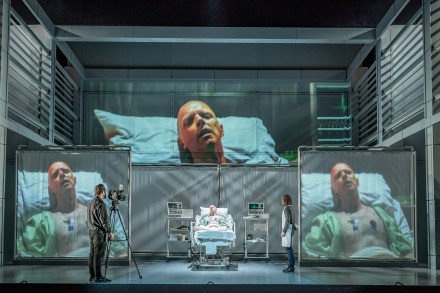
A new opera that deserves more than one outing: Royal Opera’s New Dark Age reviewed

It’s quite a title sequence. Puccini swells on the soundtrack and words flash before your eyes. ‘Ecstatic!’ ‘Spellbound!’ ‘Passionate!’ ‘Dazzled!’ Champagne fizzes, ballerinas pirouette; for some reason Bryn Terfel hovers in the roof of the Floral Hall. The Royal Opera House is back in the game, bringing the uplift of live music-drama to an opera-starved Britain, and if you’re watching it online, the only remaining question is whether the offering on stage can possibly live up to the energy, colour and sheer affirmation of the Royal Opera’s on-screen intro. Don’t be silly. What we get is New Dark Age — a double bill that takes its name from its second half, the latest creation of director Katie Mitchell.

A silly, bouncy delight: Glyndebourne’s In the Market for Love reviewed

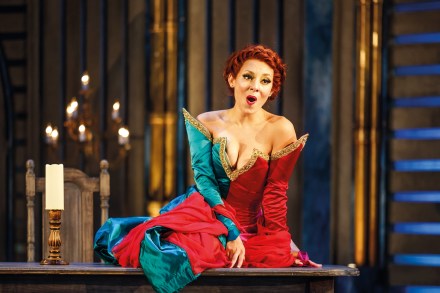
Offenbach at Glyndebourne! Short of Die Soldaten with a picnic break or a period-instrument revival of Jerry Springer: The Opera, it’s hard to imagine a less probable operatic outcome— even this year. I mean, Offenbach: the saucy skewerer of middle-class pretension; the dazzling, vulgar arriviste of 19th-century opera. It couldn’t have been more incongruous had the sideburned showman himself razzed up, bass thumping, in a pimped Renault 5 and started pulling skids on the ha-ha. He’s never been staged at Glyndebourne, and it’s not hard to guess why. The last time I saw an Offenbach one-acter done in the UK, it was Croquefer, a medieval farce that climaxes with the entire cast succumbing to projectile diarrhoea. Try turning that into a range of luxury gifts.

I pounded my car horn like a Neapolitan cabbie: ENO’s drive-in Bohème reviewed

The email from English National Opera was blunt: ‘Your arrival time is 18.25. If you arrive outside your allocated time slot, you may not be allowed entry.’ Perhaps, to habitual London drivers — if such people exist — negotiating the residential streets of Muswell Hill during a Saturday rush hour is all good clean urban fun. I couldn’t say. I just know that by the time I’d been marshalled into a parking space at Alexandra Palace, my no-claims bonus miraculously still intact, I was in no mood for an evening of updated and interval-free Puccini. Three hours later I was pounding my car horn like a Neapolitan cabbie.

Affectionate and unthreatening, just like usual: Last Night of the Proms reviewed

The Last Night of the Proms came and went, and it was pretty much as anyone might have predicted, if they’d given it a moment’s thought. A sprinkling of popular classics, a pair of unthreatening premières, the familiar landmarks tastefully and affectionately done, and some show tunes and arias, sung by the soprano Golda Schultz with a generosity and warmth that couldn’t have been more potent if she really had been singing to a packed and cheering Royal Albert Hall, rather than TV cameras and emptiness. It was recognisably a Last Night of the Proms: celebratory in that slipper-wearing BBC way, without ignoring the unavoidable truth that you can’t have audience participation without an audience. And after all that fuss, too.

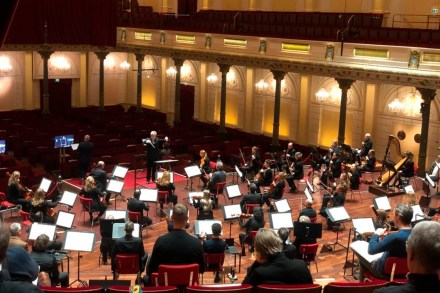
Why orchestras are sounding better than ever under social-distancing

Our college choirmaster had a trick that he liked to deploy when he sensed that we were phoning it in. He ordered us out of the choirstalls and positioned us at random all over the chapel. It was sadistic but effective. With nowhere to hide, there could be no quiet fudging of that awkward leap in ‘O Thou the Central Orb’, and no waiting until after a more confident neighbour had begun their note before scooping hastily (and hopefully unnoticeably) upwards to match their pitch. Every singer became a reluctant soloist. The result was usually either mutiny, or an immediate and dramatic improvement in tone, tuning and ensemble.

Couldn’t the BBC have filled at least some of the seats? First night of the Proms reviewed

The Royal Albert Hall, as Douglas Adams never wrote, is big. Really big. You just won’t believe how vastly, hugely, mind-bogglingly big it is. Which is great if you want a colossal audience; less great as a venue for classical music. True, sound engineers have brought us a long way from the 19th century, when one critic (it might have been Bernard Shaw) described a Weber overture wafting around that cavernous acoustic like a feather caught in a draught. If you tune in to Radio 3 — which is how most listeners have always heard the Proms — it sounds fine. But it wouldn’t be anyone’s first choice of venue for a series of classical concerts unless, as mentioned, you’re expecting a vastly, hugely, mind-bogglingly big audience.