Richard Bratby

Richard Bratby is the chief classical music critic of The Spectator

Igor Levit deserved his standing ovation; Shostakovich, even more so

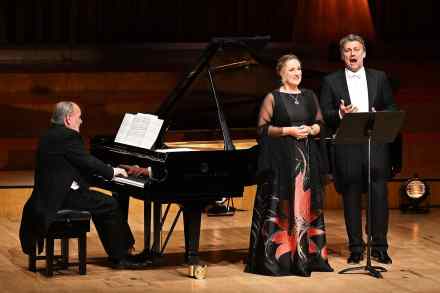
Music and politics don’t mix, runs the platitude. Looks a bit tattered now, doesn’t it? For Soviet musicians, of course, it wasn’t a question of whether you were interested in politics. Politics was unambiguously interested in you. Shostakovich wrote his 24 Preludes and Fugues for piano between 1950 and 1951, in the teeth of Stalin’s postwar crackdown, and in adopting the model of Bach, he seems to have been looking for a safe path forward: music that was politically neutral. He dedicated the Preludes and Fugues to the pianist Tatyana Nikolayeva, whose surprise victory at the 1950 Bach competition in Leipzig had been exploited by state propagandists. Bach himself was a permanent conundrum to the Soviets – that inconvenient fixation with God!

A spirited attempt to fix a show that’s never really flown: Utopia, Limited reviewed

Utopia, Limited (1893) is a rare bird, and one that every Gilbert and Sullivan completist simply has to bag. The point of completism, of course, is to acquire an overview: if artists are truly original, everything they created should illuminate the whole. But what if a career tailed off, or ran to seed? It’s just going to be depressing, isn’t it? By the time they began their penultimate opera, Gilbert and Sullivan hadn’t collaborated for three years. In fact, they’d barely spoken. Goaded back into harness, they produced a comedy that really ought to have sparkled and yet somehow… well, put it this way: even the late D’Oyly Carte company waited until 1975 before attempting a revival.

Pitch-black satire drenched in an atmosphere of compelling unease: ETO’s Golden Cockerel reviewed

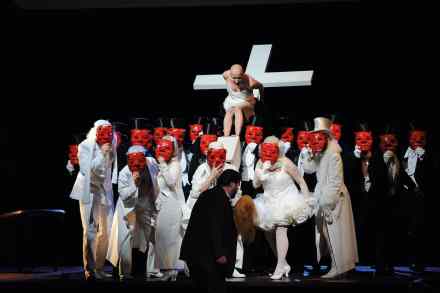
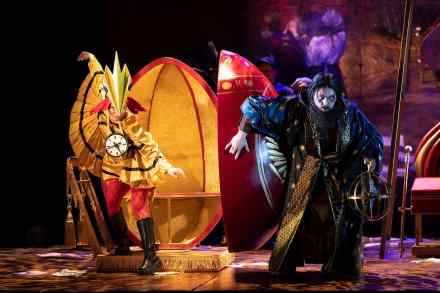
Blame it on Serge Diaghilev. Rimsky-Korsakov died in 1908 and never saw the première of his last opera, The Golden Cockerel. When the great showman finally presented it in Paris in 1914, it was as Le Coq d’Or: a spectacular opera-ballet hybrid, with colourful, folk-inspired designs by Natalia Goncharova that came to define the Ballets Russes in its imperial phase. That was the form in which it came to Britain, where the Evening Standard described it as a ‘farrago of love-making, black magic and ingenuous inconsequence’ before turning to the real news – the costumes.

Comes so close to greatness but succumbs to prejudice: Royal Opera’s Peter Grimes reviewed

No question, the Royal Opera is on a roll. Just look at the cast list alone for Deborah Warner’s new production of Britten’s Peter Grimes. Allan Clayton sings Grimes, Bryn Terfel is Captain Balstrode, and John Tomlinson is Swallow, with Mark Elder conducting. Even before you get to a supporting cast that includes premium names such as James Gilchrist, Jennifer France and Catherine Wyn-Rogers, you’ve basically got the three pre-eminent British male singers of their respective generations, singing their boots off in the greatest of all British operas under the baton of the conductor who (it’s naive, but let’s dream) really ought to succeed Antonio Pappano when he leaves the Royal Opera in 2024.

Spot-on in almost every way: Scottish Opera’s A Midsummer Night’s Dream reviewed

Scottish Opera’s new production of Britten’s A Midsummer Night’s Dream seems to open in midwinter. Snow falls, fairies hurl snowballs and the aurora borealis flickers and arcs across the darkened sky. Meanwhile Britten’s score swoons and sighs, its drowsy clouds of string tone wafting above gently snoring basses to create an atmosphere whose every glimmer evokes perfumed warmth. It should be a contradiction, but it doesn’t feel that way at all.

Astonishing, if unnecessary, grandstanding: Barbara Hannigan’s La voix humaine reviewed

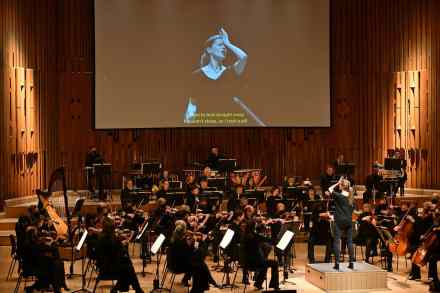
I think it was when she leaned forward and balanced on one leg that Barbara Hannigan jumped the shark. It wasn’t just a question of physical agility, although that was impressive enough. Hannigan performed her on-the-spot acrobatics while singing; the results were projected on to a big screen by three remote-controlled cameras, which zoomed in on her eyes, merged blurry images of her face and occasionally froze, meaningfully, on a particularly arresting posture. She did all this at the same time as conducting the London Symphony Orchestra in Poulenc’s one-woman opera La voix humaine, though that wasn’t really what this was about; at least, not by the time she was on one leg.

Deserves to become an ENO staple: The Cunning Little Vixen reviewed

Spoiler alert. The last words in Janacek’s The Cunning Little Vixen come from a child playing a frog. The story has come full circle — there was a frog near the start of Act One, and naturally you assume it’s the same one. But no: ‘That wasn’t me. That was my grandaddy. He used to tell me about you.’ It’s the final sad-sweet sting; the orchestra swells and the curtain falls. Perfection. Or so Janacek thought, anyway: ‘To end with the frog is impossible,’ insisted his German translator Max Brod — the same well-meaning meddler who either rescued or (according to taste) wrecked Kafka. Brod wanted a final hymn to nature from the central human character, the Forester. You know, a proper peroration.

Old-school excess, star power and spectacle: Royal Opera’s Tosca reviewed

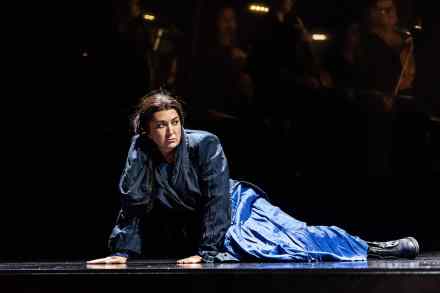
London felt like its old self on Friday night. Possibly it was just me; when you visit the capital once a week, your impressions will only ever be snapshots. Still, it’s been a while since I’ve battled such a flood tide of commuters on the ramp at Euston, or since the Royal Opera House seemed to be buzzing quite so excitedly. Crowds were four deep at the champagne bar; a latecomer in a spangly tux squeezed past and into his seat, grinning a slightly tipsy apology. And at the heart of it all — the succulent hunk of well-aged rump steak generating all this sizzle — was a revival of Jonathan Kent’s lavish period staging of Puccini’s Tosca, with a marquee name in the title role.

Handel as Netflix thriller: Royal Opera’s Theodora reviewed

The Royal Opera has come over all baroque. In the Linbury Theatre, they’re hosting Irish National Opera’s production of Vivaldi’s 1735 carnival opera Bajazet; unsurprisingly, its first appearance at Covent Garden. Upstairs in the big room, they’re doing Handel’s Theodora: premièred at Covent Garden in March 1750 and then ignored by the Royal Opera and its forebears for the next 272 years. In fairness, it isn’t actually an opera. It’s an oratorio, and it was a flop. Handel attributed its neglect to the fact that the story ‘is a virtuous one’, though the music’s emotional appeal is uncompromising, and the basic morality — Christians and virtuous pagans vs a tyrannical Roman governor — is clear-cut.

Ralph Vaughan Williams: modernist master

To look at a picture of Ralph Vaughan Williams is like contemplating an image of a mountain. Not the elegant, keen-eyed Edwardian intellectual whom we sometimes glimpse on CD sleeves or in concert programmes; I’m thinking of the portraits from the last decade of his long life. By the 1950s ‘RVW’ had been the father of British music for so long that he already seemed like part of the landscape, and he looked it too. The craggy jowls, the weathered thatch of grey hair; that questioning gaze — and beneath it all, those great, tumbling scree slopes of rumpled tweed. In his 150th anniversary year he’s still there, towering in the middle distance of national memory.

Clear, complex and gripping: Opera North’s Rigoletto reviewed

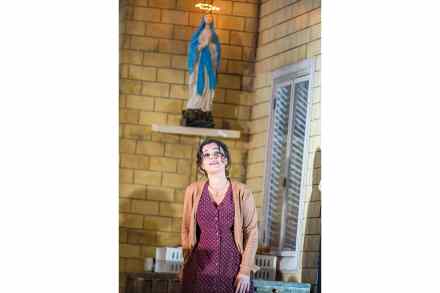
Say what you like about that Duke of Mantua, but he’s basically an OK sort of bloke. A bit of an arse, sure; the kind of TOWIE-adjacent, skinny jean-wearing reality star who’d commission photographic portraits of himself and recruit an entourage of hipsters and B-boy wannabes. But really, his worst crimes are against taste. His neon-lit crib might be hung with hideous religious art, but his parties are relatively free of the nudity, quaffing and non-consensual dry-humping that tends to characterise Act One of Verdi’s Rigoletto. In Femi Elufowoju Jr’s new staging for Opera North, the Duke lays on a hog roast for his posse but doesn’t forget to order pizza for his security staff. The Deliveroo courier got a big laugh as they pedalled in across the stage.

Not pleasant, and not in tune, but unarguably compelling: Royal Opera’s Nabucco reviewed

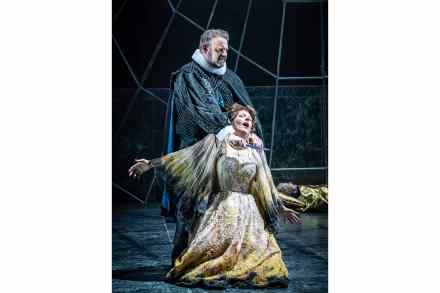
Nabucco, said Giuseppe Verdi, ‘was born under a lucky star’. It was both his last throw of the dice and his first undisputed hit, composed after the failure of Un giorno di regno and the death of his young wife and two children had driven him to abandon music outright. The story (at least, as Verdi told it) was that the director of La Scala had forced him to accept a libretto on the Biblical story of Nebuchadnezzar, and that when a page fell open on the chorus ‘Va, pensiero’ the muse returned. Citation needed, possibly, but there’s no question that the ‘Chorus of the Hebrew Slaves’ is one of those once-in-a-lifetime melodies; a tune (as Elgar might have put it) to ‘knock ’em flat’.

A booster shot of sunlight: Unsuk Chin’s new violin concerto reviewed

Sir Simon Rattle and the London Symphony Orchestra began the year with a world première. Unsuk Chin’s Second Violin Concerto opened with the soloist, Leonidas Kavakos, completely alone in front of a silent orchestra, playing phrases that rocked back and forth until, suddenly, they were striking sparks. As well they might; Kavakos, after all, is the reason that the concerto exists — the violinist whose ‘burningly intense’ (the composer’s words) artistry has prompted Chin to break her self-imposed rule of writing only one concerto for any given instrument. She explained in the programme notes that ‘the solo violin part forms the foundation of the whole score, the soloist triggering all of the orchestra’s actions and impulses.

Musical conservatives ought to love identity politics

It’s 2022 and classical music is, again, dead. It’d be surprising if it wasn’t. In 2014 the New Yorker published a timeline by the industry analyst Andy Doe showing the precise chronology of the decline and fall. Ageing audiences in the 21st century, the gramophone in the 20th, the dangerous new technology of the pianoforte in the 1840s: all, in their time, were considered proof that the rot was terminal. Doe traced the root of the problem back to a papal bull in 1324, giving new potency to Charles Rosen’s remark that ‘the death of classical music is perhaps its oldest continuing tradition’. Anyway, the fatal blow this time is the Great Awokening.

The genius of Tchaikovsky’s Nutcracker score

By all accounts, Tchaikovsky struggled to compose The Nutcracker. It wasn’t his idea of an effective ballet scenario, and he was unimpressed with the choreographer Marius Petipa’s prettified storyline. Mid-composition, he learned of the death of his younger sister Alexandra. ‘Even more than yesterday, I feel absolutely incapable of depicting the Kingdom of Sweets in music,’ he wrote. But inspiration can be counterintuitive. On a good day, Tchaikovsky could write as fluently as any Victorian serial novelist, churning out forgettable piano pieces (as he put it) ‘like batches of pancakes’. Projects like The Nutcracker put him through purgatory but the result, with hindsight, was nothing less than the sound of Christmas.

Reprehensible – but fun: Orpheus Chamber Orchestra’s Complete DG Recordings reviewed

 Grade: B It must have been an interesting day in the Orpheus Chamber Orchestra’s press office when Blair Tindall’s memoir Mozart in the Jungle hit the bookshops in 2005. ‘He sat in the desk chair, pushed aside the first oboe part of Rossini’s Italian Girl in Algiers and tapped a pile of cocaine on the glass’ runs a typical anecdote. Even in 2005, it wasn’t really what anyone expected to hear from a former member of Orpheus — a youthful, conductor-less New York outfit who used to pose for album covers dressed in spotless white.

In defence of the earworm

That strain again… it’s the morning after the concert and one tune is still there, playing in the head upon waking, running around and around on an unbreakable loop over breakfast. I’ve never liked the term ‘earworm’. It suggests an alien parasite, an aural violation, when in fact some part of the musical brain is clearly in love with this scrap of melody, and getting a microgram of a dopamine hit every time it presses ‘repeat’. It’s consensual, even pleasurable. Why fight it? There’s an Arthur C. Clarke story about a scientist obsessed by the finale of Sibelius’s Second Symphony.

40 per cent sublime, 60 per cent ridiculous: ENO’s The Valkyrie reviewed

It’s the final scene of The Valkyrie and Wotan is wearing cords. They’re a sensible choice for a hard-working deity: practical but with a certain retro flair. Slumbering under a red puffer jacket lies his daughter Brünnhilde, and as Wagner’s music yearns and flickers, the Lord of Ravens shuffles slowly around on all fours, methodically attaching the carabiners for the climactic flying effect. First one, then another. Then another. Four more to go! Possibly we’re not meant to be seeing this. Possibly it was meant to be obscured by the ‘large final fire effect’ that a slip in the programme tells us has been cut (‘despite extensive planning’) at the last minute.

Hockney’s Rake’s Progress remains one of the supreme achievements

With Glyndebourne’s The Rake’s Progress, the show starts with David Hockney’s front cloth. The colour, the ingenuity, the visual bravura: 46 years after this production’s first appearance in 1975, it’s still capable of halting you in your tracks. So drink it in. No blockbuster art exhibition will ever give you such ideal viewing conditions, or so much time with a single artwork. And no mock-up or faded video will ever be able to restore to Hockney’s sets and costumes the meaning and the impact that they possess when they’re peopled by living performers and accompanied by Stravinsky’s score. Come for the backdrops, stay for the opera. This is one revival that nearly does send you out whistling the scenery.

This is how G&S should be staged: ENO’s HMS Pinafore reviewed

Until 1881, HMS Pinafore was the second-longest-running show in West End history. Within a year of its première it had broken America too; at one point there were eight competing productions on Broadway alone. The single most wrongheaded notion that still clings to Gilbert and Sullivan’s operas is that they’re somehow low-rent or parochial. They were blockbuster international hits, superbly written, lavishly staged and exported far beyond the Anglosphere. Pinafore was performed in Denmark as Frigate Jutland and in Vienna, Johann Strauss was driven off stage by the runaway success of The Mikado. In the words of the operetta historian Richard Traubner, Gilbert and Sullivan’s collaborations were ‘simply the best musical productions of the Victorian age’.