Raymond Keene

puzzle no. 267

From our UK edition

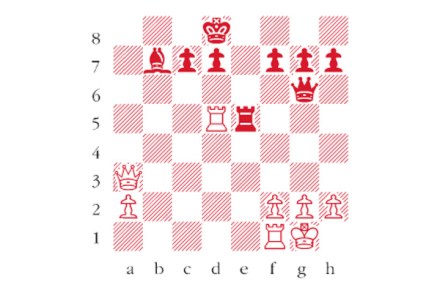
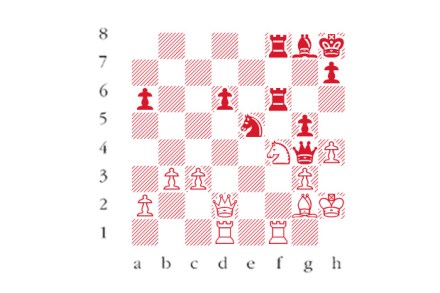
Black to play. This position is from Carlsen-Wang Hao; Norway Masters 2013. Can you spot Black’s clever winning move in this endgame? Answers to me at The Spectator by Tuesday 28 May or via email to victoria@spectator.co.uk or by fax on 020 7681 3773. The winner will be the first correct answer out of a hat, and each week I shall be offering a prize of £20. Please include a postal address and allow six weeks for prize delivery.
Fire and ice

From our UK edition

Sergei Karjakin stormed into an early lead with 4/4 in the elite tournament at Stavanger in Norway, which finishes on Saturday 18 May. Karjakin also triumphed in a blitz tournament (four minutes per player per game) preceding the main event, the results of which were used to determine pairings for the competition proper. Leading scores in this speed event were: Karjakin 61/2/9; Anand, Carlsen and Nakamura 6. Here is the game which Karjakin won against Carlsen in the blitz event.   Karjakin-Carlsen: Norway Masters Blitz 2013; Philidor Defence   1 e4 d6 2 d4 Nf6 3 Nc3 e5 4 Nf3 Nbd7 5 Bc4 Be7 6 0-0 A tempting alternative is 6 Bxf7+ Kxf7 7 Ng5+ Kg8 8 Ne6 Qe8 9 Nxc7 Qg6 when White is well on top after 10 Nxa8. However, 7 ...

Chess puzzle no.266

From our UK edition

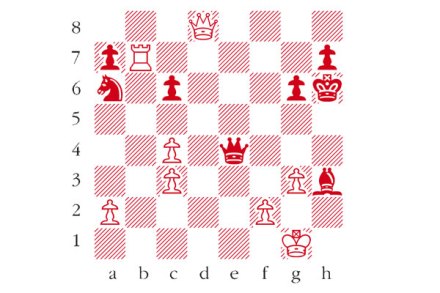
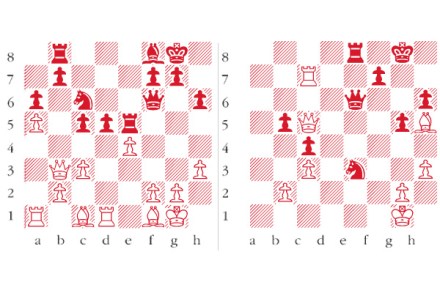
White to play. This position is from Anand-Nakamura, Norway Masters. What is White’s best move? Answers to me at The Spectator by Tuesday 21 May or via email to victoria@spectator.co.uk or by fax on 020 7681 3773. The winner will be the first correct answer out of a hat, and each week I shall be offering a prize of £20. Please include a postal address and allow six weeks for prize delivery.   Last week’s solution 1 ...
Alekhine Memorial

From our UK edition

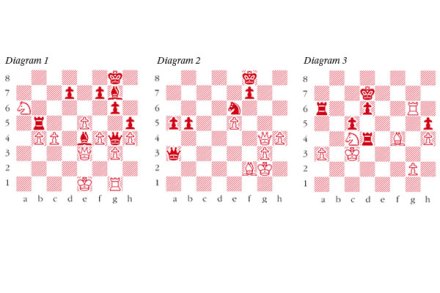
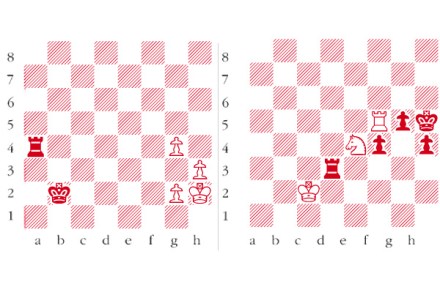
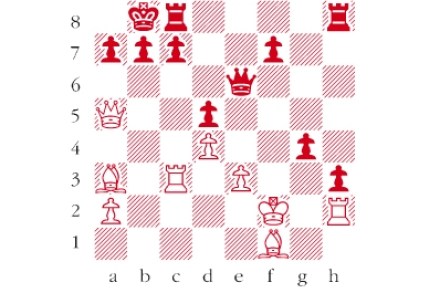
The Alekhine Memorial split between Paris and St Petersburg has been won jointly by Lev Aronian and Boris Gelfand. The final scores (out of 9) were as follows: Aronian and Gelfand 51/2; Anand 5; Vitiugov, Fressinet, Kramnik, Adams and Vachier-Lagrave 41/2; Ding Liren 31/2 and Svidler 3. Britain’s Michael Adams got off to a blazing start, winning against both Anand and Svidler. However, these were to be his only two victories and his final placing was creditable rather than glorious. The concluding phase of his game against the world champion was instructive. Anand-Adams: Alekhine Memorial, Paris/St Petersburg 2013 (see diagram 1) Endgames often come down to a race between a mass of passed pawns and a rook. Inexperienced players often allow the pawns to triumph.

no. 265

From our UK edition

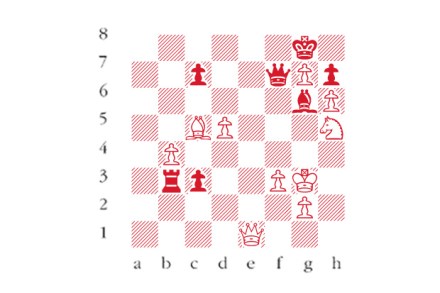
Black to play. This is from Kramnik-Fressinet, Alekhine Memorial 2013, a variation from a sensational win by the French grandmaster. Two pieces down, how does Black continue? Answers to me at The Spectator by Tuesday 14 May or via email to victoria@spectator.co.uk or by fax on 020 7681 3773. The winner will be the first correct answer out of a hat, and each week I shall be offering a prize of £20. Please include a postal address and allow six weeks for prize delivery.
Great Alexander

From our UK edition

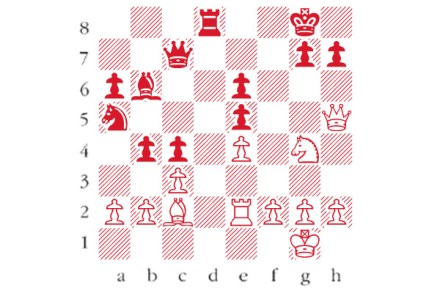
As I write, the prestigious Alekhine Memorial tournament is drawing to a close. Brainchild of sponsor Andrei Filatov, this high-powered event is taking place partly in the Louvre in Paris and partly in the Mikhailovsky Palace of the State Russian Museum in St Petersburg, combining Mr Filatov’s twin passions for chess and art. The event celebrates the brilliant Russian world champion Alexander Alekhine and this week I give samples of his ingeniously creative mind. Next week I shall report on final results and best games.   Alekhine-Rubinstein; Carlsbad 1923; Queen’s Gambit Declined   1 d4 d5 2 c4 e6 3 Nf3 Nf6 4 Nc3 Be7 5 Bg5 Nbd7 6 e3 0-0 7 Rc1 c6 8 Qc2 a6 9 a4 Re8 10 Bd3 dxc4 11 Bxc4 Nd5 12 Bf4 (see diagram 1) White agrees to give up his bishop at f4 for the knight.

Puzzle no. 264

From our UK edition

White to play. This position is a variation from Alekhine-Hofmeister, Petrograd 1917. A typical Alekhine conclusion. A queen down — how does he force the win? Answers to me at The Spectator by Tuesday 7 May or via email to victoria@spectator.co.uk or by fax on 020 7681 3773. The winner will be the first correct answer out of a hat, and each week I shall be offering a prize of £20. Please include a postal address and allow six weeks for prize delivery.
Poisson d’Avril

From our UK edition

Trust the French to have cuisine in mind when coining their phrase for April Fool. On the front page of the Daily Telegraph of 3 April, I spotted a statistical prediction by my old rival for the British chess championship, Bill Hartston, that Seabass (a horse, not a marine delicacy) would win the Grand National. Bill’s theory, which seemed a sure thing at the time, was that according to past results, stretching back 174 years, winners would have a name of one word consisting of between seven and 11 letters and beginning with S, R, M or C. The winning horse would also be aged nine or ten.

no. 263

From our UK edition

White to play. This position is from Hartston-Penrose, London 1963. Here Hartston agreed a draw but he missed a cast that would have reeled Black in. Answers to me at The Spectator by Tuesday 30 April or via email to victoria@spectator.co.uk or by fax on 020 7681 3773. The winner will be the first correct answer out of a hat, and each week I shall be offering a prize of £20. Please include a postal address and allow six weeks for prize delivery.

Adrian Hollis

From our UK edition

Adrian, who died earlier this year, was both an Oxford classicist from Keble College and a Correspondence Chess Grandmaster. One of the outstanding personalities of British chess, he won the UK Correspondence Chess Championship three times, either outright or shared. But his superlative achievement was to win a world title. From 1982 to 1987 he represented Great Britain in the 9th Correspondence Olympiad, winning the World Championship ahead of the USSR, Germany, Hungary and Yugoslavia.   Chess is usually played over the board, whereas correspondence players deliberate at leisure over their moves, then transmit them by post to the opponent. Such slow-motion games can last years or more, and in some cases chess by mail has resulted in spectacular misunderstandings.

No. 262

From our UK edition

White to play. This position is from Hollis-Courteney, Bognor Regis 1959. The Black king is badly exposed. How did White quickly cash in? Answers to me at The Spectator by Tuesday 23 April or via email to victoria@spectator.co.uk or by fax on 020 7681 3773. The winner will be the first correct answer out of a hat, and each week I shall be offering a prize of £20. Please include a postal address and allow six weeks for prize delivery.   Last week’s solution 1 ...
Magnus force

From our UK edition

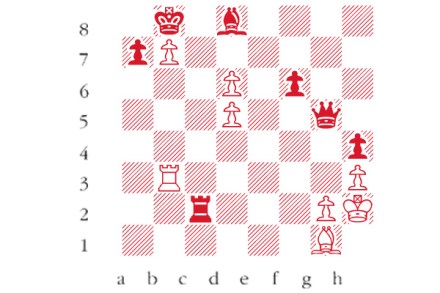
Magnus Carlsen has qualified from the London Candidates tournament to earn a title match against the incumbent world champion Vishy Anand of India. Final scores were as follows: Carlsen and Kramnik 8½; Svidler and Aronian 8; Grischuk and Gelfand 6½; Ivanchuk 6 and Radjabov 4. Kramnik tied for first and in my opinion played better chess but all the tie-breaks were in Carlsen’s favour. I would like to have seen a play-off between Kramnik and Carlsen. However, the 600 million worldwide who follow chess (the figure from the latest YouGov poll), will doubtless enjoy 22-year-old Magnus challenging Anand, who is twice his age. Here is one of Kramnik’s best wins from London followed by a Carlsen puzzle.

No. 261

From our UK edition

Black to play. This position is from Gelfand-Carlsen, Fidé Candidates London 2013. What was the key move that enabled Carlsen to make the most of his queenside pawns? Answers to me at The Spectator by Tuesday 16 April or via email to victoria@spectator.co.uk or by fax on 020 7681 3773. The winner will be the first correct answer out of a hat, and each week I shall be offering a prize of £20. Please include a postal address and allow six weeks for prize delivery.
Passed pawns

From our UK edition

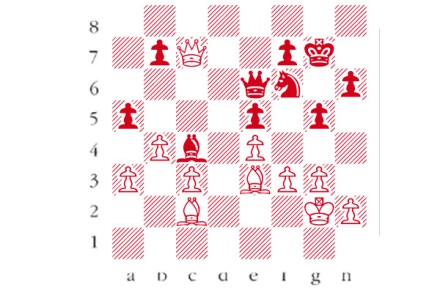
This week, further fascinating positions from the world championship qualifier Candidates tournament recently concluded in London. Although there were the regulation number of draws, for such an elite event, the general tenor was one of superb fighting chess, with little quarter asked or given. The theme of many of the games from the second cycle was the advance of massed passed pawns. I start with a position which heralded the comeback of last year’s title challenger Boris Gelfand. Gelfand-Aronian; London Candidates 2013 White can now seize a key pawn. 27 Bxf5 Bc4 This was the resource upon which Aronian had been relying. 28 e6 Black had overlooked the strength of the advance. The threat of e7 now proves exceedingly dangerous. 28 ...

No. 260

From our UK edition

White to play. This position is a variation from Svidler-Carlsen; London Candidates 2013. This is a trap that Carlsen avoided on the way to victory. What win for White had he foreseen? Answers to me at The Spectator by Tuesday 9 April or via email to victoria@spectator.co.uk or by fax on 020 7681 3773. The winner will be the first correct answer out of a hat, and each week I shall be offering a prize of £20. Please include a postal address and allow six weeks for prize delivery.
In mate

From our UK edition

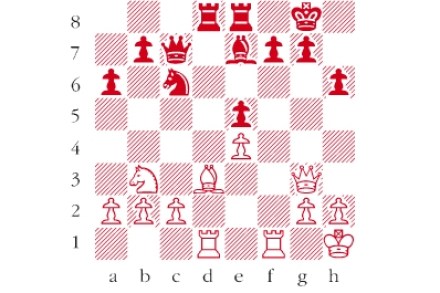
In the history of suppression of press freedom in the UK, now once again a fierce topic of debate, an honourable role was played by the chessplayer, writer, editor and irrepressible optimist James Mortimer. An officer in the US diplomatic corps, Mortimer was posted to Paris from 1855 to 1860, during which time he was one of the privileged few to witness the celebrated 1858 match between Adolf Anderssen and Paul Morphy. This was a de facto contest for the world championship. The cachet attached to being a friend of Morphy, as well as a first-hand observer of this stellar match, resulted in many subsequent invitations for Mortimer to important chess competitions.

No. 259

From our UK edition

White to play. This position is from Grischuk-Ivanchuk, London Candidates 2013. White’s next destroyed the black position. Can you see it? Answers to me at The Spectator by Tuesday 2 April or via email to victoria@spectator.co.uk or by fax on 020 7681 3773. The winner will be the first correct answer out of a hat, and each week I shall be offering a prize of £20. Please include a postal address and allow six weeks for prize delivery.

Candidates

From our UK edition

The Candidates tournament to decide the challenger to world champion Anand is the strongest tournament ever to have graced the capital. As I write, three rounds of fighting chess have produced the following scores: Aronian 2½, Carlsen and Svidler 2, Kramnik Grischuk and Radjabov 1½, Gelfand and Ivanchuk ½. The tournament continues at the IET building, No. 2 Savoy Place, London until early next month (www.worldchess.com/candidates). This week, some dramatic positions from the early rounds. Ivanchuk-Aronian: Fidé Candidates London 2013 (see diagram 1) In this position Black finds an extraordinary move to keep his chances alive. Ivanchuk was in awful time trouble, racing against the clock to complete 40 moves. 31 ...

No. 258

From our UK edition

White to play. This position is a variation from Radjabov-Ivanchuk, London Candidates 2013. White has only one move to win here. Can you see it? Answers to me at The Spectator by Tuesday 26 March or via email to victoria@spectator.co.uk or by fax on 020 7681 3773. The winner will be the first correct answer out of a hat, and each week I shall be offering a prize of £20. Please include a postal address and allow six weeks for prize delivery.

Ponziani scheme

From our UK edition

The world championship qualifier, known as the Candidates’ tournament, should now be underway in London. (For details see the website worldchess.com/candidates.) The favourite is Magnus Carlsen, who has identified Lev Aronian of Armenia as his most dangerous rival according to an interview in the Guardian with Stephen Moss. If Magnus fails to rise to the occasion, I favour Vladimir Kramnik, who usually plays well in London, where he was crowned world champion in 2000 when he defeated Kasparov.   One of Carlsen’s great strengths is his ability to adopt seemingly harmless openings and then manoeuvre endlessly until the opponent cracks. A case in point was his victory with the antediluvian Ponziani Opening, which he used to great effect at Wijk aan Zee earlier this year.