Raymond Keene

No. 247 | 3 January 2013

From our UK edition

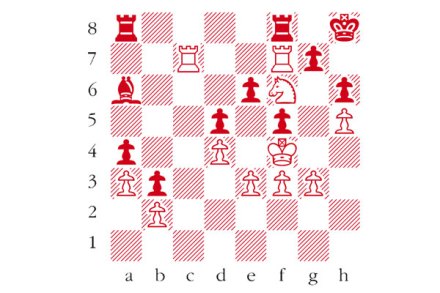
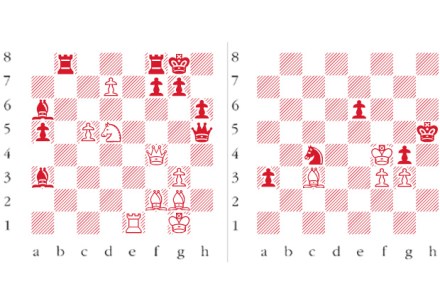
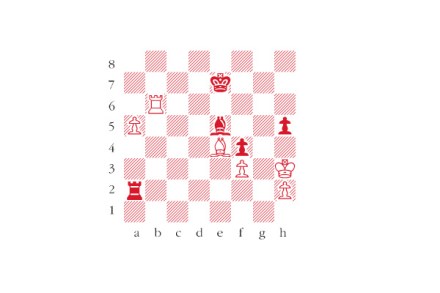
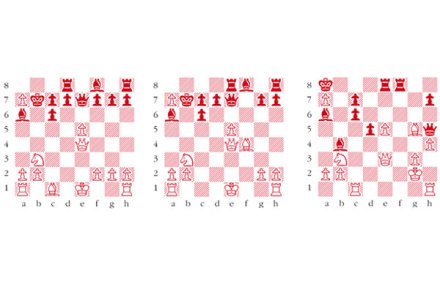
White to play. This position is from Kramnik-Kasparov, World Championship, London (Game 2) 2000. Kasparov has been struggling to hold a difficult endgame, a pawn down and has now just blundered. How did Kramnik finish off? Answers to me at The Spectator by Tuesday 8 January or via email to victoria@spectator.co.uk or by fax on 020 7681 3773. The winner will be the first correct answer out of a hat, and each week I shall be offering a prize of £20. Please include a postal address and allow six weeks for prize delivery. Last week’s solution 1 Rxg7 (1... Rxf6 2 Ke5!
London calling

From our UK edition

In my series of homages to great masters in London, this week an outstanding win by Anatoly Karpov, who took first prize in the major international tournaments in London 1982 and London 1984. The position is by Alexander Alekhine who came second to Capablanca in London 1922, won in London 1932 and would have defended his world title in London against Botvinnik in 1946, had he lived. Timman-Karpov: London 1984; Scotch Game 1 e4 e5 2 Nf3 Nc6 3 d4 exd4 4 Nxd4 Nf6 5 Nxc6 bxc6 6 e5 Qe7 7 Qe2 Nd5 8 c4 Ba6 9 Qe4 Timman tries something unusual but it is hardly to be recommended since after 9 ... Nf6 White has nothing better than repeating with 10 Qe2. However, Karpov quickly perceives that there is something even more promising in the position. 9 ...

No. 247

From our UK edition

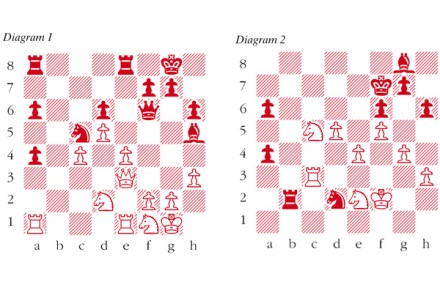
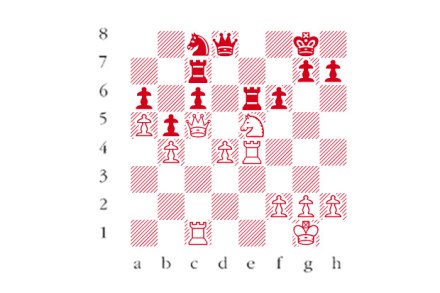
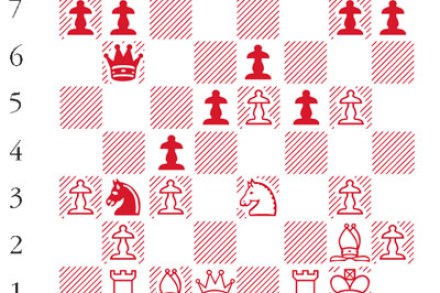
White to play. This position is from Alekhine-Yates, London 1922. White has conducted a brilliant strategic game, exposing Black on the dark squares. How does he now continue this theme for a fine tactical finish? Owing to early printing deadlines, we regret that this week’s is not a prize puzzle. Last week’s solution 1 ...

London greats

From our UK edition

This Christmas and New Year I am publishing a series of tributes to players in great London games. This week, examples of play by Capablanca, who won the great tournament at London in 1922, and Lasker, who stormed to victory in London 1899. The Capablanca game in particular is a mighty struggle which still causes controversy to the current day, in view of his bold attempt to exclude Black’s queen’s bishop from active operations.   Capablanca-Bogoljubow: London 1922; Ruy Lopez   1 e4 e5 2 Nf3 Nc6 3 Bb5 a6 4 Ba4 Nf6 5 0–0 Be7 6 Re1 b5 7 Bb3 d6 8 c3 0-0 9 d4 exd4 10 cxd4 Bg4 11 Be3 Na5 12 Bc2 Nc4 13 Bc1 c5 14 b3 Na5 15 Bb2 Much stronger is Fischer’s plan 15 d5! Nd7 16 Nbd2 Bf6 17 Rb1.

Puzzle | 12 December 2012

From our UK edition

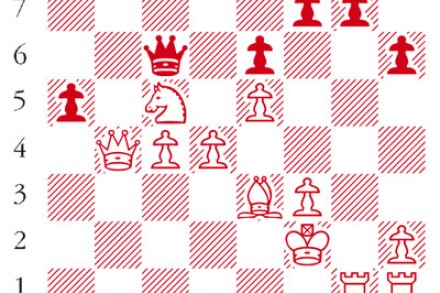
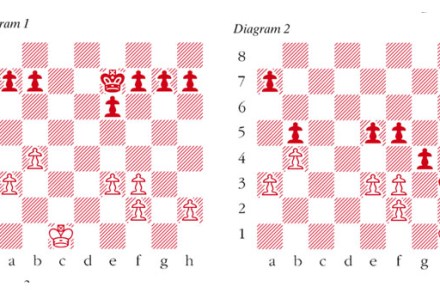
Black to play. This position is a variation from Lee-Lasker, London 1899. The white king has been driven into a dangerous situation in the centre of the board. How can Black conclude? Owing to early printing deadlines, we regret that this week’s is not a prize puzzle.

London pride | 6 December 2012

From our UK edition

This week I continue my homage, during the London Classic which finishes this coming week, to great players who have achieved outstanding things in London. In 1866 Wilhelm Steinitz defeated Adolf Anderssen in what was, to all intents and purposes, a World Championship clash. Steinitz marked it as the beginning of his World Championship tenure, which lasted until 1894.   Anderssen-Steinitz: London (Game 13) 1866; Ruy Lopez   1 e4 e5 2 Nf3 Nc6 3 Bb5 Nf6 4 d3 d6 5 Bxc6+ bxc6 6 h3 g6 ‘Preparation for an assault by a mass of pawns as taught by Philidor. For this purpose it is essential to maintain many obstructions in the centre. The bishop which aides the centre from g7 is there well placed.

Puzzle

From our UK edition

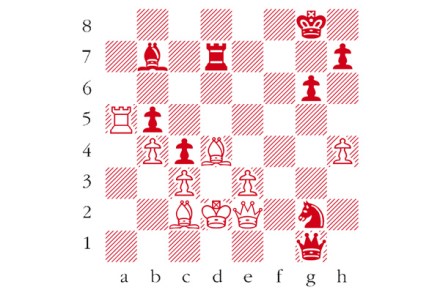
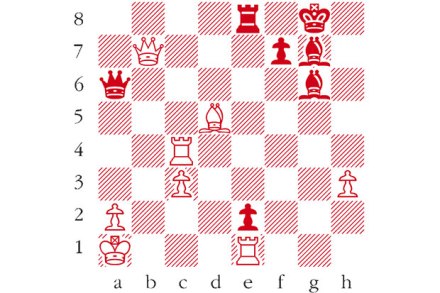
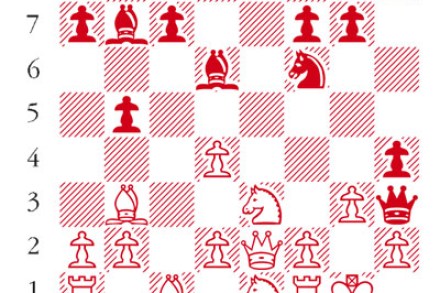
White to play. This position is from La Bourdonnais-McDonnell, London 1834. White has various ways to finish off, but what is the cleanest kill? Owing to early printing deadlines, we regret that this week’s is not a prize puzzle.

No. 246

From our UK edition

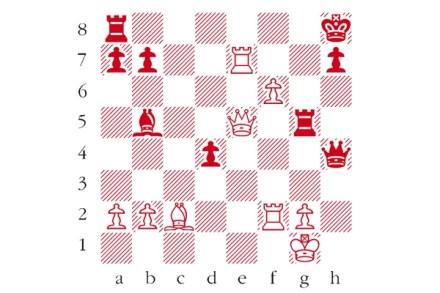
White to play. This position is from Anderssen-Kieseritzky, Simpson’s in the Strand, London 1851. It is known in chess literature as ‘The Immortal Game’. Can you spot White’s immortal finish? Answers to me at The Spectator by Tuesday 4 December or via email to victoria@spectator.co.uk or by fax on 020 7681 3773. The winner will be the first correct answer out of a hat, and each week I shall be offering a prize of £20. Please include a postal address and allow six weeks for prize delivery. Last week’s solution  1 ...

London Classic

From our UK edition

To celebrate the London Classic, which starts at Olympia this Saturday, I shall be paying a series of homages to illuminati of the game who have achieved great things in London. I kick off with Howard Staunton, who won the equivalent of World Championship matches against the German masters Harrwitz and Horwitz in London and who also founded the first ever international tournament in the capital in 1851. The winner of that inaugural event was another German, Adolf Anderssen, who won probably the most celebrated game of all time, for which see this week’s puzzle. For information on the London Classic see londonchessclassic.com.

Armenian gold

From our UK edition

Armenia won the gold medals in the Istanbul Chess Olympiad for the third time in four years — an astonishing feat for a small nation. Part of the secret of their success is the fact that chess is now taught as a curriculum subject in Armenian schools; the Armenian hero Tigran Petrosian created a chess boom by winning and retaining the world championship from 1963-1969. The top board player for Armenia in their Istanbul triumph was Levon Aronian, who will also be seen in action in the London Classic starting at London’s Olympia in early December. Final scores were: Armenia and Russia 19; Ukraine 18; China and USA 17. England finished in 17th position on 15. The following game was a key victory for the current world no.

No. 245

From our UK edition

Black to play. This is from Kalantar-Petrosian, Erevan 1946. Black has various powerful moves in this position but one is completely terminal. Can you see it? Answers to me at The Spectator by Tuesday 27 November or via email to victoria@spectator.co.uk or by fax on 020 7681 3773. The winner will be the first correct answer out of a hat, and each week I shall be offering a prize of £20. Please include a postal address and allow six weeks for prize delivery. Last week’s solution 1 ...

Witschcraft

From our UK edition

Last week, in the context of the discovery of the chessboard of Sir John Tenniel, the Times related a famous, possibly apocryphal story in which Aron Nimzowitsch mounted a table after yielding to a lesser player, shouting ‘why must I lose to this idiot?’ Nimzo is also in the news after the recent publication of a detailed monograph on his wilderness years in the Baltic and Scandinavia between the start of the first world war and his re-emergence into tournament play in the mid-1920s. The monograph (Aron Nimzowitsch on the Road to Chess Mastery 1886-1924) by Per Skjoldager and Jorn Erik Nielsen, is fascinating on Nimzo’s notorious disputes with Dr Tarrasch (Freud to Nimzo’s Jung) and gives many previously missing games against Scandinavian amateurs.

No. 244

From our UK edition

Black to play. This position is from Jacobsen-Nimzowitsch, Copenhagen 1922. How did Nimzo terminate the game? Answers to me at The Spectator by Tuesday 20 November or via email to victoria@spectator.co.uk or by fax on 020 7681 3773. The winner will be the first correct answer out of a hat, and each week I shall be offering a prize of £20. Please include a postal address and allow six weeks for prize delivery.

Cut of their jib

From our UK edition

Entries are now being invited to what I believe to be the world’s finest open tournament held at the Caleta Hotel in Gibraltar over January and February next year. I attend as often as I can and the atmosphere and general camaraderie exceed anything I have experienced elsewhere. Brian Callaghan, the spiritus rector of the tournament, thoroughly deserves his recent OBE for services to chess and tourism on The Rock. Here is a fine win from a previous event. The tournament website for further information is www.gibraltarchesscongress.com Adams–Vallejo Pons; Gibtelecom Masters, Playoff Caleta 2010; French Defence 1 e4 e6 2 d4 d5 3 Nd2 c5 4 Ngf3 Nf6 5 e5 Nfd7 6 c3 Nc6 7 Bd3 Qb6 8 0-0 a5 Black could also play 8 ...

No. 243

From our UK edition

White to play. This position is a variation from David Xu–Michael Basman, Simultaneous 2012. White has a quite remarkable winning move here. Can you see it? Answers to me at The Spectator by Tuesday 13 November or via email to victoria@spectator.co.uk or by fax on 020 7681 3773. The winner will be the first correct answer out of a hat, and each week I shall be offering a prize of £20. Please include a postal address and allow six weeks for prize delivery. Last week’s solution 1 ... f4 (planning ...

Basman forever

From our UK edition

Michael Basman is in many ways the most important person in British chess. As a player, he is an International Master, who tied for the British Championship in 1973, losing out in the tie-break. Since then he has turned his hand to organising a mass annual schools championship, attended by 70,000 entrants every year. Sponsored by Delancey, this is the prime breeding ground in British chess for future champions who have gone on to win the British championship, or compete in last month’s London Grand Prix at Simpson’s in the Strand, or will compete in the London Classic at Olympia this December.

No. 242

From our UK edition

Black to play. This is from Velimirovic-Basman, Student Olympiad 1967. Black has just given up a piece. The justification for this sacrifice is revealed with his next move, which leads to a large advantage. What is it? Answers to me at The Spectator by Tuesday 6 November or via email to victoria@spectator.co.uk or by fax on 020 7681 3773. The winner will be the first correct answer out of a hat, and each week I shall be offering a prize of £20. Please include a postal address and allow six weeks for prize delivery. Last week’s solution Amanda March, Halesowen, West Midlands Last week’s winner 1 ...

According to Akiba

From our UK edition

In contemporary high-class tournament play both adjournments and early draws have been banned. This is partly due to the accessibility of computer analysis and partly to the realisation that well-remunerated grandmasters have an obligation to entertain. As a result, more and more games are being decided in seemingly level endgames which in former times might have been abandoned as draws. Carlsen is a particular exponent of this attritional warfare. If it pays to study the endgame, then Akiba Rubinstein is your man, possibly the greatest endgame artist of all time. Rubinstein was active from around 1907 to 1930, during which period all of the great names succumbed at one time or another to his endgame prowess.

No. 241

From our UK edition

Black to play. This position is from Belstizman-Rubinstein, Warsaw 1926. Although a great endgame master, Rubinstein could turn his hand to tactical play when the occasion required. How did he finish off here? Answers to me at The Spectator by Tuesday 30 October or via email to victoria@spectator.co.uk or by fax on 020 7681 3773. The winner will be the first correct answer out of a hat, and each week I shall be offering a prize of £20. Please include a postal address and allow six weeks for prize delivery.

Magnificat

From our UK edition

Magnus Carlsen has won the elite tournament split between Sao Paulo, Brazil and Bilbao, Spain ahead of a squad of top grandmasters, including the world champion Viswanathan Anand. Using the 3 for a win, 1 for a draw and nothing for a loss system, the final scores were as follows: Carlsen and Caruana 17, Aronian 11, Karjakin 10, Anand 9 and Vallejo Pons 6. The tie-break between Magnus and rising star Fabiano Caruana was broken by two rapidplay games, both of which ended in Carlsen’s favour. Worthy of note was the feeble performance by world champion Anand, who failed to win a single game and finished near the bottom of the table. Even more significant was the fact that Carlsen overran Anand in the one decisive game from their individual encounters.