Raymond Keene

no. 324

From our UK edition

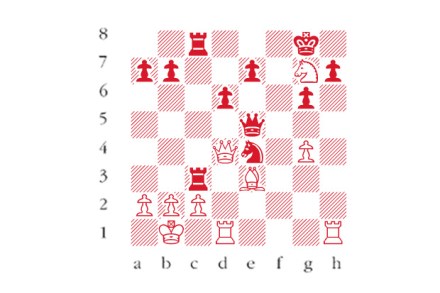
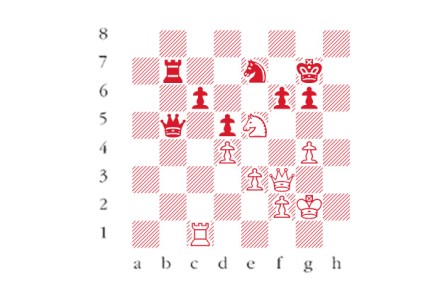
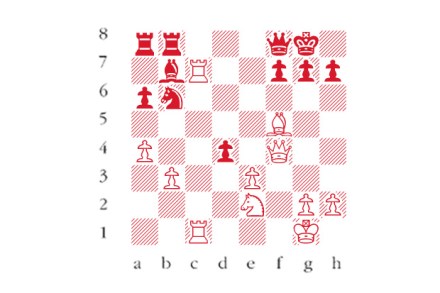
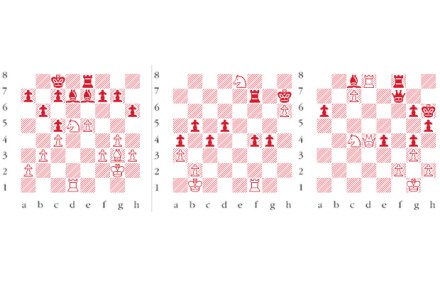
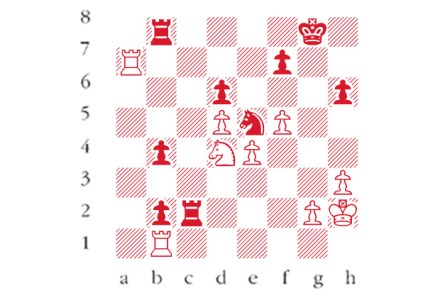
White to play. This is from Storey--Jarmany, -British Championship, Aberystwyth 2014. White’s position is overwhelming but what is the quickest win? Answers to me at The Spectator by Tuesday 29 July or via email to victoria@spectator.co.uk or by fax on 020 7681 3773. The winner will be the first correct answer out of a hat, and each week I shall be offering a prize of £20. Please include a postal address and allow six weeks for prize delivery.   Last week’s solution 1 … Rxe3 Last week’s winner P.A.
Final flame

From our UK edition

I am very sorry to report the death of International Master Andrew Whiteley, a friend of mine for half a century and a well-loved character in British chess. Andrew represented Oxford on top board on two occasions in the annual Varsity match against Cambridge, won both the British Junior and English senior titles, took second prize in the 1971 British Championship and notched a highly respectable 70 per cent average over the three Olympiads in which he represented the British Chess Federation. He was also known for his indefatigable labours on behalf of the King’s Head chess club in Bayswater, where he organised powerful international events and led his team to victory on many occasions in local and national club championships.

No. 323

From our UK edition

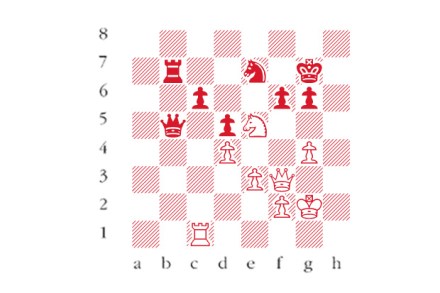
Black to play. This is from Litsberger-Whiteley, Harrachov 1967. This position also emanated from the Dragon Variation. What was Black’s killing blow? Answers to me at The Spectator by Tuesday 22 July or via email to victoria@spectator.co.uk or by fax on 020 7681 3773. The winner will be the first correct answer out of a hat, and each week I shall be offering a prize of £20. Please include a postal address and allow six weeks for prize delivery.   Last week’s solution 1 Qxh7+ Last week’s winner Eric D.

Attack

From our UK edition

This was the watchword of Grandmaster Dragoljub Velimirovic, one of the leading players of the former Yugoslavia. I first encountered Velimirovic when he represented Yugoslavia on top board in the Students’ Team Championship of Harrachov 1967. He already enjoyed a reputation as a ferociously aggressive player, and he went on to win both individual and team silver medals at the Nice Olympiad of 1974. His forte was to invent sharp attacking lines against one of Black’s most popular defences, the Sicilian. Indeed he expended so much energy looking for ways to demolish it that he probably held himself back — in particular when he played as Black and had to face his own favourite opening move 1e4.

No. 322

From our UK edition

White to play. This position is from Velimirovic-Gipslis, Havana 1971. How did White conclude? Answers to me at The Spectator by Tuesday 15 July or via email to victoria@spectator.co.uk or by fax on 020 7681 3773. The winner will be the first correct answer out of a hat, and each week I shall be offering a prize of £20. Please include a postal address and allow six weeks for prize delivery.

Tiger tiger

From our UK edition

Petrosian Move by Move is a new book published by Everyman Chess written by the Swedish international master Thomas Engqvist. The book consists of 60 closely annotated games, all wins, by Tigran Petrosian, world champion from 1963 to 1969 and an inspiration for the recent successes of the Armenian team, who have won the Olympiad gold medal on three occasions (2006, 2008 and 2012). Petrosian has a reputation for caution, and his victories were often described as pragmatic or even defensive. Engqvist takes a completely different view, depicting Petrosian as an artist of the chessboard, possessed of a quite idiosyncratic style.

No. 321

From our UK edition

White to play. This position is from Petrosian--Rossetto, Portoroz 1958. What is White’s most efficient continuation? Answers to me at The Spectator by Tuesday 8 July or via email to victoria@-spectator.co.uk or by fax on 020 7681 3773. The winner will be the first correct answer out of a hat, and each week I shall be offering a prize of £20. Please include a postal address and allow six weeks for prize delivery.

Blitzkrieg

From our UK edition

Chess, unlike football, appears to confer little or no home advantage. In a recent article for Kensington & Chelsea Today, my esteemed colleague Barry Martin, who enjoys more space than any other chess columnist in the UK, and possibly even the world, inveighed against the psychological pressures which seem to afflict great players operating on their home turf. Barry drew attention in particular to the setbacks suffered by Topalov against Anand in Sofia, and the humiliation of Anand himself in Chennai last year, in his match defence against Carlsen. Carlsen has shown signs of this syndrome when he twice failed to capture first prize in the annual elite Norway tournament (see last week’s column), on both occasions finishing as runner-up to Karjakin.

No. 320

From our UK edition

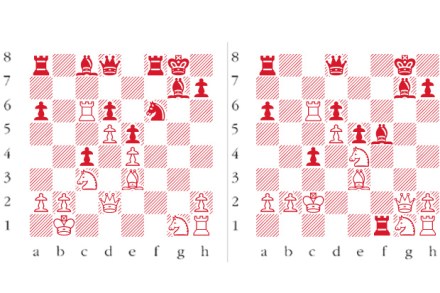
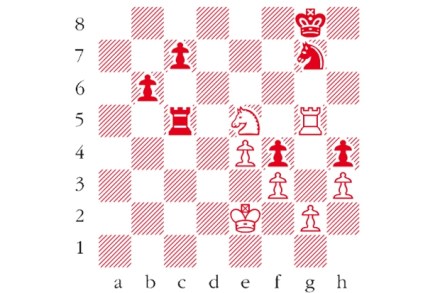
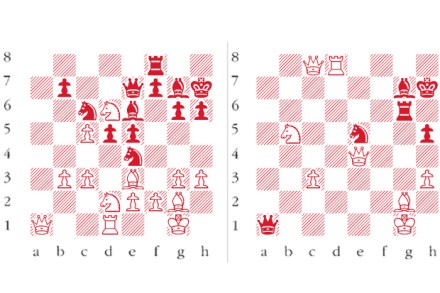
White to play. This position is a variation from Mamedov-Carlsen, World Blitz 2014. Here White played 1 hxg5 and Carlsen went on to win when White overlooked a tactic on the kingside. This wasn’t the only tactic White overlooked as he missed something  here too. What should he have played? Answers to me at The Spectator by Tuesday 1 July or via email to victoria@spectator.co.uk or by fax on 020 7681 3773. The winner will be the first correct answer out of a hat, and each week I shall be offering a prize of £20. Please include a postal address.   Last week’s solution 1 ... Rxe3 Last week’s winner Richard Hazell, S.

Hat trick

From our UK edition

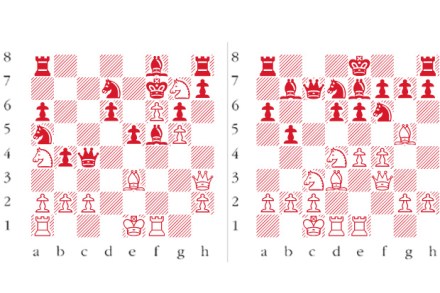
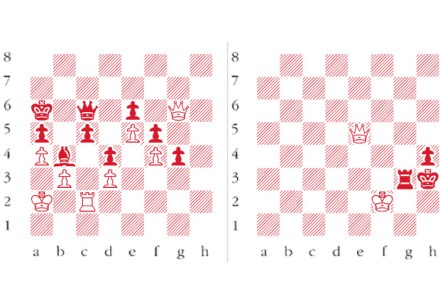
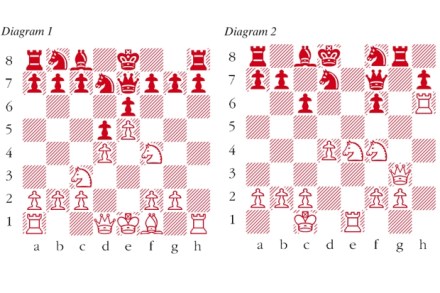
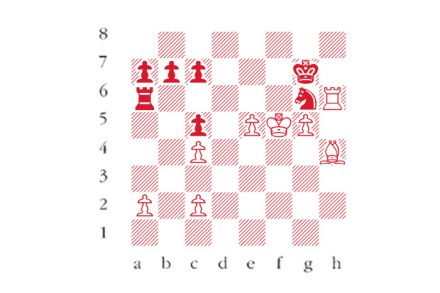
For the second year running, 24-year-old Sergei Karjakin has won the Norway International, on both occasions ahead of Magnus Carlsen. The final scores, out of 9, were as follows: Karjakin 6; Carlsen 5½; Grischuk 5; Caruana and Topalov 4½; Aronian, Svidler, Kramnik and Giri 4; Agdestein 3½. Of the world elite, only Anand and Nakamura were absent. The former world champion Kramnik, now 38, was the early leader but faded towards the end. Karjakin, in contrast, achieved the feat of winning his last three games, against Giri, Kramnik and Caruana.   Giri-Karjakin: Norway Chess 2014 (see diagram 1)   With bishop against White’s rook, Karjakin had been defending tenaciously for many hours in this 100+ move marathon.

No. 319

From our UK edition

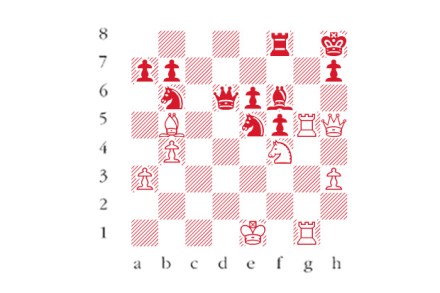
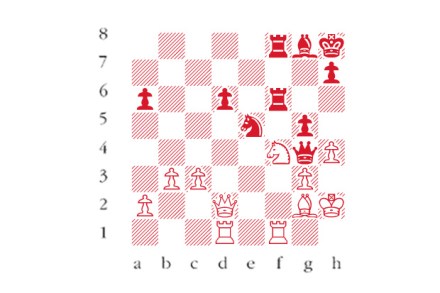
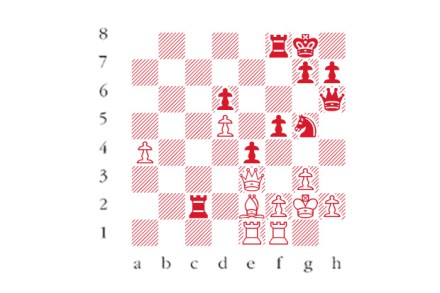
Black to play. This is a variation from Svidler-Carlsen, Norway Chess 2014. Failing to win this game cost Carlsen first place in the tournament. Black has a strong attack but his knight and rook are threatened. What is his best move? Answers to me at The Spectator by Tuesday 24 June or via email to victoria@spectator.co.uk or by fax on 020 7681 3773. The winner will be the first correct answer out of a hat, and each week I am offering a prize of £20. Please include a postal address and allow six weeks for prize delivery.

Vlad the Impaler

From our UK edition

As I write, the former world champion Vladimir Kramnik is leading in the Norway tournament in Stavanger. The line-up is impressive, including Magnus Carlsen, Lev Aronian, Fabiano Caruana and Sergei Karjakin, and missing only Viswanathan Anand, who was defeated in last year’s World Championship match by Carlsen.   At his best Kramnik is a subtle tactician, with a penchant for extraordinarily complex middlegames. Sometimes the search for complications lets him down, as in his notorious last-round loss to Ivanchuk in the final round of last year’s Candidates tournament in London. This deprived Kramnik of the right to challenge Anand for the world title, ceding the palm to Carlsen, who went on to victory.

No. 318

From our UK edition

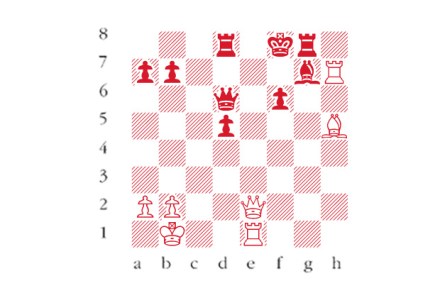
White to play. This is a variation from Karjakin-Grischuk, Norway 2014. What key move allows White to deal with the threat to his bishop and emerge with a winning position? Answers to me at The Spectator by Tuesday 17 May or via email to victoria@spectator.co.uk or by fax on 020 7681 3773. The winner will be the first correct answer out of a hat, and each week I shall be offering a prize of £20. Please include a postal address and allow six weeks for prize delivery.   Last week’s solution  1 ... Kh7 (plans ...

On the brink | 5 June 2014

From our UK edition

The last great tournament to have been completed before the outbreak of war in 1914 was St Petersburg, which saw a sensational triumph by the world champion Emanuel Lasker, ahead of Capablanca, Alekhine, Tarrasch and Marshall. It is a testament to the political naivety of both players and organisers that an event was set for Mannheim in Germany in August 1914, organised by the German Chess Federation and open to many foreign luminaries. When war broke out the tournament had to be abandoned, and various foreign dignitaries were interned in Germany. After 11 rounds of the 17 envisaged, Alekhine was in the lead, ahead of Vidmar, Spielmann, Breyer, Marshall, Reti, Janowski, Bogolyubov and Tarrasch among others.

No. 317

From our UK edition

Black to play. This position is from Mieses-Alekhine, Mannheim 1914. Can you spot Black’s subtle winning move in this endgame? Answers to me at The Spectator by Tuesday 10 June or via email to victoria@spectator.co.uk or by fax on 020 7681 3773. The winner will be the first correct answer out of a hat, and each week I shall be offering a prize of £20. Please include a postal address and allow six weeks for prize delivery.   Last week’s solution 1 ...

Close run

From our UK edition

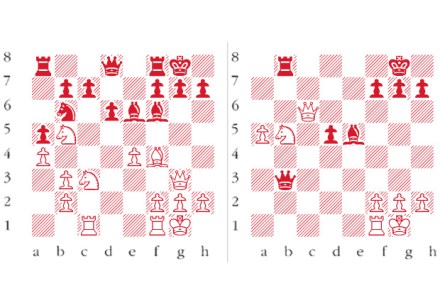
Although world champion Magnus Carlsen clearly secured first place in the Gashimov Memorial tournament, he did not have things all his own way. Indeed, just before the halfway point he lost two consecutive games and appeared to be in a state of collapse. However, in the style of his hero Emanuel Lasker, Carlsen struck back to score a magnificent 4 out of 5 points in the second half. This included his razor-edge win against his chief rival Fabiano Caruana.   This week, a selection of critical positions from this important event.   Caruana-Carlsen: Gashimov Memorial 2014   The first impediment to Carlsen’s victory parade came in the following position when Caruana uncorked a devastating pseudo-sacrifice. 25 Nxc7 Rd8 After 25 ...

No. 316

From our UK edition

Black to play. This position is a variation from Mamedov-Motylev, Gashimov ‘B’ Group 2014. How does Black conclude his kingside attack in fine style? Answers to me at The Spectator by Tuesday 3 June or via email to victoria@spectator.co.uk or by fax on 020 7681 3773. The winner will be the first correct answer out of a hat, and each week I shall be offering a prize of £20. Please include a postal address and allow six weeks for prize delivery.

Iron nerves

From our UK edition

The game that clinched Magnus Carlsen’s victory in the Gashimov Memorial came, fittingly, in a last-round cliffhanger against his closest rival, Fabiano Caruana. Both players were on 5½ points out of 9 possible, hence a win for either grandmaster would determine the laurels in his favour. A draw, leaving them both tied on 6 points, would have been a reasonable solution, honourable to both sides, but Carlsen is at his most deadly in these tense situations — one of the attributes he has taken from the great psychologist Emanuel Lasker. As it was, Caruana, despite playing with the black pieces, also seemed determined to play for a win, repeating his exploit against Carlsen from the first half of the tournament.

No. 315

From our UK edition

White to play. This position is from Wojtaszek-Safarli, Gashimov ‘B’ Group 2014. The white pieces are very active and the black king badly exposed. How does White conclude? Answers to me at The Spectator by Tuesday 27 May or via email to victoria@spectator.co.uk or by fax on 020 7681 3773. The winner will be the first correct answer out of a hat, and each week I shall be offering a prize of £20. Please include a postal address and allow six weeks for prize delivery.

In training

From our UK edition

In my column of 26 April I suggested that the new world champion Magnus Carlsen was in need of some stiff opposition in preparation for his title defence, scheduled for later this year. Since winning the championship six months ago, Carlsen has been indulging himself with a series of PR events and victories against (by his standards) minor opponents. With a resurgent Anand having qualified to challenge for the title he lost last year, it was high time Carlsen sharpened his wits to ready himself for his next encounter with an opponent who seems even more dangerous than before.   Carlsen duly agreed to compete in the memorial tournament for Vugar Gashimov, whose life and achievements were being celebrated posthumously in Shamkir, Azerbaijan.