Raymond Keene

Christmas chess puzzle

From our UK edition

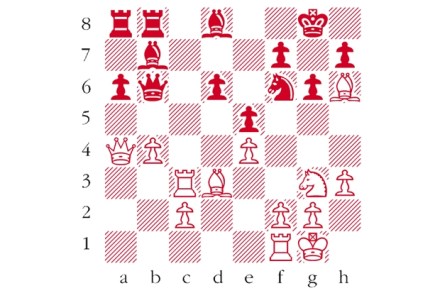
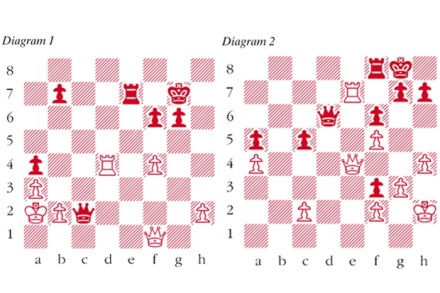
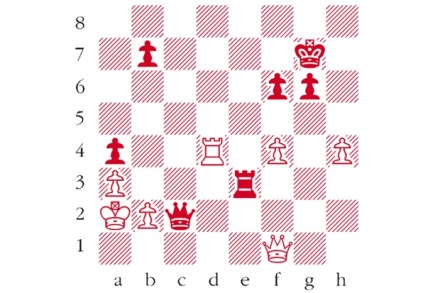
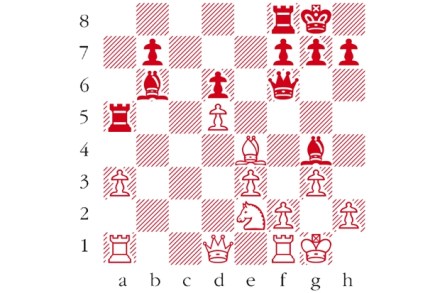
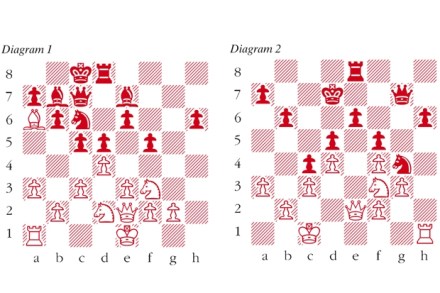
White to play. This position is from Anderssen-Kieseritzky, London 1851. It is a brilliant encounter that became known as the Immortal Game. White has already gambitted both rooks. How does he finish off?   Please note that this is not a prize competition. No need to send in answers!

Classic

From our UK edition

London chess fans are about to enjoy a great treat. The London Chess Classic will run from the 10-14 December with a tremendous line-up: Viswanathan Anand, fresh from his title challenge against Magnus Carlsen in Sochi; former world champion Vladimir Kramnik; world no. 2 Fabiano Caruana; as well as grandmasters Anish Giri, Hikaru Nakamura and Britain’s no. 1, Michael Adams. The venue, as usual, is London’s Olympia (www.londonchessclassic.com). London has been the scene of outstanding chess ever since the celebrated André Danican Philidor moved here during the late 18th century and dazzled London audiences with his displays of blindfold chess.

Chess puzzle

From our UK edition

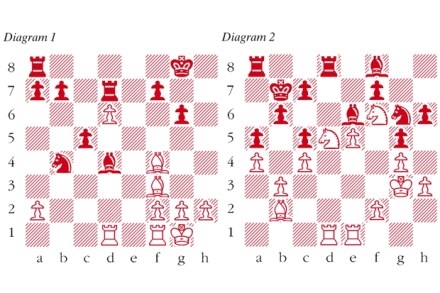
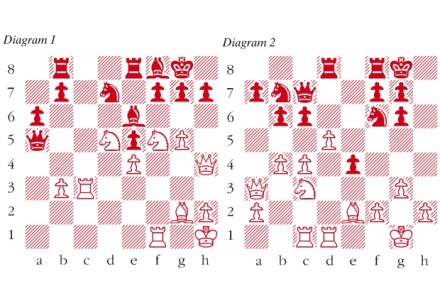
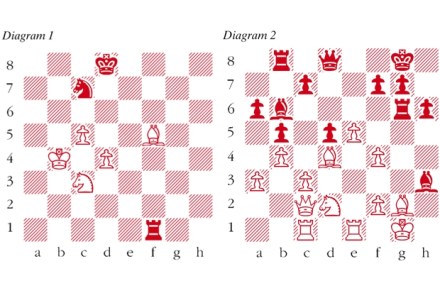
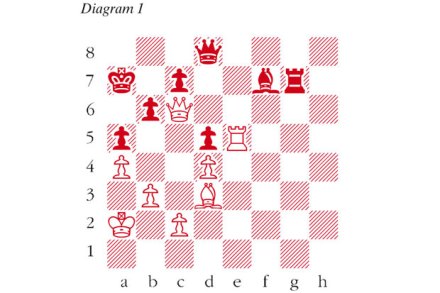
White to play. This position is a variation from Larsen-Portisch, London 1986. How can White exploit a fatal weakness in the black position? Please note that, owing to printing deadlines, this is not a prize competition. No need to send in answers!

Extinct tigers

From our UK edition

The Tiger of Madras has gone the way of the sabre-toothed tiger. Viswanathan Anand, world champion from 2007 to 2013, has now suffered his second consecutive match defeat at the hands of precocious Magnus Carlsen from Norway. On Sunday night Carlsen scored his third win, which clinched the World Championship title in his favour by the overall score of 6½-4½. Anand performed better than in their clash last year but kept failing to seize his opportunities as they arose. Symptomatic was the key moment of game six, which I published in last week’s column, where Anand missed a coup with his knight which would have shaken White’s position to its foundations. A victory there for Anand would almost certainly have reversed the overall result.

No. 342

From our UK edition

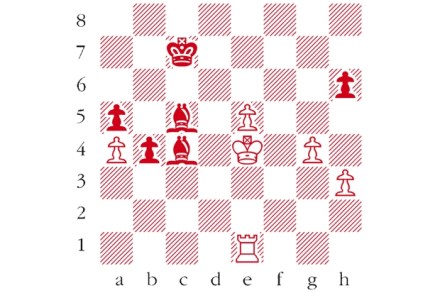
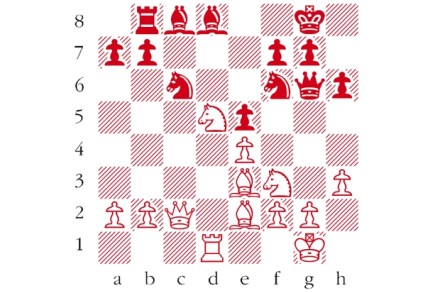
White to play. This position is a variation from move 37 of today’s game. How does White win? Answers to me at The Spectator by Tuesday 2 December or via email to victoria@spectator.co.uk or by fax on 020 7681 3773. The winner will be the first correct answer out of a hat, and each week I am offering a prize of £20. Please include a postal address and allow six weeks for prize delivery. Last week’s solution 1 ... Nf3+ Last week’s winner R.A.

Comedy of errors

From our UK edition

For reasons unknown, the world championship in Sochi between Carlsen and Anand is turning into a catalogue of disastrous blunders by both sides. Last week we witnessed Anand’s instantaneous implosion with one catastrophic move in game two, when he could still have resisted, while in game three Carlsen returned the favour, blundering material in a difficult, but not yet hopeless, situation. The nadir came in game six, when Carlsen committed a spectacular faux pas in a highly advantageous position. Anand could have wiped him out with his response, but without much consideration swiftly selected an alternative which handed victory straight back to the defending champion.

No: 341

From our UK edition

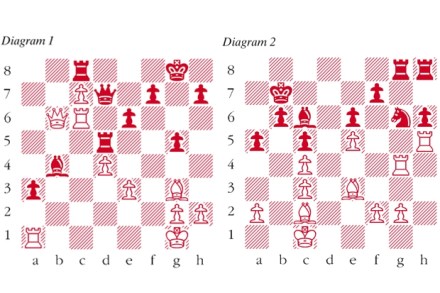
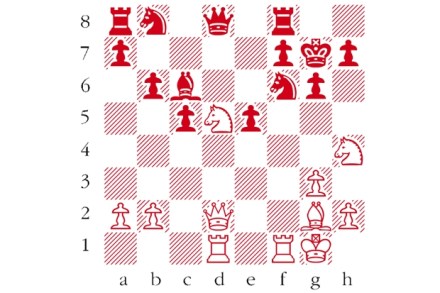
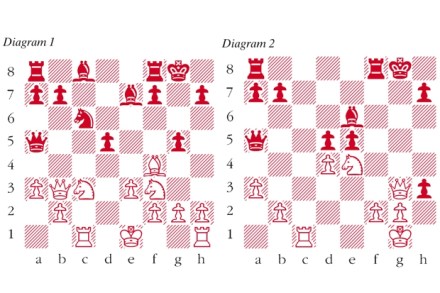
Black to play. This is from Korchnoi-Karpov, World Championship (Game 17), Baguio 1978. Can you spot Black’s winning coup? Answers to me at The Spectator by Tuesday 25 November or via email to victoria@spectator.co.uk or by fax on 020 7681 3773. The winner will be the first correct answer out of a hat, and each week I am offering a prize of £20. Please include a postal address and allow six weeks for prize delivery. Last week’s solution 1 ...

Force Majeure

From our UK edition

The common feature of the first two games of the World Championship match between Viswanathan Anand and Magnus Carlsen in Sochi has been that play was decided in a major piece endgame consisting of a queen and rook each. I have often maintained that Emanuel Lasker (world champion from 1894 to 1921) has been the role model for Carlsen’s style. Lasker was the leading exponent of such refined endgames where manoeuvring and filigree technique was of particular importance. In major piece endgames the slightest inaccuracy can spell either reversal of fortune or complete disaster, as we shall see from these extracts.

No. 340

From our UK edition

Black to play. This position is a variation from Anand-Carlsen; World Championship, Sochi (Game 1) 2014. Can you spot Black’s winning coup? Answers to me at The Spectator by Tuesday 18 November or via email to victoria@spectator.co.uk or by fax on 020 7681 3773. The winner will be the first correct answer out of a hat, and each week I am offering a prize of £20. Please include a postal address and allow six weeks for prize delivery.

Sochi Challenge

From our UK edition

On Saturday 8 November the first game will be played in the three-week long rematch between defending world champion Magnus Carlsen and the man from whom he took the title last year, Indian grandmaster Viswanathan Anand. When Carlsen seized the title from Anand in Chennai last year, the magnitude of his victory was so immense that it would appear to have terminated Anand’s career at the top. Surprisingly, Carlsen then proceeded to display feeble form as world champion, losing a couple of games to lesser lights in this year’s Olympiad and turning in a lacklustre performance in the Sinquefield Cup in St Louis.

No. 339

From our UK edition

White to play. This position is from Carlsen-Anand, Amber Rapidplay 2008. White is a pawn ahead but Black has counterplay. How did White now increase his material advantage with a tactical shot? Answers to me at The Spectator by Tuesday 11 November or via email to victoria@spectator.co.uk or by fax on 020 7681 3773. The winner will be the first correct answer out of a hat, and each week I am offering a prize of £20. Please include a postal address and allow six weeks for prize delivery.

Winning hand

From our UK edition

Tension has always existed between games of skill, such as chess or draughts, and games seemingly based on chance, like backgammon and poker. The Russian grandmaster and chess historian Yuri Averbakh has suggested that different kinds of games mirror changing human attitudes towards life, the universe and everything. So games of chance indicate the idea of the gods being in control, whereas games of pure skill suggest the start of the human assumption of responsibility. Of course, devotees of ‘chance’ games like backgammon would say skill is involved, in spite of the random element of the dice throw. An interesting new development is that poker and chess have started to ally themselves.

No. 338

From our UK edition

White to play. This is from Hebden-Mannion, Isle of Man 2014. White’s next move completely destroyed the black position. What was it? Answers to me at The Spectator by Tuesday 4 November or via email to victoria@spectator.co.uk or by fax on 020 7681 3773. The winner will be the first correct answer out of a hat, and each week I am offering a prize of £20. Please include a postal address and allow six weeks for prize delivery.

Baku beyond

From our UK edition

The irrepressible Fabiano Caruana has added to his laurels by sharing first prize in the Baku Grand Prix, which finished earlier this month. The surprise was that in the process of doing so he lost two games. Caruana had started to seem invincible after a run of wins, yet the fact that he only participated in first prize in Baku has in some way lessened the myth of his being unbeatable. The top scores in Baku were as follows: Caruana and Gelfand 6½/11; Tomashevsky, Nakamura, Grischuk, Karjakin and Svidler 6. Caruana’s fellow laureate was Boris Gelfand. Gelfand tends to be underestimated because of his normally conservative style, but his record at the top spanning several decades is impressive.

No. 337

From our UK edition

White to play. This position is from Gelfand-Andreikin, Baku 2014. What is White’s best move? Answers to me at The Spectator by Tuesday 28 October or via email to victoria@spectator.co.uk or by fax on 020 7681 3773. The winner will be the first correct answer out of a hat, and each week I am offering a prize of £20. Please include a postal address and allow six weeks for prize delivery.

Tigran Tigran

From our UK edition

Tigran Petrosian seized the world championship from Mikhail Botvinnik in 1963, defended the title against Boris Spassky in 1966 and only relinquished it against the same dangerous opponent three years later. In individual play he defeated every other world champion whom he met over the board and in chess Olympiads he twice earned the gold medal on top board for the USSR for his personal performance. In two weeks time the Petrosian Memorial tournament will commence in Moscow with a powerful line-up, the precise details of which have yet to be announced. Meanwhile here is one of Petrosian’s typical manoeuvring victories with notes based on the must-have book for Petrosian fans, Petrosian: Move by Move by Thomas Engqvist (Everyman Chess).

No. 336

From our UK edition

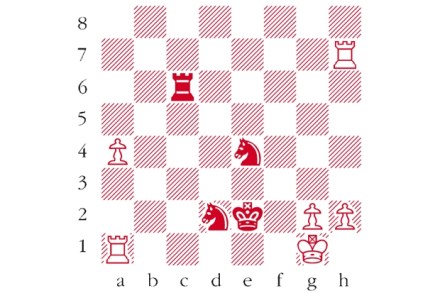
White to play. This is from Petrosian-Rosetto, Portoroz 1958. White’s knight is threatened and appears to lack a safe escape square. What did Petrosian have in mind? Answers to me at The Spectator by Tuesday 21 October or via email to victoria@spectator.co.uk or by fax on 020 7681 3773. The winner will be the first correct answer out of a hat, and each week I am offering a prize of £20. Please include a postal address and allow six weeks for prize delivery.

Fabian strategy

From our UK edition

Good news. Fabiano Caruana will be coming to London this December to participate in the sixth London Classic. This will be a great privilege for the London audience since Caruana is, in my opinion, now creating the best, most exciting, most aggressive and most accurate chess that we have seen since the glory days of Bobby Fischer and Garry Kasparov. In Standpoint’s current issue, Dominic Lawson, former editor of The Spectator, praises ‘Caruana’s astonishing and seemingly natural ability to calculate’ combined with his ‘immense aptitude for hard work’. This week’s game between Caruana and a former Fidé (World Chess Federation) champion ranks as one of the most impressive I have ever seen.

No. 335

From our UK edition

White to play. This position is a variation from Aronian-Anand, Bilbao 2014. White needs a subtle move to complete the rout. Can you see it? Answers to me at The Spectator by Tuesday 14 October or via email to victoria@spectator.co.uk or by fax on 020 7681 3773. The winner will be the first correct answer out of a hat, and each week I am offering a prize of £20. Please include a postal address and allow six weeks for prize delivery.

Highland fling

From our UK edition

Recently Professor Jackie Eales gave a lecture in Canterbury on ‘Queenship in the Age of the Enraged Chess Queen’. (The title of course refers to the new powers conferred on the queen as a piece after the transition from the slower Arabic and medieval games.) In 1560 the bishop of Limoges, the French ambassador in Madrid, sent Mary Queen of Scots a chess book, having heard that she took great pleasure in the game. The author was the famous Saffran, described by the bishop as one of the greatest players ever seen, who had beaten all of Italy and the rest of the world. Professor Eales inferred that the ‘famous Saffran’ was none other than the Spanish expert Ruy Lopez, author of the book Libro De La Invencion Liberal Y Arte Del Juego Del Axedrez.