Raymond Keene

No. 304

From our UK edition

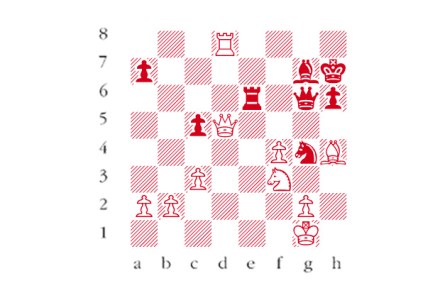
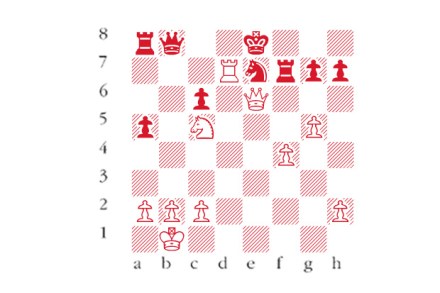
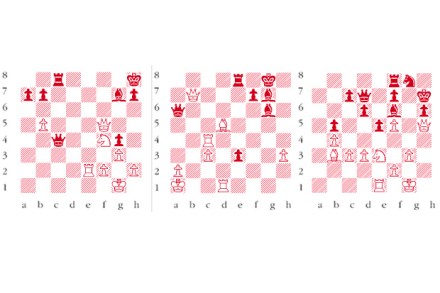
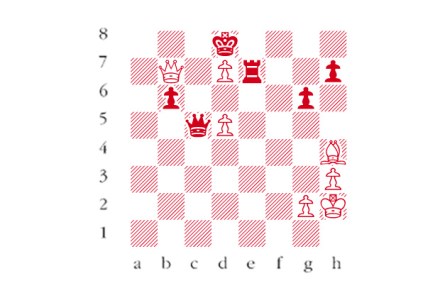
White to play. This position is from Robbins-Smith, Varsity Match 1972. The black king has been drawn out into the open. What is the quickest way for White to finish off? Answers to me at The Spectator by Tuesday 11 March or via email to victoria@spectator.co.uk or by fax on 020 7681 3773. The winner will be the first correct answer out of a hat, and each week I shall be offering a prize of £20. Please include a postal address and allow six weeks for prize delivery.
Ukrainian knights

From our UK edition

This week I pay tribute to the chess grandmasters from Ukraine, led by Vassily Ivanchuk, many times a candidate for the world championship. Ukraine occupies an honourable place in the history of chess, for example winning the gold medals in the chess Olympiad of 2010, held in one of the World Chess Federation’s favourite venues, Khanty-Mansisk in Siberia. Ivanchuk played an interesting role in last year’s world championship qualifier in London. Blessed with extraordinary creativity, yet almost equally erratic, Ivanchuk seemed headed for a disaster, based on his ability to lose on time in promising positions.

No. 303

From our UK edition

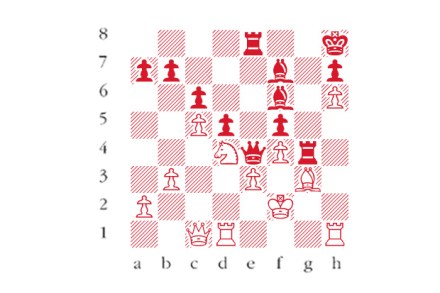
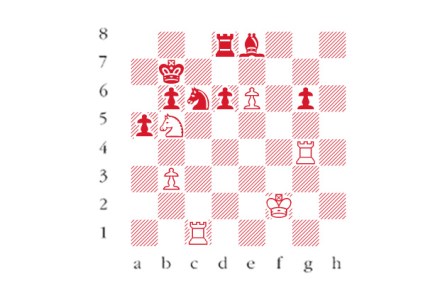
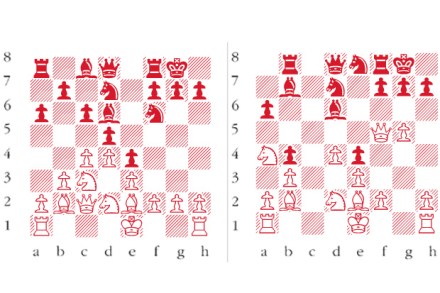
White to play. This position is from Moiseenko-Noah, Khanty-Mansisk Olympiad 2010. Even though the game is not yet out of the opening, Black has already blundered. What did White now play? Answers to me at The Spectator by Tuesday 4 March or via email to victoria@spectator.co.uk or by fax on 020 7681 3773. The winner will be the first correct answer out of a hat, and each week I shall be offering a prize of £20. Please include a postal address and allow six weeks for prize delivery.
Triumvirate

From our UK edition

Three important tournaments concluded this month, for two of which (Gibraltar and Bunratty) I attended the awards ceremonies. I have already given the results of Zurich. The most impressive game, the concluding phase of which provided last week’s puzzle, was Magnus Carlsen’s victory against Fabiano Caruana. We join the game just before Carlsen sacrifices rook for bishop to cause a fatal breach in the black defences.

no. 302

From our UK edition

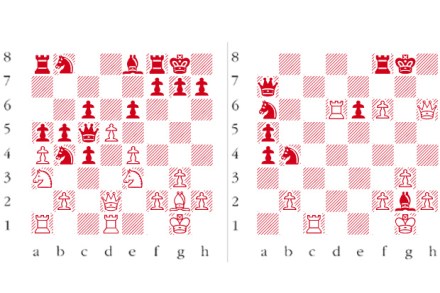
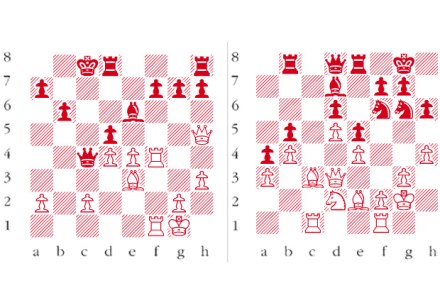
White to play. This position is from Keogh-Chevannes, Bunratty 2014. How did White’s massive central build-up transform into a winning breakthrough? Answers to me at The Spectator by Tuesday 25 February or via email to victoria@spectator.co.uk or by fax on 020 7681 3773. The winner will be the first correct answer out of a hat, and each week I shall be offering a prize of £20. Please include a postal address and allow six weeks for prize delivery.
Georgics

From our UK edition

George Osborne is a supporter of chess. During the award ceremony at 11 Downing St for last year’s London Candidates’ tournament, he told me that as a teenager he attended the Kasparov v. Karpov world championship at London’s Park Lane Hotel in 1986, which I assisted in organising. Appropriately, the Tory party chairman Sir Jeremy Hanley had persuaded Margaret Thatcher to open the championship. ‘Why on earth should I want to open a chess match?’ she asked. ‘Because,’ Sir Jeremy replied, ‘they are crazy about chess in the USSR and you will be on the front pages of all their papers the day after.’ ‘So how can I resist?’ came the prime ministerial reply.   Magnus Carlsen, Viswanathan Anand and others v.

no. 301

From our UK edition

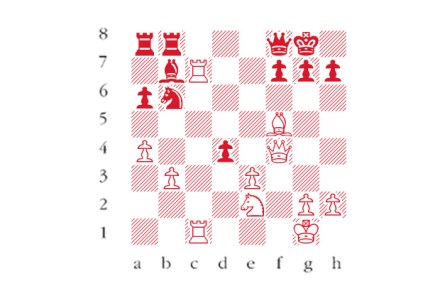
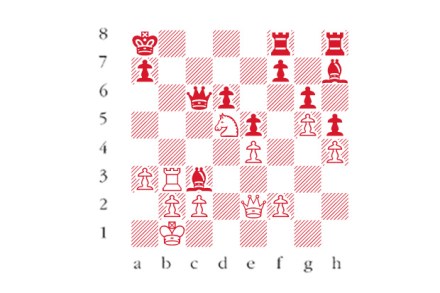
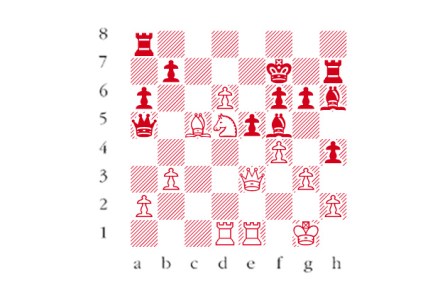
White to play. This position is from Carlsen-Caruana, Zurich 2014. White’s pin against the black rook and the passed pawn on d7 are the key components of his winning combination. What did he play? Answers to me at The Spectator by Tuesday 18 February or via email to victoria@spectator.co.uk or by fax on 020 7681 3773. The winner will be the first correct answer out of a hat, and each week I shall be offering a prize of £20. Please include a postal address and allow six weeks for prize delivery.
Lions’ den

From our UK edition

Daniel Johnson, the distinguished editor of Standpoint magazine, can be bracketed with Tim Congdon and Dominic Lawson, as having had the potential to become a chess master. All three chose other courses in economics, journalism and politics. Daniel, in particular, has faced world-class opposition in simultaneous displays, having drawn with Garry Kasparov and defeated the Czech grandmaster Ludek Pachman.   The game I have chosen to illustrate his chessboard skill was played in a curious match between Academics and Philistines, where Daniel demolished Steve Davis, the six-time winner of the snooker world championship.

No. 300

From our UK edition

White to play. This is from Johnson-Finch, Marlow 1974. White is building up a strong attack on the kingside and his next move was a brilliant way to create insurmountable threats. What did he play? Answers to me by Tuesday 11 February or via email to victoria@spectator.co.uk or by fax on 020 7681 3773. The winner will be the first correct answer out of a hat, and each week I shall be offering a prize of £20. Please include a postal address and allow six weeks for prize delivery.   Last week’s solution 1 ...
Gates’ exit

From our UK edition

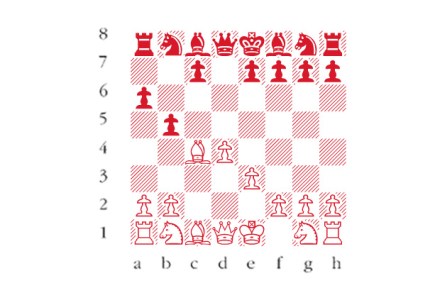
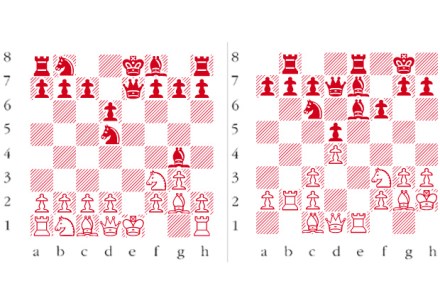
In Virgil’s Aeneid the hero Aeneas escapes from Hades via one of two gates, one made of ivory and the other of horn. It is widely believed that he selected the wrong gate. As Homer had already established, the gate of ivory, which Aeneas chose, portends false visions, while the gate of horn heralds true prognostications. Last week Bill Gates flew into London to contest a game against the new world champion Magnus Carlsen. Although the game only lasted nine moves, Bill certainly chose the wrong gate to exit the game.   Gates-Carlsen: London 2014; Nimzowitsch Defence   1 e4 Nc6 2 Nf3 Nf6 3 Bd3 d5 4 exd5 Qxd5 5 Nc3 Qh5 6 0-0 Bg4 7 h3 Ne5 This sacrifice is not sound. Instead 7 ... Bxf3 8 Qxf3 Qxf3 9 gxf3 0-0-0 gives Black a great advantage in pawn structure.

no. 299

From our UK edition

Black to play. This position is from Aronian-Van Wely, Wijk aan Zee 2014. Having already clinched first prize, Aronian’s only loss came in the last round when he fell into a diabolical trap. What has he missed? Answers to me at The Spectator by Tuesday 4 February or via email to victoria@spectator.co.uk or by fax on 020 7681 3773. The winner will be the first correct answer out of a hat, and each week I shall be offering a prize of £20. Please include a postal address and allow six weeks for prize delivery.   Last week’s solution 1 ...
Nimzo style

From our UK edition

As promised, this week a victory by chess aficionado Dominic Lawson, former editor of The Spectator. Dominic’s distinguished opponent was Peter Lee, who has been British champion in both chess and bridge — a unique achievement I believe. The following is a fine Nimzowitschian game, not least in the amazing versatility of the Black knights. Notes based on those supplied by the winner.   Lee-Lawson: Hamilton-Russell Cup, London 2010; Modern Defence   1 e4 d6 2 d4 g6 3 Nc3 Bg7 4 Be3 a6 5 Qd2 Nd7 6 0-0-0 b5 7 h4 h5 8 Nh3 Bb7 9 Ng5 Rc8 10 f3 c5 11 dxc5 Nxc5 12 Bd4 Nf6 13 Qe3 Qc7 14 e5 Against this, Black has prepared an ambush. 14 ... dxe5 15 Bxe5?   15 ... Ng4! 16 Bxc7 16 fxg4 Bxe5 much better for Black. 16 ... Nxe3 17 Re1 Nxf1 18 Bd6 0-0 19 Rxe7 Bf6 20 Rxb7?

No. 298

From our UK edition

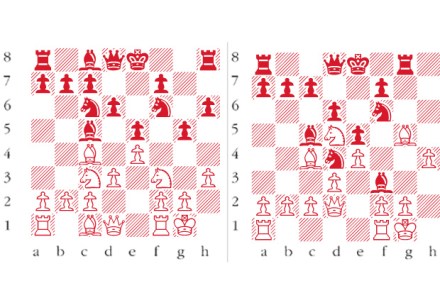
Black to play. This is from Wojtszek-Jobava, Wijk aan Zee 2014. This week’s puzzle is a fine finish from the ‘B’ group at Wijk aan Zee. The white position is a mess, but what is the key winning move for Black? Answers to me at The Spectator by Tuesday 28 January or via email to victoria@spectator.co.uk or by fax on 020 7681 3773. The winner will be the first correct answer out of a hat, and each week I shall be offering a prize of £20. Please include a postal address and allow six weeks for prize delivery.
Warhorses

From our UK edition

Towards the end of last year, those two old warhorses Anatoly Karpov and Jan Timman added to their total of over 100 competitive games against each other by contesting a four-game match in Groningen, Holland. Both aged 62, the players displayed resilience and ingenuity which contribute to the annals of age-related achievements in serious international competitive chess. After draws in the first three games, Karpov broke through to take game four and overall match victory by 2½–1½.   Karpov-Timman: Groningen Match 2013; Queen’s Indian Defence   1 d4 Nf6 2 c4 e6 3 Nf3 b6 4 g3 Ba6 5 b3 This variation was popular in the World Championship matches between Karpov and Kasparov.

No. 297

From our UK edition

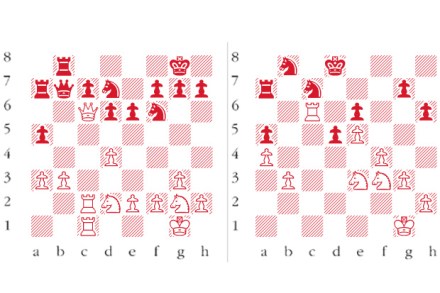
White to play. This position is a variation from Nepomniachtchi-Ivanchuk, Beijing 2013. White has a ferocious attack. How can he land the killer blow? Answers to me at The Spectator by Tuesday 21 January or via email to victoria@spectator.co.uk or by fax on 020 7681 3773. The winner will be the first correct answer out of a hat, and each week there is a prize of £20. Please include a postal address and allow six weeks for prize delivery.

Different paths

From our UK edition

Daniel Johnson, Dominic Lawson and Tim Congdon all had the potential to become chess masters. However, all three chose alternative routes, establishing their reputations in the fields of journalism, politics and economics. Daniel once held Kasparov to a draw in a simultaneous display and was instrumental in staging Nigel Short’s challenge to Kasparov in 1993. Dominic was a key player in rescuing Kasparov’s appearance in the 1983 world championship cycle and continues to compete in league and county chess. Meanwhile, Professor Tim Congdon is active in internet chess and can include a victory in the southern counties junior championship among his laurels. This week, some extracts by Tim while in future columns I hope to show Daniel and Dominic in action too.

No. 296

From our UK edition

White to play. This position is a variation from Congdon–‘Heinsius’, online game 2014. White has a ferocious attack and now needs to land the killer blow. How can he achieve this? Answers to me at The Spectator by Tuesday 14 January or via email to victoria@spectator.co.uk or by fax on 020 7681 3773. The winner will be the first correct answer out of a hat, and each week I shall be offering a prize of £20. Please include a postal address and allow six weeks for prize delivery.   Last week’s solution 1 ...

Vale Vishy

From our UK edition

Viswanathan Anand, the 15th world champion, suffered a complete meltdown in his title defence against Magnus Carlsen towards the end of last year. Anand was an impressive match player, defending the title successfully against challenges from Kramnik, Topalov and Gelfand. He was also world champion for around six years. In his latter period as champion, though, his tournament results were largely unconvincing. How does Anand figure in the pantheon of champions?   I would say that as champion he is more or less on a par with Capablanca, Petrosian and Kramnik. His record as champion was superior to that of Euwe, Tal, Smyslov and Spassky and way ahead of Bobby Fischer, who played no games at all as champion and even defaulted in what was meant to be his first title defence.

No. 295

From our UK edition

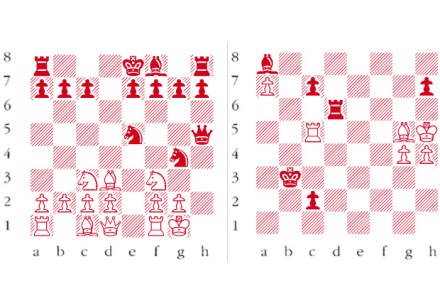
Black to play. This position is from Kramnik-Anand, Nice 2008. Both sides have dangerous-looking attacks. Can you spot Anand’s brilliant move which ensured his got in first? Answers to me at The Spectator by Tuesday 7 January or via email to victoria@spectator.co.uk or by fax on 020 7681 3773. The winner will be the first correct answer out of a hat, and each week I shall be offering a prize of £20. Please include a postal address and allow six weeks for prize delivery.
London classics II

From our UK edition

This year’s London Classic tournament is still in progress and features Vladimir Kramnik, Viswanathan Anand, reigning British champion Gawain Jones, Nigel Short and Michael Adams. As a continuing tribute to classic positions, played in London events, I give this week a number of spectacular conclusions to games played in the capital. After many years of a Soviet boycott against the defector Viktor Korchnoi, the reigning world champion Anatoly Karpov finally faced him at the Phillips and Drew/GLC tournament in London 1984. With Korchnoi in his habitual time trouble, Karpov finished with a flourish.