Raymond Keene

Brain games

From our UK edition

This week I continue with my analysis of Nigel Short’s recent animadversions upon the differences between the male and female brain and his opinion that women cannot match up to men across the chessboard. The great German poet Goethe once described chess as ‘a touchstone of the brain’; he wrote this, in fact, in the persona of a female character, Adelheid, in his play Götz von Berlichingen.   The brainiest person I know is a female triple PhD from Dubai, Dr Manahel Thabet, who is capable of expressing herself in equations way beyond my comprehension. The predominance of male chess players is, in my opinion, not the result of differing brainpower, biologically divergent ‘hardwiring’, as Nigel put it, but of certain predominant cultural conditions.
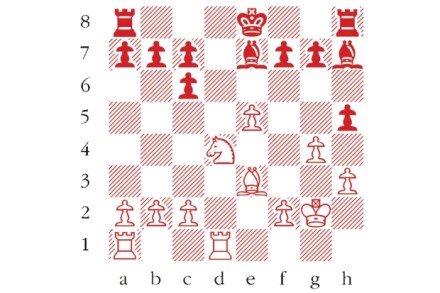
No. 361

From our UK edition

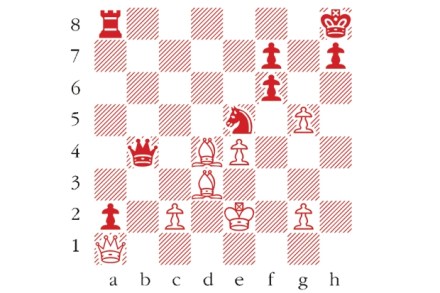
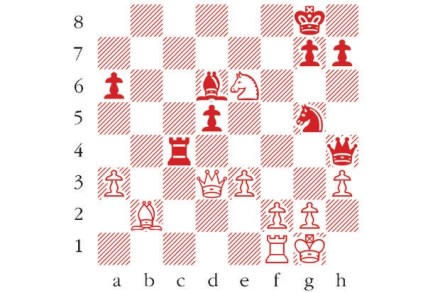
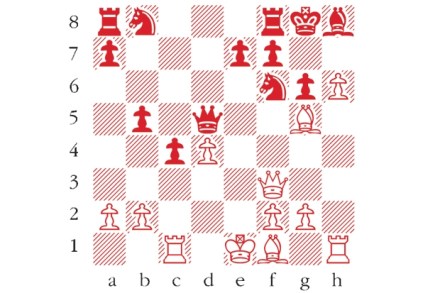
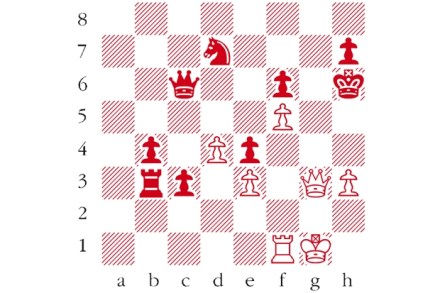
White to play. This is from Polgar-Short, -Buenos Aires 2000. Here we return to the theme of Judit Polgar’s massive plus score against Nigel Short. Nigel’s logical brain no doubt spotted 1 Rxg4 Rf1+ mating. What did Judit play instead? Answers to me at The Spectator by Tuesday 12 May or via email to victoria@spectator.co.uk or by fax on 020 7681 3773. The winner will be the first correct answer out of a hat, and each week I am offering a prize of £20. Please include a postal address and allow six weeks for prize delivery. Last week’s solution 1 ...

Nigel’s controversy

From our UK edition

British chess grandmaster Nigel Short has form when it comes to provocative statements. When competing in a tournament in France as a junior player, some years ago, he was asked the question by an interviewer: ‘What do you hate most in life?’ His answer — ‘The French’ — failed to endear him to the organisers. At a later appearance in a French tournament, an entente cordiale was struck, and Nigel is once again a welcome guest across the Channel. Nigel’s latest foray into contentious self-expression came with his widely reported intervention into the age-old debate about the differences between the male and female brain.

No. 360

From our UK edition

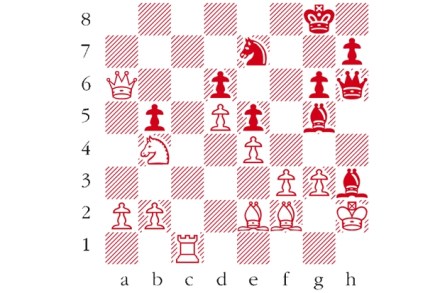
Black to play. This is from Short-Polgar, Madrid 1995. Judit Polgar is the strongest female -player ever, with an overwhelming plus score against Nigel Short. This is the conclusion of one of her many wins against him. What is the key move? Answers to me at The Spectator by Tuesday 5 May or via email to victoria@spectator.co.uk or by fax on 020 7681 3773. The winner will be the first correct answer out of a hat, and each week I am offering a prize of £20. Please include a postal address and allow six weeks for prize delivery. Last week’s solution 1 ...

So there

From our UK edition

Hikaru Nakamura has won the US Championship in convincing style with 8/11, ahead of Ray Robson and Wesley So. Things might have turned out differently had So not been disqualified after just six moves of his game against Akobian. These moves were: 1 d4 e6 2 c4 d5 3 Nc3 c5 4 cxd5 exd5 5 Nf3 Nc6 6 dxc5. Apparently, Akobian complained to the arbiters that Wesley So, the most promising grandmaster ever to emerge from the Philippines and currently ranked no. 8 in the world, had been scribbling notes to himself during the opening phase of the game. Since the opening is well known these notes could have had nothing to do with the position. But it is illegal to write notes during the game and So had been warned about this during an earlier encounter.

No. 359

From our UK edition

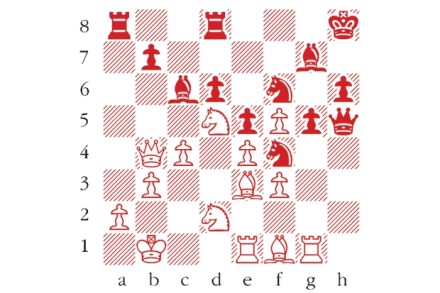
Black to play. This position is a variation from Troff-Nakamura, US Championship 2015. How can Black conclude his kingside attack with a standard tactic? Answers to me at The Spectator by Tuesday 28 April or via email to victoria@spectator.co.uk or by fax on 020 7681 3773. The winner will be the first correct answer out of a hat, and each week I am offering a prize of £20. Please include a postal address and allow six weeks for prize delivery.

Men dominate professional chess thanks to history not ‘hardwiring’ in their brains

From our UK edition

British chess Grandmaster Nigel Short has form when it comes to explosive statements. Competing in a tournament in France some years ago as a junior player, he was asked during an interview 'what do you hate most in life?' His answer - 'the French' - failed to win over his audience. Short's latest foray into contentious self-expression came with his intervention into the age-old debate about the differences between the male and female brain. According to Short's comments, the female brain fails in the logic department, hence girls will never be able to match boys over the chessboard. He is reported to have said that we should 'gratefully accept' that men are 'hardwired' to be better chess players than women.

Hit for six

From our UK edition

The Hamilton Russell trophy for London clubs has been dominated in the past by the RAC. This year, though, they were knocked for six in the final decisive match by the MCC. The full scores (out of a possible 14) were as follows: 1st Marylebone Cricket Club, 14; Joint 2nd Oxford & Cambridge Club and Royal Automobile Club, 11; 4th Athenaeum Club, 7; Joint 5th Hurlingham Club and Oriental & East India Clubs, 4; 7th Chelsea Arts Club, 3; 8th Reform Club, 2. The crucial game which helped the MCC to take the cup was the following clash between an international master and a former Spectator editor. Dominic Lawson has supplied the following notes himself.

No. 358

From our UK edition

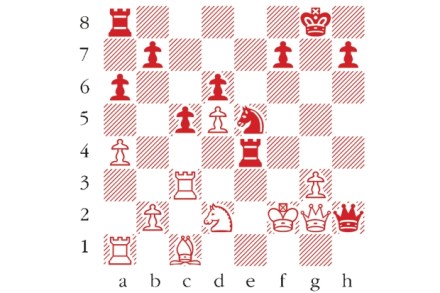
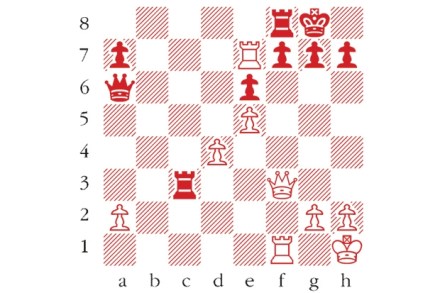
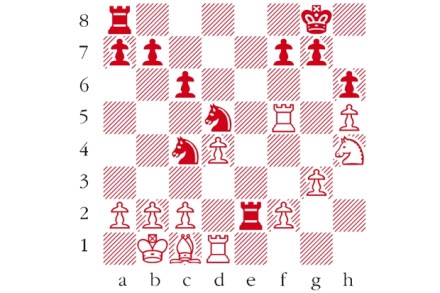
White to play. This is from Lee-Zakharov, Vrnjacka Banja 1963. Black has just captured on c3 and now 1 Qxc3 runs into 1 ... Qxf1 mate. However, White can do rather better than that. Can you see how? Answers to me at The Spectator by Tuesday 21 April or via email to victoria@spectator.co.uk. The winner will be the first correct answer out of a hat, and each week I am offering a prize of £20. Please include a postal address and allow six weeks for prize delivery. Last week’s solution 1 ... Nxh3+ Last week’s winner D.V.

Polymath

From our UK edition

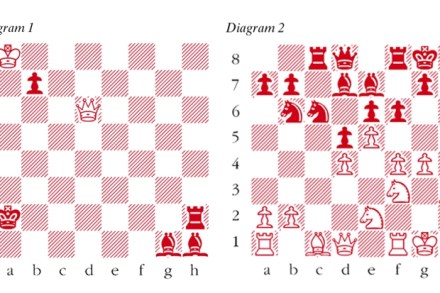
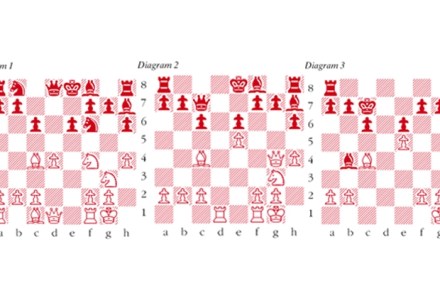
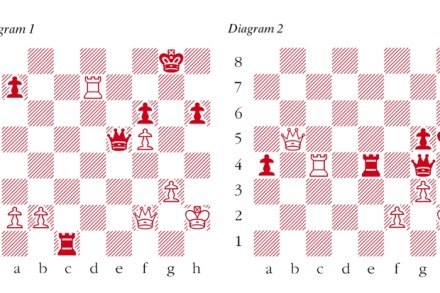
I learn from The Problemist, the organ of the British Chess Problem Society, that the polymath Dr Jacob Bronowski also composed chess problems. According to the article I read, Bronowski was born in Lodz, Poland, in 1908, grew up in Germany and then became an undergraduate at Jesus College, Cambridge. He was a mathematician, biologist, historian of science, theatrical author, poet and inventor, and of course is most celebrated as the author and presenter of the 1973 BBC TV series The Ascent of Man. The puzzle in Diagram 1 composed by Bronowski. This puzzle is a reflex mate which is a variant of the self-mate theme. In a self-mate White must force Black to checkmate him. The same applies in a reflex mate, with the extra rule that if either side can give checkmate, then they must.

No. 357

From our UK edition

Black to play. This is from Cochrane-Staunton, London 1842. How did Staunton exploit his menacing build up of pieces on the kingside? Answers to me at The Spectator by Tuesday 14 April or via email to victoria@spectator.co.uk or by fax on 020 7681 3773. The winner will be the first correct answer out of a hat, and each week I am offering a prize of £20. Please include a postal address and allow six weeks for prize delivery.

From Russia with love | 2 April 2015

From our UK edition

In the James Bond film From Russia with Love there is an evil mastermind named Kronsteen. The character is in some ways based on the Russian chess genius David Bronstein, and the chess game ‘from the Venice International Tournament’ that forms the backdrop to the opening sequence is taken from a game between Bronstein and Boris Spassky. A new book by Steve Giddins, Bronstein Move by Move (Everyman Chess), gives a superb insight into the creative processes of the chessboard colossus through a series of deeply annotated games. This week’s game and notes are based on those in this highly rewarding and entertaining book.

No. 356

From our UK edition

White to play. This position is a variation from Bronstein-Zilberstein, Tbilisi 1973. Bronstein has just given up a piece on d5 but has a clever tactical idea in mind. Can you see the key move? Answers to me at The Spectator by Tuesday 7 April or via email to victoria@spectator.co.uk. The winner will be the first correct answer out of a hat, and there is a prize of £20. Please include a postal address. Last week’s solution 1 ...

Caro can

From our UK edition

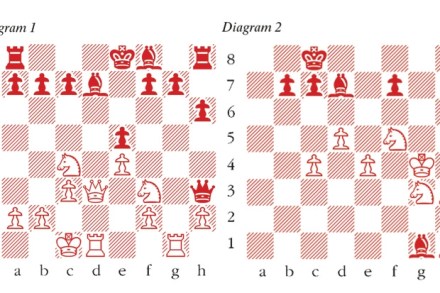
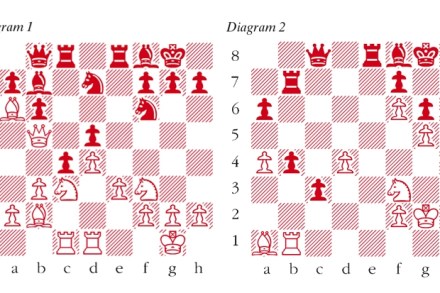
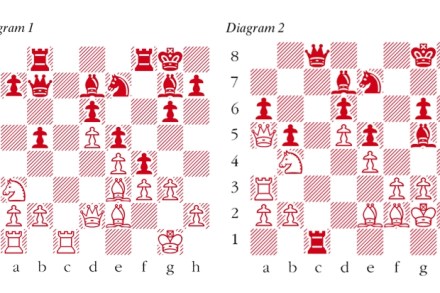
The Caro-Kann Defence, 1 e4 c6, has always appealed to me. It has the advantage of staking a claim in the centre by means of ... d5, without the disadvantages of the Centre Counter (1 e4 d5) which brings out Black’s queen prematurely, or the French Defence (1 e4 e6 2 d4 d5), which locks in the black queen’s bishop. A new book by Jovanka Houska, Opening Repertoire: The Caro-Kann (Everyman), details Black’s strategies against the dangerous Advance Variation, while in the main line she recommends the early development of Black’s queen’s bishop, as in the following game.   Tal-Keene; Simultaneous Exhibition 1964; Caro-Kann Defence   1 e4 c6 2 d4 d5 3 Nc3 dxe4 4 Nxe4 Bf5 5 Ng3 Bg6 6 N1e2 e6 7 h4 h6 8 Nf4 Bh7 9 Bc4 Nf6 10 0-0 (diagram 1) 10 ...

No. 355

From our UK edition

Black to play. This position is a variation from Ganguly-Vitiugov, Gibraltar 2014. The game started as a Caro-Kann and is mentioned in Houska’s book. Although Black is a pawn down he has very active pieces he can exploit with a clever tactic. Can you see it? Answers to me at The Spectator by Monday 30 March or via email to victoria@spectator.co.uk or by fax on 020 7961 0058. The winner will be the first correct answer out of a hat, and each week I am offering a prize of £20.

Just So

From our UK edition

Last week in a perceptive piece for the Times, Will Pavia animadverted upon the fact that the USA appears to be actively recruiting top chess grandmasters. Pavia focused on attempts to persuade world-ranked no. 2 Fabiano Caruana to defect from representing Italy, and switch allegiance to the USA. Even more indicative has been the effort made to entice the former Philippine grandmaster Wesley So to adopt the stars and stripes. As far as I can see, this enterprise has been successful, and it is not hard to detect the hand of the eminence grise of American chess Rex Sinquefield, behind a prima facie attempt to reconquer the Olympiad gold medal (which they have won five times overall) and the individual world title (last held for American chess by Bobby Fischer).

No. 354

From our UK edition

White to play. This is from Pillsbury-Tarrasch, Hastings 1895. White has only one move to bring his kingside attack to a successful conclusion before Black lands on the other wing. Can you see it? Answers to me at The Spectator by Tuesday 24 March or via email to victoria@spectator.co.uk or by fax on 020 7681 3773. The winner will be the first correct answer out of a hat, and each week I am offering a prize of £20. Please include a postal address and allow six weeks for prize delivery.

Bright blues

From our UK edition

The boat race for the brain, as it has become known, took place at the Royal Automobile Club, Pall Mall, London last Saturday. The 133rd Oxford v Cambridge Varsity chess match was generously hosted by Henry Mutkin, the life president of the club, and the club itself, represented by their new chess circle chairman, Stephen Meyler. Among the chess experts present were grandmasters Luke McShane, Michael Stean, Jon Speelman and Julian Hodgson, while the wider world of chess enthusiasts included Tony Buzan of mind-mapping fame, Daniel Johnson, editor of Standpoint magazine, and Barry Martin, former vice president and captain of the Chelsea Arts Club chess team.

No. 353

From our UK edition

Black to play. This is from James-Sugden, -Cambridge 1972, as featured last week. It’s a win by the Cambridge player Dr J. N. -Sugden of St John’s College. In the diagram my notes gave 1 ... Bf1+ but Julian Simpole pointed out something far more effective. Can you spot it? Answers to me at The Spectator by Tuesday 17 March or via email to victoria@spectator.co.uk. The winner is the first correct answer out of a hat, and there is a prize of £20. Please include a postal address.   Last week’s solution 1 ... Qh3+ Last week’s winner T.

Varsity

From our UK edition

On Saturday 7 March the annual Varsity Match between the teams of Oxford and Cambridge takes place. The contest is at the Royal Automobile Club starting at noon, and spectators are welcome, though anyone wishing to attend should bear in mind the dress code of jacket and tie with no trainers or jeans. As usual, the match is supported by both the RAC and the doyen of RAC chess, Henry Mutkin, himself a former Oxford player in this match. The notes to the game this week are based on those in the book Cambridge Chess by Richard Eales, published by Hardinge Simpole. The puzzle is a win by a top board player for Oxford.   James-Sugden; Cambridge 1972; Sicilian   1 e4 c5 2 Nf3 e6 3 d3 Nc6 4 g3 g6 5 Bg2 Bg7 6 0-0 Nge7 7 c3 e5 7 ... d5 is simple and good.