Raymond Keene

No. 352

From our UK edition

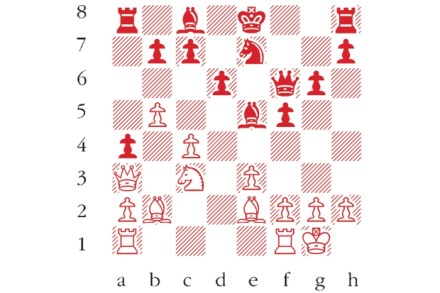
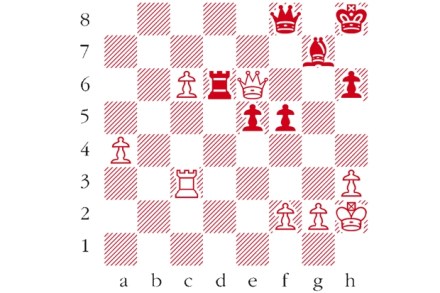
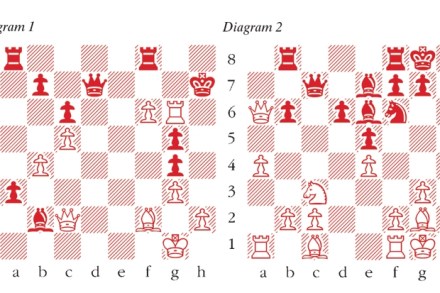
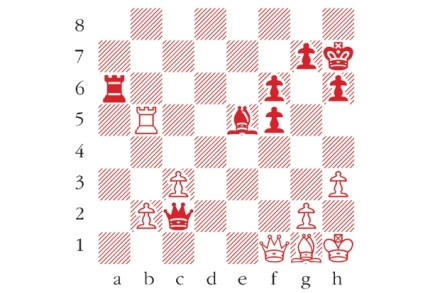
Black to play. This is a variation from Chandler-Whiteley, Brighton 1979. Here Black can bring his attack to a successful conclusion thanks to a fine tactical idea. Can you see it? Answers to me at The Spectator by Tuesday 10 March or via email to victoria@spectator.co.uk or by fax on 020 7681 3773. The winner will be the first correct answer out of a hat, and each week I am offering a prize of £20. Please include a postal address and allow six weeks for prize delivery.
Gnomic

From our UK edition

The elite tournament at Zurich, which finished last week, has adopted a system for determining the ultimate trophy winner which seems to me virtually impenetrable. Zurich consisted of three separate events, a blitz, a rapidplay and a classical tournament, all of them involving the elite group of Nakamura, Anand, Kramnik, Aronian, Karjakin and Caruana. For the general public, victory in the classical tournament would be the chief honour. But Zurich’s complex system ignores the blitz results, includes the classical section, adds on points scored in the rapidplay, and ends with an armageddon game in the event that two leaders have tied for first place. As it was, Aronian won the blitz and Anand won the classical, while Kramnik triumphed in the rapidplay.

No. 351

From our UK edition

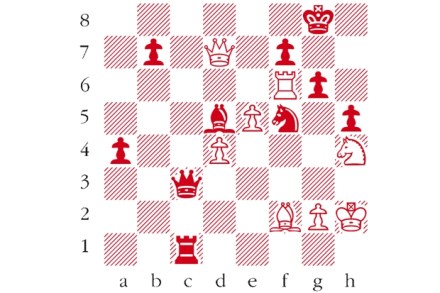
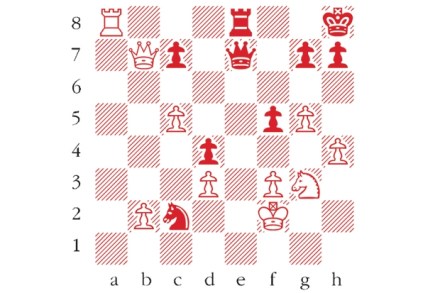
White to play. This position is from Nakamura-Karjakin, Zurich classic 2015. White’s knight seems trapped but he can rescue it with a fine tactical idea. Can you see how? Answers to me at The Spectator by Tuesday 3 March or via email to victoria@spectator.co.uk or by fax on 020 7681 3773. The winner will be the first correct answer out of a hat, and each week I am offering a prize of £20. Please include a postal address and allow six weeks for prize delivery.
Carlsen’s special brew

From our UK edition

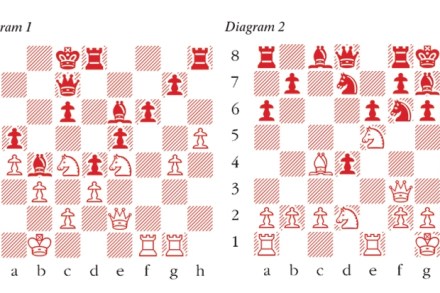
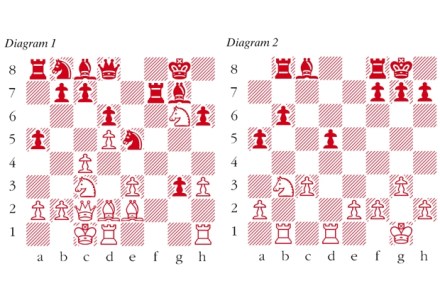
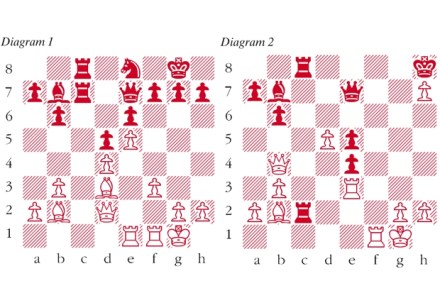
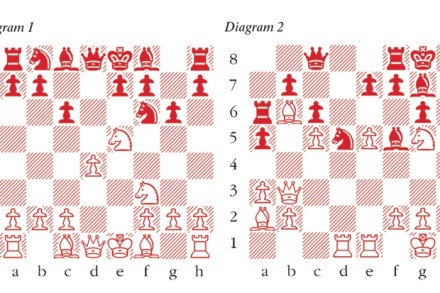
Magnus Carlsen has added another trophy to his cabinet by taking the honours at the Grenke tournament in Baden Baden, Germany. As at Wijk aan Zee, the world champion had to surmount an early loss with Black, on this occasion against his chief rival for glory, the German grandmaster Arkadij Naiditsch. But Carlsen clawed his way back to a share of the lead and finally emerged triumphant after a closely fought tie-break playoff.   A key moment of Carlsen’s fightback came in this tense position against former champion Anand. Here Anand appears to have a powerful attack, but Carlsen broke the back of his offensive with a stunning counter-coup.   Anand-Carlsen: Grenke Chess Classic, Baden Baden 2015 (see diagram 1)   33 ...

No. 350

From our UK edition

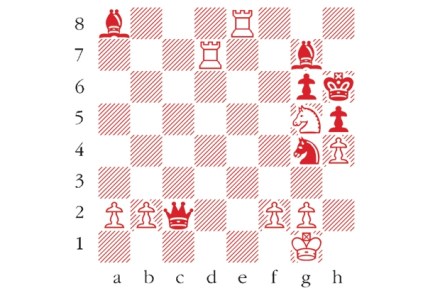
White to play. This is from Anand v Kramnik, Zurich Rapidplay 2015. White has two ways to win this position, both using the same idea. Either move can be considered the correct solution. Can you see the idea? Answers to me at The Spectator by Tuesday 24 February or via email to victoria@spectator.co.uk or by fax on 020 7681 3773. The winner will be the first correct answer out of a hat, and each week I am offering a prize of £20. Please include a postal address and allow six weeks for prize delivery.
Tradewise

From our UK edition

The Tradewise Masters in Gibraltar has been won by the American grandmaster Hikaru Nakamura, with the British co-champion David Howell in clear second place. This is possibly a career best for Howell, whose forte turned out to be remarkable resilience in difficult endgames. Last week the puzzle showed Nakamura defeating the pre-tournament favourite and highest ranked competitor, Veselin Topalov. This week’s game from Gibraltar is a fine win by a grandmaster who was trained in the classical Soviet tradition.

No. 349

From our UK edition

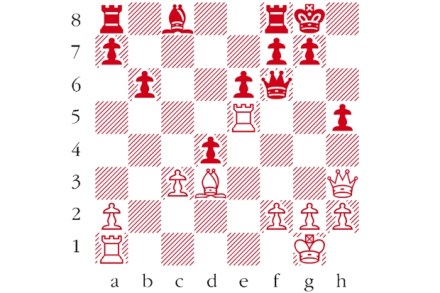
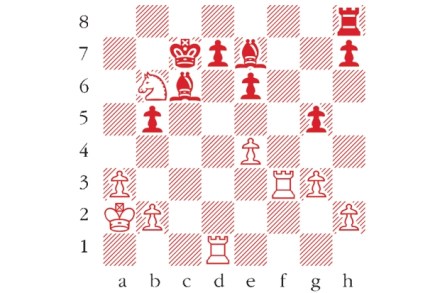
White to play. This position is a variation from Bellin-Georgiadis, Gibraltar 2015. White has given up his queen. How does he now force checkmate? Answers to me at The Spectator by Tuesday 17 February or via email to victoria@spectator.co.uk or by fax on 020 7681 3773. The winner will be the first correct answer out of a hat, and each week I am offering a prize of £20. Please include a postal address and allow six weeks for prize delivery.   Last week’s solution 1 Rxe5 Last week’s winner R.F.
Sixes and sevens

From our UK edition

The veteran world championship contender, Victor Korchnoi, has accused the reigning world champion Magnus Carlsen of hypnotising his opponents. Plainly unimpressed by the overall quality of Carlsen’s play, the ever-controversial Korchnoi ascribes Carlsen’s successes to mental influence rather than superlative moves. In the past, similar accusations were levelled against Alekhine, when he beat Bogolyubov in 1934, and against Tal, when he won the Candidates tournament in 1959. Winning streaks often come in sixes and sevens. Fischer defeated Taimanov and Larsen by six to zero in each case, in his celebrated run in 1971.

No. 348

From our UK edition

White to play. This position is a variation from Nakamura-Topalov, Gibraltar 2015. Topalov has already resigned this game as he had seen what was coming. What is White’s next move? Answers to me at The Spectator by Tuesday 10 February or via email to victoria@spectator.co.uk or by fax on 020 7681 3773. The winner will be the first correct answer out of a hat, and each week I am offering a prize of £20. Please include a postal address and allow six weeks for prize delivery.
Magnificent Magnus

From our UK edition

Magnus Carlsen has won first prize in the elite Tata Steel tournament at Wijk aan Zee, Holland. Leading scores out of 13 were Carlsen 9, then Giri, So, Ding Liren and Vachier-Lagrave all in hot pursuit half a point behind. This week’s puzzle shows a crucial variation from one of Carlsen’s best wins. The player who made the greatest mark, apart from the world champion, was 20-year-old Anish Giri, who is maturing into a truly dangerous prospect, notching up himself a four-game winning streak. I kick off this week with a Giri victory from London against a former world champion.   Giri-Kramnik: London Classic Rapidplay 2014   In this last example from the Rapidplay, the former world champion Vladimir Kramnik takes opportunism a bridge too far.

No. 347

From our UK edition

White to play. This is a variation from Carlsen-Aronian, Wijk aan Zee 2015. Black has just played his bishop to a3, uncovering an attack on the white queen while also threatening the c1-rook. How can White respond to this double attack? Answers to me at The Spectator by Tuesday 3 February or via email to victoria@spectator.co.uk or by fax on 020 7681 3773. The winner will be the first correct answer out of a hat, and each week I am offering a prize of £20. Please include a postal address and allow six weeks for prize delivery.
London Blitz

From our UK edition

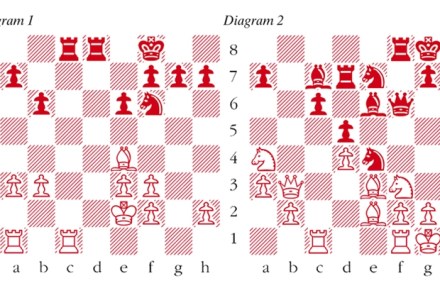
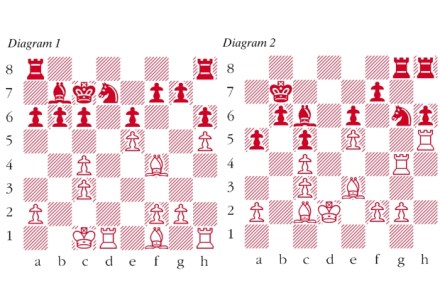
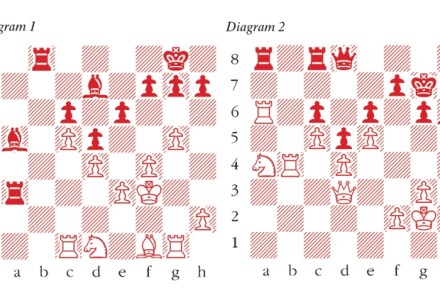
Britain’s leading grandmaster, Michael Adams, started well in the London Classic, with a beautiful win against the rising star Fabiano Caruana. After that, Adams ran out of steam, finishing in next to last place. Fortunately he made up for this with an excellent performance in the Blitz section, where he tied for first place and won the trophy on tie-break. Scores out of ten were: Adams, Nakamura and Kramnik 6; Giri 5; Anand 3½; Caruana 3.   Adams-Nakamura: London Classic Blitz 2014 (see diagram 1)   As the great teacher and world champion Wilhelm Steinitz taught in the 19th century, it often pays to delay castling.

No: 346

From our UK edition

White to play. This position is a variation from Kramnik-Nakamura, London Classic Blitz 2014. How can White make a decisive material gain? Answers to me at The Spectator by Tuesday 27 January or via email to victoria@spectator.co.uk or by fax on 020 7681 3773. The winner will be the first correct answer out of a hat, and each week I am offering a prize of £20. Please include a postal address and allow six weeks for prize delivery. Last week’s solution 1 Bh7+ Last week’s winner Keith D.

London Rapid

From our UK edition

The exciting American grandmaster Hikaru Nakamura compensated for his somewhat lacklustre performance in the London Classic section, held at Olympia just before Christmas, with an overwhelming victory in the Rapidplay arena. The top final scores were Nakamura 9½ and Giri 8½, while those on 8 included Kramnik, Caruana, Anand and Short. By its very nature, Rapidplay chess tends to be exhilarating rather than accurate and favours those who have a buccaneering spirit and a talent for opportunism.   Nakamura-Anand: London Classic Rapidplay 2014 (see diagram 1)   First off we see Nakamura outmanoeuvring former world champion Viswanathan Anand. It is axiomatic that a bishop in the endgame, unless heavily restricted by its own pawns, will tend to outgun a knight.

No: 345

From our UK edition

White to play. This position is a variation from Williams-van Wely, London Rapidplay 2014. How can White bring his kingside attack to a successful conclusion? Answers to me at The Spectator by Tuesday 20 January or via email to victoria@spectator.co.uk. The winner will be the first correct answer out of a hat, and each week I am offering a prize of £20. Please include a postal address and allow six weeks for prize delivery.
London Classic | 8 January 2015

From our UK edition

The key feature of the London Classic, which finished shortly before Christmas, was the resurgence of Viswanathan Anand, the former world champion. One might have expected him to be demoralised after his second drubbing at the hands of Magnus Carlsen, but he played steadily and his single victory, without loss, sufficed to share first prize and win the trophy on tie-break. The tie-break method centred on rewarding victory with the black pieces. The wins by Giri and Kramnik were both with White, while Anand defeated Adams with Black. The final scores (on the 3-1-0 system) were: Anand, Kramnik and Giri 7; Nakamura 6; Adams and Caruana 4. Also notable was the continuing poor form of Fabiano Caruana, whom I eulogised in last week’s column.

No. 344

From our UK edition

White to play. This is a position from Adams--Caruana, London Classic 2014. How did Adams convert to a winning endgame? Answers to me at The Spectator by Tuesday 13 January or via email to victoria@spectator.co.uk or by fax on 020 7681 3773. The winner will be the first correct answer out of a hat, and each week I am offering a prize of £20. Please include a postal address and allow six weeks for prize delivery. Last week’s solution 1 Re7 (1 ...

Ave et vale

From our UK edition

2014 was the year in which Magnus Carlsen confirmed his position as world champion, and also the year in which the dynamic new star, Fabiano Caruana, rose to the rank of world no. 2. For my game of the year I am choosing the crucial encounter from the Carlsen-Anand world championship match where Anand failed to spot a winning opportunity and went on to lose. This was a massive turning point, ensuring that a contest which had seemed within Anand’s grasp was decided in favour of the reigning champion. Traditionally, my game of the year is a brilliant example of the creative heights to which chess can aspire. In this instance, the sporting importance of the game outweighs its aesthetic defects, making it the defining moment in global chess from last year.

No. 343

From our UK edition

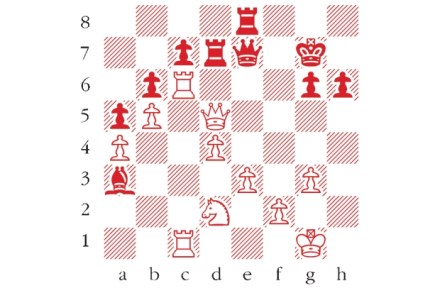
White to play. This position is from Caruana--Ponomariov, Dortmund 2014. The structure is symmetrical but White’s pieces are very active. How did Caruana make the most of this with a stunning combination? Answers to me at The Spectator by Tuesday 6 January or via email to victoria@spectator.co.uk or by fax on 020 7681 3773. The winner will be the first correct answer out of a hat, and each week I am offering a prize of £20. Please include a postal address and allow six weeks for prize delivery.
London greats | 11 December 2014

From our UK edition

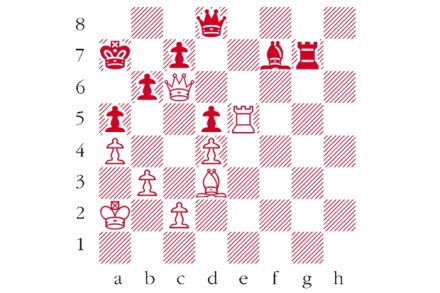
The London Chess Classic, graced by two former world champions Viswanathan Anand and Vladimir Kramnik, as well as the world number two, Fabiano Caruana, is nearing its close. Full details can be found on www.londonchessclassic.com and there is still time for chess fans to visit the event at Olympia, since it runs to 14 December. The London Classic continues the great tradition of outstanding events and superlatively creative games which have been played in the capital. London has been the home to such outstanding champions of the game as Andre Philidor, Wilhelm Steinitz and Emanuel Lasker while Steinitz himself claimed that two of the supreme creative masterpieces of his time were played in London. Those two examples cited by Steinitz are given this week as the main game and the puzzle.