Raymond Keene

Fabulous Fabiano

From our UK edition

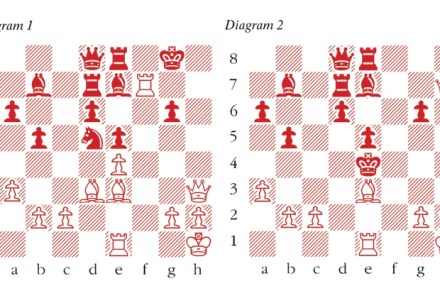
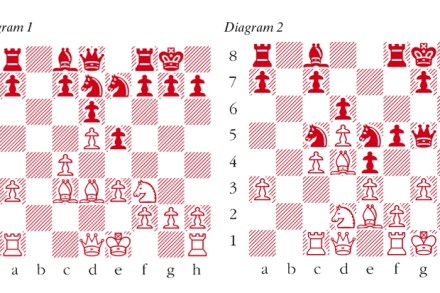
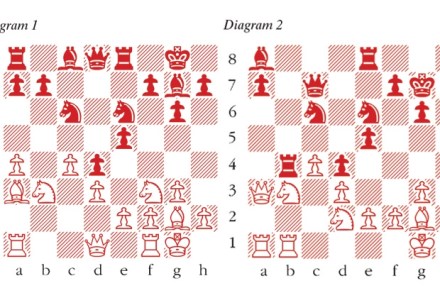
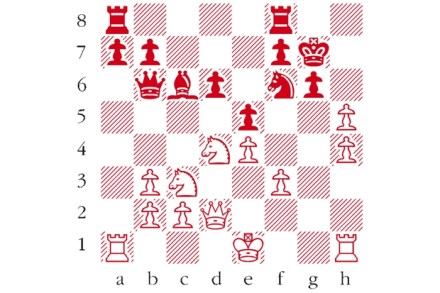
Fabiano Caruana notched the result of his life at the Sinquefield Trophy in St Louis last year. Since then he has done nothing in particular and not done it very well, to adapt W.S. Gilbert’s lordly formula from Iolanthe. Now Caruana has reasserted himself at the elite tournament in Dortmund, where final scores (out of 7) were as follows: Caruana 5½, So and Nisipeanu 4, Kramnik 3½, Nepomniachtchi and Naiditsch 3, Hou Yifan and Meier 2½.   As can be seen, Caruana outclassed the field by a substantial margin, in spite of losing one game to Wesley So.   Nisipeanu-Caruana, Dortmund 2015 (see diagram 1) Black’s plan of advancing the a-pawn is obvious. However, the brilliant tactic that makes it work is not. 27 ... a5 28 Nd4 axb4 29 Nxc6 b3!!
No. 370 | 16 July 2015

From our UK edition

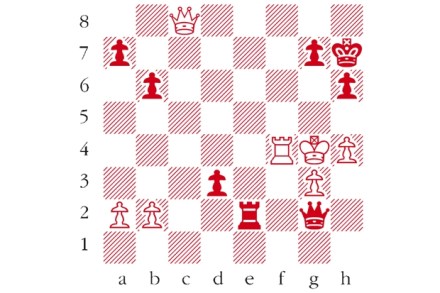
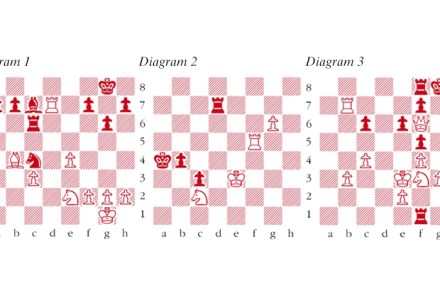
Black to play. This position is a variation from Kramnik-Naiditsch, Dortmund 2015. How can Black make a decisive material gain? Answers to me at The Spectator by Tuesday 21 July or via email to victoria@spectator.co.uk or by fax on 020 7681 3773. The winner will be the first correct answer out of a hat, and each week there is a prize of £20. Please include a postal address and allow six weeks for prize delivery. Last week’s solution 1 ...

Chinese cracker

From our UK edition

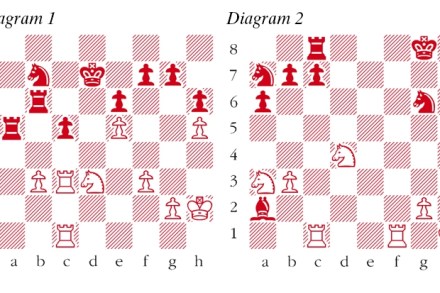
I have a particular affection for Chinese involvement in mind sports. In 1981 I was invited as the first western grandmaster to compete in an international chess tournament in China, held in Guangzhou, Shanghai and Beijing. For this, I was awarded the gold medal of the Chinese Olympic Association. Since then, I have organised three world memory championships in China, with a fourth set for Chengdu in November.   The Chinese have their own form of chess, Xiang Qi, which differs from western chess in various ways: a nine-by-nine board, play on intersections rather than squares, a piece which fires through other pieces and a king which is trapped in its own castle throughout the entire game.

No. 370

From our UK edition

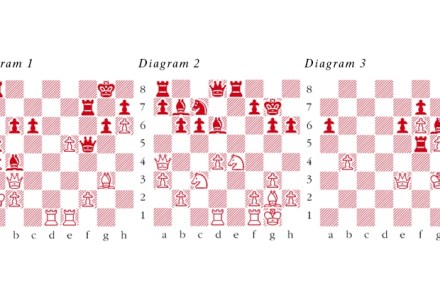
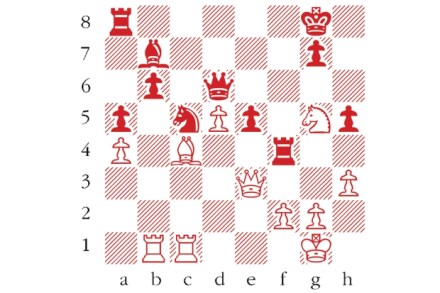
Black to play. This position is a variation from Hou Yifan-Kramnik, Dortmund 2015. Black is a rook down. What does he have in mind? Answers to me at The Spectator or via email to victoria@spectator.co.uk or by fax on 020 7961 0058. The winner will be the first correct answer out of a hat, and each week I shall be offering a prize of £20. Please include a postal address and allow six weeks for prize delivery.

Magnus toppled

From our UK edition

Last week, world champion Magnus Carlsen suffered a devastating defeat in the first round of the Stavanger super tournament when he lost on time to Topalov, in what had been a winning position for the champion. This contradictory outcome lent wings to the Bulgarian grandmaster, who then stormed to one of his greatest tournament triumphs.   The normally irrepressible Carlsen, clearly unnerved by this unfortunate accident, went on to lose a further three games from the remaining eight, with just two wins to his credit.   Inevitably this once again prompts questions about Carlsen’s actual strength.

No. 369

From our UK edition

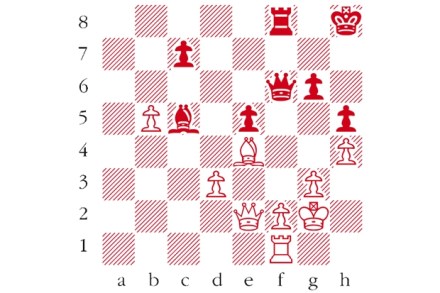
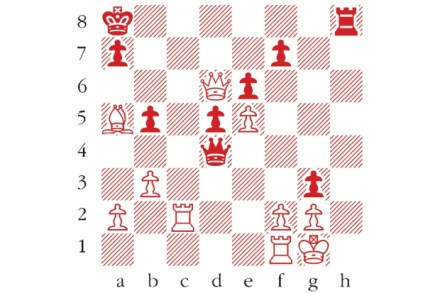
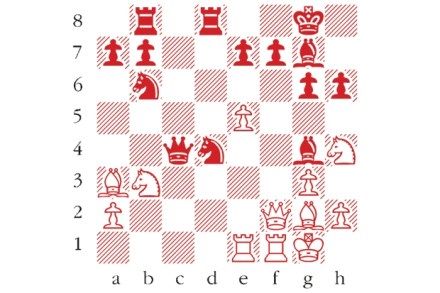
White to play. This is from Anand--Hammer, Stavanger 2015. White is a pawn up with a good position and his next move put the game beyond all doubt. How did he continue? Answers to me at The Spectator by Tuesday 7 July or via email to victoria@spectator.co.uk or by fax on 020 7681 3773. The winner will be the first correct answer out of a hat, and each week there is a prize of £20. Please include a postal address and allow six weeks for prize delivery.

Tempus fugit

From our UK edition

In serious competitive chess the play is regulated by time limits for completion of the moves. In the mid-19th century, players could take as long as they wished over their moves. This proved unsatisfactory and it was recognised that time needed to be rationed and the failure to meet time control would result in the loss of the game. There have been freak accidents with time restrictions. In the first round of Hastings 1895, the German grandmaster Dr Siegbert Tarrasch lost on time with one move to go against Amos Burn. The reason for Tarrasch’s time forfeit was that he had written his own name in the space for his first move. His opponent tried to make him aware of the blunder, but the dogmatic German refused to take heed until his clock flag had fallen.

No. 368

From our UK edition

White to play. This position is from Vachier-Lagrave-Caruana, Norway Blitz 2015. How did White finish off at once? Answers to me at The Spectator by Tuesday 30 June or via email to victoria@-spectator.co.uk or by fax on 020 7681 3773. The winner will be the first correct answer out of a hat, and each week I am offering a prize of £20. Please include a postal address and allow six weeks for prize delivery.

Dark lord

From our UK edition

A new book, Opening Repertoire: The Nimzo-Indian and Bogo-Indian by Christof Seilecki (Everyman Chess), focuses on the ever popular Nimzo-Indian and Bogo-Indian Defences. The former arises after 1 d4 Nf6 2 c4 e6 3 Nc3 Bb4 while the latter commences 1 d4 Nf6 2 c4 e6 3 Nf3 Bb4+. The possibilities for transposition are legion.   The Nimzo-Indian is named after the subtle chessboard strategist and author of My System Aron Nimzowitsch, victor of the great international tournaments at Dresden 1926, London 1927 and Carlsbad 1929. Its close relative is named after Efim Bogolyubov who won the equally impressive tournaments at Moscow 1925 and Bad Kissingen 1928 and also challenged, unsuccessfully, for the World Championship in 1929 and 1934.

No. 367

From our UK edition

Black to play. This is from Spassky-Fischer, World Championship, Reykjavik (Game 5) 1972. This is probably the most famous ‘dark-square’ Nimzo-Indian game of all-time. How did Fischer finish off? Answers to me at The Spectator by Tuesday 23 June or via email to victoria@spectator.co.uk or by fax on 020 7681 3773. The winner will be the first correct answer out of a hat, and each week I am offering a prize of £20. Please include a postal address and allow six weeks for prize delivery. Last week’s solution 1 ...

Triple tie

From our UK edition

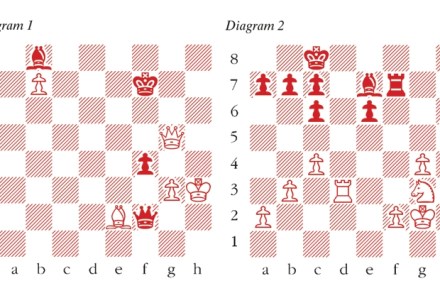
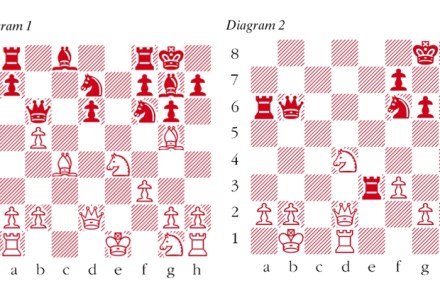
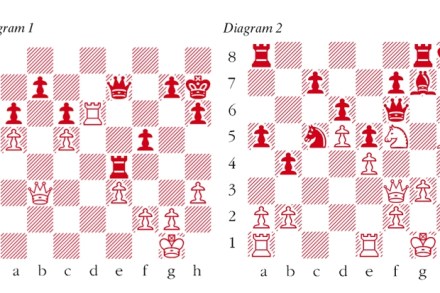
This week I conclude my coverage of the Fidé (World Chess Federation) Grand Prix which finished last month in Khanty-Mansiysk. Three shared first place: Dmitri Jakovenko, Fabiano Caruana and Hikaru Nakamura. Although Jakovenko emerged in pole position on tie-break, it was Caruana and Nakamura who qualified for next year’s Candidates tournament to determine a challenger to world champion Magnus Carlsen by virtue of their superior scores in the overall series.   Here are some of the decisive moments from this important event.   Caruana-Tomashevsky: Khanty-Mansiysk 2015 (see diagram 1)   White’s king is safer than Black’s and he has powerful central play. Caruana quickly converted these advantages. 31 e6 Re7 32 Bh4 Ree8 If 32 ...

No. 366

From our UK edition

Black to play. This is from Rodriguez-Xiong, California 2012. How does Black finish off? Answers to me at The Spectator by Tuesday 16 June or via email to victoria@spectator.co.uk or by fax on 020 7681 3773. The winner will be the first correct answer out of a hat, and each week I am offering a prize of £20. Please include a postal address and allow six weeks for prize delivery. Last week’s solution 1 ...

Boris Good Enough

From our UK edition

Boris Gulko, celebrated both as a grandmaster and a former Soviet dissident, has recently completed his great trilogy of instructional volumes. They make exclusive use of the instructional value of Gulko’s own victories, which include probably more victories against Kasparov, when compared to losses, than any other major player. Lessons with a Grandmaster, Volume 3 (Everyman Chess) is the third in the series. Notes to the following game are based on those by Gulko.   Gulko-Kasparov: Linares 1990; King’s Indian Defence   1 d4 Nf6 2 c4 g6 3 Nc3 Bg7 4 e4 d6 5 f3 0-0 6 Be3 c6 7 Bd3 e5 8 d5 b5 9 cxb5 cxd5 10 exd5 e4 11 Nxe4 Nxd5 12 Bg5 Qb6 12 ... Qa5+ was seen in Timman-Kasparov, Reykjavik 1988.

No. 365

From our UK edition

Black to play. This is from Caruana-Jakovenko, Khanty-Mansiysk 2015. Black is winning -easily, but can you find the most accurate continuation, which forces mate in six moves at the most? Answers to me at The Spectator by Tuesday 9 June or via email to victoria@spectator.co.uk or by fax on 020 7681 3773. The winner will be the first correct answer out of a hat, and each week there is a prize of £20. Please include a postal address and allow six weeks for prize delivery.   Last week’s solution 1 ... Rxf2+ Last week’s winner D.W.

Shuffleduck

From our UK edition

There are some odd opening moves in chess, such as 1 a3 and 1 g4. The former was used by Adolf Anderssen to win a game against Paul Morphy in their 1858 match, while the latter has been developed into an entire system by the English international master Michael Basman. Perhaps the weirdest of all is 1 h4, the topic of a new book, Shuffleduck, by Ken Norbury. It is conceivable that it might be possible to weld 1 h4 into a kind of system, as Basman has done with 1 g4. However, this book points out how an early h4 can form part of a strategic design, in particular when Black has fianchettoed his king’s bishop. This week I annotate the earliest example I can find of this strategy.

No. 364

From our UK edition

Black to play. This is from Westman-Walther, Havana 1966. Black has the possibility of a discovered check against the white king. How can he make the most of this? Answers to me at The Spectator by Tuesday 2 June or via email to victoria@spectator.co.uk. The winner will be the first correct answer out of a hat, and each week I am offering a prize of £20. Please include a postal address and allow six weeks for prize delivery.

Reichenbach falls

From our UK edition

The former world champion Vladimir Kramnik recently espoused an opening system which I elaborated in a tournament in Germany in 1975. Remarkably, in the first two rounds of the Mannheim competition, both of my opponents defended identically, and both were eventually ground down in simplified positions. Kramnik used the same method to defeat grandmaster Peter Svidler, the seven-times Russian champion, in the recently concluded Russian Team Championship. A position from Kramnik’s victory forms the topic of this week’s puzzle. Keene-Reichenbach: Mannheim 1975; Reti Opening 1 Nf3 d5 2 b3 Nf6 3 Bb2 g6 4 g3 The double fianchetto is the hallmark of this variation. 4 ...

Puzzle no. 363

From our UK edition

White to play. This is from Kramnik-Svidler, Russian Team Championship, Sochi 2015. The black pieces are in a tangle and vulnerable to tactical strikes. How did Kramnik now launch just such a strike? Answers to me at The Spectator by Tuesday 26 May or via email to victoria@spectator.co.uk. The winner will be the first correct answer out of a hat, and each week I am offering a prize of £20. Please include a postal address and allow six weeks for prize delivery.

Hypnotism

From our UK edition

During the World Championship qualifier of 1959, grandmaster Pal Benko wore dark glasses to counter the hypnotic gaze of his dangerous opponent, world champion-to-be Mikhail Tal. This precaution did him no good (see this week’s puzzle).   This is not the only instance when hypnosis has been suspected in chess. In the 1978 world championship, Viktor Korchnoi accused Anatoly Karpov’s assistant, Dr Vladimir Zukhar, of disrupting his thought processes by attacking him telepathically.   Korchnoi has also said he thinks Magnus Carlsen, the reigning world champion, mesmerises his opponents into making blunders.

No. 362

From our UK edition

White to play. This position is from Tal--Benko, Candidates 1959. Black has just advanced with ... e5, attacking the white knight. What has he overlooked? Answers to me at The Spectator by Tuesday 19 May or via email to victoria@spectator.co.uk or by fax on 020 7681 3773. The winner will be the first correct answer out of a hat, and each week I am offering a prize of £20. Please include a postal address and allow six weeks for prize delivery.