Philip Patrick

Philip Patrick

Philip Patrick is an exiled Scot, who lectures at a Tokyo university and contributes to the Japan Times

Japan just can’t find the staff

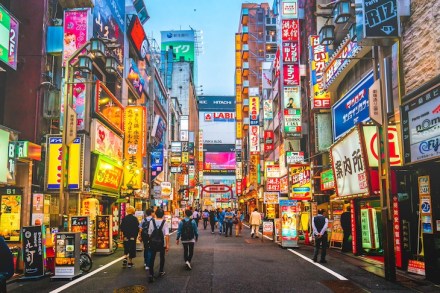
‘Kanko kankai’ (tourism pollution) is the latest buzz phrase here in Japan as the double-edged samurai sword of the visitor boom continues to cause profit but also pain. The latest problem, along with the overcrowding, poor behaviour, and squeezed out locals, is a shortage of staff at the main attractions and the hotels and restaurants that surround them. Which, given the importance of quality service in Japanese culture, is a veritable crisis. Healthcare, distribution and agriculture are all facing, to varying degrees, serious issues due to a lack of manpower There is nothing especially new in this. Labour shortages have long been a problem as the society ages, the fertility rate remains low and the pool of fit young people shrinks.

The decline of football speak

The new Premiership season kicked off this weekend and, with all the usual hype, will come novelties. There are the gamely optimistic new arrivals and returnees, no doubt a breakout star or two, some eyebrow-raising new hairstyles (Mo Salah) and some ingeniously tweaked – and therefore ‘must-have’ – revenue-gouging strips. As ever, there will be new rules, including yet further tinkering with VAR. But what interests me, as an English teacher and student of socio-linguistics, will be any novelties in the figurative language which the players, fans and journalists use to describe the game. Over nearly 50 years of watching football, it has been fascinating to hear the football lexicon evolve in ways that can be quite culturally revealing.

How scandal brought down yet another Japanese leader

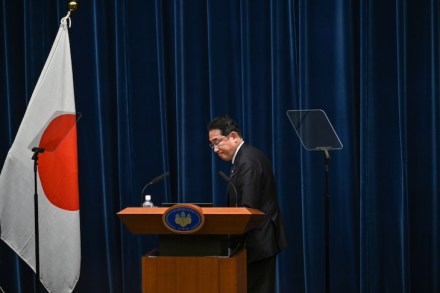
Japanese prime minister Fumio Kishida has announced he will be stepping down as leader of the Liberal Democratic party next month. This means yet another new leader, the 13th in my quarter century in the country (unless one of the previous incumbents fancies another go) but almost certainly not a radical new direction.  Whoever wins the LDP leadership election will become prime minister, as the party controls both houses of parliament, though no general election need be held until 2025. The announcement has been declared a ‘surprise’, but in truth, the resignation of a Japanese premier is never really that much of a surprise.

Nagasaki shouldn’t have snubbed Israel from its A-bomb ceremony

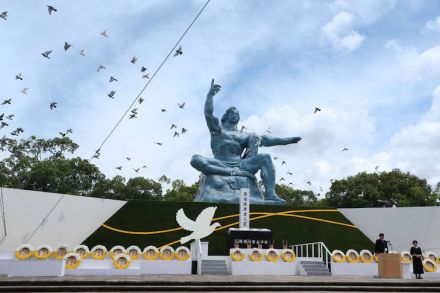
Nagasaki’s Peace Park held a ceremony today to mark the 79th anniversary of the dropping of the atomic bomb on the city (which killed 74,000 people). It was a sombre and moving occasion, as it always is, and one usually attended by high level representatives of all nations. This year was different though: the ambassadors of the UK, US and Israel were elsewhere, holding their own memorial at a Buddhist temple in Tokyo, 750 miles away. Nothing spooks the Japanese as much as disorder The reason is an unseemly row over the withdrawal of an invitation to Israel, by the mayor of Nagasaki Shiro Suzuki, apparently over fears of potential protests in the wake of the ongoing conflict in Gaza.

Japan’s volatile stock market is causing panic

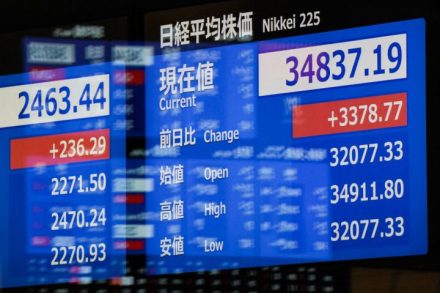
Japan’s Nikkei 225 index registered its biggest ever daily fall on Monday, plummeting by over 12 per cent and continuing the extraordinary collapse that began last Friday. Meanwhile, the Yen, which had been slowly eroding in value for months continued its dramatic resurrection moving from 162 to the dollar to under 140. At the time of writing, a technical rebound seems to be underway – but such volatility is alarming. After years of nothing very interesting happening to the Japanese economy, such upheavals have stunned locals and provoked urgent questions about causes and consequences.

Japan is running out of rice

Japan is running out of rice. Stocks have fallen to their lowest levels in decades, prompting fears that emergency reserves may need to be accessed. Prices have hit a 30-year high as private companies held just 1.56 million tons in June, the lowest level since 1999 and 20 per cent less than the previous year. Partly this is just the result of a poor crop caused by unfavourable climatic conditions – high temperatures combined with water shortages. But there is more to it than that: whereas Japan would once have shrugged off an occasional bad year, the poor state of the farming industry in Japan means seasonal fluctuations in yield are now more serious.

What’s the problem with playing Premier League football in the US?

Sadiq Khan has suggested that the long rumoured prospect of Premier League fixtures being played in the United States is now inevitable. Khan, a Liverpool supporter (largely an armchair one), told the Sports Agents podcast that he believes a stateside ‘international round’ of Premier League fixtures, similar to the NFL and NBL games played in London, was ‘the way things were going’: ‘They (the big clubs) have big fans in America. Why can’t those fans see a competitive game?... All 32 NFL teams have played in London, all of them have had a great experience. We have some of the top baseball teams playing in London’, Khan explained.

Why the punishment fits the ‘crime’ for Japan’s smoking gymnast

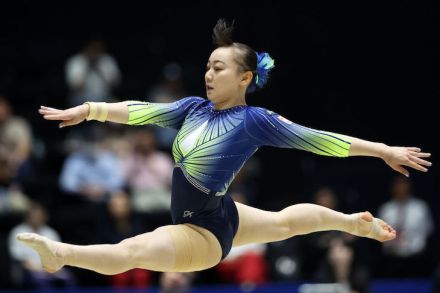
Japan’s Olympics have got off to the worst possible start. The captain of their women’s gymnastics team Shoko Miyata has withdrawn, or more accurately been obliged to withdraw, after admitting breaking the team’s code of conduct while at their training camp in Monaco. Her Olympic dream is over and she leaves in disgrace. So, what was this unacceptable behaviour? Well, it appears Miyata smoked a cigarette and drank alcohol (once, for each). Smoking and drinking are prohibited for anyone under the age of 20 in Japan. Miyata is 19.

Japan’s weird celebrity culture is coming to Britain

The Japanese singer, actor and heartthrob Matsumoto Jun, who I’ve always thought of as an Oriental David Cassidy (thus showing my age), will make his UK acting debut later this year when he appears in acclaimed playwright Hideki Noda’s very loose adaptation of the Brothers Karamazof at Sadler’s Wells. Jun is, not to sell him short, a superstar in Japan. It should be quite an event. In many ways, Japan (and South Korea’s) talent factory is like a throwback to the Hollywood star system of the 1920s to 1960s If you can’t get your head round the David Cassidy analogy, perhaps Harry Styles would be more meaningful, though even the former One Direction star would struggle to attract the kind of devotion inspired by Jun (it really is more like Cassidy – look him up).

Should the BBC be mocking Ronaldo’s tears?

Portugal squeezed through to the Euros quarter finals last night after a penalty shoot-out victory against plucky Slovenia. Or perhaps I should say Cristiano Ronaldo’s Portugal squeezed through, as whatever Roberto Martinez’s team does and however much or little their 39-year-old talisman contributes, the story always seems to be about him. The Beeb used to be fair-minded and respectful, even of the game’s rascals This time it was a tale of two penalties – one missed in normal time and one scored in the shootout. A flood of tears from Ronaldo followed the former and made it seem as if the living legend was having an on-field breakdown – though he soon recovered.

Why does Japan want to build a 300-mile conveyor belt?

In a move that sounds like something out of the new Francis Ford Coppola film Megalopolis, the Japanese government has announced that it will build a 300-mile conveyer belt for trade to link Tokyo and Osaka. The ‘Auto-flow Road’ which is projected to be the first of many such arteries linking Japan, will consist of conveyer belts either in tunnels beneath major roads or on tracks alongside the hard shoulder, or perhaps even both.  The image of the country as a super-efficient high tech deadline meeting superpower probably no longer Pallets holding up to ton of cargo each will be transported on the constantly moving treadmill.

Why Japanese women are hitting the bottle

Older Japanese women are boozing more than ever, according to a new survey conducted by Tokyo Metropolitan Government. The study found that while binge drinking by men decreased over the last ten years in all age groups, the percentage of women in their 40s, and especially those in their 50s, drinking dangerous amounts of alcohol, has shot up. For the latter cohort the figures were particularly alarming: 9 per cent a decade ago and 17 per cent now. Public displays of drunkenness are not especially frowned upon Why would this be? The most popular theory is that life for many middle-aged women has simply become much more stressful in recent years as a result of heavy-handed and perhaps ill thought through government efforts to get a more gender balanced workforce.

King Charles has much in common with Japan’s Anglophile Emperor

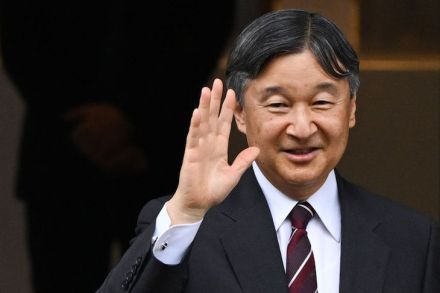
The Japanese Emperor is in London today for a state visit, the first by the occupant of the chrysanthemum throne to the UK for 26 years. Along with a trip to Buckingham Palace, Emperor Naruhito, accompanied by his wife Empress Masako, will inspect the Thames barrier, which the Emperor studied as a student. He'll then proceed to Oxford where he spent happy years as an undergraduate. The Emperor will also pay a private visit to St. George’s chapel and lay a wreath at the tomb of Queen Elizabeth II. Naruhito is a genuine Anglophile. You may not hear too much about this visit, due to other salient events obviously (there won’t be a meeting with Rishi Sunak) and the characteristically low-key way the Japanese Emperor goes about his duties.

Why Japan is unlikely to legalise same-sex marriage

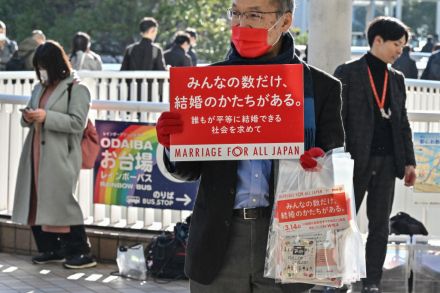
Thailand has just passed a ‘landmark’ marriage equality bill, which will pave the way for the recognition of same-sex unions in the Land of Smiles. The upper house in Bangkok comfortably approved the measure on Tuesday, and as soon as King Maha Vajiralongkorn signs it off Thailand will become the first Southeast Asian jurisdiction to formally legalise gay marriage. Equality campaigners in Japan will be watching these developments closely. With a general election expected before November and Prime Minister Fumio Kishida’s scandal-wracked Liberal Democratic Party (LDP) administration under considerable pressure, advocates for same sex marriage in the one G7 country that still denies it, will have hopes that, following the Thai precedent, the issue will feature prominently.

Will Gary Lineker be able to keep his election thoughts quiet during the Euros?

It is hard to imagine the European football championship, which kicked off last night, was a big factor in Rishi Sunak’s decision to call a snap general election. But whether the footie was a consideration or not, the possibility that events in Germany might have some bearing on the result on 4 July is something he, and we, might now wish to consider. We may have no choice if the BBC’s X-addicted Gary Lineker, who will have a huge platform during the tournament, chooses to spout off about politics. Footballers, unless they’re called Gary (Neville, Lineker), tend to keep tight-lipped about their politics There is limited data to support a link between national sporting success/failure and political outcomes but there is one precedent worth examining.

Can a government dating app solve Japan’s birth crisis?

The Tokyo metropolitan government has announced that it will soon be in the online matchmaking business. It is launching a dating app, which will hopefully appear in the summer, its latest attempt to get people to do their duty to the nation by finding a partner, getting married and procreating ASAP. The rules of the app will be a bit stricter than most commercial equivalents – you will be required to submit documentation establishing you are single and sign a pledge stating that you are willing to get married. It’s not Tinder. You’ll also need to attend an interview and provide a tax slip to indicate your salary.

What’s behind the boom in Japanese fiction?

‘There are two things that I can simply not tolerate: feminists and margarine’.  This is a quote from the novel Butter by Japanese writer Asako Yuzuki, which was published in translation last month to great acclaim. It’s billed as ‘a novel of food and murder’, inspired by the true story of a gourmet chef/serial killer and the journalist intent on cracking her case. It sounds gruesome but has plenty of descriptions of ‘scrumptious food’ apparently. I’m tempted to give it a go. What is it about these oriental offerings that has bookworms so enthralled? As are many others it seems. Butter is just the latest in a string of Japanese novels claiming prime display space in UK bookshops.

How to quit like the Japanese

Tokyo For many, the idea of quitting a job they hate, of walking into their boss’s office and telling him or her in no uncertain terms what they think of it (and them perhaps), and then striding out without a backward glance, is a delicious one, a pleasant daydream to be enjoyed on the dreary daily commute. But for the Japanese, the idea of resigning from your company is positively traumatic, so much so that the latest boom industry here is agencies who will take care of the whole messy business for you. For the Japanese, the idea of resigning from your company is positively traumatic There are now dozens of so-called ‘resignation firms’ in Tokyo, which will act as an intermediary between the prospective resignee and their company.

Will this stop players mobbing the referee?

The European football governing body Uefa has informed competing nations at this summer’s Euros that only team captains will be allowed to approach referees to dispute decisions. It is hoped this will reduce the amount of pressure placed on referees and allow for smoother and more orderly officiating. So, two’s company but three or more will be deemed an unlawful assembly and could result in yellow or even red cards. It’s a bold move, but is it necessary and will it work? The already crucifying difficulty of refereeing is not helped by having a throng of excitable prima donnas ready to encircle you at any moment  The idea comes from IFAB (the International Football Association Board) who describe themselves as the ‘guardians of football’s laws and regulations’.

Why are the yakuza stealing Pokemon cards?

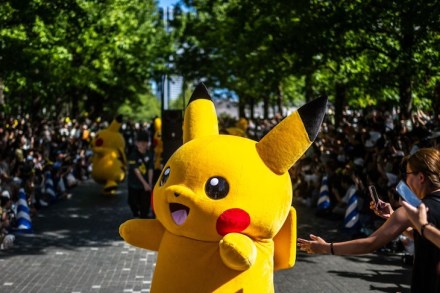
A high-ranking member of the yakuza (Japanese mafia) has been arrested in Tokyo for selling stolen Pokemon cards. Keita Saito was taken into custody in April after the theft of goods worth 1,600 dollars, which included a stack of the popular ‘Pocket Monster’ trading cards. What a comedown for the once fearsome lords of the underworld whose domains included extortion, prostitution, loan sharking, and illegal gambling. It's as if Don Corleone had been reduced to running the shell game ('watch the ball, which cup is it under?') on some New York back street.