Philip Patrick

Philip Patrick

Philip Patrick is an exiled Scot, who lectures at a Tokyo university and contributes to the Japan Times

Should the BBC be mocking Ronaldo’s tears?

From our UK edition

Portugal squeezed through to the Euros quarter finals last night after a penalty shoot-out victory against plucky Slovenia. Or perhaps I should say Cristiano Ronaldo’s Portugal squeezed through, as whatever Roberto Martinez’s team does and however much or little their 39-year-old talisman contributes, the story always seems to be about him. The Beeb used to be fair-minded and respectful, even of the game’s rascals This time it was a tale of two penalties – one missed in normal time and one scored in the shootout. A flood of tears from Ronaldo followed the former and made it seem as if the living legend was having an on-field breakdown – though he soon recovered.

Why does Japan want to build a 300-mile conveyor belt?

From our UK edition

In a move that sounds like something out of the new Francis Ford Coppola film Megalopolis, the Japanese government has announced that it will build a 300-mile conveyer belt for trade to link Tokyo and Osaka. The ‘Auto-flow Road’ which is projected to be the first of many such arteries linking Japan, will consist of conveyer belts either in tunnels beneath major roads or on tracks alongside the hard shoulder, or perhaps even both.  The image of the country as a super-efficient high tech deadline meeting superpower probably no longer Pallets holding up to ton of cargo each will be transported on the constantly moving treadmill.

Why Japanese women are hitting the bottle

From our UK edition

Older Japanese women are boozing more than ever, according to a new survey conducted by Tokyo Metropolitan Government. The study found that while binge drinking by men decreased over the last ten years in all age groups, the percentage of women in their 40s, and especially those in their 50s, drinking dangerous amounts of alcohol, has shot up. For the latter cohort the figures were particularly alarming: 9 per cent a decade ago and 17 per cent now. Public displays of drunkenness are not especially frowned upon Why would this be? The most popular theory is that life for many middle-aged women has simply become much more stressful in recent years as a result of heavy-handed and perhaps ill thought through government efforts to get a more gender balanced workforce.

King Charles has much in common with Japan’s Anglophile Emperor

From our UK edition

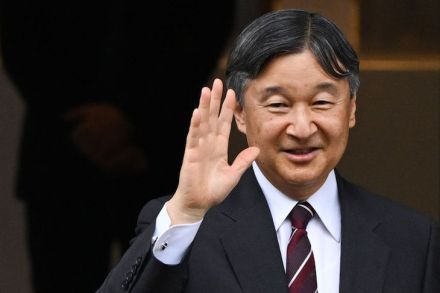
The Japanese Emperor is in London today for a state visit, the first by the occupant of the chrysanthemum throne to the UK for 26 years. Along with a trip to Buckingham Palace, Emperor Naruhito, accompanied by his wife Empress Masako, will inspect the Thames barrier, which the Emperor studied as a student. He'll then proceed to Oxford where he spent happy years as an undergraduate. The Emperor will also pay a private visit to St. George’s chapel and lay a wreath at the tomb of Queen Elizabeth II. Naruhito is a genuine Anglophile. You may not hear too much about this visit, due to other salient events obviously (there won’t be a meeting with Rishi Sunak) and the characteristically low-key way the Japanese Emperor goes about his duties.

Why Japan is unlikely to legalise same-sex marriage

From our UK edition

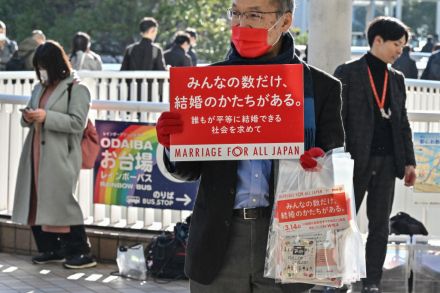
Thailand has just passed a ‘landmark’ marriage equality bill, which will pave the way for the recognition of same-sex unions in the Land of Smiles. The upper house in Bangkok comfortably approved the measure on Tuesday, and as soon as King Maha Vajiralongkorn signs it off Thailand will become the first Southeast Asian jurisdiction to formally legalise gay marriage. Equality campaigners in Japan will be watching these developments closely. With a general election expected before November and Prime Minister Fumio Kishida’s scandal-wracked Liberal Democratic Party (LDP) administration under considerable pressure, advocates for same sex marriage in the one G7 country that still denies it, will have hopes that, following the Thai precedent, the issue will feature prominently.

Will Gary Lineker be able to keep his election thoughts quiet during the Euros?

From our UK edition

It is hard to imagine the European football championship, which kicked off last night, was a big factor in Rishi Sunak’s decision to call a snap general election. But whether the footie was a consideration or not, the possibility that events in Germany might have some bearing on the result on 4 July is something he, and we, might now wish to consider. We may have no choice if the BBC’s X-addicted Gary Lineker, who will have a huge platform during the tournament, chooses to spout off about politics. Footballers, unless they’re called Gary (Neville, Lineker), tend to keep tight-lipped about their politics There is limited data to support a link between national sporting success/failure and political outcomes but there is one precedent worth examining.

Can a government dating app solve Japan’s birth crisis?

From our UK edition

The Tokyo metropolitan government has announced that it will soon be in the online matchmaking business. It is launching a dating app, which will hopefully appear in the summer, its latest attempt to get people to do their duty to the nation by finding a partner, getting married and procreating ASAP. The rules of the app will be a bit stricter than most commercial equivalents – you will be required to submit documentation establishing you are single and sign a pledge stating that you are willing to get married. It’s not Tinder. You’ll also need to attend an interview and provide a tax slip to indicate your salary.

What’s behind the boom in Japanese fiction?

From our UK edition

‘There are two things that I can simply not tolerate: feminists and margarine’.  This is a quote from the novel Butter by Japanese writer Asako Yuzuki, which was published in translation last month to great acclaim. It’s billed as ‘a novel of food and murder’, inspired by the true story of a gourmet chef/serial killer and the journalist intent on cracking her case. It sounds gruesome but has plenty of descriptions of ‘scrumptious food’ apparently. I’m tempted to give it a go. What is it about these oriental offerings that has bookworms so enthralled? As are many others it seems. Butter is just the latest in a string of Japanese novels claiming prime display space in UK bookshops.

How to quit like the Japanese

From our UK edition

Tokyo For many, the idea of quitting a job they hate, of walking into their boss’s office and telling him or her in no uncertain terms what they think of it (and them perhaps), and then striding out without a backward glance, is a delicious one, a pleasant daydream to be enjoyed on the dreary daily commute. But for the Japanese, the idea of resigning from your company is positively traumatic, so much so that the latest boom industry here is agencies who will take care of the whole messy business for you. For the Japanese, the idea of resigning from your company is positively traumatic There are now dozens of so-called ‘resignation firms’ in Tokyo, which will act as an intermediary between the prospective resignee and their company.

Will this stop players mobbing the referee?

From our UK edition

The European football governing body Uefa has informed competing nations at this summer’s Euros that only team captains will be allowed to approach referees to dispute decisions. It is hoped this will reduce the amount of pressure placed on referees and allow for smoother and more orderly officiating. So, two’s company but three or more will be deemed an unlawful assembly and could result in yellow or even red cards. It’s a bold move, but is it necessary and will it work? The already crucifying difficulty of refereeing is not helped by having a throng of excitable prima donnas ready to encircle you at any moment  The idea comes from IFAB (the International Football Association Board) who describe themselves as the ‘guardians of football’s laws and regulations’.

Why are the yakuza stealing Pokemon cards?

From our UK edition

A high-ranking member of the yakuza (Japanese mafia) has been arrested in Tokyo for selling stolen Pokemon cards. Keita Saito was taken into custody in April after the theft of goods worth 1,600 dollars, which included a stack of the popular ‘Pocket Monster’ trading cards. What a comedown for the once fearsome lords of the underworld whose domains included extortion, prostitution, loan sharking, and illegal gambling. It's as if Don Corleone had been reduced to running the shell game ('watch the ball, which cup is it under?') on some New York back street.

Why are the Japanese so bad at English?

From our UK edition

Tokyo, Japan ‘Shhh! Now on face to respectable great eels life’. How’s that for the first line of an article? I spotted this gem written on a sign in the window of a seafood restaurant in the Hibiya Midtown shopping centre in Tokyo recently. I was delighted. I’ve spent 25 years in Japan and have always enjoyed a good bit of mangled Japanese English. I had been dismayed of late by an apparent improvement in the quality of English on signs and noticeboards around Tokyo. But this was the old stuff. This was ‘Engrish’. Why would a people usually so meticulous about every aspect of life be so seemingly careless about the correct use of a foreign language?

Japan won’t forgive Joe Biden for his xenophobia gaffe

From our UK edition

Joe Biden just threw a particularly nasty insult the way of Japan, a close ally of the United States, at a campaign event. The president accused the Japanese, along with China, Russia, and India, of being ‘xenophobic’ in their reluctance to admit large numbers of immigrants, and of damaging their economies as a consequence: 'Why is China stalling so badly economically, why is Japan having trouble, why is Russia, why is India, because they’re xenophobic. They don’t want immigrants. Immigrants are what make us strong,’ he told a Washington fundraiser on Wednesday.

Scrapping replays could be the beginning of the end for the FA Cup

From our UK edition

Is time running out for the oldest knock-out tournament of them all? The FA cup‘s obituary has been written a few times in recent years but the much-loved competition has somehow survived. But, with the latest downgrade imposed by the game’s authorities, its status as a major footballing competition and treasured cultural artefact could be in real jeopardy. From next year, in response to the latest engorgement of the Champion’s League and the calendar war between Uefa and Fifa and the domestic leagues, the FA has announced that not only will there be no replays, but that the final, the traditional culmination of the football season and, once, a truly national event, will be rescheduled, yanked forward to allow a longer summer break.

It’s time for Ronaldo to retire

From our UK edition

All good things must come to an end, and that surely now ought to include the footballing career of Cristiano Ronaldo, who disgraced himself again on Monday after being sent off for appearing to stamp on and elbow an opponent in his team Al-Nassr’s Saudi Super Cup defeat by Al-Hilal. He then seemed to come close to hitting the referee. This debacle comes hard on the heels of him making an obscene gesture to fans after a game in February. Yes, he’s still scoring goals, at a low level of football, but as a global sporting icon, he’s in danger of becoming an embarrassment.

The curiously quiet reaction to Oppenheimer in Japan

From our UK edition

Finally, eight months after its US premiere and a month after it triumphed at the Oscars, Christopher Nolan’s Oppenheimer has opened here in Japan. The film had been mysteriously delayed and there were rumours it would never be screened in the only country to suffer the consequences of a nuclear bomb. No definitive explanation was ever given for the lengthy hold up, but it was almost certainly due to concerns about the subject matter, especially since Prime Minister Fumio Kishida is a native of Hiroshima and lost relatives in the blast. Timing may also have been a factor, as the buildup to the worldwide release coincided with Kishida’s hosting of the G7 summit in his hometown. One theme was global peace and nuclear disarmament and the Oppenheimer premiere might have proved awkward.

Japan is no country for young men

From our UK edition

Another week, another fun fact about Japan’s declining birthrate and ageing population to startle and amuse us. Japan has now recorded a full decade where sales of adult nappies outstripped those of baby nappies. Thanks to the surfeit of geriatric incontinents, one well-known manufacturer, Oji Holdings, has made headlines by giving up on tots entirely and announcing it will shift its production to nappies for seniors instead. It is a reasonable business decision by the company. There just aren’t enough babies. Indeed, children under the age of 15 made up less than 12 per cent percent of the country’s population in 2022, while those aged 65 and over constituted almost 30 per cent.

Football is in enough trouble without a ‘regulator’

From our UK edition

Unlike David Cameron – who famously got in a muddle about which team he supported – Rishi Sunak is a genuine football fan. But this makes the government’s latest wheeze of introducing a football regulator hard to take. Sunak says the outfit will help to prevent the ‘financial mismanagement’ of ‘unscrupulous owners’. It is, he says, a ‘historic moment for football fans’. Not everyone is convinced. The Premier League is one of Britain’s most famous exports. Millions of people around the world follow teams like Man City, Arsenal and Liverpool. Its success is because these clubs have been left relatively free to conduct business: snapping up the best players and paying enormous salaries to persuade stars to play in England, rather than rival leagues in Spain or Italy.

Japanese toilets aren’t all they’re cracked up to be

From our UK edition

What is the world’s best city in which to be caught short? You can imagine a lively discussion on this question on a TripAdvisor forum. A strong candidate would be Tokyo, which has recently added to its long list of otherworldly attractions, a collection of 17 high-tech architect designed public lavatories. The toilets feature, and arguably star, in Wim Wender’s Oscar-winning film Perfect Days which tells the story of a reclusive, obsessively diligent cleaner whose job it is to keep the facilities in immaculate condition.

Liverpool fans should stop booing the national anthem

From our UK edition

Liverpool fans, a significant number at least, booed the national anthem at the Carabao Cup final at Wembley yesterday. It wasn’t the first time this has happened – it’s been going on since the 1980s – but it was the first time since the monarch was diagnosed with cancer. This added a certain poignancy to the ‘save’ bit of the anthem, and might have been expected to persuade the Liverpool boo-boys to take the afternoon off. But no. The usual explanation for this ongoing practice is lingering resentment at how Liverpool was affected by the Thatcher government’s monetarist policies of the 1980s (parts of the city reported 30 to 50 per cent unemployment) and how it has been treated after.