Philip Patrick

Philip Patrick

Philip Patrick is an exiled Scot, who lectures at a Tokyo university and contributes to the Japan Times

Trump’s tariff pause has given Japan time to plan its next move

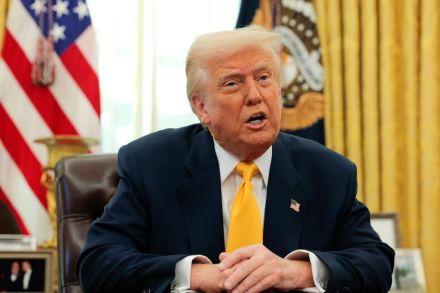
Asian markets are rebounding after President Trump announced a 90-day ‘pause’ in the implementation of the ‘Liberation Day’ tariffs that had sent shock waves through the financial community. Most dizzying perhaps were events in Japan, where after a vertiginous plunge on Monday, the Nikkei surged over 8.5 per cent on this morning's trading. Japan’s iconic companies had a good day: Toyota was up 6 per cent, Sony 12 per cent and Mitsubishi 10 per cent. Elsewhere in Asia, the South Korean KOSPI rose 6 per cent, the Hang Sang climbed 2.69 per cent, the Singapore Composite Index 1.29 per cent and Taiwan’s stock exchange was up over 9 per cent.

Trump is bending Japan to his will

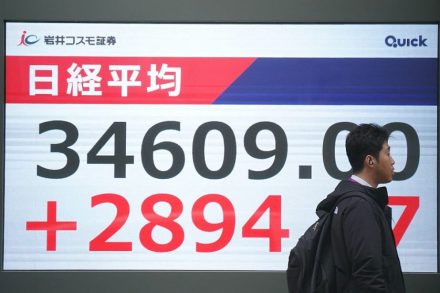
‘National crisis’ was how Japanese Prime Minister Shigeru Ishiba described the fallout from President Trump’s ‘Liberation Day’ tariffs in a speech on Friday. That was strong language from the normally measured Ishiba, but was borne out by the bloodbath in the Nikkei stock exchange over the last few days of trading. Stock markets around the world have been battered, but Japan’s has been one of the worst. It plunged 2,600 points to close down a whopping 8 per cent today, the third largest fall on record. Amongst the worst casualties were the Mizuho Financial Group, whose shares fell 10.6 per cent, and Mitsubishi, whose stock plunged by 10.2 per cent. Trading on futures was briefly suspended as circuit breaker limits were reached amid the carnage.

They think it’s all over for President Yoon – it is now

Yoon Suk Yeol, elected South Korea’s president in 2022, has been removed from office. The Constitutional Court in Seoul has upheld Yoon’s impeachment over his actions in the ultra-short-lived declaration of martial law last December. After lengthy deliberations the court delivered a decisive eight-zero verdict. A snap election must now be held within 60 days with Prime Minister Han Duck-soo serving as acting president in the interim. Yoon’s PPP (People Power party) accepted the verdict and the man himself issued a humble apology to the nation saying, ‘I deeply regret not being able to live up to your expectations. It has been the greatest honour of my life to serve our nation.

I’m bored by this blossom worship

It’s cherry blossom season in Japan and about half the population (according to a Kansai University study) will gather at the viewing spots to pose for photos (Japanese Instagram may collapse) and enjoy picnics in the shade of the sakura trees. Japan will also welcome close to four million visitors to witness the floral marvel. The season is brief, peaking in about a week and disappearing by the end of April, during which time the progress of the blooms across the country is followed with breathless enthusiasm by reporters on the news bulletins. We are assumed to be, expected to be, giddy with excitement about all this, and to swoon with childlike wonder at the profusion of vivid yet delicate flowers. But I’m afraid I’m not quite up to it any more.

Japan has been stunned by the Trump tariffs

Virtually the whole world is waking up to the reality, not threat now, of President Trump’s Liberation Day tariffs, but in few places will the sense of shock and resultant anxiety be greater than Japan, where a whopping 24 per cent has been slapped on exports to the US. The Japanese, who have grown used to a decent relationship with successive American administrations and a whopping trade surplus, will have many sleepless nights ahead. The reaction here has not been one of anger or resentment – more stunned bemusement. Prime Minister Shigeru Ishiba, who did his best to cozy up to Trump on a recent summit in Washington (he presented Trump with a golden ‘kabuto’ helmet) has said the tariffs are ‘very hard to understand’.

What’s wrong with a Spinal Tap reboot?

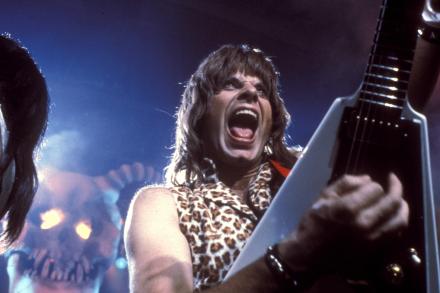
The wigs are being dusted off, the spandex jumpsuits laundered and the amps turned up, not to 11 but to infinity. Rock legends Spinal Tap, one of the world’s loudest bands, are back with a sequel to their seminal 1984 mockumentary, to be released on 12 September. But can Spinal Tap 2: The End Continues possibly live up to the nearly flawless original, or are we about to witness an act of cultural sacrilege? https://youtu.be/P-Y51nBET8k Happily, nearly all the original cast will be in the sequel, and we are promised some big-name cameos from Paul McCartney, Elton John and Garth Brooks.

Does Japan want its own nuclear weapons?

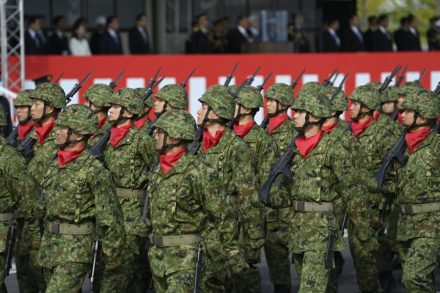
Japan is planning to strengthen its ‘counterstrike capabilities’ by deploying long-range missiles on the southern island of Kyushu. The missiles have a range of 621 miles, meaning they could hit targets within North Korea and China. The move comes amidst rising tensions in the region and in an atmosphere of increased uncertainty in Japan about American security guarantees. The weapons, upgraded versions of the GSDF (Ground Self Defense Force – Japan’s army) Type 12 land-to-ship guided missiles, will be stored at bases with existing military garrisons and will be able to defend the strategically vital Okinawa island chain.

Football is demolishing its past

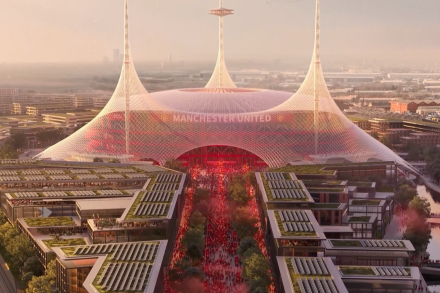
Saturday 17 May will see the final ever game at Everton’s Goodison Park, and with it the end of 133 years of history. Unless the rumour of a last-minute reprieve involving the women’s team turns out to be true (highly unlikely), the bulldozers will soon get to work and the ground will be reduced to rubble. The club will move into a new ‘super arena’ at Bramley-Moore Dock, Vauxhall, for the 2025/26 season. Sad? Well, yes. The club, on its website, has acknowledged the mixed feelings of the faithful but promised the move will be an ‘exciting new chapter in the club’s history’, with the additional 13,000 seats in the new ‘365-day’ ground offering space for additional ‘fandom’, including many more of those all-important, merchandise-hungry ‘tourists’.

Is Trump going to rip up the US security alliance with Japan?

Another day, another Trumpian bombshell, this one aimed at the country he says he loves: Japan. Trump told reporters this week that the US-Japan security alliance which has bound the two countries together militarily since 1952 and offered military guarantees to Japan since 1960 was ‘interesting’ but unequal as it obliged the US to defend Japan but not vice-versa. Trump added that the Japanese ‘make a fortune with us economically’ a reference to Japan’s trade surplus with the US. Trump was speaking ahead of a visit by Japan’s trade minister who will reportedly ask (perhaps beg) for an exemption from pending US tariffs on steel and aluminium (25 per cent due next week with ‘no exceptions’).

Japan and Britain are too weak to help each other

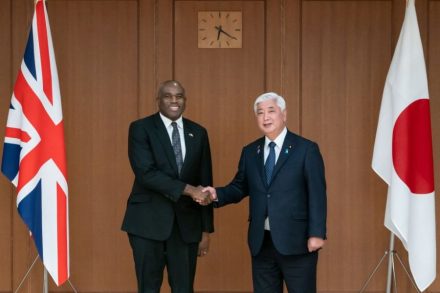
Foreign Secretary David Lammy and Business Secretary Jonathon Reynolds are in Tokyo for ‘2+2’ (two ministers for the price of one) talks with their Japanese counterparts. The sessions are expected to be at least superficially productive, with hopeful talk of enhanced cooperation on security and strengthened economic ties (particularly on AI). Apparently, details of a new trade and defence deal, including plans to develop a new industrial strategy partnership between the 4th and 6th biggest economies in the world, will be announced, along with some hot air about an offshore wind project. There is something faintly desperate in the idea that the UK can be of much help to Japan The Foreign and Business Secretaries will probably enjoy themselves.

The comedy genius of John Shuttleworth

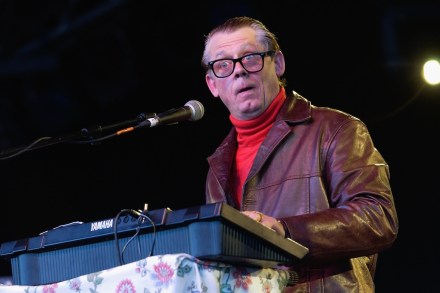
There is a certain comic archetype that is particularly British. The likes of Pooter, Mainwaring, Hancock, Fawlty and Brent are in a tradition – going back to Falstaff, perhaps further – of hopelessly optimistic yet socially oblivious dreamers. One such character is John Shuttleworth, created and played by Graham Fellows. For the uninitiated, John Shuttleworth is a retired security guard and aspiring singer-songwriter from Sheffield who lives with his dinner lady wife and two children, Darren and Karen. He performs mainly at hospices and drop-in centres, often for no more than his travel money. His career is inexpertly managed by his next-door neighbour with whom John enjoys a generally warm, though occasionally fractious, relationship.

Why Japan is best at whisky, tailoring, cheese, pastries… I could go on

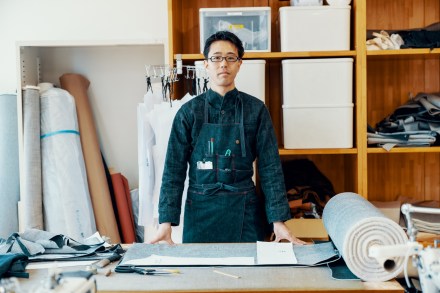
Many people visit Japan because of its food but few, surely, have pastries in mind. In fact, Japan has no discernible tradition in this culinary realm at all. But that didn’t stop a trio of Japanese bakers from winning the biannual pastry world cup, pushing the fancied host nation France into a chastening second place. Japan won last time too and thus became the first country ever to retain the title, which you might suppose would make this big news here in Tokyo. But the media has hardly mentioned it, probably because this kind of national stereotype-busting triumph is becoming quite normal. For example, Japan, believe it or not, is now one of the best countries in the world for pizza, especially the Neapolitan version.

Japan’s smoking ban is a sham

The Japanese city of Osaka has banned smoking on the streets in an apparent effort to smarten up the city and make it more ‘visitor-friendly’ ahead of this year’s World Expo, which begins in April. Smoking had been prohibited in six zones, including around the central station prior to the announcement. But on Monday, all public streets, buildings, parks and plazas in the city became smoke free. Smoking and vaping in all but the smallest eateries has been banned too, though designated smoking rooms will still be permitted. The fact that the smoking ban is getting significantly more coverage than the Expo itself highlights the difficulties organisers have had in rousing interest in the looming jamboree.

The real reason female footballers aren’t on birthday cards

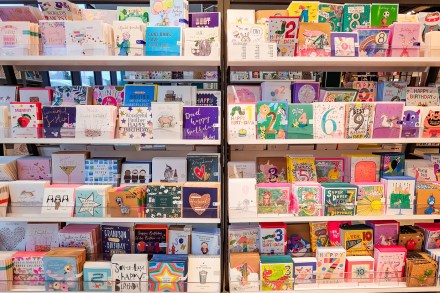
Oh dear… it appears that birthday and greetings cards are sexist. This is, at least, the claim of a group of MPs who have submitted an EDM (Early Day Motion) calling for more representation of female footballers on such items by their manufacturers. The motion was tabled by Liberal Democrat MP for Epsom and Ewell, Helen Maguire, who told the BBC that the greeting card industry was ‘not moving with the times’.  Perhaps it is not the companies who are sexist then but the public? I certainly am Poor Ms Maguire explained how she had been motivated by the trauma of searching for a card for her ‘massive football fan’ office manager and finding only those depicting male players. One can only imagine the distress this induced.

The Arts Council should subsidise footballers

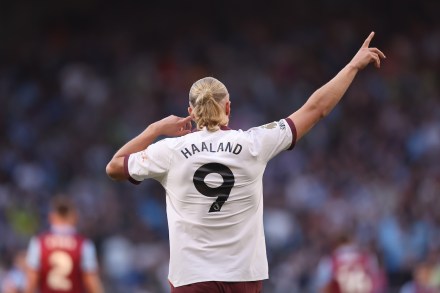
The Norwegian footballer Erling Haaland will, upon commencement of his new nine-year contract extension with Manchester City, be paid £1 million a week. On pocketing his first colossal pay cheque (which includes sponsorship income), Haaland will cruise past his rivals in the traditional European leagues. Real Madrid’s Kylian Mbappé is forced to get by on a paltry €45 million a year, Liverpool’s Mohamed Salah on his derisory €18 million, and Ballon d’Or winner Rodri with his piddling £9 million. The Finnish government used to pay its greatest artists an annual stipend Has the world gone insane? One million pounds a week, for kicking a ball around for a couple of hours? It is a sum that might make Croesus himself blush.

The arrest of South Korea’s president won’t end this saga

South Korean president Yoon Suk-yeol has been arrested after police officers scaled fences and cut through barbed wire to detain him in his luxury Seoul residence. Suk-yeol, the first ever sitting South Korean leader to be taken into custody, was held in connection with his failed attempt to impose martial law last month. But while South Korean authorities have finally got their man, this is far from the end of the saga. Yoon's talk of ‘bloodshed’ was probably hyperbolic A motorcade believed to be carrying the president was seen leaving his compound and he appears to be being held at the CIO (Corruption Investigation Office) headquarters in the nearby city of Gwacheon.

The ‘MAGA’ South Koreans still supporting President Yoon

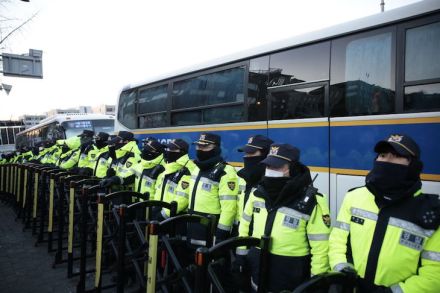
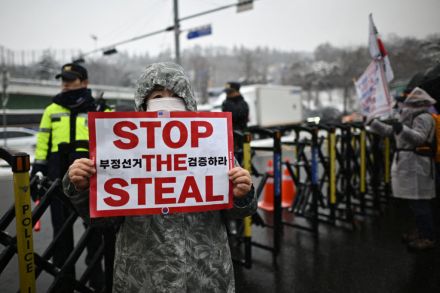
In extraordinary scenes more reminiscent of a South American coup than a supposedly stable first world democracy, fights broke out between protestors supporting and opposing South Korean President Yoon Suk-Yeol, outside his presidential compound in an upscale suburb of Seoul. They were there to demand or resist Yoon’s arrest for his declaration of martial law last month.  Yoon, whose powers are currently suspended, is being defended by the PSS (Presidential Security Service) who are barring the way to government investigators now trying to figure out how to gain entry. Yoon’s personal security detail (200 strong) has fortified his compound and so far kept investigators at bay.

Are Premier League fans right to protest ticket hikes?

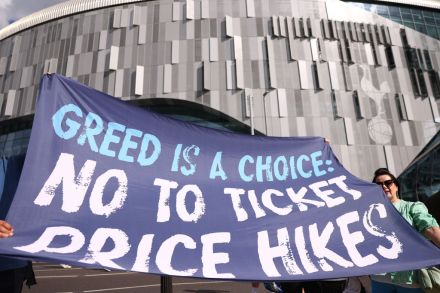
It takes quite a lot to unite the fans of Manchester United and Liverpool, but it will happen today at Anfield. Some of the most committed supporters will make a joint protest along with the Football Supporters’ Association at what they see as the exploitative ticket price policies of their respective clubs. There will be demonstrations outside the stadium and a banners bearing the message ‘Stop Exploiting Loyalty’ will be unfurled inside the ground. The specific target is the trend in rising prices and the gradual disappearance of concessions, which is making regular attendance for generational fans increasingly unaffordable.

Why did South Korea’s President Yoon declare martial law?

The aftershocks of last Tuesday’s declaration, and then cancellation, of martial law by President Yoon Suk Yeol continue to be felt by South Korea’s ruling elite. Every day brings a new development and fresh revelations in this shocking and somewhat bizarre episode, along with evidence of the deep fissures in what had seemed a stable and relatively harmonious society. Yoon survived an impeachment vote on 7 December, but will likely face another on Saturday. He is under police investigation and two attempts have reportedly been made to raid his parliamentary office. There have been protests and strikes (by metalworkers at Kia plants) in a push for his exit. He has vowed to fight on.

South Korea’s President Yoon will be lucky to escape jail

Six hours. That was the duration of the profoundly disturbing and simultaneously farcical version of martial law invoked by South Korea’s president Yoon Suk Yeol on Tuesday night – the country’s first experience of military rule for 40 years. It was so brief in duration that if you weren’t plugged in to social media or watching TV you may not have been aware it had even occurred. What this brief but extraordinary episode amounted to was a deployment of troops to the parliament building to bar the entrance of lawmakers. That operation failed utterly, as protesters were quickly on the scene to take on the military, in some cases with fire extinguishers, and facilitate the entrance of the representatives.