Philip Hensher

Philip Hensher is professor of Creative Writing at Bath Spa University and the author of 11 novels including A Small Revolution in Germany.

Sins of the flesh

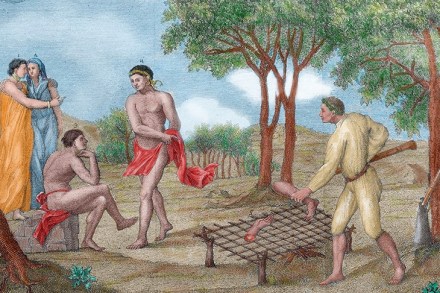
Bill Schutt has an excellent subject, and he explores it from a promising angle. Cannibalism has long interested zoologists, anthropologists, historians, criminologists, literary theorists and students of theology and blasphemy — the absurd claim that Roman Catholics were commending it in their account of transubstantiation was a favourite with 18th-century English blasphemers. Few people have tried to bring all these together, and perhaps by the end we have to conclude that there is not much connecting the very different elements at the remote ends of the scale. Still, it was worth a try. Schutt is an animal scientist, and he begins with the simpler organisms. At the bottom of the scale, cannibalism in invertebrates is actually quite common for particular purposes.

An unmagnificent seven

One of the most interesting developments in modern publishing has surely been the revival of interest in women writers of the past. Beginning with Virago Press, publishers have delved back and rediscovered exceptional female writers from the 17th century onwards. These have either been rescued from oblivion, or from the frequent fate of being dismissed as middle-brow and narrowly domestic. Editors and a new generation of scholars have unearthed excellent writers, from Fanny Burney to Elizabeth Taylor, and have changed literary taste forever. The success of the enterprise probably means that it is now easier to find a new readership for a once-popular female author than for a largely forgotten male author.

Spectator Books of the Year: Philip Hensher on a good year for novels

A good year for novels. Rachel Cusk’s Transit (Cape, £16.99) is a brilliant and original enterprise, as well as a hymn to the joys of the good story. Elizabeth Strout’s My Name is Lucy Barton (Viking, £12.99) shouldn’t work, but its frail texture was a triumph of tenderness, and sent me back to her excellent Olive Kitteridge. And I loved David Szalay’s scabrous, intelligent and hugely engaging All That Man Is (Cape, £14.99). My major discovery, though, was Joy Williams, whose collected stories, The Visiting Privilege (Tuskar Rock, £16.99), proved an electric and dangerously human volume. Not making sense, and making too much sense, is Williams’s alarming territory.

No one turned a hair

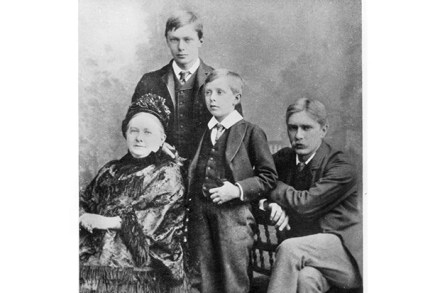
The Benson family was one of the most extraordinary of Victorian England, and they certainly made sure that we have enough evidence to dwell on them. Edward White Benson was a brilliantly clever clerical young man of 23 when he proposed to his 11-year-old cousin Minnie Sidgwick. He had been the effective head of his family since his father’s death nine years earlier; Minnie, too, was fatherless. Despite doubts from Minnie’s mother, they agreed to marry when Minnie was 18. She, too, was clever — Gladstone famously described her as ‘the cleverest woman in Europe’ — but had no real attachment to Benson or to any other man. Her romantic passions were always directed towards women.

A big beast in Hush Puppies

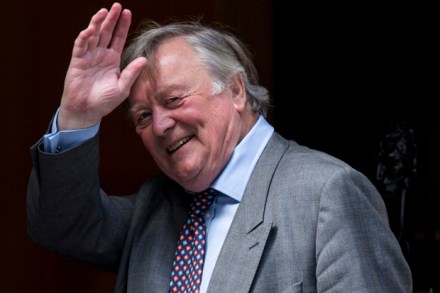
It always used to be said that, if it had been up to Guardian readers, Ken Clarke would certainly have been leader of the Conservative party. It might have gone beyond that. Some politicians are much loved by the general public, who never have to meet them, and loathed by their colleagues and unfortunate underlings — one thinks of Greville Janner or Alf Morris, who once pushed his fist into my face when I was refusing to do his bidding. That doesn’t seem to be true of Clarke, who is popular pretty much across the board, his instincts for decency and sceptical intelligence ensuring that. Although his Europhile commitments effectively barred him from the party leadership on the occasions when he might have stood a chance, his qualities have always been recognised.

Thoroughly bewitching

Angela Carter was a seminal, a watershed novelist: perhaps one of the last generation of novelists to change both the art she practised and the world. Reading this splendid biography, it is hard to avoid the false conclusion that she always knew exactly what she was doing. Her life, in its swerves and unexpected corners, always turns out to be contributing to her work; how clever of her, one starts to think, to get a job on a local news-paper, to go to Japan, to have an array of dotty, oppressive or plain witchy aunts, mother and grandmother…. Of course it was not like that. Carter’s life seems rich and inevitable in the retelling because she made use of almost everything. There was not much that she wouldn’t look at with interest.

A life of telling stories

Not all novelists lead a public life. Those who do, however, tend to make a bit of a performance out of it. Beryl Bainbridge’s life, even before she started publishing novels, was an act, and during her period of fame she was famous for presenting herself in a certain way. It was an effective strategy for dealing with life, and because of it Beryl was one of the most widely loved figures of London life. I didn’t know her at all well, but always found her a total delight when she surfaced at literary parties; she had a knack of making you feel that you were going to enjoy looking after her for the next ten minutes.

A meeting of two minds

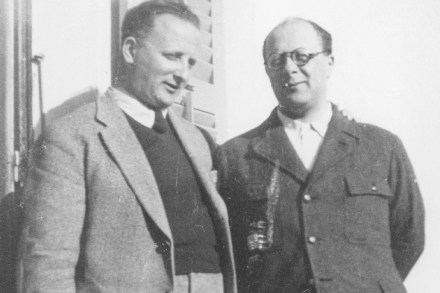
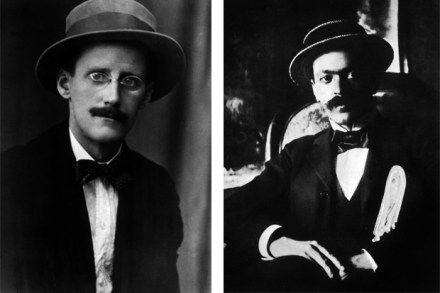
This lovely, modest and precise book tells the story of the most productive friendship among the modernists, and the most surprising. Stanley Price calls James Joyce and Italo Svevo two of the four great modernists, along with Kafka and Proust. That may overstate the case for Svevo, but no reader will reach the delightful, happy ending of their friendship and begrudge a biographer’s warm enthusiasm. Few encounters between a paint manufacturer and a teacher of English as a foreign language have ever ended in a mood so like a fairy tale. In 1904, Joyce arrived in Trieste with a woman he had met only four months earlier called Nora Barnacle. It was not a carefully considered destination.

Visions of suburbia

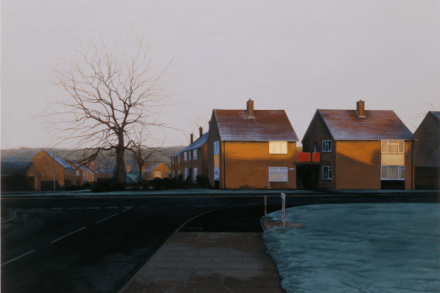
Art is aspiring; hungry; acutely aware of what it could become, and of what it could lack; longs for safety and reaches out in speculative attempts to do something new; exists on the outer edges of lives, looking inwards with hopes, some day, to be more essential. Art, literature and music are, in short, suburbs to the grands projets of our lives at their most significant. Over the next year the Architecture Foundation will present new films, walks, talks and another instalment of the Doughnut Festival, to contemplate the transformation of London’s outer ring. It’s an interesting moment. The capital is not physically expanding, but the relationship between inner and outer is significantly altering and will go on altering.

Food for thought | 7 July 2016

Elisabeth Luard has a fascinating and rich subject in the relationship between food and place. Humans eat differently according to where they live. Their diets both in daily life and in feast-day magnificence are influenced by seasonal and regional availability, sumptuary laws, convention, history and even political diktat. I was in Norway last week, and was repeatedly tempted by the offer of grilled whale, though less so by the pseudo-cheese Brunost or Gjetost. (When a lorry carrying Gjetost crashed and burst into flames in a tunnel in 2013, the load of sugar in the ‘cheese’ fuelled an inferno that the firefighters could not approach for four days.

Wise women in wikuoms

In spurts and bursts and flashes, a sublime novelist at work reveals herself. In Annie Proulx’s new novel, there are breath-taking pages and set pieces of extraordinary power. A man on board a ship, as the temperature plummets, sees all those around him embedded in ice before the catastrophe falls on him; a logging run down a river blocks, builds and explodes with the force of missiles; a wall of fire sweeps across a forested wildness. There are individual chapters of great dramatic force, as Proulx’s people confront the possibilities before them and produce their own solutions. But are those flashes enough?

The spaces in between

The unfinished is, of course, something which tells us about the history of a work of art’s creation. A work of art may have been interrupted by the artist’s death, as with the paintings that Klimt left behind in his studio. Or it may simply have been abandoned when a patron failed to fulfil his obligations, or the painter had grown bored with the subject and moved on to something else. These spaces and gaps give us a glimpse of an artist at work and invite us to speculate about what Mondrian, for instance, was doing abandoning the 1934 ‘Composition with Double Lines’ or Cézanne the 1898 ‘Bouquet of Peonies’. Did something better come along? Did the painting present too many problems?

‘Help the British anyhow’

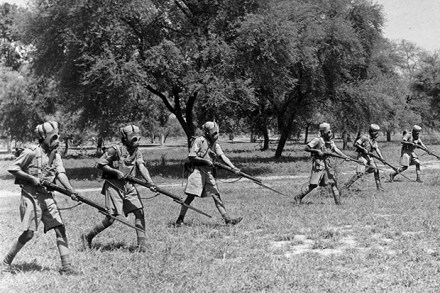
The other day, some anti-imperialist students were questioning the presence in their institutions of statues of Cecil Rhodes, a West African cockerel and, very strangely in view of her conspicuously anti-racist convictions, Queen Victoria. In response, a Guardian columnist, who has probably made less effort to learn Hindi than Queen Victoria did, amusingly said that it was time to ‘start a debate’ about the British empire. I would have thought that we have spent much of the last century energetically examining the subject from topknot to shoesole. Nevertheless, there remain some large areas which haven’t been properly considered, and among them is the complex story of India’s role in the second world war.

‘Existentialism? I don’t know what it is’

I’m certainly the wrong person to be reviewing this book, never having succeeded in understanding anything that a philosopher said about anything — but particularly the collected utterances of the existentialist school. Nevertheless, I think it fair to say that between the ages of 15 and 18, I had the wardrobe down to a T. In Yorkshire in the early 1980s, if you wanted to be existentialist, you wore duffle coats and drainpipe jeans and, of course, the famous black polo-neck. I knew kids who smoked Gauloises and one who actually went in for smoking a pipe. Your spectacles were those NHS free type popularised by John Lennon; your shoes might be Hush Puppies. (A little later they were black Doc Martens with thick rubber soles.

Tawdry tales of Tinseltown

This is a very odd book that Jean Stein has compiled — about the evanescent splendour of Los Angeles, which only occasionally touches on the film industry. Its setting’s most memorable landmark appears to be the name of one of its districts, written in enormous white letters on a hillside. That, and various opulent houses, preserved in one movie after another and generally concealed from public view. Stein’s subject is the failure to leave any kind of a mark — despite huge spectacle and expenditure; and witnesses are reduced to repeating over and over again,‘Well, you should have been there at the time.’ She tells five stories. The first concerns the Doheny family, whose wealth derived from Los Angeles’ main commodity before films: oil.

A touch of class | 31 December 2015

The New Yorker, not far off its centenary now, has moved beyond rivalry to a position of supremacy among American magazines. It has attained this not by taking a particular political position, although it certainly has one — it represents, obviously, a metro-politan, liberal, outward-facing attitude to the world. Rather, its pre-eminence is down to its valuing, above all, the quality of writing. Of course, aspects of the New Yorker have always irritated people. It possesses a somewhat supercilious quality — the one-page comic sketch, ‘Shouts and Murmurs’, invariably leaves me straight-faced, and sometimes even a bit depressed. I can never decide whether the restaurant reviews are meant to be a joke, so absurd do they make their subjects sound.

Charles Williams: sadist or Rosicrucian saint?

Charles Williams was a bad writer, but a very interesting one. Most famous bad writers have to settle, like Sidney Sheldon, for the millions and the made-for-TV adaptations and the trophy wife. Williams had a following, and in the 1930s and 1940s some highly respected literary figures declared him to be a genius. But why did Williams appeal so strongly to a particular age — and what, if anything, can he offer us now? He belonged to that wonderful generation liberated by the 19th-century spread of education. He came from a family with no resources, but a terrible, pathetic yearning for literature. His father, Walter, managed to scrape into print, writing moralising short stories and sentimental poems for the cheapest magazines.

Margaret Thatcher’s most surprising virtue: imagination

In almost every one of the many biographies of Margaret Thatcher that now exist, the story is told of her being congratulated for her good luck in winning a prize when she was nine — either for reciting poetry or for playing the piano. She indignantly replied, ‘I wasn’t lucky. I deserved it.’ Now, in Charles Moore’s biography, we reach the splendid zenith of Mrs Thatcher’s career in the form of her second administration of 1983–7. We have to ask the question again: was she lucky, or did she deserve it? Clearly, one of the chief reasons that she was re-elected in 1983 after a period of staggering unpopularity was the Falklands triumph of 1982, with which Moore concluded his first volume.

Wholly German art

Christian Thielemann (born in 1959) is a self-consciously old-fashioned figure who makes rather a virtue out of his limitations. As a conductor, he stands out in a profession increasingly given to the eclectic, and to performances of music outside the western canon. The practitioners of art music have almost all surrendered to the requirement to reach out, to experiment with the new and the non-European, and to mesh their endeavours with conscious gestures of social improvement. Thielemann could hardly be more out of sympathy with the prevailing mood. He is noisily devoted to musical excellence at all costs, and to long apprenticeships rather than flashes of stardom.

A bad novel on the way to a good one

This is an interesting document, and a pretty bad novel. I don’t know why anyone thought it would be otherwise. In 1960, Harper Lee published To Kill a Mockingbird. It was an important statement, as well as a very good novel. Just as it took the southerner Lyndon B. Johnson to make the most significant civil rights concessions, so literary culture needed a novel written by a woman from the south saying all the right things about race in the firmest way possible. The book was compelling, and immediately made its way into classrooms worldwide, where it has stayed. Subsequently, Harper Lee made it very clear that she would not be publishing another novel — neither writing one, nor producing one written earlier.