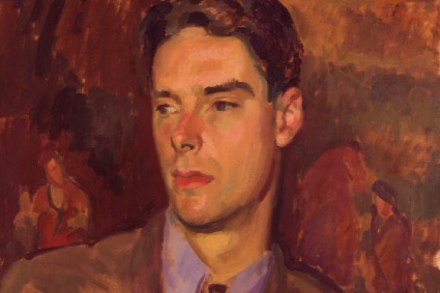
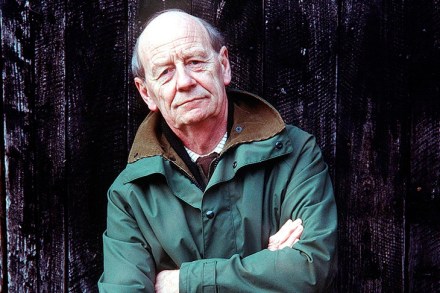
Anthony Powell gets the superb new biography he deserves
From our US edition
Anthony Powell: Dancing to the Music of Time by Hilary Spurling reviewed
Philip Hensher is professor of Creative Writing at Bath Spa University and the author of 11 novels including A Small Revolution in Germany.
From our US edition
Anthony Powell: Dancing to the Music of Time by Hilary Spurling reviewed
The revival of interest in mid-20th century novelists is one of the most positive and valuable developments of our time. This has particularly brought about a reconsideration of the work of women. Beginning, perhaps, with the creation of the Virago classics, female authors have been brought back into print and given the sort of serious
The other day in the Guardian’s Blind Date column, two participants, or victims, finished off an account of their frightful encounter by dismissing any chance of a future relationship: ‘I’m sure two ENFPs might wear each other out.’ The acronym is perhaps not familiar to everyone, but that, coming from a couple of young people
Orphans are everywhere in literature — Jane Eyre, Heathcliff, Oliver Twist, Daniel Deronda, and onwards to the present day. They are obviously useful to storytellers, and particularly to the writers of children’s books, who naturally want their heroes to undertake adventures without the controlling eye of ordinarily caring parents. The parents of Roald Dahl’s James
In the gap between what we feel ourselves to be and what we imagine we might in different circumstances become, lies civility. Keith Thomas’s marvellous new book addresses the subject of ideal behaviour. It shows the way that early modern England formed notions of civilisation and proper conduct, in contrast to what was termed ‘the
A very prolific and long-standing writer of short stories reveals himself. William Trevor, who died in 2016, owned up to 133 short stories in the two-volume 2009 Collected Stories, and here are ten final ones, written in his last seven years. One shy of a gross, he might have had a character put it. Reading
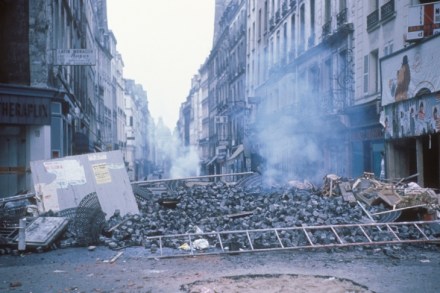
’68 will do as shorthand. Most of ’68, as it were, didn’t happen in 1968. It was, at most, the centrepoint of a long accumulation of radical protest. It began with duffle-coated marches against nuclear war, a well-mannered and respectful movement whose spirit persisted to the end of the decade. (In October 1968, a rally
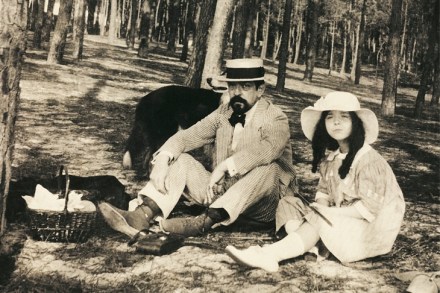
At the end of his study of Debussy, Stephen Walsh makes the startling, but probably accurate, claim that musical revolutionaries tend to be popular. We generally think of radicals as being primarily like Schoenberg, Charles Ives and Pierre Boulez, whose works, after decades, still mainly appeal to a small group of sophisticates. But if one
‘True crime’ is a genre that claims superiority over imagination, speculation and fantasy. It makes a virtue of boredom and detailed accounts of procedure and paperwork, and characteristically narrates two things: the process of investigation and discovery, and the events that set them off. But what happens if those procedures can’t be narrated? What becomes
For many of us, life has become global. Areas which were previously tranquil backwaters are now hives of international activity. Leisure travel has given us the possibility of first-hand exposure to once very remote places. You don’t have to be particularly privileged or adventurous to go on holiday in January to south-east Asia: two weeks
‘Outsider’ ought to be an important word. To attach it to someone, particularly a writer, is to suggest that their helpless circumstances have condemned them to struggle and neglect. It is up to us — posterity — to look beyond the writers who had social advantages in the year 1880, say, and find those who
Great novelists come in all shapes and sizes, but one thing they all share is a status of half-belonging. If they had no foot in the world at all, they could hardly understand it; if they completely belonged, they could hardly understand what was distinctive. One of the pleasures of this excellent biography is fully
In 1987, the art of opera changed decisively. John Adams’s opera Nixon in China was so unlike the usual run of new operas in its concept that many people, on first hearing about it, assumed it had to be a joke of some sort. Turning the preposterous and reviled figures of Richard and Pat Nixon
There are a number of reports by his contemporaries of Thomas Gainsborough at work. They make you realise what a very strange painter he was. There was an element of theatricality in his working practice — the public would expect to be astonished when they glimpsed it — but, even so, it is difficult to
The details of Mussolini’s fascism are perhaps not quite as familiar in this country as they might be. Even quite well-meaning people have a tendency to treat him as, in part, a joke. Just how horrible the period was needs to be explained with reference to individual lives. Caroline Moorehead’s book about the Rosselli family,
It’s an important subject: the existence of a permanent and significant minority within London’s life. Gay men and lesbians have always been there, leaving — or taking care not to leave — traces of their existence. But for the historian, a difficulty arises: often the only evidence lies in their occasional brushes with the law.
I think we’re all agreed about Donald Trump — by which I mean all of us who read the literary novel, buy hardbacks and take pleasure in good writing. The novel as a form is interested in different points of view; is protean and humanly various; listens to different voices patiently; does not shout down.
Everyone knows what the Rorschach tests are. Like Freudian slips, boycotts, quislings and platonic friendships, however, it was long ago forgotten that they had been named after an individual human being. Hermann Rorschach was a Swiss doctor and psychiatrist with curiosity about the visual arts, a contemporary of Freud and Jung. He created the tests
Bill Schutt has an excellent subject, and he explores it from a promising angle. Cannibalism has long interested zoologists, anthropologists, historians, criminologists, literary theorists and students of theology and blasphemy — the absurd claim that Roman Catholics were commending it in their account of transubstantiation was a favourite with 18th-century English blasphemers. Few people have
One of the most interesting developments in modern publishing has surely been the revival of interest in women writers of the past. Beginning with Virago Press, publishers have delved back and rediscovered exceptional female writers from the 17th century onwards. These have either been rescued from oblivion, or from the frequent fate of being dismissed