Philip Hensher

Philip Hensher is professor of Creative Writing at Bath Spa University and the author of 11 novels including A Small Revolution in Germany.

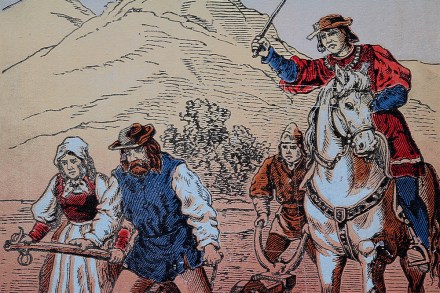
The pointlessness of the German Peasants’ War – except in Marxist ideology

From our UK edition

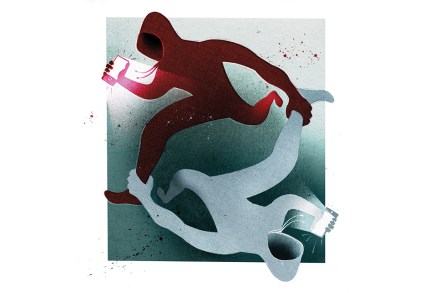
The preservation of a strict social hierarchy rests very often on the enforcement of correct modes of address. In America today any university student may address any other as ‘dude’, but those who have attained a certain level of prestige will object if an unwary low-status blunderer ventures to call them ‘bro’. Rebels seeking to overturn rigid class systems will often start by violating such regulations. The German revolutionaries of 1968, for example, made a point of addressing everyone as arschloch, or ‘arsehole’ – a radical usage I remember being startled by it in mid-1990s Kreuzberg bars until it was explained to me that I wasn’t being insulted. Their other move, to use the intimate du, rather than the formal Sie, for ‘you’, has taken much stronger hold.
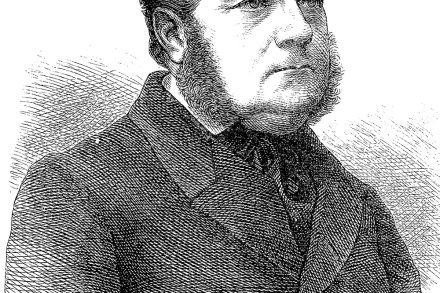
The beauty and tedium of the works of Adalbert Stifter

From our UK edition

A commercial publisher bringing out a book of old academic essays on Austrian writers, some completely unknown to English readers, might need an explanation. In this case the author is W.G. Sebald, who produced a series of cogitative books that made his name in the 1990s. Before he acquired the worldwide authority of The Emigrants, The Rings of Saturn and Austerlitz, Sebald had a career in the academic proponency of German literature. Silent Catastrophes is the first English translation of two essay collections from 1985 and 1991, The Description of Misfortune and Strange Homeland. (‘Uncanny’ would be a better translation than ‘strange’, but neither title goes easily into English.

Catherine Lafferty, Michael Simmons, Paul Wood, Philip Hensher, Isabel Hardman and Damian Thompson

From our UK edition

39 min listen

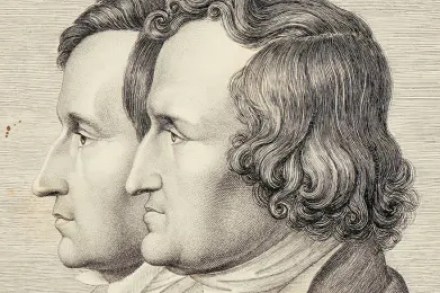
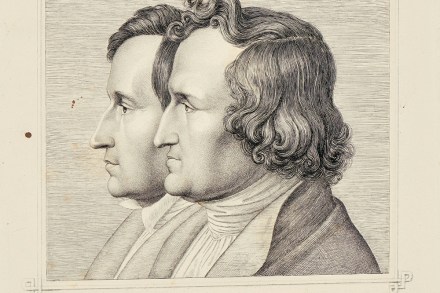
On this week’s Spectator Out Loud: Catherine Lafferty argues that the drive to reduce teenage pregnancies enabled grooming gangs (1:27); following Luke Littler’s world championship victory, Michael Simmons says that Gen Z is ruining darts (6:32); Paul Wood looks at the return of Isis, and America’s unlikely ally in its fight against the terrorist group (10:35); Philip Hensher reviews a new biography of the Brothers Grimm by Ann Schmiesing, and looks at how words can be as dangerous as war (17:57); Isabel Hardman highlights the new garden now open at the Natural History Museum (26:57); and, Damian Thompson reveals he watched videos of plane crashes to distract himself from the US election coverage – why? (31:40).  Produced and presented by Patrick Gibbons.

Once upon a time in Germany: the Grimms’ legacy of revenge and gory redemption

From our UK edition

It might help if we stopped calling them ‘the Brothers Grimm’, which always makes them sound like characters in one of their fairy tales. We don’t talk about ‘the Sisters Brontë’, after all. In reality, Jacob and Wilhelm Grimm have been described, very accurately, as ‘visionary drudges’. The Children’s and Household Tales, the first edition of which was published in 1812, was only a part of their grand project to establish a German cultural and linguistic identity. The brothers were primarily philologists, concerned with the meaning and history of words, and their investigation of German folk culture, narratives, myths and legends was rooted in an austere examination of language.

Alexandra Shulman, Sean Thomas, Matthew Parris, Adrian Dannatt and Philip Hensher

From our UK edition

34 min listen

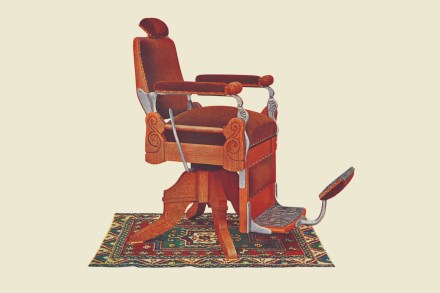
On this week’s Spectator Out Loud: Alexandra Shulman reads her fashion notebook (1:13); Sean Thomas asks if a demilitarised zone in Ukraine is inevitable (6:02); Matthew Parris argues against proportional representation (13:47); Adrian Dannatt explains his new exhibition Fresh Window: the art of display and display of art (21:46); and Philip Hensher declares he has met the man of his dreams: his Turkish barber (28:17).  Produced and presented by Patrick Gibbons.

The joy of the Turkish barber

From our UK edition

Just as you always hope will happen, I knew I had met the man of my dreams almost on sight. I had made a booking the day before. I arrived. Burak was just finishing the previous customer and gestured with a comb towards an armchair. A Turkish coffee was brought. The customer paid and left and I took his place in the chair before the mirror. ‘Now, sir,’ Burak said, with an ingratiating formality not quite his own. ‘What can I...’ But as he was asking about the haircut, the nervous pale English boy at the next station in the barber’s interrupted. ‘Er, Burak,’ he said, tremulously. ‘I wonder, er, would you mind if I borrowed your...’ ‘Nah,’ Burak said, all ingratiation gone in a fierce flash. ‘Nah. Fuck off.’ He turned to me. ‘I’m sorry, sir,’ he said.

Reading the classics should be a joy, not a duty

From our UK edition

Writing the history of the novel, even covering a limited period, is a challenge. No one could possibly read every novel that has been published. Even if you read 100 a year you would scarcely scratch the surface. It isn’t like writing a history of most other subjects, where the important matters select themselves. You wouldn’t guess from this book how hilarious Lolita is, or some of the best passages of Ulysses No one could say with certainty that the most noteworthy novels are those which once made, or now make, the most impact. Indeed, a history that included many of the bestsellers of the day would be unusual – one, for instance, that took in G.W.M.

Richard Dawkins, Nicholas Farrell, Mary Wakefield, Lisa Hilton and Philip Hensher

From our UK edition

33 min listen

On this week’s Spectator Out Loud: Richard Dawkins reads his diary for the week (1:21); Nicholas Farrell argues that Italy is showing the EU the way on migration (6:33); Mary Wakefield reflects on the horrors, and teaching, of the Second World War (13:54); Lisa Hilton examines what made George Villiers a favourite of King James I (19:10); and a local heroin addict makes Philip Hensher contemplate his weight (27:10).  Produced and presented by Patrick Gibbons.

Reeves’s gambit, a debate on assisted dying & queer life in postwar Britain

From our UK edition

52 min listen

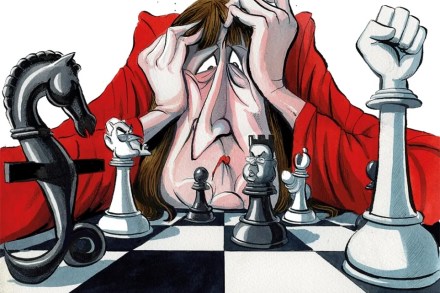
This week: the Chancellor’s Budget dilemma. ‘As a former championship chess player, Rachel Reeves must know that the first few moves can be some of the most important of the game,’ writes Rupert Harrison – former chief of staff to George Osborne – for the cover of the magazine this week. But, he says, the truth is that she has played herself into a corner ahead of this month's Budget, with her room for manoeuvre dramatically limited by a series of rash decisions. Her biggest problem is that she has repeatedly ruled out increases in income tax, national insurance and VAT. So which taxes will rise, given that the easy options have been ruled out? The answers appear to be evolving rapidly when ministers are confronted with the OBR’s harsh reality.

The joy of weight loss

From our UK edition

It was a few months ago. I was coming back from my morning walk with Greta in Battersea Park, so it can only have been half past ten in the morning. A familiar neighbourhood figure zigzagged recklessly across the road towards us. He had something like a sense of purpose about him. Telling a stranger that his avoirdupois could give G.K. Chesterton a run for his money counts as a hate crime ‘Have you got –’ he paused and reckoned – ‘£5? To get something to eat?’ Five pounds seemed an ambitious amount. I thought I’d answer the implied request and not the question he’d actually asked. ‘I’m not going to give you £5,’ I said briskly. He looked about as ghastly as usual – that yellow-grey, oily quality of the long-term heroin aficionado.

The demonising of homosexuals in postwar Britain

From our UK edition

Not every human culture leaves clear and legible accounts of itself. Here we have a comparatively recent way of life which we know thousands of men led. It was proscribed, and those who lived within it had good reasons to conceal their participation and nature, usually taking care not to leave any records. Invisible and, even at this short distance, impossible completely to understand, the culture of male homosexuals in London was only partially legalised in 1967. Before that has to be interpreted through material which is intrinsically unsatisfactory. A comparison might be drawn to the textual means historians have of understanding another proscribed culture, the early Christians in Rome.

The trivial details about royalty are what really fascinate us

From our UK edition

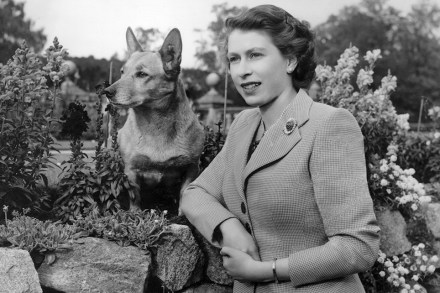
For the moment, can there be anything new to say about Elizabeth II? In time, the archives will open up and more of her correspondence and any of the diary we know she kept will be made available to the public. (I wouldn’t get too excited – no monarch’s diary since Victoria’s has had much to tell us about its writer). But for now you would be forgiven for thinking every scrap has been gone over, every anecdote and every major or minor event in a long life. In an excruciating encounter with HM, Brown told her the plot of The Resistible Rise of Arturo Ui The first published biography of Elizabeth II came out in 1930, when she was four years old. When she died in 2022, she had been constantly written about for almost a century.

Why Britain riots

From our UK edition

33 min listen

This week: The Spectator’s Gus Carter was in Rotherham and Birmingham in the days after the riots. Locals tell Gus that ‘violent disorder isn’t acceptable but people from down south don’t know what it’s like up here’. A retired policeman in Birmingham adds that ‘it’s just yobs looking for an excuse – and yobbos come in all sorts of colours’. You can hear Gus’ report on the podcast. (02:25)  Next: Gus and Lara take us through some of their favourite pieces in the magazine, including Flora Watkins’ notes on ragwort and Isabel Hardman’s review of Swimming Pretty: The Untold Story of Women in Water.

The dark side of your local dog show

From our UK edition

Over at the judging for Waggiest Tail, things were getting acrimonious. ‘That bloody woman,’ my new acquaintance muttered. We were sitting behind the rope barrier in the front row and had formed a bond over a serious injustice in Prettiest Bitch. ‘I’m pretty sure she threw this category three, four years back. I happen to know – for a fact – that she made her husband stay overnight in a Travelodge. Dog’s got awful separation anxiety. Husband comes to the park, sitting round the corner. Once the Waggiest Tail starts up, she texts him, and he appears in the dog’s eyeline. Dog starts wagging fit to bust. First prize. Disgrace.’ ‘Surely not,’ I said. ‘You’d be surprised what people are capable of,’ he said.

James Heale, Svitlana Morenets, Philip Hensher, Francis Beckett and Rupert Christiansen

From our UK edition

38 min listen

On this week’s Spectator Out Loud: James Heale analyses the state of the Conservative leadership race (1:09); Svitlana Morenets reports from the site of the Kyiv children’s hospital bombed this week (5:56); Philip Hensher examines the ‘Cool Queer Life’ of Thom Gunn (12:13); Francis Beckett reviews ‘The Assault on the State’ arguing in favour of bureaucracy (21:20); and, Rupert Christiansen reveals why he has fallen out of love with Wagner (27:05).  Presented by Patrick Gibbons.

Dedicated to debauchery: the life of Thom Gunn

From our UK edition

In 1876, writing to his friend Gertrude Tennant, Gustave Flaubert set down a principle that artists and writers should live by: Soyez réglé dans votre vie et ordinaire comme un bourgeois, afin d’être violent et original dans vos œuvres. (Be regular in your life and ordinary as a bourgeois, in order to be violent and original in your work.) The life of the English poet Thom Gunn had its disciplined aspect (he managed to hold down a job at least), but, overall, it was so dedicated to debauchery and excess that it’sa wonder it lasted as long as it did. The story, told in detail by Michael Nott, makes even the least censorious reader sometimes wonder why this seemed like a good idea. Gunn was born in Kent in 1929 to an upper-middle-class intellectual family.

The reckoning: it’s payback time for voters

From our UK edition

39 min listen

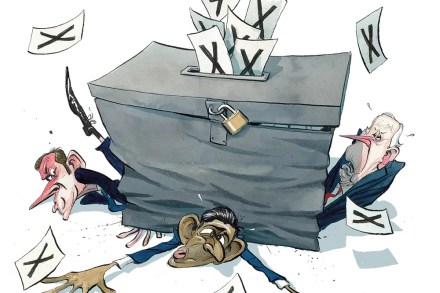
This week: the reckoning. Our cover piece brings together the political turmoil facing the West this week: Rishi Sunak, Emmanuel Macron, and Joe Biden all face tough tests with their voters. But what’s driving this instability? The Spectator’s economics editor Kate Andrews argues it is less to do with left and right, and more a problem of incumbency, but how did this situation arise? Kate joined the podcast to discuss her argument, alongside former Cambridge Professor, John Keiger, who writes in the magazine about the consequences that France’s election could have on geopolitics (2:32).  Next: what role does faith play in politics?

The clue to Shakespeare’s sexuality lies in the sonnets

From our UK edition

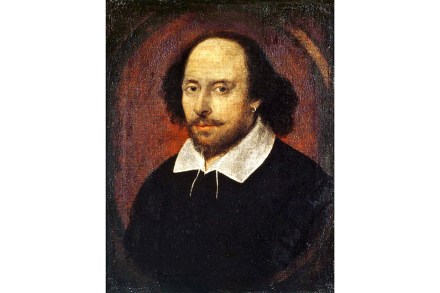
The question ‘Was Shakespeare gay?’ is not very rational. It might be a little like asking ‘Was Shakespeare a Tory?’. Some of his scenarios might coincide with later developments – Jaques trying to pick up Ganymede in As You Like It (gay), or Ulysses’s speech on degree in Troilus and Cressida (Tory). But the historical conditions are not there. No doubt there have been people keen on same-sex relations since the dawn of time. But the possibilities of a social identity embedded in the word ‘gay’ didn’t exist in the 16th century, nor the medical diagnosis from which the word ‘homosexual’ arose. Nor will ‘sodomite’ do. That describes some very different sexual tastes and practices through history.

The art of talking to strangers

From our UK edition

About halfway round the park, by the last spindly remnants of the Festival of Britain, I bumped into my Scandinavian acquaintance. ‘Beautiful day,’ I said. ‘I thought you’d be in Sweden by now.’ ‘No,’ she said. ‘Not quite. My daughter’s going for midsummer – it’s her first time on her own. We’re going a little later but I thought she’d like a treat for having finished her GCSEs.’ ‘How gorgeous!’ I said. Around our feet our dogs greeted each other in a stately way – two schnauzers, hers a beautifully groomed gentleman called Prince with a gravity-defying moustache like a Wilhelmine Feldmarschall; mine a plump and rumpled small person, like the White Queen.

What’s really behind the Tories’ present woes?

From our UK edition

The problem is, we really need a Tory party. Whether we have one at the moment is another question. Political debate requires a significant and trustworthy proponent of personal freedom, of the limits of government, of personal responsibility, of strict limitations of government expenditure, of independent enterprise which may succeed through a lack of intrusive state control or may fail without hope of public rescue. Not everyone will share those values. But I think everyone should accept that it’s proved catastrophic that those values have apparently disappeared from public policy. History rhymes, but does not repeat itself. The lessons of previous periods when major economic policies of an interventionist sort were agreed with no serious dissent ought to have been learnt.