Peter Parker

Men of letters

From our US edition

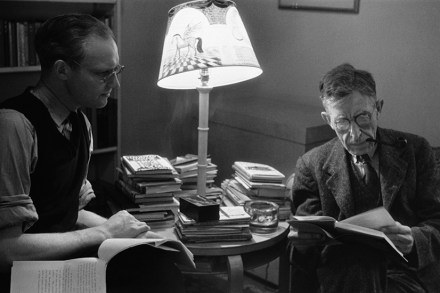
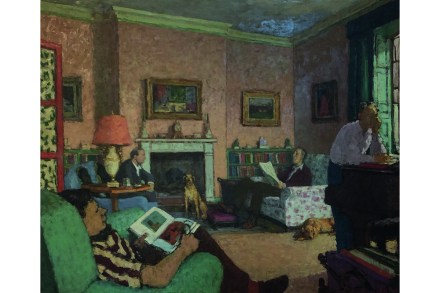
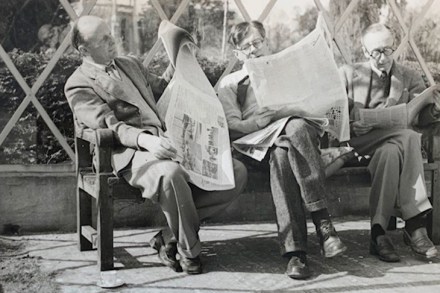
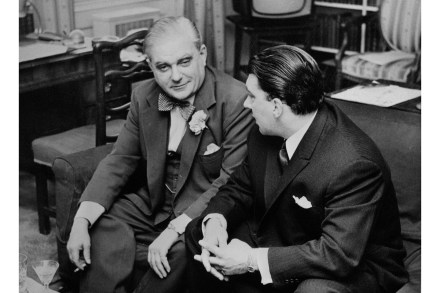
In the spring of 1945 three men pooled their resources to buy Long Crichel House, a former rectory built during the reign of Queen Anne in a secluded Dorset village. Desmond Shawe-Taylor and Edward Sackville-West were highly influential music critics, while Eardley Knollys, a former gallery owner, was now assistant secretary to the National Trust and a painter. The idea was for the three friends to live communally but each have his own part of the house where he could work undisturbed and enjoy some privacy. The house was in fact large enough to accommodate not only a live-in butler and cook-housekeeper but, from 1949, a fourth partner, Raymond Mortimer, the leading literary and art critic of the day.

crichel

All good friends and jolly good company: life with the Crichel Boys

In the spring of 1945 three men pooled their resources in order to buy Long Crichel House, a former rectory built during the reign of Queen Anne in a secluded Dorset village. Desmond Shawe-Taylor and Edward Sackville-West were highly influential music critics, while Eardley Knollys, a former gallery owner, was now assistant secretary to the National Trust and a painter. The idea was for the three friends to live communally but each have their own parts of the house where they could work undisturbed and enjoy some privacy. The house was in fact large enough to accommodate not only a live-in butler and cook-housekeeper but, from 1949, a fourth partner, Raymond Mortimer, the leading literary and art critic of the day.

Poise and wit: The Collected Stories of Shirley Hazzard reviewed

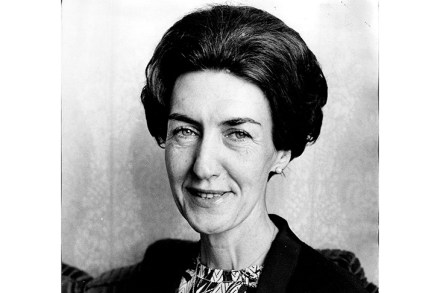
Shirley Hazzard was in her late twenties when, in 1959, somewhat diffidently, she submitted her first short story to the New Yorker. It was, William Maxwell remembered, ‘an astonishment to the editors, because it was the work of a finished literary artist about whom they knew nothing whatever’, and he immediately accepted it for publication. Hazzard’s arrival as a fully formed and refreshingly cosmopolitan writer was a result of her peripatetic and often unhappy early life. ‘By the time I was 25, I had emerged from a lot of trouble,’ she recalled. ‘I had also, more interestingly, lived for appreciable periods in six countries and diverse languages.

The establishment was always covering up for Bob Boothby

Just after John Pearson finished writing The Profession of Violence, his celebrated biography of the Krays, both his and his agent’s officeswere broken into. Letters from Lord Boothby to Ronnie Kray had disappeared, as had a copy of the book’s manuscript. Pearson then received a telephone call from the high-powered lawyer Lord Goodman, who warned him that the book libelled Boothby. A subsequent phone call from Goodman to Pearson’s publisher led to the book’s contract being cancelled.

Without Joseph Banks, Cook’s first voyage might have been a failure

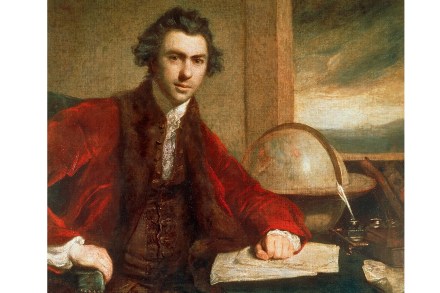
When the wealthy young Joseph Banks announced that he intended joining Captain Cook’s expedition to Tahiti to observe the Transit of Venus, friends asked why he didn’t instead do the Grand Tour. ‘Every blockhead does that,’ Banks replied. ‘My Grand Tour shall be one round the whole globe.’ It was a wise decision, and his voyage on HMS Endeavour would be the making of him.

Flower power: symbols of romance and revolution

Critics have argued over the meaning of the great golden flower head to which Van Dyck points in his ‘Self-Portrait with a Sunflower’. It probably symbolises the radiant majesty of the painter’s patron, Charles I, but for Van Gogh the sunflower ‘embodied and shouted out yellow, the colour of light, warmth and happiness’. In the Victorian language of flowers the plant denoted pride or haughtiness, but its tendency to turn its head to the sun led Byron’s abject Julia to use its image on a seal for her final letter to Don Juan with the accompanying motto Elle vous suit partout.

Capturing the mood of the English landscape: the genius of John Nash

‘If I wanted to make a foreigner understand the mood of a typical English landscape,’ the art critic Eric Newton wrote in April 1939, ‘I would first show him a good Constable and then one or two of John Nash’s best watercolours.’ This is about as good an endorsement any painter could ask for, but Nash is more usually bracketed with, and overshadowed by, his older brother. There have been major exhibitions of Paul Nash’s work at the Dulwich Picture Gallery in 2010 and at Tate Britain three years ago, whereas the last truly substantial retrospective of John’s work was at the Royal Academy in 1967.

Was there some Freudian symbolism in Lucian’s botanical paintings?

In early paintings such as ‘Man with a Thistle’ (1946), ‘Still-life with Green Lemon’ (1946) and ‘Self-portrait with Hyacinth Pot’ (1947–8) Lucian Freud portrayed himself alongside striking plant forms, giving equal weight to the vegetable and the human. Similarly, his first wife, Kitty, was depicted in portraits from the same period more or less obscured by a fig leaf held in front of her face, or apparently threatened by the leafy branch of a plant thrusting into the picture plane.

Feasts and flowers

Cedric Morris is often referred to as an artist-plantsman, and while as a breeder of plants, most particularly of irises, he has always been highly regarded in horticultural circles, his reputation as a painter has been subject to regular fluctuations. Last year, two excellent and complementary London exhibitions — Cedric Morris: Artist Plantsman at the Garden Museum and Cedric Morris: Beyond the Garden  Wall at Philip Mould & Company — did a great deal to revive interest in his paintings; and so a joint biography of Morris and his partner Arthur Lett-Haines is welcome. They met in 1918 at an Armistice party hosted by Lett (as he was always known) and his wife.

On a wing and a prayer | 27 June 2019

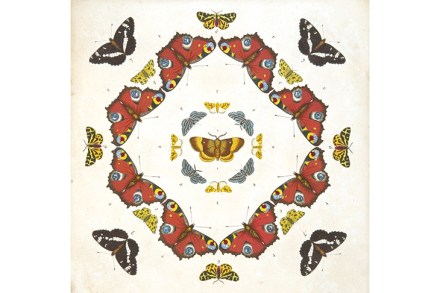
In 1979, despite the best efforts of scientists for more than a century, a butterfly called the British Large Blue became extinct. There is widespread concern about the more recent decline in butterfly populations, but the American ecologist Nick Haddad writes that the collective weight of the known populations of the five rarest butterflies he discusses in his sobering book is just ‘three pounds five ounces — as much as one panda’s paw’. The special importance of butterflies, he argues, is that they provide lessons about the decline and management of other threatened species.

Messing about on the river

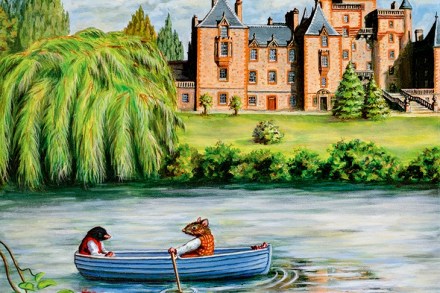
The title of Matthew Dennison’s new biography of the man who wrote The Wind in the Willows appears to nod to another children’s classic of the Edwardian period. J.M. Barrie subtitled Peter Pan — first staged in 1904, four years before the publication of Kenneth Grahame’s book — ‘The Boy Who Wouldn’t Grow Up’, and once declared: ‘Nothing that happens after we are 12 matters very much.’ It is Dennison’s contention that for Grahame the clock stopped even earlier.

A pearl of great price

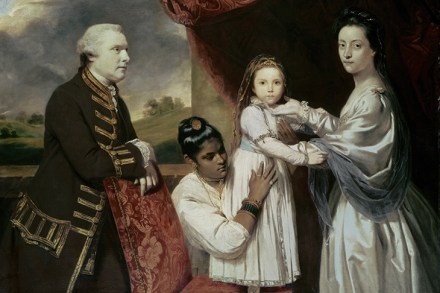
Objectivity seems to be difficult for historians writing about Britain’s long and complicated relationship with India, and this makes the even-handedness David Gilmour achieves in books such as The Ruling Caste both unusual and welcome. In his enlightening and wonderfully detailed new portrait of The British in India, he states that he is ‘not seeking to make judgments or to contribute to any debate about the virtues and failings of imperialism’, although a brief Envoi supplies some ‘concluding reflections’ on what he acknowledges is a controversial subject.

How pleasant to know Mr Lear

Edward Lear liked to tell the story of how he was once sitting in a railway carriage with two women who were reading aloud to children from his Book of Nonsense. When a male passenger confidently asserted that ‘There is no such person as Edward Lear’, the writer was obliged to prove his own existence as ‘the painter & author’ (in that order) by showing the passengers his name on his hat, handkerchief and visiting card. In an extraordinary drawing of this event, Lear depicted himself and the two women realistically, but the doubting man is a cartoonish figure straight out of one of his limericks. Lear’s two worlds of ‘art and nonsense’ wonderfully collide in this anecdote and its illustration.

Drowning in mud and blood

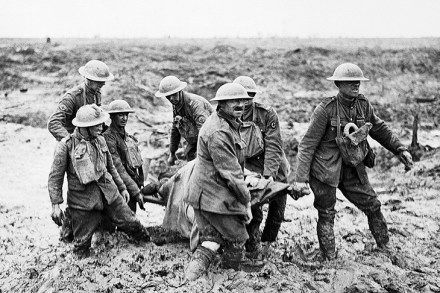
George Orwell’s suggestion that the British remember only the military disasters of the first world war is certainly being borne out by the centenary commemorations. The focus of each year so far has been Gallipoli, the Somme and now the Third Battle of Ypres, popularly known as Passchendaele. The basic story is familiar. On 31 July 1917, in torrential rain, General Haig launched an attack against German positions in the Ypres Salient. The troops had to advance over ground that rapidly turned into a quagmire, shells having already destroyed the area’s network of drainage ditches. The attacks would continue sporadically, against the advice of those on the ground and often in atrocious weather, until November.

Undone by love

On the Whitsun weekend of 1935 an art student called Denton Welch was knocked off his bicycle by a car and suffered catastrophic injuries, including a fractured spine. Although he made a remarkable partial recovery, he subsequently endured regular bouts of disabling illness, and would die in 1948 aged only 33. Welch continued to paint after the accident, but also began writing the autobiographical fiction for which he is now best known, publishing his first novel, Maiden Voyage, in 1943. By this time he was living in a chauffeur’s flat over a garage in rural Kent.

Spectator Books of the Year: The dangers of unrequited love

My novel of the year was What Belongs to You (Picador, £12.99), Garth Greenwell’s slender, poised, clear-eyed and devastating account of the depths to which unrequited sexual obsession can lead you, particularly if you become entangled with a rent-boy in Sofia. I also enjoyed and admired Aravind Adiga’s funny and touching Selection Day (Picador, £16.99), in which cricketing prodigies in Mumbai face googlies from both bowlers and life. And Tom Bullough’s densely and thrillingly written Addlands (Granta, £14.99), which traces the lives of a farming family on the Welsh borders through 70 years.

In life divided

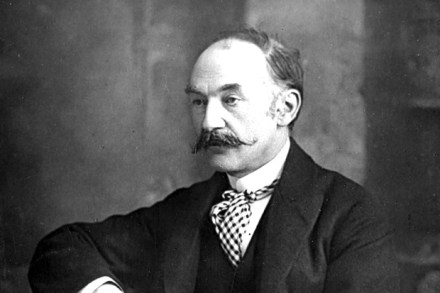
The ten pallbearers at Thomas Hardy’s funeral in Westminster Abbey on 16 January 1928 included Kipling, Barrie, Housman, Gosse, Galsworthy, Shaw and both the prime minister and leader of the oppposition. This distinguished gathering was not strictly necessary for the job at hand, because Hardy’s coffin merely contained his ashes — all that there was room for in Poets’ Corner. At exactly the same time in Dorset, at a smaller funeral, a casket containing Hardy’s unincinerated heart was being borne to its final resting place alongside his parents and his first wife in the churchyard at Stinsford.

Broken and mad

In the final months of 1914, medical officers on the Western Front began seeing a new kind of casualty. Soldiers who had no physical injury were displaying a wide range of alarming symptoms. Some appeared to be completely dazed or were shaking uncontrollably, others had lost their sense of taste or smell, or were suffering from blindness, mutism and various kinds of paralysis. It was not until February 1915 that the term ‘shell shock’ first appeared in print, in the Lancet. It was originally intended to describe a physical condition in which the brain had been damaged by the percussive effects of high explosives, but was subsequently adopted to describe many different forms of battle trauma.

Action this day

‘July 1st 1916 was the most interesting day of my life,’ Philip Howe recalled, with characteristic English dryness, half a century after taking part in the most catastrophic 24 hours in the history of the British army. Howe had been a lieutenant in the 10th West Yorkshires, which had the grim distinction of losing more men during the first day on the Somme than any other battalion: of the 1,050 that went into battle, 710 became casualties, 60 per cent of whom were killed. At the end of the day Howe was the only officer left standing, and many other battalions had suffered almost as badly.

The other trenches: the Dardanelles, 100 years on

In August 1915, in his tent at GHQ on the Aegean island of Imbros, General Sir Ian Hamilton, commander-in-chief of the Gallipoli expedition, woke from a dream in which someone was attempting to drown him in the Hellespont. ‘For hours afterwards,’ he wrote in his diary, ‘I was haunted by the thought that the Dardanelles were fatal: that something sinister was afoot: that we, all of us, were pre-doomed.’ This was not how it had seemed when what had been confidently designated ‘the Constantinople expedition’ set out for the distant and largely unknown Turkish peninsula.