Peter Jones

Simone Biles, Plutarch and an Olympic trial

From our UK edition

The outstanding gymnast Simone Biles has pulled out of several Olympic events, saying: ‘I just don’t trust myself as much any more.’ Many took the view that this was a fashionable ‘mental health’ issue. Ancient Greeks might have come up with a rather different analysis. Plutarch (c. ad 100) is said to have been the author of a letter of condolence to one Apollonius whose son had just died. In it he considered how best one should react to loss in the context of the whole field of human suffering, which Greeks regarded as the common lot of all mankind. For example, Achilles in the Iliad claimed that Zeus possessed two storage-jars, one filled with evil, the other with blessings. A man could be served from the jar of evil alone, or from a mixture of both.

The Greeks had their reservations about the Olympics

From our UK edition

Winners at the Olympics were thought to have come as close to a god as any man could. But that did not stop some Greeks wondering whether it was all worth it. The poet Xenophanes commented that ‘a noble boxer would not make a city better ordered, nor keep its granaries filled’. Diogenes the cynic once met an athlete boasting about how fast he was. Diogenes replied: ‘But not faster than a rabbit or deer, the swiftest of animals, and also the most cowardly.

The ancient Greeks had no time for losers

From our UK edition

Every red-blooded Englishman has believed that exercise in the open air is the finest prophylactic against popery, adultery and the fine arts. Baron de Coubertin, who dreamt up the modern Olympic Games, took a different view. He admired the spirit of games on the playing fields of Eton and thought that they might provide a model for games of the sort he imagined the ancient Greeks enjoyed at Olympia: competitive but amateur, fair, wholesome, played for the sake of it and also, he hoped, acting as a stimulus to world peace. Up to a point, Lord Copper. The Olympic Games, founded in 776 bc, celebrated Zeus, god of Mount Olympus, at his sacred site, Olympia (the actual mountain is more than 160 miles away).

How the ancients kept people behaving responsibly

From our UK edition

The Prime Minister is urging citizens not to throw caution to the winds when lockdown ends on 19 July but to behave ‘responsibly’. But there seems little incentive when legions of psychiatrists, lawyers, counsellors, social workers etc appear to insist you must never blame people (only ‘society’ or ‘the Tory cuts’) for anything. Can the ancients help? For ancient Greeks, it was the prospect of public shaming that kept people behaving responsibly. In Homer’s Iliad, the first work of European literature (c. 700 bc), the heroes who always feared what other people would say about them if their behaviour did not come up to what was expected of them exemplified that sense of shame (aidôs). A myth explained all.

What the Romans would have made of Diana’s statue

From our UK edition

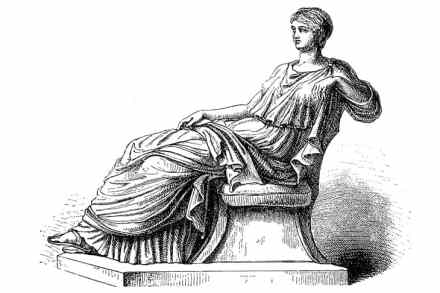
The recently unveiled funerary monument of Princess Diana prompts comparison with Greek and Roman archetypes. To many, Diana was a heroic figure. Greek sculptors represented females as dignified figures, intricately coiffed, in graceful, loose-fitting, free-flowing tunics and ankle-length cloaks, with contrasting vertical and diagonal folds. Males were nude, a public statement of power and physical perfection, as if human significance did not end in death. Both were idealised figures, illustrating character and quality, not likeness. There is no hint of heroic ideals in this Diana, dressed presumably as a nursery teaching assistant. She does not even look like Diana, an attractive, delicate-featured woman.

Tacitus and the hypocrisy of cancel culture

From our UK edition

The delicious hypocrisy at the heart of today’s cancel fraternity is that it is strongly opposed to censorship. Romans grappled with the issue; the historian Tacitus nailed it. Since the Roman republic sprang from the expulsion of a tyrant-king (509 bc), anti-monarchic views became standard fare in legal and political debate whenever anyone suspected tyranny. Julius Caesar, seen by some, and slain, as a tyrant, was well aware of such republican sympathies and ‘bore with good nature’ abuse of himself. So did his successor Augustus (27 bc). True, he ended publication of senatorial minutes, but senators still had their say. Vitriolic pamphlets directed against him were initially met with written rebuttals.

What the EU could learn from the Athenian Empire

From our UK edition

The EU has regularly been likened to the Roman Empire. But its current direction suggests that the Athenian Empire (478-404 bc) is a better parallel. The EU began as an attempt to unify countries economically after the second world war. By slow accretion of powers via the single market, Maastricht, the euro and finally Lisbon, the EU became, drip by drip, a full political union run by an unelected central authority, which now threatens to end vetoes and intervene domestically, suing member states with whose policies on immigration, civil rights, freedom of speech etc it disagrees. After the Persian wars, Athens in 478 bc assembled on Delos an alliance of Greek city-states (poleis) to keep Persia at bay.

Roman cancel culture didn’t stop at statues

From our UK edition

The mob is at work again in Oxford, protesting against the existence of Oriel’s statue of Cecil Rhodes. But this is a mob of dons who, rather than doing anything about it, have decided just to stop teaching at Oriel. And that will solve the problem? The Romans were a little more proactive. ‘Statue’ derives from statuo, ‘I place X so as to remain upright’. That was its correct position, where it could be kissed, garlanded and so on. Cicero mentions a deity whose mouth and chin had been worn down by worshippers. Vandalism and indeed theft were known, but it was damnatio memoriae (‘condemnation of memory’, a designation invented in 1689) that the powerful, especially emperors, feared.

What Dominic Cummings could learn from Xenophon

From our UK edition

On the subject of leadership, the Athenian soldier, historian, biographer and essayist Xenophon (c. 430-354 BC) had much to say, having led the retreat of 10,000 Greek soldiers from Cunaxa (Iraq) through hostile territory back to Greece. Had Dominic Cummings paid more attention to him when he studied ancient and modern history at Oxford, his time in government might have been more successful. The key to Xenophon’s thinking was that the good leader had a positive relationship with his men, calculated to be of mutual benefit to everyone: the image of friendship between leader and men was never far away.

A sex education from Aristophanes

From our UK edition

The publication of the new Cambridge Greek Lexicon reminded the comedian and classicist Natalie Haynes of her frustrations at school, when she found that the lexica either translated sexual vocabulary into Latin or otherwise bowdlerised it. So when she read the comic poet Aristophanes, she decided that any word she could not identify meant ‘vagina’. Fair enough, but did her school not teach her that it takes two to tango? For the sexual organs, the poet’s hysterically anarchic inventiveness draws largely on rustic images of agricultural instruments, plants, animals, birds, and food, with military images from land and sea battles added for the male organs. Many of these terms are matching pairs (e.g. ‘bolt’ and ‘bolt-hole’).

A Roman solution to Prince Charles’s ‘Harry problem’

From our UK edition

Charles, Prince of Wales, is having a little trouble with his son Harry. Romans knew about difficult offspring. They told a story of a father who discovered his son was plotting against his life. Unable to believe a son would commit such an outrage, he received confirmation on oath from his wife that he was their son, and then summoned him to a meeting. There he gave him a sword and told him to cut his father’s throat. The son, horrified by his father’s reaction, threw it away, saying: ‘I ask only that you should not think my love for you to be of little value because it arises from repentance.

Animal sentience law has finally caught up with Plutarch’s thinking

From our UK edition

Almost no ancients cared whether animals felt pain or not. The classical Stoic belief that man’s reasoning capacity elevated him above all other creatures was the intellectual justification. Cruelty to animals could be frowned upon, but only because it might encourage man’s cruelty to man. Descartes (d. 1650) raised the question of whether animals really were conscious and, deciding they were not, concluded they did not feel pain: their reaction to it was purely mechanistic. Behaviourists of the 20th century took the same line. But there is one ancient dissenting voice to that view: the Greek essayist Plutarch (c. ad 100). Now that UK law has legislated that animals are sentient, it has finally caught up with him.

Virgil understood the great power of nature

From our UK edition

‘Georgics’ are an ancient form of poetry about agriculture and the land. The term derives from Greek gê ‘land’ + ergon ‘work’ (cf. farmer George) and emphasises the necessity of working hard to counteract deprivation, build a nation and forge a civilised world. Virgil’s Georgics (29 bc) in four books are a supreme example of the genre and not without relevance to the modern ‘green’ agenda. Its opening outlines the subject matter: field crops and tilling the soil, viticulture, and the care and skill required to tend cows, sheep and bees.

The importance of gossip (according to the ancients)

From our UK edition

Gossip appears to be good for the mental health. That should make the females of the ancient world some of the healthiest people around. Not that men did not gossip. The essayist Plutarch (c. ad 100) wrote disapprovingly of the ‘adulteries, seductions, family quarrels and lawsuits’ they loved to hear about (barbers’ shops were especial hotbeds of gossip); but his big gripe was that they were such bores. He described one droning on to Aristotle, and indulgently adding how amazing his stories were. Aristotle replied: ‘What is amazing is that anyone with feet puts up with you.’ Another crasher, after a long rigmarole, said: ‘I’ve bored you, philosopher.’ Aristotle replied: ‘Certainly not! I wasn’t paying attention.

Do spelling and grammar still matter?

From our UK edition

Some universities have announced that spelling and grammar (i.e. morphology and syntax) are not all that important, but quality of thought is. Up to a point, Lord Copper. Ancient Greeks were fascinated by language and invented much of the terminology in which we still talk about it. Protagoras (5th century bc) first classified nouns as masculine, feminine and ‘things’ (neuter). Aristotle (4th c. bc) defined articles, nouns, conjunctions and verbs, and talked of vowels, consonants, syllables and inflections as well as groups of words producing a collective meaning (‘utterance’), noting that ‘there can be utterance without verbs’. Dionysius from Thrace (2nd c. bc) divided nouns into cases (nominative, vocative, etc.), and singular and plural.

The Greensill scandal wouldn’t have shocked the ancients

From our UK edition

Ex-prime minister David Cameron, ignoring official protocol, though not acting illegally, went directly to the chancellor Rishi Sunak to ask him to give Greens(w)ill Capital access to government-backed loans. Result? No cigar. And that is ‘corruption’? Tell that to the ancients. For Greeks and Romans, one of the oils which kept social, political and business wheels rolling was reciprocal gift-giving. But how does one draw a line between a ‘gift’ and a ‘bribe’? Those claiming a gift was a bribe would talk of ‘corruption’ or ‘buying’, ‘selling’ and ‘profit’ (trade was seen as a dirty business); those defending it as a gift called it ‘giving’, ‘receiving’ and ‘persuading’.

How to eulogise the Duke of Edinburgh

From our UK edition

The reason why Greeks and Romans would have found it difficult to eulogise the Duke of Edinburgh was that he did not hold the supreme office: his wife did. This disturbance to the ‘natural’ order of things made the Duke an anomaly. Had he not been, handbooks on the topic would have extolled him as follows. His parents would be noble, of a splendid race and ancestry, and his place of birth a distinguished one. Omens would attend his birth. His education would feature the finest teachers, associates and friends, imbuing him with traditional values, a mind apt for learning, and attention to physical fitness.

Models of obedience: how to make people obey the law

From our UK edition

Protests are being staged against the proposed bill to change the laws on protest. But there is a bigger issue here. Obedience to the law is at the root of civil society, but what systems best achieve that end? The ancients provided three models that underpin western thinking on the subject. The Athenian model was that of radical democracy, the law to be made by the majority of citizens (males aged over 18) meeting weekly in assembly and then publicly posted. Further, all male citizens over 30 were available to sit as jurors in the courts. No judges or official legal authorities controlled their decisions.

The ancient Greek approach to mediation

From our UK edition

Divorcing couples are being given vouchers worth £500 to settle their problems by mediation rather than going to court. It was the ancient Greeks who produced the first examples of mediation in the West. Since the ancients had no police force or Crown Prosecution Service, all prosecutions were brought privately. There were no barristers or judges or witnesses — just the two litigants, giving a single speech of fixed length (with witness evidence read out), after which the jurors voted, with no further discussion. But since jurors (201, 401 or 501 depending on the case) were paid by the state, it was an expensive business. So every effort was made to settle matters out of court. Here serious public arbitration came into play, if it became necessary.

Even Ancient Rome battled culture wars

From our UK edition

Identity politics empowers people to make all sorts of claims, not because they are true but because it makes them feel superior. ‘All whites are racist’, ‘all empires are evil’ and ‘all men are rapists’ are typically brain-dead examples of this increasingly popular genre. Classical elites were equally susceptible to fabrications of self-importance. Ancient literature reflects the interests of those who composed it: i.e. educated elite males moving in highly competitive political, military and literary circles. Their wives rarely feature, as if they were people of little relevance and less agency — just staying at home, under male protection, producing and rearing children.