Peter Jones

Could today’s Hollywood stars have made it in ancient Greece?

From our UK edition

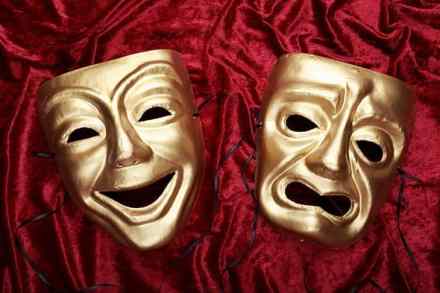
The Oscar frenzy spent, it is worth reflecting on how easy writers and actors have it these days. The ancient Greeks invented our idea of acted drama, and the conventions were tough. Here are the main ones. In myth-based tragedies, for example, all the speaking parts – young and old, male and female – were played, and occasionally sung too, by only three fully masked male actors (one play had 11 speaking parts – work that out!). There was also a ‘chorus’ – 12 or 15 actors, all masked, singing and dancing in unison between episodes, though the leader could converse with the main characters. Of low social status, they provided an alternative collective voice to that of their ‘heroic’ superiors.

Was Penelope really a ‘silenced’ woman?

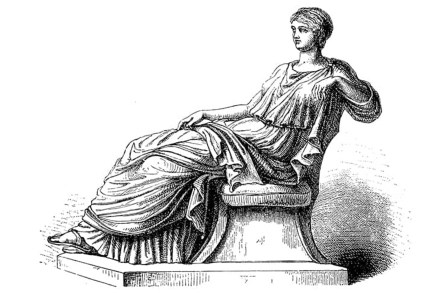
Problems about the misuse of history, especially on subjects such as race and colonialism, have been running for a long time. But when it comes to the ancient world, there are also problems about the misuse of literature. Dame Mary Beard’s “manifesto” Women and Power (2018) contains an example of the problem. Her thesis is that women’s voices in the public sphere (my emphasis) have been “silenced” by men ever since the West’s first literature (Homer’s Iliad and Odyssey) gave us our first access to “Western” thoughts, deeds, beliefs, hopes and fears (c. 700 BC). The problem exists in the first example of her thesis, to which she returns four times — Penelope, the wife of Odysseus.

Penelope

Patriarch Kirill, Archbishop Ambrose and a lesson for Putin

From our UK edition

Patriarch Kirill is Patriarch of Moscow and all Rus’ and Primate of the Russian Orthodox Church; and one of his flock is that committed Orthodox Christian Vladimir Putin. Kirill applauds Putin’s genocidal assault on Ukraine. Has he never heard of Archbishop Ambrose of Milan and his dealings with the Christian Roman emperor Theodosius? It all began in ad 390, in the important Greek city of Thessalonica, when Butheric, the commanding general of the Roman field army and a friend of Theodosius, imprisoned a popular chariot-racer. The mob, determined to see him racing at the next games, demanded his release. Butheric refused. A major riot ensued, and since much of the army was on duty elsewhere, Butheric and other officers were murdered.

How John Bercow could have learned to control his temper

From our UK edition

The ex-Speaker John Bercow has been found to be a serial bully and serial liar. The ancients would have had views on both counts. Bercow’s bullying seems to have arisen from his uncontrollable temper. The philosopher Seneca (an adviser to Nero) painted a memorable picture of the physical results: ‘The eyes blaze and flash, the whole face is crimson, blood surges up his heart, the lips quiver, the teeth clench, the hair bristles, breathing is forced and harsh…’ (Seneca would have suggested showing Bercow a mirror).

What Tacitus knew about tyrants

From our UK edition

Last week Aristotle offered a lesson in tyrant theory. This week Tacitus (ad 56-c.120) offers one in tyrant practice. Tacitus was a Roman historian who enjoyed a successful political career, rising to consul and provincial governor. He admitted that he laid its foundations under the tyrannical emperor Domitian (d. ad 96) – he memorably contrasted Domitian’s red face with the pallor his gaze induced in his victims – and thought his duty as a historian was to ensure that those responsible for murderous deeds or heroic actions should never be forgotten. His judgment of Domitian’s reign was worthy of Orwell: ‘Rome of old [i.e.

Does Putin pass Aristotle’s tyrant test?

From our UK edition

Is Putin a tyrant? Aristotle (384-322 bc) might well have thought so. Seeing the turannos as a deviant type of king, Aristotle tested the distinction under four headings. Was he subject to the law? Did he rule for a set term, or for ever? Was he elected? And did he rule over willing subjects? We may judge Aristotle’s answer from the image he drew of the tyrant as a master of slaves who, knowing that his subjects hated him, did everything in his power to ensure they were incapable of moving against him. First, therefore, the tyrant stamped on anyone exhibiting the slightest independence of mind, since ‘the man who rivals the tyrant’s pride and spirit of freedom robs the tyrant of his position of mastery, undermining his authority’.

What the ancients would have made of Virginia Giuffre

From our UK edition

Virginia Giuffre may well be a heroine among all those abused in their youth. Ancient reactions compare interestingly with ours. It would have been one thing had she been a high-class courtesan (hetaira), who was her own woman, dealing in ‘gifts’ from ‘friends’ who wanted to ‘benefit’ her, with no going rate of exchange. Fickle in granting her favours, she would have made herself available on her terms, to the fury of the males besieging her doors. The point is that she was in full control, and that was something that ancient males admired. Such women became rich and famous. The courtesan Nossis composed an epigram about Polyarchis who built a temple to Aphrodite on the proceeds of her ‘dazzling body’.

How the ancients approached the three Rs

From our UK edition

German archaeologists have found ancient Egyptian tablets covered in repetitive writing exercises and ask — were they pupil punishments? But if classical examples are anything to go by, they sound more like normal education. For elite Roman boys, education began with elementary reading, writing and numbers. From about the age of nine, they developed these skills further, especially in the study of poetry, and began Greek; and at 15, they were taught the arts of political and legal argument, drawing widely on mythical, historical and philosophical precedents, to prepare them for life at the top of Roman society. Rote learning, memorisation, repetition (and the whip) were the means of ‘driving into the memory the lessons to be learned’. The educationist Quintilian (d.

The ancient problem of unscrupulous ‘doctors’

From our UK edition

Yet again ‘doctors’ with no qualifications have been found advertising dodgy but expensive products and treatments, in this case, injections of unregulated Botox variants to remove wrinkles. Pliny the Elder (d. ad 79) inveighed against such practices 2,000 years ago. Romans had a love-hate relationship with the Greeks, and medicine was no exception. In his massive Naturalis Historia — a 36-book encyclopaedia of the animal, vegetable and mineral world — Pliny acknowledged the enormous influence of Greek medical theory, i.e. that health required a balance between the four bodily liquids (blood, phlegm, yellow bile and black bile) and their many associated ‘powers’ in matching groups of four (e.g.

Claudius, Messalina and how not to choose political advisers

From our UK edition

The Prime Minister has been having some trouble with his inner circle of advisers. Tacitus supplies fine examples of how they worked in Rome. Emperors chose whomever they liked to advise them. Augustus, for example, chose men like Agrippa and Maecenas, who had provided excellent service for him while Rome was still (just) a republic. The fourth emperor C-C-Claudius, by contrast, despised by the imperial family but thrust into power by the military, put his trust in politically experienced and highly efficient Greek freedmen (ex-slaves). Pallas was put in charge of the treasury, Narcissus in charge of correspondence (nothing got past him), and Callistus in charge of justice and law. One incident illustrates the way Narcissus worked.

The ancients knew they couldn’t turn back time

From our UK edition

The singer Cher, now 75, has announced that, because she refuses to appear old, she is not going to allow her hair to go grey. But the ancient view was that there was nothing inherently wrong with old age, as long as one prepared for it, accepted it and respected it for what it was, limitations and all. As Cicero pointed out, ‘each stage of life has its place in the nature of things, for harvesting in its time’. So, he went on, the child is weak, the young man self-assertive, becoming authoritative in his middle years and mature in old age. Each stage made different demands. Not to acknowledge that was to ask for trouble. One of Aesop’s fables put an amusing spin on the point. A man whose hair was black but flecked with grey had two lovers, one old, the other young.

Twitter has taken the place of the ancient curse-tablet

Twitter and other easily accessible means of online communication have encouraged the public to believe that Their Voice Will Be Heard. When it isn’t, they express their frustration through abuse and threats or by blocking roads. In this way, the mentality of the ancient curse-tablet lives on. In the Ancient world, the purpose of the curse was to “bind” the person you disliked — i.e. frustrate them from achieving the end they wanted and you did not. It was written on a thin lead plate, rolled up tight, sometimes twisted (to “hobble” the victim) and pinned (to constrain him), then placed into the tomb of someone who had died before his time. The belief was that the dead man, resentful of his early demise, would be happy to enact the curse against the named victim.

curse-tablet

Boris wouldn’t be the first to be brought down by a party

From our UK edition

Whatever the result of Sue Gray’s report on ‘gatherings’ in Downing Street, there is a political lesson to be learned: any excuse will do, even a party, when people are out to get you, as the Roman historian Tacitus (ad 56–c.ad 120) well knew. ad 69: the emperor Vitellius was lying seriously ill when he noticed a mansion with lights ablaze throughout the night. He was told that a ‘lavish, licentious’ party was being held in honour of Junius Blaesus. Critics denounced it and Vitellius angrily agreed (Tacitus commented: ‘There are people on the lookout for signs of the emperor’s displeasure’). Lucius Vitellius, the emperor’s brother, who loathed Blaesus, now saw his chance to destroy him.

Will Colston’s statue wreak its revenge?

From our UK edition

The statue of the Bristol merchant Edward Colston is apparently guilty of a hate crime. Let us hope that the four charged with pulling him down are indeed, for their sake, ‘on the right side of history’, as they claim, since statues have a habit of getting their own back on those who dishonour them. The statue of Theagenes (5th C bc) provides an instructive example. A Greek from the island of Thasos, Theagenes was one of the greats of the games’ circuit (so one should hope: his father was a priest of Heracles). As a boxer and all-in fighter (pankratiast), he won twice at the Olympics (boxing 480 bc, pankration 476 bc), and 22 times at the three other major games (Pythian, Isthmian and Nemean).

In ancient Rome, the truth could be stranger than fiction

From our UK edition

Saturnalia was a period of Roman fun and games held just before our Christmas. Macrobius (c. ad 430) composed a series of conversations enjoyed by cultured Romans over this festive period, covering a vast range of topics, one of which featured amusing true stories. What better way to start the year? The emperor Augustus, tired of being offered epigrams almost daily by a poor Greek, dashed off one in Greek himself and gave it to him. Expressing his admiration, the Greek gave Augustus a few coins, swearing he would have given more if he had them. Everyone burst out laughing, and Augustus gave him 100,000 sesterces. A man appeared in Rome, looking remarkably like Augustus. Augustus summoned him and asked: ‘Was your, er, mother ever in Rome?

Was Penelope really a ‘silenced’ woman?

From our UK edition

Problems about the misuse of history, especially on subjects such as race and colonialism, have been running for a long time. But when it comes to the ancient world, there are also problems about the misuse of literature. Dame Mary Beard’s ‘manifesto’ Women and Power (2018) contains an example of the problem. Her thesis is that women’s voices in the public sphere (my emphasis) have been ‘silenced’ by men ever since the West’s first literature (Homer’s Iliad and Odyssey) gave us our first access to ‘western’ thoughts, deeds, beliefs, hopes and fears (c. 700 BC). The problem exists in the first example of her thesis, to which she returns four times — Penelope, the wife of Odysseus.

It’s time to settle the Great Omicron Question

From our UK edition

Time to settle the Great Omicron Question. First, there is no word omikron (and no c) in ancient Greek. Second, the classical Greek (5th-4th centuries BC) name for omicron was an accented ou. In the 2nd century AD it was replaced by the name o mikron (‘little/short o’), when Greece was under Roman rule. So how did Greeks pronounce o mikron? The little o was pronounced short, as in ‘lot’. The letter i (iôta, whence our ‘jot’) was pronounced either long (as in ‘purine’) or short (as in ‘tin’). In the case of mikron, it was pronounced long. The r was lightly trilled. Finally, the last o was stressed. So o mikron was pronounced ‘o meekrrón’. So much for replicating ancient Greek.

Is Latin worth learning?

From our UK edition

A teacher wanting to teach Latin has enquired whether it is worth doing because the subject has ‘such a bad reputation’. As ever with such assertions, it is always wise to ask, ‘In whose eyes?’ The bizarre fact is that, both here and in the United States, the answer is in those of a certain type of academic, for a very specific reason. Dan-el Padilla Peralta, for example, a professor at Princeton University, wants classics to disappear because it has been used for 2,000 years as a justification for slavery, colonialism and fascism. But what ‘authoritative’ human (Plato) or text (the Bible) has not been used to justify something that some nutter has dreamed up?

The ancients would have approved of Durham’s prostitute plans

From our UK edition

The ‘globally outstanding’ University of Durham has plans to help its undergraduates who pay their way by prostituting themselves. Three heavyweight ancients, all from different perspectives, might have rather approved of the scheme. St Augustine, looking at the world as it was, regretted his conclusion but decided that if prostitutes were banned, society ‘would be reduced to chaos through unsatisfied lust’.

Greta and the gap between words and actions

From our UK edition

Greta Thunberg and her supporters were loud in protest at COP26, but one wonders to what end. They demanded deeds, not words, but words were all they had to offer, except when they were so devoutly letting down the tyres of SUVs. Ancient Greeks were extremely interested in the distinction between word (logos, cf. our ‘-logy’) and deed (ergon, cf. our ‘energy’). In one branch of usage, logos was seen in opposition to ergon. The distinction was that logos was merely verbal and therefore a potentially deceptive representation of reality, while ergon was the real thing, reality itself, a fact.