Peter Jones

What Gary Lineker could learn from Herodotus

From our UK edition

Gary Lineker has unfolded his thoughts on the World Cup in Qatar (Romans called them Catharrei). ‘It’s a delicate balance between “sports-washing” and trying to make change,’ he intoned. Actually, the issue is quite different. Let Herodotus (5th C bc), the first western historian and a man of inexhaustible curiosity and vitality, put you right. Herodotus’ aim was to discover the reason for the enmity between Greeks and Persians that led to the Persian Wars (491-479 bc). Researching Persia’s rise to power took him around the Greek East, Persia, Egypt, Africa and South Russia, and the different cultures he came across filled him with fascination and wonder.

The Greeks’ curiosity extended far beyond the cerebral

From our UK edition

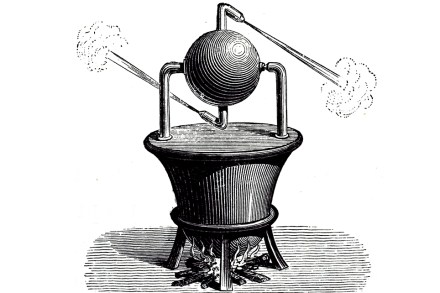
These days technology rules the roost and robots take questions in the House of Lords. In the West at least, the Greeks (as ever) got there first. Like the Romans, they were fascinated by hydraulics, springs, pistons, gears, sprockets, pulley-chains – and experimented with them to produce a whole range of lifting, digging, and propelling devices, especially for military purposes. A breakthrough happened when some Ancient Greeks, observing that the earth and heavens revolved in predictable circles, mimicked them in hand-cranked, bronze mechanisms consisting of complex, linked cogwheels to replicate and predict that movement – the first analogue computers.  The single recovered example is the Antikythera machine (2nd century bc), named after the island off which it was found.

In defence of Alexander the Great

From our UK edition

The charity Classics for All staged its annual moot in the Supreme Court on the question of Alexander the Great: hero or war criminal? (Search for ‘Classics for All Moot Trial’.) The prosecution drew masterfully on the Nuremberg trials (1945-6) for war crimes and crimes against humanity to condemn him; the defence thought this anachronistic and that Alexander’s reputation as a hero could be justified by Homer’s Iliad and many other examples of heroism in ancient eyes. The jury found for the defence. The case goes to the heart of the debate about colonialism, imperialism and slavery and raises the question: ‘Through whose eyes are you making your judgments – ancient or modern?’ The two positions cannot be reconciled. The ancient case, at its most basic, goes as follows.

Justice for Boris, ancient-style

From our UK edition

Did Boris Johnson lie to the House about partygate? The Privileges Committee decided to investigate, but refused to take Mr Johnson’s ‘intention’ into account. However, Lord Pannick QC (now KC) has since claimed that ignoring ‘intention’ would be ‘unlawful’ in determining whether there had been a violation. The Committee disagrees. Could the ancients help? Argument about the nature of law and justice has ever been at the heart of western thinking. Some early Greek philosophers maintained that only a form of metaphysical ‘justice’ kept a chaotic universe, riven with competing forces, stable. When Socrates (c. 470-399 bc) shifted the emphasis towards the purpose of existence, debates about the meaning of human justice intensified.

The privations of Diogenes

From our UK edition

Nine exceedingly passive ‘activists’ glued themselves to the floor of a Volkswagen factory in Germany and complained about being humiliated, left overnight in the cold and the dark and without ‘facilities’. Should they not have rejoiced at such deprivations to which the whole world ought, in their view, to accustom itself if it is to be saved? The ancient cynics could teach these narcissists a thing or two. ‘Cynicism’ derives from the ancient Greek kuôn, ‘dog’, the epitome of shamelessness. Diogenes (c. 410-320 bc) agreed, admitting that he lived in accordance with nature rather than custom and arguing that human conventions – marriage, family, politics, reputation, wealth, power, etc – stifled one’s true humanity.

Liz Truss and the art of rhetoric

From our UK edition

Liz Truss was spot-on in arguing that the only way in which a state can flourish is by combining low taxes with economic growth. But she failed to persuade her audience that she knew how this could be achieved. If only Dr Kwarteng, a classicist, had drawn her attention to Aristotle’s Art of Rhetoric (4th century bc), the first full analysis of the means of persuasion, the day and her career would have been saved. First, Aristotle defined two general types of persuasive proof. One he called ‘artistic’, because it depended upon human ingenuity, the other ‘non-artistic’, because it derived from pre-existing evidence, e.g. witness statements, written contracts, etc.

How would the Romans have defined Meghan Markle?

From our UK edition

Meghan Markle has been urging women to define themselves as they see fit, with ‘your full, complete, whole-layered, sometimes weird, sometimes awesome but always best and true self… you’re so much greater than any archetype’. But that all depends on the self-definition you come up with. Hers (if she had the slightest self-awareness) would clearly involve her thirst for power, status and revenge. That thirst is something Romans well understood. They took the view that all human beings were personally accountable for their actions and fully responsible for the outcomes. But coming out on top, which they all desired, earned the ultimate goal of it all, public respect, only if it was seen to serve the interests of public order and the common good. Yes, Ms Markle?

A lesson for Rupa Huq from the ancient Greeks

From our UK edition

The Labour MP Rupa Huq, of Pakistani heritage, has been suspended for suggesting that Kwasi Kwarteng, of Ghanaian heritage, was only superficially black and did not sound black on the radio. The ancients would have been baffled by her comment. They were fascinated by their world’s many different cultures, but colour held no significance for them. People’s beliefs, however, were a matter of great interest. The widely travelled Greek historian Herodotus (5th century bc) produced a fine example (among many others): while Greeks expressed utter revulsion at the Indian idea of eating their dead, an Indian tribe also did so at the idea of burning their dead. Conclusion: there was no right and wrong way to do it. It was simply a matter of custom.

Peta, Lysistrata and the comedy of a sex strike

From our UK edition

The German branch of the ‘green’ organisation Peta (‘People for the ethical treatment of animals’) is demanding that, until men stop eating meat – apparently they cause 41 per cent more pollution than female carnivores – women must deny them sex. The same sanction had its origin, of course, in Aristophanes’s comedy Lysistrata (411 bc), staged during the war between Athens and Sparta (431-404 bc), just after Athens had suffered a disastrous defeat in a failed attempt on Sicily. Naturally, an organisation like Peta might well think the play was in earnest. Was not Lysistrata proposing a noble, female-instigated sex-strike, by the women of both sides, to stop a war?

The police have learned to treat republican protests the Roman way

From our UK edition

Public dissent, from riots to republicans objecting to homage to the Queen, is dealt with by the police, a force created in 1829. Romans too faced such problems, though many had no qualms about crushing free speech; and it took them some time to get a grip on them. During the decline of the Roman Republic (c. 130-27 bc), violent crowds supporting one political faction or another regularly fought it out on the streets of Rome. The city authorities could do little but muster whatever forces were at hand to deal with it. Augustus tackled the problem head on, locating his Praetorian guard within the city and backing it up with three Urban Cohorts and official night-watchmen (mainly on the lookout for fires).

Augustus and a lesson in self-publicity

From our UK edition

The death of Her Majesty raises the question of a commemoration of her extraordinary years of service. Augustus ruled the Roman empire from 27 bc to ad 14 and was the longest serving of the roughly 70 emperors of the western empire (which ended technically in ad 476). He may have cracked a joke on his deathbed, asking those around him to applaud if he had played his part well in the comedy of life, but he was in deadly earnest about documenting in the first person a selective record of his own achievements (res gestae) for posting across the empire in both Greek and Latin. For example, he tells how he gave every Roman citizen 400ss. (nearly half a soldier’s annual pay) in 29, 24 and 11 bc and more than 1.2 billion ss. in handouts to soldiers.

Does Cincinnatus have anything in common with Boris?

From our UK edition

On retiring from office, Boris Johnson described himself as a sort of Cincinnatus, returning to his plough. This famous story attracted two comments from the media, both missing the point. According to the historian Livy (c.59 bc-17 ad), when Rome’s last king, the tyrannical Tarquinius Superbus – ‘the arrogant’ – was ejected in 509 bc, those who had acted as his advisers (patricians, i.e. senators) assumed control. But conflict soon emerged between them and the plebians over problems of freedom, poverty and debt. By refusing to co-operate with the senators, especially by refusing to wage war, the plebs eventually won the right to appoint tribunes from among their number to try to solve the problems in the plebs’ interests, with mixed success.

The Roman roots of Tony Blair’s approach to education

From our UK edition

Sir Tony Blair’s Tone-deaf suggestion that Stem subjects should dominate the curriculum of all schools would paradoxically take education back to the ancient world, when education was designed to benefit only the few. Take Rome. Wealth in the ancient world lay in land, which the rich exploited for all it was worth. Needing to protect their investment, Romans used their power to ensure that it was they who governed the state. The education system was designed to train them in winning arguments in the Senate and to protect themselves and their money in the courts. That left the remaining 90 per cent to fend for themselves, most trying to survive on a small land-holding, providing enough of a surplus to sell at market and buy what they could not themselves produce.

How the ancients treated gout

From our UK edition

Medical problems come and go in the media, and at the moment the flavour of the month appears to be gout (from Latin gutta, a ‘drop’, seeping into a joint). For the Greek doctor Hippocrates, gout (Greek podagra, ‘foot-trap’) was the ‘fiercest, longest and most tenacious of all joint diseases’. But since the ancients did not know that excess uric acid, a natural product of the body, was its cause, their remedies were futile. Pliny the Elder claimed that wet seaweed was the answer. Scribonius Largus was at least original, the first to suggest electrification for medical purposes: he backed torpedo fish (an electric ray) for curing gout (some types put out 220 volts).

What Truss and Sunak could learn from Cicero

From our UK edition

As Miss Truss and Mr Sunak spray policies around on a range of topics which they hope will appeal to Conservative members, Tory MPs agonise about whom to support, presumably with jobs in mind. The philosopher and statesman Cicero (106-43 BC) was more interested in a politician’s personal qualities. The Roman state was a res publica. At one point in his writings, Cicero rephrased that as res populi, which he interpreted as ‘the possession of the people’. By that, he did not mean a democracy – Romans disapproved of the Greek experiment – but a state in which the people did have an active and meaningful interest.

The ancient problem of the man who threw away £150m in bitcoin

From our UK edition

James Howells has spent years trying to persuade Newport council to allow him to spend millions digging up a rubbish tip to find a computer hard-drive, possibly containing yet more millions, which he threw away in 2013. The ancients, who found obdurate behaviour fascinating, often explored such human failings in their myths, many of which featured horribly appropriate outcomes. Erysichthon (‘one who pulls up the land’) provides a good example. Let the poet Ovid explain. Erysichthon, a man who never sacrificed to any gods, hacked away at and pulled down a much-venerated oak tree, hung with votive offerings and sacred to Ceres, goddess of the grain that feeds the world; further, he both beheaded a man who tried to stop him and ignored the tree’s threats of punishment.

Do we need a Roman-style Water Czar?

From our UK edition

It is clear that the country will soon need a Water Czar. Augustus’s right-hand man Agrippa would be the one to reshape the whole system, and Frontinus to ensure it all worked. Of Rome’s aqueducts, ‘cut-and cover’ masonry channels, following the contours of the ground, made up 80 to 90 per cent of their total mileage, with tunnels and arches only as necessary. Rome’s first three aqueducts, built between 312 bc and 144 bc, were ten miles, 40 miles and 56 miles long, the last with arches along the final flat seven miles into the city.

The unflattering truth about the battle for No. 10

From our UK edition

The battle to be PM raises the question: in a functioning democracy, how should arguments be won? Surely, by persuasion. But for ancient Greeks, too often it seemed to be by flattery. The Greek for ‘flatterer’ was kolax, and a comedian described a kolax’s lifestyle as follows: he would dress up in his best cloak, hire a slave and head off into town looking for someone rich and stupid, whom he would load with grotesque flattery. With any luck this would result in a dinner invitation, where he would make witty comments, turn the host’s vices into virtues and express delight at being the butt of his jokes.

The Roman roots of ‘colony’

From our UK edition

The word ‘colony’ meets with a sharp intake of breath these days, but ‘province’ raises no eyebrows. How very odd. The ancient Greeks invented the western notion of the colony. But ‘colony’ is the term the Romans applied to it and is of Latin derivation, from colo, ‘I cultivate, inhabit’ and so colonia. The ancient Greek term was apoikia, lit. ‘a home apart, away’, or perhaps a ‘home from home’.

The ancient Greek art of theatre criticism

From our UK edition

Last week Lloyd Evans was wondering whether it was about time audiences started booing dramatic productions of which they disapproved. He was right to trace this happy practice back to the ancient Greeks. In Athens, trilogies of tragedies were put on in competition, and Plato tells us that the audience did not disguise its feelings about its choice of winner, though the judges had the final say (Plato disapproved of those who yielded to the ‘howling of the mob’). In general, disapproval of any aspect of a play was expressed by hissing and booing, and heels being kicked against the seats. Uncouth behaviour was also not uncommon.