Peter Jones

How the ancients anticipated the apocalypse

From our UK edition

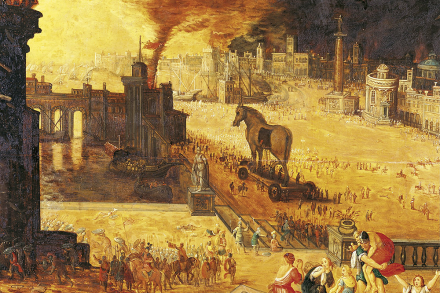
What with the threat of global warming and nuclear war, the new year might start with a big bang. The Greeks were preoccupied with this possibility as well and called it the apocalypse (apokalupsis), meaning ‘uncovering’ or ‘revelation’. It has a long history behind it. The Greek farmer-poet Hesiod (c. 700 BC) introduced the idea of a sequence of five ages – golden, silver, bronze, heroic, iron, each worse than the other – repeated five times and ending in total destruction. In his magnificent On the Nature of the Universe, the Roman poet Lucretius (d. c. 55 BC), who was an atomist, described how a world made of atoms would slowly decay and crumble into ruin – which he thought nature was doing in his own time – but would then renew itself. The evidence?

How the Roman ranking system actually worked

For otherwise healthy plebs in the Roman world, survival depended on four Fs: farming (the sole source of food and money), fighting, family and friends. Everything else that made life worth living meant having some degree of political control over your own existence, which could be summed up in a fifth F: freedom, or political equality. But the elite had little time for such goodwill towards men. For the plebs, there was the rub. In the 20s BC Livy began writing a history of Rome from its foundation in 753 BC. It was first ruled by a series of seven kings (none actually Roman) who were finally thrown out as tyrants in 509 BC.

roman ranking
tom stoppard

Stoppard, Sappho and me

Many years ago, and well retired, I was working in my study at home when the phone rang and a voice said, “This is Tom Stoppard. David West put me onto you.” David was the professor of Latin at Newcastle University and it emerged that Tom used him when he had queries about Latin, but now had a question about the ancient Greeks. When he couldn’t answer it, David suggested that Tom should call me. I felt a vast chasm of ignorance opening in front of me and have no memory of what the question was – but my reply must have satisfied him because he continued to throw the odd leg-break my way. To give some idea of his range of interests, on one occasion he became interested in the Greek perfect tense. Don’t ask me why, but that was at least something I could do.

How the Roman plebs made modern democracy

From our UK edition

For otherwise healthy plebs in the Roman world, survival depended on the four ‘Fs’: farming (your sole source of food and money), fighting, family and friends. Everything else that made life worth living meant having some degree of control over your life, which could be summed up in the fifth ‘F’, freedom, or political equality. But the elite had little time for such goodwill towards men. For the plebs, there’s the rub. In the 40s bc, the historian Livy began writing a history of Rome from its foundation in 753 BC. It was first ruled by a series of seven kings (none actually Roman!) who were finally thrown out as tyrants in 509 BC.

Why does the Latin mass prevail?

From our UK edition

The Pope is visiting Lebanon and Turkey. Will anyone be raising the vexed question of the Latin mass and sacraments with him and asking him exactly why it is so vexed? Though Jesus spoke Aramaic, the New Testament first appeared in Greek in the 1st century ad because that was the common language of the Mediterranean. It remained the language of the liturgy until Pope Damasus I (d. ad 384) invited St Jerome to translate the whole Bible into Latin (the Vulgate: vulgatus, ‘widely used, common’). The Roman empire collapsed in the 5th century ad and local languages started replacing Latin, but the Roman liturgy remained standard in western Europe. It was not until 1546 that the Vulgate was declared the inspired word of God.

How I bonded with Tom Stoppard over the classics

From our UK edition

Many years ago, and well retired, I was working in my study when the phone rang and a voice said: ‘This is Tom Stoppard. David West put me on to you.’ West was professor of Latin at Newcastle University and Tom called him when he had queries about Latin. But he had a question about the ancient Greeks which David could not answer, so he suggested Tom try me. I have no memory of what the question was, but my answer must at least have satisfied him because he continued to throw the odd leg-break my way. To give some idea of his range of interests, on one occasion he became interested in the Greek perfect tense. He had done Latin and some Greek at his school in Yorkshire.

What the newspapers reported in ancient Rome

From our UK edition

Nero’s personal amphitheatre, recently discovered near the Vatican, was praised to the skies in the ancient Romans’ ‘newspaper’. The historian Tacitus commented drily that it ought to carry stories of much greater historical merit. The ‘newspaper’ was the Acta Diurna (‘Daily Events’), written on papyrus by actuarii, posted up on an Album (whiteboard) in the Roman forum and elsewhere, and left for a few days before being taken down and put into storage for future reference (no copies survive). It was Julius Caesar’s ‘very first act as consul (59 bc) to ensure that the proceedings both of the Senate and of the people should be published daily’.

Aristophanes would have loved Zohran Mamdani

From our UK edition

Mr Zohran Mamdani, the 34-year-old elected mayor of New York, who has described the police as ‘racist, anti-queer and a major threat to public safety’, says that his top policy priority is implementing free universal childcare, taxing the wealthy, freezing rents, running buses for free and heaven knows what else. How very Marxist! The Greek comic writer Aristophanes (d. c. 386 bc) would have loved it. It was he who invented communism, after all, and had his audience in hysterics. His comedy Ecclesiazusae (‘Women Running the Assembly’) was produced in Athens in 391 bc. The women of Athens decide to seize power for themselves.

The golden thread between Donald Trump and Nero

From our UK edition

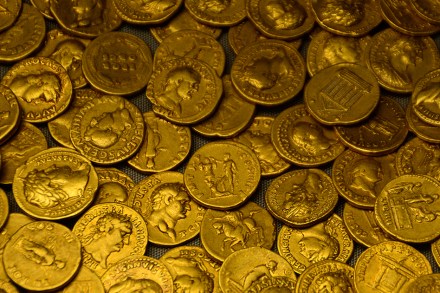
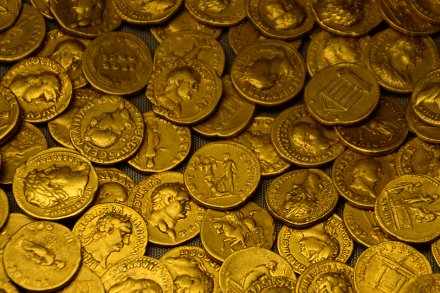
Donald Trump has knocked down the east wing of the White House and is turning it into his Golden Ballroom. Might he be tempted to go a step further and build a Golden House (Domus aurea), as Nero did? Nero was as besotted with gold as Trump is. He wrote poems in gold, preserved his first beard in a golden box, possessed a golden fishing net, had a golden box of poisons and golden chamber pot, and shod his second wife’s mules in gold. When the king of Armenia visited, he had the theatre of Pompey – the stage, the walls, everything – somehow gilded. In 64 bc a devastating fire hit Rome (was Nero complicit?). Only four out of Rome’s 14 regions were untouched.

Andrew Mountbatten Windsor and the ancient struggle with shame

From our UK edition

The most extraordinary thing about Andrew Mountbatten Windsor is that he seems to have no sense of shame. That word in Greek was aidôs, which covered everything from a sense of shame, inhibiting one’s own behaviour, to respect, i.e. sensitivity to the feelings, status and claims of others. ‘When I consider that I am doing wrong, I feel aidôs to look my friends in the face’ (Agathon) is a typical example. This feeling is a major feature of Greek literature. In Homer’s Iliad, Hector the Trojan hero challenges the Greeks to single combat, but ‘they felt aidôs to refuse, but were afraid to accept’. They knew what society expected of them but were afraid to do it. On the other hand, in the heat of battle, it was often enough for the leader simply to cry ‘Aidôs!

The Romans would have known that AI can’t replace architects

From our UK edition

Architects are thrilled about AI, confident that it will take us into an exciting new world at the flick of a switch. The Roman architect Vitruvius begins his ten-book De architectura (c. 25 bc) by describing an architect’s education. Craftsmanship – continuous and familiar practice – must go hand in hand with theoretical skill and method. He must be a man of letters so that he can draw on precedents; proficient in drawing and geometry; and a master of rule and compass. Optics will teach him how to use the sun to best effect in lighting rooms. He must also be good at arithmetic to cost his buildings. He must be a historian, to explain why columns and ornaments look as they do, and a philosopher, high-minded, urbane, cherishing a good reputation.

How to succeed, Roman-style

From our UK edition

Whatever Prince Andrew has done, the succession to our throne is secure. How envious the Roman emperor Augustus would have been! In vain did he offer rewards for faithful marriage and punishments for adultery and such like. The mildest punishment was temporary expulsion from Roman territory; the harshest, banishment in perpetuity to an ‘island or oasis’, with loss of property and citizenship, and death for returning. But Augustus’s only child, Julia, who had five children, took advantage of her husband’s lengthy spells abroad and had (it appears) many lovers, and even assignations in the middle of the forum.

What did the ancients consider a ‘just war’?

From our UK edition

Since the UN does not provide a definition of the ‘just war’, it is interesting to see the ancient take on the matter. The Greeks contributed little. For Plato, war was necessary for the creation and survival of the city, but it was not its ultimate purpose: that was peace. For Aristotle, life consisted of three arenas of activity: war for the sake of peace, work for the sake of leisure, and necessary and useful activities to demonstrate one’s worth. But Cicero (d. 43 bc) understood war in ways that have shaped our own understanding. His starting point was that there were two ways of settling an issue: by discussion, or by force. As he said, ‘the former [is] appropriate for human beings, the latter for animals’.

Keir Starmer and the ancient question of word vs deed

From our UK edition

Sir Keir Starmer said that Britain had come to a fork in the road. As usual, he took it – the fork between his words and his actions. Athenians of the 5th C bc were fascinated by the implications of logos (‘speech, reason, argument’, cf. ‘logic’) and ergon (‘action/results’, cf. ‘erg’). While Homeric heroes (8th C bc) were ordered to excel as ‘speakers of words’ and ‘doers of deeds’ because that made them winners in both the political and military arenas, the statesman Pericles emphasised the high importance of the interaction between word and deed: ‘We do not think logos is an obstacle to action; no, the issue is the failure to use logos before action has to be taken.

How to create an educational elite

From our UK edition

University term has started, and even more students are being taught in even larger classes. But to what end? Education was a subject that thinkers like Aristotle who argued that the aim of a state was ‘the sharing by households and families in the good life, i.e. a complete and self-sufficient life’. This being of supreme importance: ‘It is evident that there must be one and the same education for everyone, and the superintendence of this should be public and not private… Public matters should be publicly managed.’ But what was meant by ‘the good life’?

What would the Romans have made of Trump’s state visit?

From our UK edition

The Roman historian Tacitus commented that the visit of an Armenian king to Rome to clinch a deal in ad 66 demonstrated ‘that the king did not understand how we Romans value real power, but disdain its vanities’. What about Donald Trump’s recent visit, then? The imperial powers of Rome and of Parthia (modern Iran) were cagily cautious of each other, and both sides wished to control Armenia, which separated the two. The Parthian king put Tiridates on the throne of Armenia to maintain local control, while Rome determined its foreign policy. When Tiridates and his retinue arrived in Puteoli, Rome gave him a daily allowance of 800,000 sesterces, and a fabulous gladiatorial exhibition greeted him.

Cicero’s tips for the Labour party

From our UK edition

Labour may be in a bit of a mess, but Cicero (d. 43 bc) has some top tips. ‘Let conscience and scrupulous regard for the right take precedence over the obligations of friendship.’ ‘The person who corrupts his audience by words commits a graver crime than the man who does so by bribery. For even a virtuous man could be corrupted by words, but not by a bribe.’ ‘People who argue that advantage is one thing and right another are uprooting nature’s fundamental principles. Obviously, we all aim at our own advantage: we find that irresistibly attractive. No one can possibly work against his own interests – indeed no one can refrain from pursuing them to the best of his ability.

Angela Rayner and the ancient question of ‘good judgment’

From our UK edition

Angela Rayner has returned to the back benches because, as housing secretary, she failed to follow the rules relating to stamp duty on a flat she had bought. Athenians were extremely proud of their citizen-led Assembly and did not take kindly to sub-standard officials. Plato constructed a dialogue (c. 430 bc) between Socrates and the controversial sophist Protagoras, who claimed that anyone taught by him would be a success in public and private life. Socrates challenged this claim. He pointed out that, when the democratic assembly of male citizens met to discuss technical matters (e.g. ship-building), they listened to those who actually had experience of building ships and shouted down anyone who did not.

The ancient Greek take on human rights

From our UK edition

While Greek and Roman thinkers were influential in developing ideas such as citizenship, justice and equality, the notion of universal ‘human rights’ (1948), especially those involving one’s ‘identity’, would have struck them as absurd. ‘Identity’ derives from the Latin idem, ‘the same, unchanged’, via the French identité (14th century). The term has been colonised by many different groups who feel that their specific identity – e.g. colour, sexual preferences, personal beliefs – bestows ‘rights’ upon them to behave or be treated in specific ways, whatever anyone else thinks about it, let alone the law of the land.

How Athens handled asylum seekers

From our UK edition

Since, in the absence of border posts, people in the ancient world could come and go at will, refugees and asylum seekers were as common as they are now. But then the notion of ‘citizenship’ came into play. Roman plebs were indeed proud to be citizens, but the ruling oligarchic elite, intent on expanding Rome’s control over land and people (the ancients’ sole resources, bestowing power and wealth), were reluctant to give them any political say. Democratic Athens, however, took citizenship very seriously. All males with Athenian parents, and aged 18 or above, met weekly in assembly to take all political decisions by majority vote. The idea that any Tom, Dick or Harry could be involved was absolutely anathema to them.