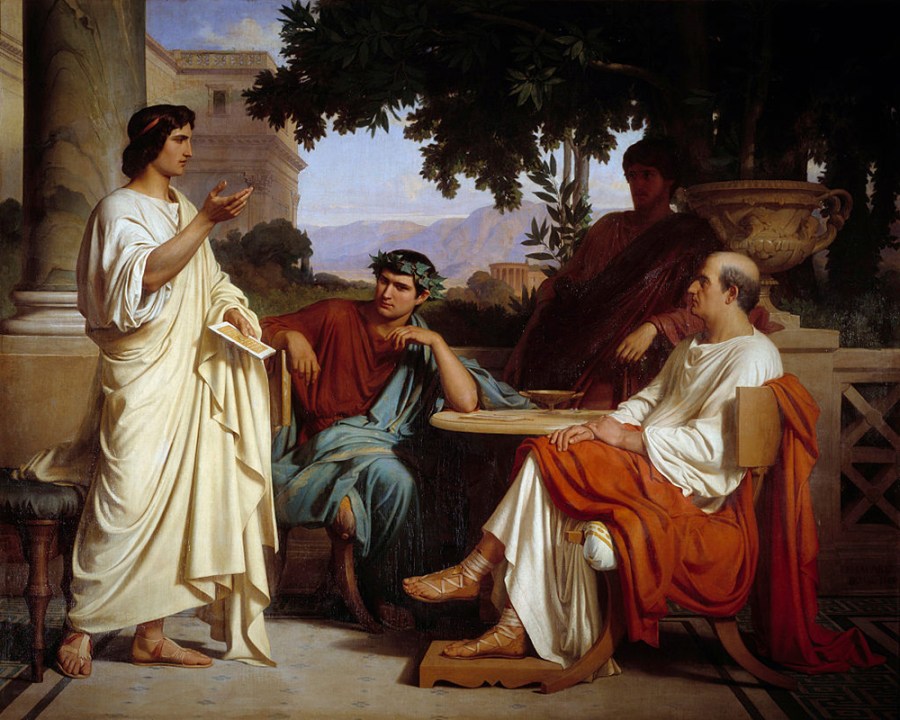
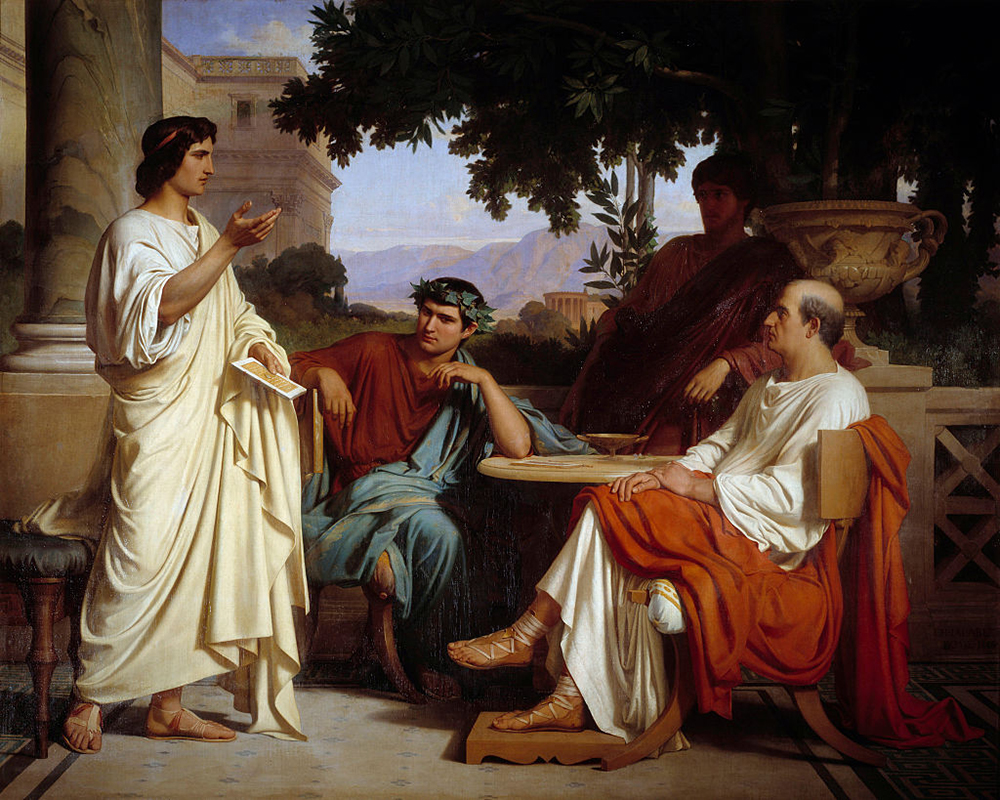
What a lot of friends Jeffrey Epstein appears to have had! But what did friendship mean to him? Was it simply a matter of reciprocal benefits and obligations? In the ancient world, such interactions were a matter of life and death for the poor (there was no such thing as the welfare state), and of political success or failure for the wealthy and ambitious. But many thought there was far more to real friendship than such purely practical considerations.
For Aristotle, having a friend was ‘one of the greatest goods, because there is an unbreakable connection between friendship and virtue, since friends do not wrong one another: justice and friendship are either identical or very close to each other’. He went on to define three types of friendship: we love someone ‘for his character and virtue, or because he is serviceable and useful, or because he is pleasant and gives us pleasure’. But perfect friendship, the friendship of good people, involved ‘mutual exchange of love and choice’.
That kind of friendship occurred only among humans, since they alone were able to make a conscious choice in the matter. Yet nothing stopped bad people from enjoying friendships with other bad people for e.g. the sake of utility or pleasure, he argued: they were still in a relationship, just one not characterised by ‘love’.
Cicero approached the matter from a different angle. His reasoning was that most men recognised no human relationship as good unless it brought some profit, and regarded friends as they did cattle, prioritising those which gave hope of the largest gain.
Likewise, friendship for many people was a matter of fawning and flattering, saying everything to please – except the truth. That utterly destroyed sincerity, without which friendship could have no meaning. Since, therefore, it was virtue that made a real friend, make sure you appraise him before you love him.
But it was Pliny the Younger (strangely) who got to the root of the matter: real friendship depended on shared moral values (morum similitudo). But if you have no moral values in the first place…






Comments