Peter Hoskin

Spinning an atrocity

From our UK edition

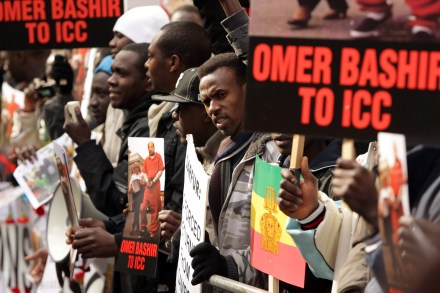
Paul Waugh's got it spot on.  The Muslim Association of Britain's statement on Sudan and Darfur today is utterly disgraceful.  Rather than supporting the ICC's decision to charge the President of Sudan, Omar Hassan Ahamd al-Bashir - who has encouraged the rape and murder of thousands of civilians, many of them Muslim - with war crimes, they describe it as "reprehensible".  Their thinking?  That similar prosecutions haven't been launched against war crimes in "Palestine, Lebanon, Iraq, Afghanistan, Chechnya", as if that somehow mitigates the atrocities that al-Bashir has instigated. It's reminiscent of the Muslim Council of Britain's disgusting decision to boycott Holocaust earlier this year.

Worse than Madoff?

From our UK edition

This is how Jeff Randall kicks off his column in the Telegraph today: "What's the difference between Bernard Madoff and Gordon Brown? Answer: one has drained fortunes from gullible victims, plundering their income and savings to create an illusion of prosperity. The other is going to jail. Mr Madoff has thrown in the towel. His Ponzi scheme, whereby he needed to suck in ever greater quantities of other people's money in order to maintain a semblance of competence, collapsed under the weight of undeliverable expectations. Nobody knows for sure how much has gone missing, but Wall Street scribes are calling it a $65 billion fraud. Not bad for peddling fresh air.

Darling has money troubles

From our UK edition

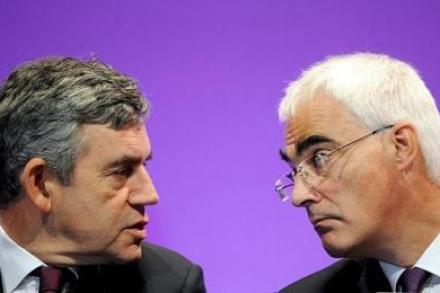
Yes, yes, I know I commented on rumours of a Brown-Darling split yesterday, but this passage from the FT deserves pulling out, especially given Brown's emphasis on forging a global "grand bargain" at the G20 summit: "The chancellor would love to be able to agree to a tax cut equivalent to 2 per cent of national income in 2010 as demanded by Tim Geithner, the US Treasury secretary. It would also please Gordon Brown ... who has championed a global fiscal boost. But Mr Darling knows he cannot afford it. 'There's no money,' says one ally." Perhaps the most striking thing about the split reports, now, is their frequency - the papers have carried allusions to tension between the Chancellor and the Prime Minister for almost every day of the past two weeks.

There may be tension ahead

From our UK edition

There's another epsiode in the Alistair Darling story today, with a hint in the FT that he may be resisting pressure from Brown to introduce a big package of (debt-fuelled) spending increases and tax cuts in the Budget:   "Mr Darling, speaking to foreign journalists in London, called for the world’s 20 leading industrial and developing nations to pursue a package of measures to boost the economy including monetary loosening and measures to rebuild banks. However, on the fiscal side the chancellor put the stress on implementing tax cuts and spending increases that were already in the pipeline... ...Some ministers believe Mr Darling is coming under pressure from Mr Brown to give the economy another fiscal jolt, a claim denied by both the Treasury and Downing Street.

Keeping it in the family | 12 March 2009

From our UK edition

With Brown publishing a list of ministerial interests today - some two years late, and possibly delayed by Peter Mandelson's complex financial dealings - the Evening Standard has the scoop that around 30 figures in the Goverment employ family members at the taxpayers' expense: "Nearly 30 members of the Government employ their family at the taxpayer's expense, the Evening Standard reveals today. They include four Cabinet members who are using public funds to pay for their spouses, partners or children to be on their staff. Among the claimants are Home Secretary Jacqui Smith, housing minister Margaret Beckett, Europe minister Caroline Flint, children's minister Beverley Hughes and Environment Secretary Hilary Benn, who all attend Cabinet.

Will the loyalists prevent an escalation?

From our UK edition

In today's Independent, David McKittrick highlights one of the most important questions surrounding the recent killings in Northern Ireland: Will loyalists seek bloody revenge?  It's encouraging that the leader of the largest loyalist paramilitary group, the Ulster Defence Association, answers in the negative in the Times.  Here's what Jackie McDonald tells the paper, in of the most resonant quotes of the past few days: “There is no danger of retaliation. I have to send my deepest sympathies to the families of the soldiers and the policeman. People came to me saying, ‘Please don’t go back to this, don’t let us go back’.

Is the Tory poll lead really all that soft?

From our UK edition

One of the most frequent claims made about the Tory poll lead is that it's "soft"; that it's only due to protest votes against the Government.  Yet an intriguing survey by the essential Politics Home suggests that may not be the case after all.  They asked over a 1,000 people who they intend to vote for at the next election, and then followed it up with the question, "How enthusiastic are you about this prediction?

PMQs live blog | 11 March 2009

From our UK edition

Stay tuned for live coverage of PMQs from 1200. 1200: Brown stands up, and offers his condolences to the soldiers and policeman murdered in Northern Ireland over the past few days.  He commemorates the peace marches in NI today, calling them "unity against violence". 1201: First question from Andrew Miller: "When will the banks get their act together to stimulate demand for, not just vehicles, but for other manufactured goods?"  Gives Brown an opportunity to talk about his "international settlement" for banking. 1202: Cameron gets a big cheer.  He thanks the Speaker and PM for what they said a fortnight ago, on the occasion of the death of his son, Ivan. 1204: Cameron leads on the situation in Northern Ireland, calling the attacks "disgusting".

Is this how a Labour Opposition would attack a Tory Government?

From our UK edition

An incisive column from Daniel Finkelstein this morning, which perfectly sets out how difficult managing the public finances will be for the next government.  This passage on public service reform is worth pulling out: "The Tories will aim, of course, to make services more efficient and to get government out of wasteful projects altogether. Yet even this will prove hard. Reform costs money. Making people redundant, moving offices, sending out circulars full of new instructions, keeping interest groups happy while making controversial changes - it all costs money. And (here's a point I may not have mentioned) there is no money." It's something which Team Cameron should bear in mind.

No.10 belatedly starts the G20 expectations management

From our UK edition

Today's Times has a great double-page spread on the forthcoming G20 meeting; concentrating on how much the summit will cost, and the dim prospects for any meaningful agreement being reached.  Nestled among the coverage is this quote from a "government source": “We are by no means talking it down but I do not think anyone is suggesting the world’s problems can be solved in a single day,” If this is expectations management, it's all too little, too late.  We've already had Brown calling for a global "grand bargain"; we've already had the Downing Street-fuelled idea that this is Brown's Big Chance to save his premiership; and these memes have had plenty of time to take root and create expectations that will be very difficult to meet.

Downing Street can only reach the US answering machine

From our UK edition

Earlier today, Ben Brogan reported a telling comment from the Cabinet secretary, Sir Gus O'Donnell, that, when it comes to discussing the G20 summit with Washington, "There is nobody there ... You cannot believe how difficult it is."  The remarks have since been withdrawn, and expunged from civil service websites.  But, in spite of the revisionism, the sentiment has cropped up elsewhere.  A couple of weeks back, the Times quoted an anonymous "British official" saying the following: "The new US regime is like an echo chamber. We are struggling to get people even to return our calls. They are totally focused on domestic issues and have not lifted their heads to look at the international perspective.

More must be done for the victims of the recession

From our UK edition

Just returning to the theme of my earlier post, I thought I'd flag up some IFS figures which indicate how fiscally squeezed the least well-off are, even before we consider taxes, job losses and the rest.  Here's how today's Times reports them: "The poorest tenth of the population suffers inflation more than 50 times higher than the RPI measure, which is 0.1 per cent, the Institute for Fiscal Studies said. The most hard-pressed households have an effective inflation rate of 5.4 per cent, while those aged over 80 face a 7.1 per cent annual rise in prices because both of these households spend a bigger proportion of income on food and energy, both of which are still rising in cost. In contrast, rich households are enjoying a fall in the cost of living, with -1.

Moral fervour gives way to technical lingo

From our UK edition

Alistair Darling's article* in the Guardian this morning is a perfect example of why Brown's global focus will struggle to impress voters.  The lingo of international finance settlements is just too dry and disconnected from the plight of the British public.  Here are some yawn-inducing excerpts: "For those most at risk, we need to increase financing through the IMF and multilateral banks, through swap-lines between central banks and an enhanced lending facility at the EU level. On Saturday, the G20 finance ministers will meet here in the UK. This will be followed by the London summit on 2 April under the presidency of Gordon Brown.

Is welfare reform becoming a consensus issue?

From our UK edition

Just returning to this Compass / YouGov poll of Labour members which I flagged up yesterday, as some of the other results are worth noting.  There's plenty of support for ostensibly leftist measures, such as a crackdown on bankers' bonuses and higher taxes for the well-off.  But James Purnell's welfare reform agenda also gets a fair amount of backing, despite the fact that it's been unpopular with the left of the party before now.

The requirement to rethink aid

From our UK edition

Following my earlier post, on how Brown will contribute British funds to a World Bank fund for poorer countries, I just thought I'd recommend this excellent interview with Dambisa Moyo and Richard Dowden in the latest issue of Standpoint.  Fraser's already commented on Moyo's book Dead Aid (here, and The Spectator's review here) but a good thesis is worth repeating.  So here's her take on the failure of "government-to-government flows or multilateral-to-government flows" to improve conditions in Africa: "...if you are a government and you have as much money as you would like to maintain the military, then you don't actually worry about being kicked out of office because the military is on your side all the time.

Brown’s global focus leaves opportunities for his rivals

From our UK edition

This from the BBC website: "Britain will contribute to a new World Bank fund for the poorest countries, Gordon Brown is expected to confirm on Monday. The fund calls on the richest nations to finance it with 0.7% of the money they have used to bail out the banks. The prime minister will address a two-day conference in London a month ahead of the G20 summit of the world's biggest economies." The Prime Minister's constant attention to the international dimension of this crisis - as typified by his trip to America last week, this latest conference, and April's G20 meeting in London - may well put him in his comfort zone, and it may well be part of Downing Street's great survival strategy.  But, as I wrote last week, there's a real risk that it turns out to be alienating.

Standing by an atrocity

From our UK edition

Of all the revelations about Saturday's brutal terrorist attack on Massereene Barracks, Co Antrim, those in today's Times are among the most unsettling: "Armed security guards employed to protect the military base in Northern Ireland where two soldiers were shot dead did not open fire on the terrorists, even when they stood over the injured men and fired further shots... ...Army sources said that it was the first time that the Northern Ireland Security Guard Service (NISGS) had had to deal with a direct attack on a base. The service took over responsibility for security of barracks from soldiers more than ten years ago.

A Miliboost?

From our UK edition

Reporting this Compass / YouGov poll, the Sunday Telegraph concentrates on the news that Labour members think Peter Mandelson is doing a better job than Harriet Harman.  Yet, to my eyes, there's a more a striking finding in there.  74 percent of respondents think that David Miliband is doing a good job.  And that after Miliband's abortive leadership coup; the infamous banana and Heseltine moments; the disastrous trip to India; and his ill-advised 'War on Terror' article for the Guardian.  It's enough to make a Foreign Secretary think he could be party leader after all.

Common sense over computers?

From our UK edition

Recommending what sounds like a prescient report by Edward Chancellor, Crunch Time for Credit? (2005), Charles Moore writes the following in his column today: "Although some of Chancellor's work is technical, it benefits from a historian's understanding of what people have done in reality rather than a narrower economist's obsession with 'modelling'. It has strong elements of common sense. By that same common sense, though obviously with much less information, the man in the street also predicted the credit crunch." It's a crucial point - and one stressed by Nigel Lawson in his evidence to the Spectator Inquiry, which will be up on Coffee House soon - that while common sense may balk at 125 percent mortgages and the like, numerous economic and financial models failed to.