Peter Hoskin

Brown’s wayward sense of priorities

From our UK edition

What is it with Gordon Brown and alarm calls?  He spent years ignoring the IMF's warnings about the state of the UK public finances.  And now, thanks to a National Audit Office report, we learn that he ignored warnings about the preparedness of the Treasury to deal with a banking collapse.  Here's the relevant passage from that report, with the key part underlined:   31. The Treasury had been aware of potential shortcomings in the arrangements for dealing with a financial institution in difficulty prior to the crisis at Northern Rock. From 2004 the Tripartite Authorities had undertaken exercises to test their response to a range of scenarios.

Have the Tories drawn back some of their spending plans?

From our UK edition

If you want a taste of what Cameron's speech on the public services was like earlier, do tune into his interview with Nick Robinson - video on the BBC website here.  He's considerably more unabashed about talking cuts than he has been in the past, and stresses the "tough choices" that a Tory government would have to make.  It makes for a fascinating contrast with his press conference in January, when Cameron asserted that the NHS, schools, international development and defence would all see real terms spending increases under a Tory government.  Pushed by Robinson today, he seems only to commit to increases for the NHS and international development and, even on those, seems quite evasive.
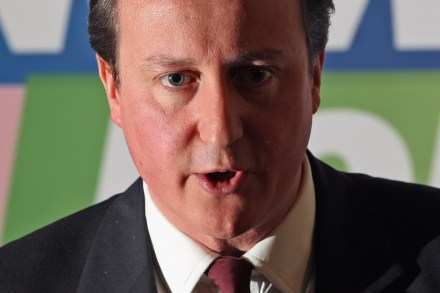
The Tories are ramping up their spending cut rhetoric

From our UK edition

David Cameron has just delivered what struck me as his most forceful speech yet on public spending, an indication that the Tories may finally be prepared to talk about cuts.  The basic theme was "more for less" - cutting down on Government waste and trimming the "quangocracy" - to deal with the crisis of our public finances.  Sure, it's all still a little nebulous.  But at least it makes fiscal sense - unlike the "sharing the proceeds of growth" formula, which I suspect this speech was designed to bury once and for all. The more Cameron talks like this, the better for the Tories.  As Robert Chote points out in his article for the Times - highlighted by James earlier - the next government will be forced to "squeeze" (i.e. cut) public spending and raise taxes.

Cameron calls for a positive approach

From our UK edition

Here's how David Cameron kicks off his article in the latest issue of the magazine, before going on to outline the Tories' "empowerment" agenda: "'Sit back, keep quiet, let the government unravel and you will be in Number 10.' If I had a pound for every time these words of advice have been uttered to me over the last year or so, I’d be able to make a sizeable contribution towards easing the pain of Labour’s debt crisis. But the advice — however well meaning — is plain wrong. The election is far from won and I still hold to the belief that governments don’t just lose elections; oppositions must deserve to win them with a positive mandate for change." It may seem like a platitude - what opposition wouldn't say that kind of thing?

Will this have the same impact as it did in 1979?

From our UK edition

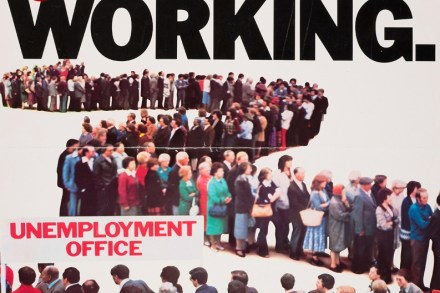
You felt it had to come at some time, and here it is - the Tories have reworked the original 'Labour isn't working' poster (30 years old this year) for the current recession.  As Fraser suggested earlier, you can expect this message to form their central attack from now until polling day.

Is No.10 losing faith in the “Tory cuts” attack?

From our UK edition

Reporting speculation that the Government will delay its departmental spending review, the FT contains this intriguing snippet: "According to one Downing Street insider, there is a debate between those who believe that at least the top priorities for spending should be spelt out, so Labour can challenge the Conservatives on whether they will stick to those plans. Against that is the fear that if the general election becomes a debate over who is best placed to cut public spending, the electorate might favour the Conservatives." This internal debate suggests that the Government's commitment to the "Tory cuts" attack is at least weakening.

PMQs live blog | 18 March 2009

From our UK edition

Stay tuned for live coverage of PMQs from 1200 onwards. 1204: Here's Brown now.  First question from Jim Sheridan - "Today's unemployment figures are extremely disappointing ... will [the PM] reassure us that he will deal with this?"  An opportunity for Brown to talk about "investment" in skills and training. 1206: Cameron now.  Leads on unemployment and the rise in the claimant count.  "Doesn't this mean that the PM's claim that Britain was best-placed to weather the recession was nonsense?" 1208: Brown repsonds that the Government are spending £1.3 billion on the problem.  He adds, predictably, that the Tories would "do nothing".

Will Brown get a Recovery Boost?

From our UK edition

So would an economic recovery give Labour a slim chance of winning the next election?  That's the question mooted by the Guardian this morning, as their ICM poll discovers that some people planning to vote Tory or Lib Dem would consider switching to Labour if there are "clear signs of a recovery" by May 2010.  That's 9 percent of current Tory "voters" and 22 percent of Lib Dem "voters", to be precise. To my mind, there are two major impediments to a significant Recovery Boost for Labour.  The first is, simply, that there may not be a recovery.  After all, leaked IMF figures yesterday have downgraded UK growth for this year (putting it at -3.8 percent), and have the economy shrinking by a further 0.2 percent in 2010.

Happy St Patrick’s Day

From our UK edition

As it's St Patrick's Day, here's a clip of the great Irish comedian Dave Allen to round off the afternoon: I'd also recommend you check out this (sadly, unembeddable) clip of Allen's 1993 routine on banks - I reckon he may have spotted the signs of the credit crunch before anyone else...

Labour close the gap | 17 March 2009

From our UK edition

This month's Ipsos-MORI figures have been released and Labour appears to have eaten a hefty chunk out of the Tory lead: Conservatives --- 42 percent (down 6 percentage points) Labour --- 32 percent (up 4) Lib Dems --- 14 percent (down 3) As Anthony Wells points out, though, the last Ipsos-MORI poll had a considerably bigger lead for the Tories than other pollsters were showing, and this puts them back in a similar range.  Either way, I think Downing Street will be more pleased than not with this.  Throw in the YouGov poll from the weekend (which had also had a reduced gap of 10 points between the Tories and Labour), and there's some evidence of a small post-Obama bounce for Brown.

Myners ducks and weaves – but to little effect

From our UK edition

I didn't actually tune into Paul Myners' appearance before the Treasury Select Committee (did any CoffeeHousers?), but it sounds as though he took "It's not my fault, guv" to a whole new level.  Take Myners' explanation of why he didn't know that Fred the Shred's pension settlement was discretionary: "Nothing was said that at [a] meeting by either [former RBS chairman] Sir Tom McKillop or [former head of RBS's remuneration committee] Mr Scott along the lines of 'Well actually Minister what we are minded to do is be rather generous to Fred because he's served us well and we would like to double the value of his pension as a result of which we're going to create an elaborate ruse under which it appears he's requested to retire and he has accepted that request.

Cambridge University’s decision makes the case for school reform

From our UK edition

In some sense, the critics of Cambridge University's decision to call for an A* grade from its applicants have a point - it will, most likely, make it disproportionately more difficult for students from state schools to get into the university.  After all, despite educating only seven per cent of pupils, independent schools produce more students with three A grade A-levels than all the country's comprehensives put together - a shocking statistic, among countless others, which James highlighted last week.  But those same critics are directing their anger at the wrong target.  That the performance gap between British state and British private schools is the largest in the world is not Cambridge Uni's fault - it's testament to the failure of government education policy.

More of the same from Brown

From our UK edition

So here it is.  After Cameron's apology last week, Brown has used his interview in today's Guardian to hit back with an apology of his own.  Or maybe not.  Truth is, the Prime Minister says he accepts "full responsibility" for his actions, but - as usual - follows it up with a caveat which passes the buck: "I take full responsibility for all my actions, but I think we're dealing with a bigger problem that is global in nature, as well as national. Perhaps 10 years ago after the Asian crisis when other countries thought these problems would go away, we should have been tougher ... keeping and forcing these issues on to the agenda like we did on debt relief and other issues of international policy.

Clever politics – but not something to really loosen the fiscal squeeze

From our UK edition

The take-home point from Cameron's press conference seems to be his announcement that the Tories would freeze the 2 percent rise in the BBC licence fee pencilled in for this year - Jeremy Hunt also discussed this earlier on ConservativeHome.  My quick take on it is that it's clever politics, but deeply unambitious.  The clever politics first: after the recent scandals that the Beeb's been embroiled in, there's less public goodwill towards the corporation, and more reluctance surrounding the licence fee.  The Tory proposal keys into that, as well as giving them a platform to talk about saving money for households, ordinary families and the like.  To some extent, any attempt to loosen the fiscal squeeze must be welcomed.  And yet...

Crunched households

From our UK edition

The research by PricewaterhouseCoopers in today's Independent delivers some more figures for the credit crunch scrapbook: "The total value of shares and homes owned by British households has fallen from £6.8trn in 2007 to £4.9trn now – a decline of £1.9trn, or 28 per cent, the PwC figures show. During the credit crunch, houses have lost 20 per cent of their value (or £800bn) and equities 40 per cent (or £1.1trn). Thus, each adult Briton has lost on average £17,000 from the property slump and a further £23,000 in the value of shares, held either directly or indirectly though pension plans. The losses are likely to rise, and there could be a further fall of about 15 to 20 per cent in property values.

The tension over BJ4BW continues

From our UK edition

In the wake of the Lindsey oil refinery strikes, there's evidence that Gordon Brown's deeply misguided 'British jobs for British workers' soundbite has provoked some dangerous trends.  Take the Harris poll in this morning's FT.  It finds that 78 percent of British adults think immigrants should be made to leave the country if they don't have a job (with around 50 percent strongly supporting this idea).  And that 54 percent of British adults oppose citizens of other EU countries getting a job here.  Compared to the other countries polled - France, Germany, Italy and Spain - Britain displays the highest levels of hostility to migrant labour.

Government by clique?

From our UK edition

An important article by Andrew Rawnsley in the Observer, setting out the "clique of four" at the heart of the Tory party - David Cameron, George Osborne, Andy Coulson and Steve Hilton - and the deleterious monopoly they have on decision-making.  This passage outlines the extent of the problem: "Some shadow cabinet members report that their leader can be good at soliciting the views of colleagues and treating their portfolios with respect. Others complain that they are so frozen out of the inner gang that they have never had the opportunity for a one-to-one discussion with him about their policy areas." The claims of the latter shadow cabinet members flag up something Cameron should fix - and sharpish.

Where is the foreign policy?

From our UK edition

Matthew Parris hits the nail on the head this morning, with an article bemoaning the lack of Tory foreign policy.  Do read the whole thing, although the final paragraph sums up the charge: "As Opposition leader, Margaret Thatcher defined herself in brutal and angry outline as a cold warrior. Today there is no need for such clarity from Mr Cameron and something to be said for wait and see. But in Europe Britain's natural allies in the “new” EU would be glad of an outstretched hand from our likely next government. And in Asia we are snagged in the barbed wire of a bloody conflict. I'm told Mr Cameron is not disposed to review our entanglement. Is that really true? I - and perhaps the electorate - would like to know.