Peter Hoskin

Brown backs down

From our UK edition

Apart from the sentiment expressed, perhaps the most damaging aspect of Mervyn King's intervention on Tuesday was its timing.  Brown's round-the-world trip was meant to act as a rallying call - but now it's more an exercise in firefighting, as he deals with tricky questions surrounding our capacity for a "fiscal stimulus".   Take his comments in New York yesterday , where he suggested that there wouldn't be any further stimulus in the Budget, and claimed there were more "effective and quicker ways" of boosting the economy.  This is a trifle unconvincing, coming from a man who has paraded his "everything it takes" credentials for the past few months, and who has been pushing his colleagues to borrow, borrow, borrow, spend, spend, spend.

Restoring faith in Parliament

From our UK edition

A thought-provoking article by Iain Martin in today's Telegraph, on the subject of MPs and their expenses.  Here are some of his proposals for strengthening Parliament and making the system more transparent: "So, how to improve the quality of members and their work? Some political analysts argue, with some justification, that MPs should be paid more, with a simpler allowance system and publication of all expenses claims. But, realistically, this is a non-starter: the public would hate the idea, and it would be a foolish government that risked it in a recession. Better would be to increase the size of constituencies, to cut the number of seats to around 400 and bring down the cost. Supply and demand would ensure there were fewer seats for weak MPs.

PMQs live blog | 25 March 2009

From our UK edition

Brown's off saving the world, so it's a Harman-Hague-Cable match-up at PMQs today.  Stay tuned for live coverage from 1200. 1201: You can watch proceedings here. 1207: Here's Harman.  First question from Joan Ryan, wanting an assurance that the Government "will do all it can" to combat rising burglary.  Harman, predictably, gives an answer in the affirmative, and reels off some policies... 1208: Cheers for Hague as he stands to the lectern.  As he did a few weeks ago, he leads on the government's failure to get its business loans scheme up-and-running.  Keys into the "headless chickens" attack. 1210: Harman looks flustered from the off.  She slips up, claiming that the Government have helped 93 businesses - she meant to say 93,000.

How significant was King’s intervention?

From our UK edition

Looking at this morning's papers, it's hard not to see Mervyn King's intervention yesterday (footage from Sky, above) as a major turning point. It makes the covers of the FT, the Telegraph, the Guardian, the Mail and the Times, and the headlines cut right into Gordon Brown's "everything it takes" bravado (The Times: "Bank to Brown: stop spending"). The Tories will be delighted, particularly as King's warning more or less reflects what they've been saying over the past few months. Suddenly, if indirectly, the case against Brown the Headless Chicken looks a whole lot stronger, while the PM's "do-nothing" retort looks a whole lot weaker. Indeed, you wonder whether the blow that's been delivered to Brown's strategy will prompt a change of tack from Downing St.

Home and away | 24 March 2009

From our UK edition

A tale of two speeches today, as Brown and Cameron delivered addresses largely on the markets and financial regulation.  The big difference: Brown's was directed at a European audience in Strasbourg, whilst Cameron's was delivered here in Blighty.  It made for a striking comparison. On the one hand, you had the PM putting a Continental spin on his usual platitudes - he even said that "we in Europe are uniquely placed...".  Will this really achieve all that much, apart from raising a few chuckles from those European politicians who can remember when Chancellor Brown frequently snubbed meetings of EU finance ministers?

King contra Brown

From our UK edition

Ben Brogan's got it right.  Mervyn King has just "blown a hole" in Gordon Brown's strategy for the next few weeks and months, by telling the Treasury Select Committee that there's no case for another fiscal stimulus.  Here are the BoE governor's exact words: "Given how big [UK fiscal] deficits are, I think it would be sensible to be cautious about going further in using discretionary measures to expand the size of those deficits. The level of the fiscal position in the UK is not one that would say: 'Well, why don't we just engage in another significant round of fiscal expansion?

The politics of Trident

From our UK edition

Some intriguing revelations about Trident in Rachel Sylvester's column today:  "Behind the scenes ... the Government is taking a long hard stare at the programme. It is estimated that the replacement will cost between £15 billion and £20billion, but with annual upkeep of £1.5 billion, the total over 30 years could rise above £65 billion. That's an awful lot of schools and hospitals. As one minister put it, to get rid of Trident would be a 'welcome relief on public spending'. It won't happen immediately but scrapping Britain's nuclear deterrent is on the cards for the first time since Labour came to power... ...Although the official line remains that Britain will retain its nuclear capability, the language in Whitehall has changed.

Could Clarke’s premature announcement have been good for the Tories?

From our UK edition

Steve Richards is right: Ken Clarke was only being honest about the Tories and inheritance tax.  The current fiscal landscape means that certain pledges will have to be sacrificed (or at least delayed) and, to my mind, the IHT pledge is a good candidate for that.  You imagine that Clarke's take, carefully stage-managed, would have become the official Tory line in a few weeks or months. But it's happened now, and it seems to have wreaked some damage on the Tories.  Coming so soon after the 45p tax announcement, the word "aspiration", and the confused retractions and denials surrouding it, have - rightly or wrongly - allowed a twin "tax confusion" and "Tory split" story to develop.

The Lib Dems take the lead on second homes

From our UK edition

Could the second homes controversy be a chance for the Lib Dems to set themselves apart from the other parties?  They've certainly come out hard on the issue, tabling an early day motion calling for the second home allowance to be abolished for London MPs, and calling for an inquiry into MPs' expenses.  Here, courtesy of Politics Home, is the statement put out by their housing spokesman, Sarah Teather: "It is completely unacceptable that London MPs living within commuting distance of Westminster are allowed to claim money for a second home. Thousands of Londoners travel to work in Central London every single day, so why on earth shouldn’t their MPs?

Where would we be if Brown had faced more internal opposition?

From our UK edition

Trust Frank Field to come up with another revealing anecdote about Gordon Brown in tonight's Panorama.  This time it's about Brown's raid on pension funds in 1997, and is reported by the Telegraph thus: On the programme, Mr Field also recalls the day in 1997 when Gordon Brown, the Chancellor, abolished tax credits paid to pension funds and companies: "I went to see Tony Blair after that budget was announced when the raid occurred on pension pots, and I explained to him what had happened and he said in a rather charming ashion, Gordon didn't explain it that way to me." It's indicative of how - despite the constant feuding between the Blairites and the Brownites - Blair seemed to leave Brown to it on the economic front.

The system needs an overhaul

From our UK edition

There's a futility about the calls for an investigation into Tony McNulty's housing arrangements.  Sure, McNulty's expense claims are outrageous - a mockery of the taxpayer that will further undermine the public's trust in politicians - but I expect the refrain of the investigators will be depressingly familiar: McNulty acted within the letter, if not the spirit, of the rules.  That, or something similar to it.   Of course, this isn't to say that McNulty shouldn't be investigated.  MPs can't engage in this kind of behaviour without some sort of scrutiny of their actions.  But it is to say that there needs to be a wider review of MPs expenses.  The current system is quite clearly not fit for purpose.

The Tories reposition themselves on inheritance tax

From our UK edition

Now here's another tax debate for the Tories to get caught up in.  Appearing on the Politics Show today, Ken Clarke has suggested that the Tory plan to raise the inheritance tax threshold is no more than an "aspiration".  Here's how the indispensable Politics Home reports it: "Mr Clarke said Tory plans to raise the inheritance tax threshold would not be a priority if they win the next election. Hinting plans had been kicked into the long grass, he called inheritance tax reform 'an aspiration' but not something they would do 'the moment we take power'. Asked if inheritance tax was 'off the shelf', he said: 'We'll have to consider when we get in whether we can afford to do that, in my opinion. I don't think Labour's going to leave us in a position where we can do that.

Brown and Miliband: not seeing eye to eye?

From our UK edition

Remember David Miliband's wrongheaded Guardian article from earlier this year; the one where he questioned the use of the phrase "war on terror," and railed against the idea of a "unified, transnational enemy"?  Well, today, Gordon Brown has an article in the Observer which seems dead set against his Foreign Secretary's thinking.  Its headline: "We are about to take the war against terror to a new level".  And it sets out the global threat of Islamist groups operating "under the banner of al-Qaida": "We should be under no illusion, however, that the biggest security threat to our country and other countries is the murderous agents of hate that work under the banner of al-Qaida.

Disappearing companies

From our UK edition

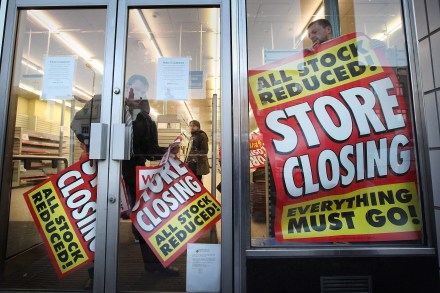
Yet another set of alarming recession statistics, these from today's FT: "One in every 56 businesses is expected to collapse this year as the recession intensifies, a leading accounting firm has warned. BDO Stoy Hayward says the rate of business failures will increase by 59 per cent by the end of this year to 36,000 companies, up from 22,600, or one in 87, in 2008. As the UK economy contracts at its fastest rate since the second world war, the firm’s Industry Watch report predicts that more company casualties will follow in 2010. It says 39,000 businesses, or one in 50, are likely to fail next year." What's particularly striking about this set of predictions is how, for this measure at least, they warn of an even worse position in 2010.

Cameron should avoid dancing to Brown’s tune

From our UK edition

One of the more frustrating aspects of the Cameron leadership is how its strategy is sometimes (overly) determined by what Labour will do or say.  Take what was their long-standing commitment to match Labour's spending plans.  This was made in fear of the "Tory cuts" attack, and ensured that the New Labour orthodoxy - that "spending = investment" - remained in place long past its use-by date.  Cameron now admits that he should have ditched the commitment sooner, and regards the failure to do so as one of his biggest mistakes. Why mention this now?  Well, there's a similar air about George Osborne's statement on a 45p tax rate yesterday.  When this measure was announced in the PBR, it seemed little more than cyincal Brownite ploy to put the Tories in a spot.

Taxpayers should look on and tremble

From our UK edition

The public finances are deteriorating - and fast.  Alistair Darling's PBR forecasts seemed optimistic back in November, but now they seem like a sick joke at the expense of the taxpayer.  Indeed, a report by the Ernst & Young Item club today predicts that government borrowing over the next five years will be some £270 billion higher than Darling accounted for.  The debt mountain keeps getting bigger and bigger; measured now in £trillions not £billions. The priority for the next government will be to balance the books, to stem the upwards pressure on borrowing.  As a great double-page spread in today's Times suggests, even that's not going to be easy.

Now, this is getting silly

From our UK edition

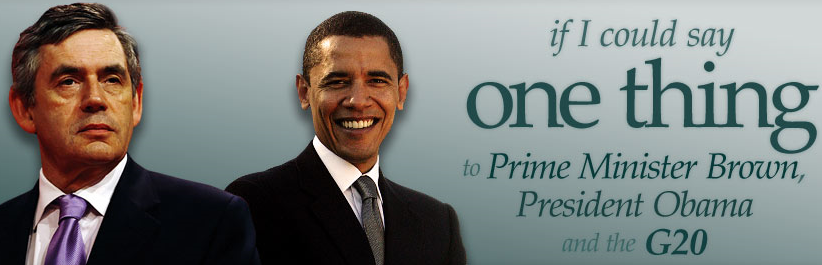
Labour's Obama-centricity has certainly been grating recently - the hoo-haa surrounding Brown's trip to the States, for instance, and the name-dropping he's engaged in since. But now it's been cranked up to 11, and is all the more disspiriting for it.  Exhibit A: the party's G20 micro-site, which Dizzy highlighted yesterday.  It features a picture of Brown and Obama, and calls for users to submit statments to "Prime Minster Brown, President Obama and the G20".  Somehow, I doubt other G20 leaders will be amused at Obama's elevation from the pack.  And, now, Exhibit B: a Labour party leaflet emblazoned with the words "Yes. I want to make a difference" and, again, featuring a picture of the US President.  Iain Martin has details, and a scan of it.

The Tories are in line for a 45p tax headache

From our UK edition

Have the Tories fallen into Gordon Brown's 40p tax trap?  Since the measure was announcned in the Pre-Budget Report, they've skilfully avoided raising it - after all, an attack on the tax hike could be spun by Labour as a case of the Tories and their "rich friends"; whilst support for it could provoke some ire from the Tory benches.  But no longer.  The Telegraph extrapolates from David Cameron's comment yesterday that "the richest in our society must bear a fair share of the burden" to reveal that: "Senior Tory sources believe that the 45p tax rate is now necessary if the party is to fulfil its other pledges to reduce public debt and continue to maintain front-line public services such as health and education.

Why welfare reform will be a vote winner

From our UK edition

There's a school of thought that welfare reform will become less popular as the recession bites deeper, and as more people enter the welfare system.  Not so, to my mind - and Alice Thomson adroitly sets out the reasons why in today's Times.  Her central claim is that the main divide in UK labour isn't between immigrants and non-immigrants - despite Brown's dangerous BJ4BW sloganeering - but simply between the "active and the idle".  Many of those currently losing their jobs belong to the former group - they are getting made redundant and almost immediately hopping into the queues at Job Centres.  The competition for jobs is fierce, but they're willing to struggle on as they want to get back into work as soon as possible.

Work-shy Labour?

From our UK edition

An eyecatching snippet from the Telegraph:"[Labour chief whip, Nick] Brown said that he was concerned that a hardcore rump of five per cent of Labour MPs were responsible for a quarter of all 'unauthorised absences' from the Commons." Now, I wonder who they might be...