Owen Matthews

Owen Matthews

Owen Matthews is an Associate Editor of The Spectator and the author of Overreach: The Inside Story of Putin’s war on Ukraine.

Why sanctions against Putin and his allies don’t work

An ‘act of aviation piracy’ was how Ryanair boss Michael O’Leary described the forcible grounding of one of his planes in Minsk by Belarusian authorities in order to arrest a dissident who was on board. ‘A shocking assault on civil aviation and an assault on international law,’ said the UK Foreign Secretary Dominic Raab. The Taoiseach Micheál Martin, en route to Brussels for an emergency meeting, called for EU heads of state to deliver a ‘very firm and strong response’ to Belarus’s President Alexander Lukashenko. But what response can the West actually make that will put an end to lawless behaviour by Lukashenko — and, more importantly, by his on-and-off ally Vladimir Putin? Where to hit where it really hurts?

Putin and Biden need one another

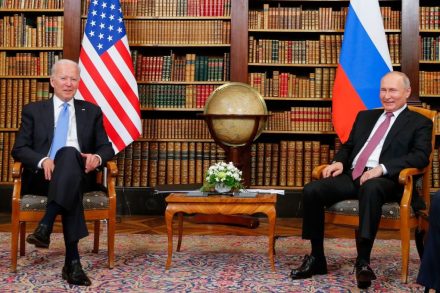
Does Joe Biden think that Putin is a killer? asked ABC host George Stephanopoulos. ‘Mmm-hmm, I do,’ answered the President. Once, that would have been fighting talk. Today? Biden can insult Putin with impunity because he believes that Russia is, quite simply, no longer important or dangerous. Once a deadly serious enemy whose rivalry threatened to destroy life on the planet, Russia’s diminished status means that, these days, there’s little left to the grand old conflict except mere mudslinging. ‘We no longer think in Cold War terms, for several reasons. One, no one is our equal. No one is close,’ Biden told Ukrainian lawmakers in Kiev in 2014.

What’s Putin up to?

12 min listen

Russian troops had been building up on the Ukrainian border for weeks now, only for Putin to announce their pullback this week. Moscow claims it was only ever a military exercise, but the troop presence was enough to fuel speculation of further annexation of parts of Ukraine. Fraser Nelson speaks to James Forsyth and Owen Matthews about Putin's geopolitical game.

The truth about Russia’s hidden Covid deaths

The secret is out: the Russian government has been lying to its people. Officially, Russia’s coronavirus death toll for last year — as reported on state television and logged at the World Health Organisation — was an impressively low 86,498 for a population of 146 million. In his traditional December press conference Vladimir Putin proudly reeled off statistics on how quickly Russia’s economy was recovering from the pandemic, and last month he made a triumphant address to a packed public concert to celebrate the anniversary of the annexation of Crimea in 2014. ‘Today is a holiday for our entire vast country,’ Putin told an 80,000-strong, maskless crowd at Luzhniki stadium. ‘Please, take a deep breath and answer this: Do we love Russia?

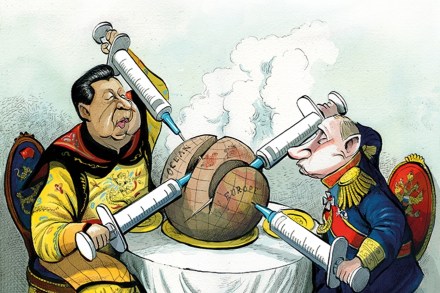
Power jab: the rise of vaccine diplomacy

44 min listen

How are China and Russia getting ahead in the great game of vaccine diplomacy? (00:50) Has the US press lost its way? (11:30) Why is Anglo-Saxon history making a comeback? (27:20)With The Spectator's broadcast editor Cindy Yu; journalist Owen Matthews; Harper's publisher Rick MacArthur; The Washington Post's media critic Erik Wemple; journalist Dan Hitchens; and Sutton Hoo archaeologist Professor Martin Craver.Presented by Lara Prendergast.Produced by Max Jeffery and Matt Taylor.

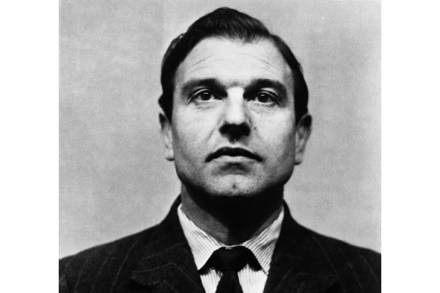
Betrayal was a routine business for George Blake

Kim Philby once remarked to the journalist Murray Sayle that ‘to betray, you must first belong. I never belonged’. Kim, as usual, was lying. Westminster and Cambridge, the Foreign Office and SIS: for all his attempts to pose as an outsider, Philby was a thorough-paced member of the British Establishment. George Blake — who is quoted using exactly the same phrase about himself in Simon Kuper’s wise, engaging biography The Happy Traitor — was telling the truth. Blake never belonged to a country, and communism was probably the closest thing he ever found to a spiritual home — even if he was deeply disillusioned by the reality of the workers’ paradise when his espionage career ended in exile in Moscow.

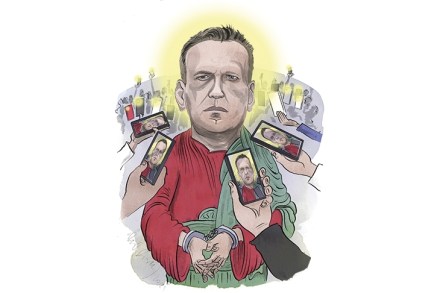
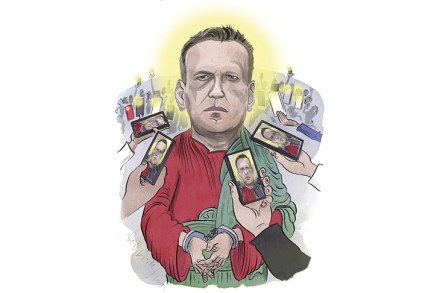
Can Navalny the martyr weaken Putin?

Yesterday Russian opposition leader Alexei Navalny achieved his martyrdom, with a panelled courtroom packed with journalists and Western diplomats standing in for Golgotha. A Moscow judge turned an outstanding two year, eight month suspended sentence for fraud into a prison term on the grounds that Navalny had missed probation hearings — dismissing as frivolous his excuse that he was lying in a Novichok-induced coma in a Berlin hospital bed at the time. In one sense, Navalny has achieved what he set out to do. Two weeks of street protests in 85 cities across Russia followed his arrest after a voluntary return from his German convalescence — the most serious overt political challenge to Putin’s authority since his return to the presidency in 2012.

Protests for Navalny sweep Russia

The protests began in Vladivostok, on Russia’s Pacific coast, and spread Westwards across 85 cities across the country’s nine time zones. The ritual was familiar enough from the last major wave of protests in the summer of 2019 - several thousand banner-carrying protesters calling for the release of opposition leader Alexei Navalny, an overwhelming show of force by the police, baton charges, cracked heads, mass arrests. By the end of the day over 2000 protesters had been detained, forty policemen and thousands of protesters injured.  So Navalny got, in one sense, what he wanted. By voluntarily returning from Berlin, where he had been recovering from Novichok poisoning, Navalny has indeed triggered a wave of indignation and anger against the Kremlin.

Navalny and Putin: the next chapter

‘Arrest me? Why would anyone arrest me?’ said Russian opposition politician Alexei Navalny to reporters last week as he boarded a Moscow-bound plane. Four hours later he was in jail — but not before spending an hour circling above the Russian capital as riot police shut down the airport where 2,000 supporters awaited him and diverted his plane to another. Did Navalny truly believe he would not be arrested? Did anyone? A week before his planned return from Berlin, where he had been recovering from being poisoned by Russia’s security services, Navalny posted a video on social media in which he openly taunted Vladimir Putin. ‘Putin has been stamping his little feet, demanding that they do everything to prevent me from returning,’ he said.

What is Russia’s plan to unleash chaos?

39 min listen

As the long-awaited Russia report is released this week, we discuss Russia's plan to unleash chaos (00:45). Plus, does Boris Johnson have a management problem with his new MPs? (14:30) And last, the pains of dating during lockdown (28:30). With Russia journalists Owen Matthews and Mary Dejevsky; the Spectator's deputy political editor Katy Balls; Conservative Home's editor Paul Goodman; Sunday Telegraph columnist Madeline Grant; and author James Innes-Smith.Presented by Cindy Yu.Produced by Cindy Yu and Pete Humphreys.

Putin plans to make the West destroy itself

There’s only one person who’ll be genuinely pleased with the Intelligence and Security Committee’s Russia report, finally revealed on Tuesday, and that’s Vladimir Putin. Russia emerges as an amorphous and formidable enemy — all the more so because the inconclusive and much-redacted report contains next to no substantiated allegations. Instead Russia appears as a phantom, unknowable menace, and this will spawn a thousand conspiracy theories far more corrosive and confusing to our politics than any Moscow-generated Twitter-storm or document leak. There’s no smoking gun on Brexit. Yet the government-induced delay in publication allows anyone that way inclined to imagine a cover-up.

Vladimir Putin’s history fetish

Russia, the old joke goes, has long been a country with an unpredictable past. On September 22, 1939, for instance, Soviet Brigade Commander Semyon Krivoshein stood alongside German Generals Mauritz von Wiktorin and Heinz Guderian in Brest-Litovsk, Poland, to review a joint parade of Wehrmacht and Red Army troops who had recently occupied the town. The street was decorated with joined swastika and hammer-and-sickle banners celebrating the Nazi-Soviet Pact signed in Moscow less than a month before. Under the terms of the now-infamous secret annexe to that agreement, Hitler and Stalin agreed to divide Poland and the Baltic states between them - and less famously but more importantly to Berlin, the Soviets agreed to provide millions of tons of raw materials to fuel the German war machine.

Putin needs Xi more than China needs Russia

From our US edition

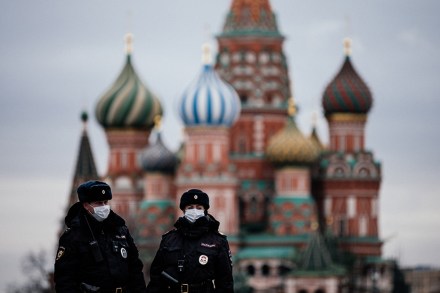
On May 9, Vladimir Putin had been due to review a parade of troops and military hardware on Red Square alongside Xi Jinping and Emmanuel Macron. Russia’s coronavirus lockdown forced Putin to cancel the elaborate celebrations of the 75th anniversary of the end of World War Two in Europe — as well as to postpone a national referendum that would have extended his personal rule until 2036. But though Putin and Xi have been deprived of the opportunity to make a show of solidarity amid the sea of Soviet flags that bedecks Moscow annually for Victory Day, the coronavirus crisis promises to throw Russia and China closer together than they have ever been. China needs friends; Russia needs money.

putin xi

The way out: what is the Prime Minister’s exit strategy?

37 min listen

James Forsyth writes in this week's cover piece that the government 'is going to go South Korean on the virus'. In other words, test, track, and trace. But as James points out, this raises the obvious question of why we weren't doing this already. On the podcast, Cindy Yu talks to James and the Economist's Adrian Wooldridge. Adrian argues that the West is too slow at learning the lessons of elsewhere in the world, a costly mistake as Asian states like Singapore offer instructive lessons in governance. As this global pandemic lays bare the differences of national approaches, it's a timely discussion.

Can Putin survive the coronavirus stress test?

Vladimir Putin knows that a poor state is a weak state. As a middling KGB apparatchik in Dresden in 1989 he saw the USSR’s authority over its empire collapse along with its economy. Two years later, the Soviet state itself imploded, unable to feed its citizens or command the loyalty of its own security forces. Rebuilding Russia’s security apparatus back to Soviet levels and securing it against another systemic collapse has been the touchstone of Putin’s two decades in power. With the coronavirus crisis, the Putin system faces a stress test every bit as radical as that which brought down Mikhail Gorbachev. The proximate cause of the USSR’s collapse was a 1985 decision by the Saudis — with American encouragement — to crash the price of oil.

Moscow rules in London: how Putin’s agents corrupted the British elite

In the past year alone, Russia-watchers have been treated to books entitled The Code of Putinism; Putin’s World; Putin vs the People; The Putin System and We Need to Talk About Putin — just to mention the ones with Putin’s name in the title. In addition, Robert Service’s Kremlin Winter, Sergei Medvedev’s The Return of the Russian Leviathan and Andrew Monaghan’s Dealing with the Russians have also offered their own insights into the history, politics and future of Putin’s Russia. In this crowded field, is there a place for Putin’s People? Happily, there is.

Oil wars: is this the real threat to the world economy?

36 min listen

This week kicked off with an incredible fall in oil prices globally, so what on earth happened (00:50)? We also talk about the Budget, where Rishi Sunak set out in more detail how the government's 'levelling up' agenda will look (10:20). Finally, should we be doing more science research for curiosity's sake (23:05)?

The King of Christmas: A short story by Owen Matthews

The Christmas King steps slowly from his house and sniffs the evening’s chill. His tread is dainty, for all his heft, and his handsome head swings proudly as he surveys a kingdom of carrot tops and mud. He smells woodsmoke, the sows’ reek, the night’s damp rising from the river. From the kitchen door he hears the teasing voices of boys, the clatter of scullions’ ewers loaded with his dinner. On the hill, Wytham Wood hisses like the sea. All summer Harry has dined on sour curds and burned crusts, lettuce roots and swedes, and the rich scrapings of the pottage pot. Now winter brings him even greater plenty. A mess of oats and gravy bones cooked special for his Majesty.

‘It wasn’t the Russian people who poisoned Skripal, it was just a few guys’: Alexander Lebedev interviewed

Who wants to be a billionaire? Not, apparently, Alexander Lebedev, the self-described ‘Russian ex-oligarch’ who has tried billionaredom and found it not to his liking. Lebedev opens his new book, Hunt the Banker, with a nostalgic riff on his happy youth in a tiny Moscow apartment and the observation that ‘the ideal menu consists of buckwheat (60 cents a kilo), extra virgin flaxseed oil, vegetables and a little fish’. Money, he reckons, ‘warms only a shallow soul. It shrivels the heart, gives no peace, and problems proliferate’. Why, then, did Lebedev leave a comfortable post as a KGB spy in London to pursue a career in banking in post-Soviet Russia?