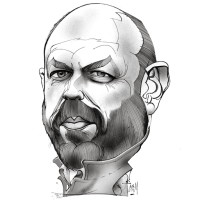
Owen Matthews

Owen Matthews

Owen Matthews is an Associate Editor of The Spectator and the author of Overreach: The Inside Story of Putin’s war on Ukraine.

Douglas Murray, Owen Matthews, Lionel Shriver

From our UK edition

29 min listen

On this week's episode, we’ll hear Douglas Murray on how the Prevent scheme has lost sight of its founding intention. (00:43)Then Owen Matthews on Rome’s rubbish. (12:35)And finally, Lionel Shriver gives her review of Dave Chappelle’s transgressive new Netflix Special.

How Rome’s rubbish became a political problem

From our UK edition

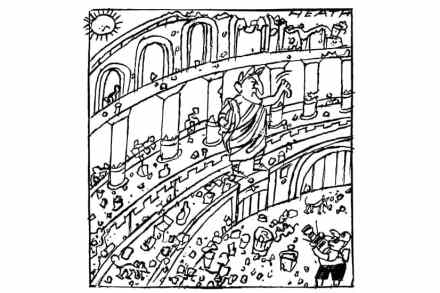
‘Excommunication,’ reads a stone plaque on the wall of the church of St Theodore in Rome, ‘and a fine of 200 gold ducats for any person who should dare to unload… waste of any kind and cause a stink outside these precincts.’ This threat might have worked when the plaque was erected in 1703, but it certainly doesn’t work now. A few paces down the street, a waist-high pile of stinking rubbish bags festers in the autumn sunlight, pecked at by seagulls. In Rome, even the rubbish is eternal. Italy’s capital is strewn with litter — geological layers of the stuff. In a pile of last year’s crumbled leaves by my house on the Tiber embankment I found a beer bottle with a sell-by date of September 2020.

The mystery of Vladimir Putin’s mistresses

From our UK edition

There’s an odd thing about 18-year old Luiza Rozova’s instagram feed. You can see photos of her breakfasts (sliced exotic fruit on heart shaped plates); her bikini selfies and her smart Paris apartment; her new shoes and her trips to the Louvre (heavily masked). But you never see her face. Take a look at screen-grabs of her insta feed before it was purged of all recognisable images and you realise why. Luiza – born Elizaveta Vladimirovna Krivonogykh – bears a striking resemblance to Vladimir Putin. It’s the same story with her mother, Svetlana Krivonogykh. The blonde 46-year-old’s social media pages were once full of photos of Svetlana in a helicopter and of charming views over the Vieux Port of Monaco taken from the balcony of a waterfront apartment.

Journey to the end of the world: the full horror of the Belgica’s Antarctic expedition

From our UK edition

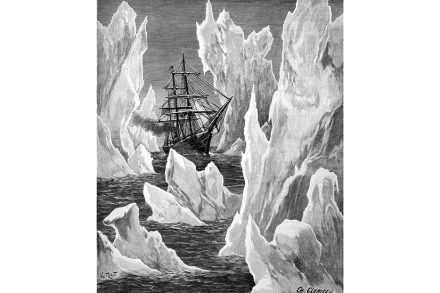
The epic story of the Antarctic voyage of the Belgica (1897-9) has all the ingredients of a truly glorious misadventure: an aristocratic expedition commander who carries the pride of a small nation on his shoulders; an eccentric American surgeon who was to become known as one of the greatest frauds in the history of polar exploration; a cantankerous crew, racked by madness, scurvy and mutiny; a desperate sunless polar winter stuck in shifting sea ice that threatens to crush the ship; and finally an escape plan that involves half a ton of explosives and hand-sawing through a mile and a half of sea ice.

The Biden-Putin summit was a diplomatic nothingburger

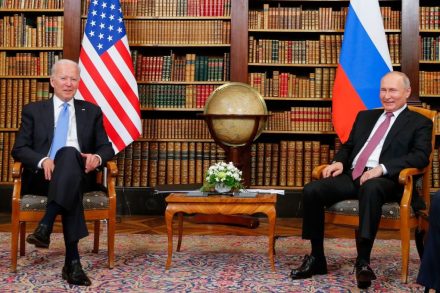
There was a time when summit meetings between the presidents of Russia and the US were world-historical events on which the balance of world peace rested. Today — not so much. Joe Biden and Vladimir Putin didn’t even manage to fill the five hours allotted for their talks in Geneva today in large part because they simply didn’t have much to talk about. Russia today threatens no US vital interests, commands no alliances or strategic resources and remains a world power in only two areas, both inherited from the Cold War — its large nuclear arsenal and its UN Security Council veto.

biden putin

Why sanctions against Putin and his allies don’t work

From our UK edition

An ‘act of aviation piracy’ was how Ryanair boss Michael O’Leary described the forcible grounding of one of his planes in Minsk by Belarusian authorities in order to arrest a dissident who was on board. ‘A shocking assault on civil aviation and an assault on international law,’ said the UK Foreign Secretary Dominic Raab. The Taoiseach Micheál Martin, en route to Brussels for an emergency meeting, called for EU heads of state to deliver a ‘very firm and strong response’ to Belarus’s President Alexander Lukashenko. But what response can the West actually make that will put an end to lawless behaviour by Lukashenko — and, more importantly, by his on-and-off ally Vladimir Putin? Where to hit where it really hurts?

Putin and Biden need one another

From our UK edition

Does Joe Biden think that Putin is a killer? asked ABC host George Stephanopoulos. ‘Mmm-hmm, I do,’ answered the President. Once, that would have been fighting talk. Today? Biden can insult Putin with impunity because he believes that Russia is, quite simply, no longer important or dangerous. Once a deadly serious enemy whose rivalry threatened to destroy life on the planet, Russia’s diminished status means that, these days, there’s little left to the grand old conflict except mere mudslinging. ‘We no longer think in Cold War terms, for several reasons. One, no one is our equal. No one is close,’ Biden told Ukrainian lawmakers in Kiev in 2014.

What’s Putin up to?

From our UK edition

12 min listen

Russian troops had been building up on the Ukrainian border for weeks now, only for Putin to announce their pullback this week. Moscow claims it was only ever a military exercise, but the troop presence was enough to fuel speculation of further annexation of parts of Ukraine. Fraser Nelson speaks to James Forsyth and Owen Matthews about Putin's geopolitical game.

The truth about Russia’s hidden Covid deaths

From our UK edition

The secret is out: the Russian government has been lying to its people. Officially, Russia’s coronavirus death toll for last year — as reported on state television and logged at the World Health Organisation — was an impressively low 86,498 for a population of 146 million. In his traditional December press conference Vladimir Putin proudly reeled off statistics on how quickly Russia’s economy was recovering from the pandemic, and last month he made a triumphant address to a packed public concert to celebrate the anniversary of the annexation of Crimea in 2014. ‘Today is a holiday for our entire vast country,’ Putin told an 80,000-strong, maskless crowd at Luzhniki stadium. ‘Please, take a deep breath and answer this: Do we love Russia?

Power jab: the rise of vaccine diplomacy

From our UK edition

44 min listen

How are China and Russia getting ahead in the great game of vaccine diplomacy? (00:50) Has the US press lost its way? (11:30) Why is Anglo-Saxon history making a comeback? (27:20)With The Spectator's broadcast editor Cindy Yu; journalist Owen Matthews; Harper's publisher Rick MacArthur; The Washington Post's media critic Erik Wemple; journalist Dan Hitchens; and Sutton Hoo archaeologist Professor Martin Craver.Presented by Lara Prendergast.Produced by Max Jeffery and Matt Taylor.

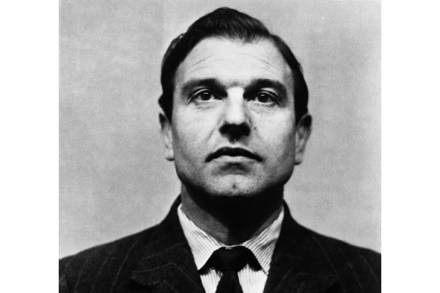
Betrayal was a routine business for George Blake

From our UK edition

Kim Philby once remarked to the journalist Murray Sayle that ‘to betray, you must first belong. I never belonged’. Kim, as usual, was lying. Westminster and Cambridge, the Foreign Office and SIS: for all his attempts to pose as an outsider, Philby was a thorough-paced member of the British Establishment. George Blake — who is quoted using exactly the same phrase about himself in Simon Kuper’s wise, engaging biography The Happy Traitor — was telling the truth. Blake never belonged to a country, and communism was probably the closest thing he ever found to a spiritual home — even if he was deeply disillusioned by the reality of the workers’ paradise when his espionage career ended in exile in Moscow.

Can Navalny the martyr weaken Putin?

From our UK edition

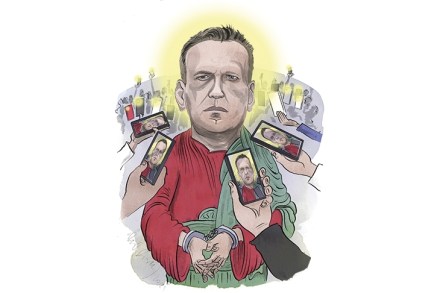
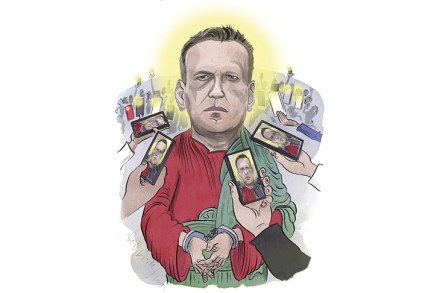
Yesterday Russian opposition leader Alexei Navalny achieved his martyrdom, with a panelled courtroom packed with journalists and Western diplomats standing in for Golgotha. A Moscow judge turned an outstanding two year, eight month suspended sentence for fraud into a prison term on the grounds that Navalny had missed probation hearings — dismissing as frivolous his excuse that he was lying in a Novichok-induced coma in a Berlin hospital bed at the time. In one sense, Navalny has achieved what he set out to do. Two weeks of street protests in 85 cities across Russia followed his arrest after a voluntary return from his German convalescence — the most serious overt political challenge to Putin’s authority since his return to the presidency in 2012.

Protests for Navalny sweep Russia

From our UK edition

The protests began in Vladivostok, on Russia’s Pacific coast, and spread Westwards across 85 cities across the country’s nine time zones. The ritual was familiar enough from the last major wave of protests in the summer of 2019 - several thousand banner-carrying protesters calling for the release of opposition leader Alexei Navalny, an overwhelming show of force by the police, baton charges, cracked heads, mass arrests. By the end of the day over 2000 protesters had been detained, forty policemen and thousands of protesters injured.  So Navalny got, in one sense, what he wanted. By voluntarily returning from Berlin, where he had been recovering from Novichok poisoning, Navalny has indeed triggered a wave of indignation and anger against the Kremlin.

Navalny and Putin: the next chapter

From our UK edition

‘Arrest me? Why would anyone arrest me?’ said Russian opposition politician Alexei Navalny to reporters last week as he boarded a Moscow-bound plane. Four hours later he was in jail — but not before spending an hour circling above the Russian capital as riot police shut down the airport where 2,000 supporters awaited him and diverted his plane to another. Did Navalny truly believe he would not be arrested? Did anyone? A week before his planned return from Berlin, where he had been recovering from being poisoned by Russia’s security services, Navalny posted a video on social media in which he openly taunted Vladimir Putin. ‘Putin has been stamping his little feet, demanding that they do everything to prevent me from returning,’ he said.

Owen Matthews, Lionel Shriver, and Peter Hitchens

From our UK edition

26 min listen

Owen Matthews on Russia's plan to unleash chaos in the West (00:50); Lionel Shriver on the peculiar similarities between the open letter and the ransom note (11:00); and Peter Hitchens on why he won't be wearing a mask when he's giving blood (19:40).

What is Russia’s plan to unleash chaos?

From our UK edition

39 min listen

As the long-awaited Russia report is released this week, we discuss Russia's plan to unleash chaos (00:45). Plus, does Boris Johnson have a management problem with his new MPs? (14:30) And last, the pains of dating during lockdown (28:30). With Russia journalists Owen Matthews and Mary Dejevsky; the Spectator's deputy political editor Katy Balls; Conservative Home's editor Paul Goodman; Sunday Telegraph columnist Madeline Grant; and author James Innes-Smith.Presented by Cindy Yu.Produced by Cindy Yu and Pete Humphreys.

Putin plans to make the West destroy itself

From our UK edition

There’s only one person who’ll be genuinely pleased with the Intelligence and Security Committee’s Russia report, finally revealed on Tuesday, and that’s Vladimir Putin. Russia emerges as an amorphous and formidable enemy — all the more so because the inconclusive and much-redacted report contains next to no substantiated allegations. Instead Russia appears as a phantom, unknowable menace, and this will spawn a thousand conspiracy theories far more corrosive and confusing to our politics than any Moscow-generated Twitter-storm or document leak. There’s no smoking gun on Brexit. Yet the government-induced delay in publication allows anyone that way inclined to imagine a cover-up.

Vladimir Putin’s history fetish

From our UK edition

Russia, the old joke goes, has long been a country with an unpredictable past. On September 22, 1939, for instance, Soviet Brigade Commander Semyon Krivoshein stood alongside German Generals Mauritz von Wiktorin and Heinz Guderian in Brest-Litovsk, Poland, to review a joint parade of Wehrmacht and Red Army troops who had recently occupied the town. The street was decorated with joined swastika and hammer-and-sickle banners celebrating the Nazi-Soviet Pact signed in Moscow less than a month before. Under the terms of the now-infamous secret annexe to that agreement, Hitler and Stalin agreed to divide Poland and the Baltic states between them - and less famously but more importantly to Berlin, the Soviets agreed to provide millions of tons of raw materials to fuel the German war machine.

Putin needs Xi more than China needs Russia

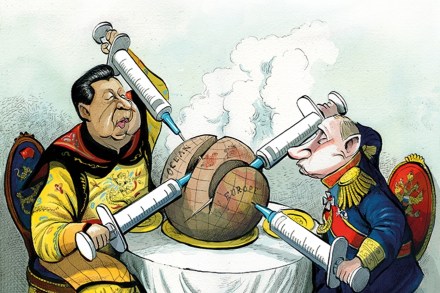
On May 9, Vladimir Putin had been due to review a parade of troops and military hardware on Red Square alongside Xi Jinping and Emmanuel Macron. Russia’s coronavirus lockdown forced Putin to cancel the elaborate celebrations of the 75th anniversary of the end of World War Two in Europe — as well as to postpone a national referendum that would have extended his personal rule until 2036. But though Putin and Xi have been deprived of the opportunity to make a show of solidarity amid the sea of Soviet flags that bedecks Moscow annually for Victory Day, the coronavirus crisis promises to throw Russia and China closer together than they have ever been. China needs friends; Russia needs money.

putin xi

The way out: what is the Prime Minister’s exit strategy?

From our UK edition

37 min listen

James Forsyth writes in this week's cover piece that the government 'is going to go South Korean on the virus'. In other words, test, track, and trace. But as James points out, this raises the obvious question of why we weren't doing this already. On the podcast, Cindy Yu talks to James and the Economist's Adrian Wooldridge. Adrian argues that the West is too slow at learning the lessons of elsewhere in the world, a costly mistake as Asian states like Singapore offer instructive lessons in governance. As this global pandemic lays bare the differences of national approaches, it's a timely discussion.