Niall Gooch

Niall Gooch is a writer who has appeared in the Catholic Herald and UnHerd.

Lord of the Flies is no Adolescence

From our UK edition

There are certain works that have attained, through their inclusion in GCSE and A-level syllabuses, an enduring place in the vague memories of several generations of Britons. Of Mice and Men, An Inspector Calls and The Owl Service come to mind, as does Wilfred Owen’s ‘Dulce et Decorum Est’, an excellent poem which has unfortunately become quite irritating due to its use by smart alecks trying to debunk patriotism.

The power and nostalgia of Christmas music

From our UK edition

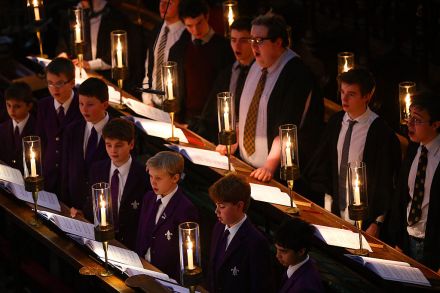
Picking up the children from school recently, I heard the lovely old carol ‘In Dulce Jubilo’ drifting slowly across the quadrangle. It was a recorded version played over loudspeakers as part of the Christmas light switch-on, rather than the work of rosy-cheeked choristers in gowns, and yet I felt a sudden, unexpected catch in my throat, and a pricking at the corner of my eyes. I am still trying to work out why I reacted, involuntarily, in that way. ‘In Dulce Jubilo’ does not have any specific personal resonance for me. Perhaps it was something to do with the poignant timelessness of the scene – children hurrying between ancient buildings, chatting merrily and bundled up against the cold, while warm light glows in cosy windows.

The Guardian’s desperate smears about Farage’s school days

From our UK edition

Nigel Farage is the perfect folk devil for the British liberal left. He is robustly patriotic, cheerfully irreverent about modern pieties, and a Barbour-wearing libertarian smoker and beer-drinker. He represents – in both the literal and figurative sense – the Britain that the Sensible classes dislike and ignore and would like to see consigned to irrelevance: a Britain made up of ambitious City boys, the aspirational middle class, farmers, left-behind coastal towns and small business owners. Perhaps I am old-fashioned, but there is something rather feeble and underhand about playing the informer on contemporaries from your schooldays What makes it worse for them is that none of their attacks seem to stick.

Cinema needs more naval dramas

From our UK edition

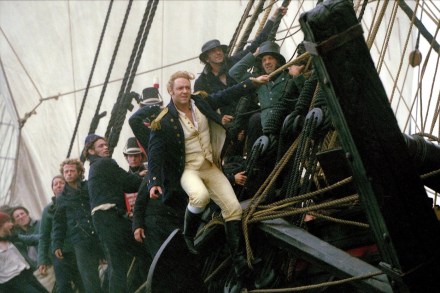
On a trip to the local library, many years ago now, my dad was asked by a kindly but rather severe librarian if I was really allowed to borrow one of the Ramage books, as they were from the section for grown-ups and I was only about 11. The old man nodded assent and so I went home with, if memory serves, Ramage and the Renegades. For the uninitiated, the series, by Dudley Pope, follows the adventures of Royal Navy officer Lord Nicholas Ramage in the Revolutionary and Napoleonic Wars. They don’t have the painstaking attention to detail and literary brilliance of Patrick O’Brian’s Aubrey-Maturin series, and they are usually more light-hearted and breezy than the Hornblower and Bolitho novels, whose heroes tend towards self-doubt and melancholy.

The case for Biggles

From our UK edition

The first Cold War thriller I ever read – before MacLean, before Le Carre, before Clancy – was Biggles Buries a Hatchet, from 1958, in which James Bigglesworth MC, DSO, of the Air Police, heads for Siberia to spring his nemesis Von Stalhein from a Soviet prison camp. The wily old German had first crossed swords with our hero in aerial combat over the Western Front, later thrown his lot in with the Nazis, and then deftly switched sides to serve the Communist Bloc after the second world war, but had run out of luck and been sent to the gulag after a falling out with his new masters. I must have been about ten or 11, and was just beginning to get a handle on what had been at stake in the great ideological struggle of the late twentieth century (which had then only recently concluded).

It’s time to arm the police

From our UK edition

Displays of sheer physical bravery are always impressive. Having been in precisely one real fight in my life, I enormously admire those who put their lives on their line for the rest of us every day, so I almost found myself applauding when I saw last week the police bodycam footage of Inspector Molloy Campbell taking on the drug-crazed sword-wielding murderer Marcus Monzo. Armed only with his extendable baton, Campbell kept Monzo at bay, before other officers eventually subdue him with tasers. The ‘long peace’ of low crime enjoyed by Britain from the last decades of the nineteenth century to around the middle of the twentieth, is well and truly over Nevertheless, admiration was not my only reaction to that video.

Are rivers really people?

From our UK edition

No man treads in the same river twice, wrote Heraclitus in the fifth century BC. No doubt that clever old bird was on to something, but nowadays it seems that we need to be careful about treading in rivers at all. It was reported last week that the River Loddon in Hampshire has been granted legal personhood by a local council, inspired by a document known as the Universal Declaration of the Rights of Rivers. The UDRR, created in 2017, was created by an organisation called the Earth Law Centre, and makes some pretty sweeping claims on behalf of our fluvial comrades, including the ‘right to flow’, the ‘right to feed and be fed by sustainable aquifers’, and ‘the right to regeneration and restoration’.

VE Day and the taboo of victory

From our UK edition

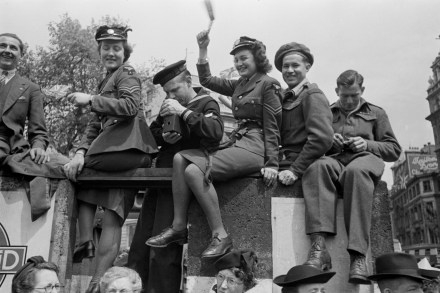
I was born in 1983, and when I was a child, the second world war still had a significant cultural presence in British life. The youngest veterans – men born in the mid-twenties – remained relatively sprightly. The war was recent enough that there were men around who had been senior officers or otherwise involved in important decision-making. War films were a staple of Sunday afternoon and Bank Holiday TV, and we played ‘English versus Germans’ in the playground. Not until 2007 did the House of Commons lose its last member who had been under arms in 1939-45: the Indian-born Piara Khabra died just a few days before Tony Blair stood down as PM. Robert Runcie, who was Archbishop of Canterbury for the first eight years of my life, had won the MC on the Rhine.

In defence of teenage boys

From our UK edition

Horatio Nelson passed his examination for lieutenant on 9 April 1777 (possibly with a little help from his uncle, who was one third of the examining panel). He was then just 18 and a half years old, and yet he already had six years of naval experience. The man who was to become England’s greatest fighting sailor had served in the West Indies and the Arctic, and had spent two years on the India station, at a time when sea voyages to India could take as much as six months each way. He had seen combat, albeit a brief and insignificant skirmish, and had recently recovered from a serious bout of malaria. All this before he reached the point at which most modern youngsters leave school. His was not an especially unusual trajectory for the time.

Can the social contract survive in Britain?

From our UK edition

In the vestry of the church where my father was priest, there was a large wall-mounted plaque commemorating some long-dead worthy of the eighteenth century. I cannot recall his name, but he left a large bequest to the parish for the support of ‘poor persons known to be of good character.’ There are similar inscriptions marking similar bequests in churches up and down the country – though perhaps fewer of them now, in these days of fervent ideological scrutiny of such memorials. As an idealistic young man, I used to find the plaque rather irritating. I thought it was archaic and unchristian, a relic of the Bad Old Days when the gentry’s arbitrary prejudices about the undeserving poor led to misery and injustice among the working class.

Cost-effectiveness can’t trump everything 

Elon Musk’s Department of Government Efficiency noted on X their discovery that “federal employee retirements are processed using paper, by hand, in an old limestone mine in Pennsylvania” Tuesday. Apparently, the facility employs 700 people, over 200 feet underground, processing around 100,000 applications per year, which are then stored in boxes and brown envelopes. This processing can last many months, according to the intrepid boys at DoGE. The clear implication was that they had uncovered yet another absurd and archaic operation, needlessly long-winded and ripe for automation. I must confess this was not my reaction. I am generally sympathetic to the idea of lean, thrifty government.

doge

Britain is failing Gen Z

From our UK edition

Ask not what you country can do for you, said JFK in his inaugural address in 1961, but what you can do for your country. Kennedy was well-placed to throw down this gauntlet – he had actively sought out dangerous combat service in the second world war when he could easily have avoided doing so. It’s a challenge that has echoed down the decades, especially for conservative-minded people who tend to think about patriotism in terms of individuals’ obligations to the nation and to the state. All the same, there does come a point when it is reasonable for people to turn the question around once again. It is possible for countries to fail their citizens, for governments to pile unbearable and unjust burdens on the backs of their taxpayers, to ignore their most fundamental duties.

Parliament has fallen

From our UK edition

Kim Leadbeater’s Terminally Ill Adults (End of Life) Bill passed its Second Reading in the Commons on Friday, which means that it is considerably more likely than not to end up on the statute book. Normally, when momentous legislation is before the House, the media is full of glowing tributes to the quality of the speeches, and we hear many warm words about MPs rising to the occasion and so forth. If you read Hansard from even 30 years ago, let alone 50 or 60, the sophistication and rigour of parliamentary argument is quite remarkable It may be my imagination, but there seems to have been rather less of that this time round. Even the most generous of Westminster observers would have struggled to find much to admire in the speeches given in favour of assisted suicide.

The rise of the reckless divorce columnist

From our UK edition

It is now 20 years since I left university. Two pints in an evening and I feel groggy the next morning. My oldest child is in his last year at primary school, I regularly wake up with mysterious aches and pains, and we still have a very long way to go on our mortgage. All of which is to say that I am firmly and undeniably middle-aged. As it happens, I am rather enjoying myself at the start of my fifth decade. My midlife crisis takes one of the more benign forms: crafting a 1:76 scale model of an interwar rural branch line in the attic. That almost half of children do not have both parents present is grim But that is clearly not the universal experience.

The cowardice of the Chris Kaba case

From our UK edition

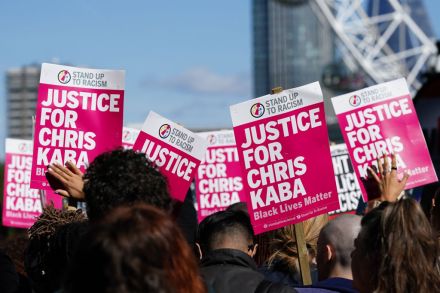
Since 2010, British police have shot dead 30 people. This works out at an average of around 2.1 people per year. In two consecutive years – 2012-13 and 2013-14 – not a single person was fatally shot by police in the UK. In 2023-24, the last period for which we have full data, it was two; for 2022-23, it was three. Which is to say that incidents where the British police kill people are vanishingly rare. It is highly unusual for the roughly 6,000 licensed firearms officers in England and Wales to use their weapons at all. Over the past decade there have been only 66 incidents where officers have fired their guns at people, even though armed police are deployed to around 18,000 incidents every year.

Stop trying to make ‘weird’ happen

From our UK edition

Where American left-liberal rhetoric leads, British left-liberal rhetoric invariably follows. Hate speech, reparations, decolonisation, white fragility; there is no intellectual fad so inane that it will not be enthusiastically mimicked, with childlike credulity, by journalists, academics, civil servants and broadcasters, regardless of whether it even makes sense in a British context. The impression you get is of status-conscious provincials seizing, herd-like, on the latest fashions and conventional wisdom from the imperial centre.

The problem with Larry the Cat

From our UK edition

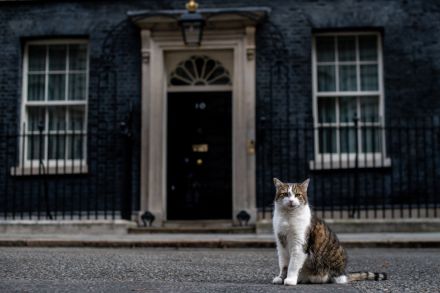
There is, reportedly, an official plan in place for the demise of Larry the Downing Street Cat, aka the Chief Mouser to the Cabinet Office. Old Larry, originally acquired by the Camerons in the early part of the coalition, has now reached the impressive age of 17, having been born in the dog days of the Blair government. Sir Keir is the sixth Prime Minister to have passed through the black door of No. 10 since Larry began his tenure. What exactly will happen when Larry shuffles off to pounce on balls of angelic wool for all eternity has not been revealed. Some wag has apparently dubbed the alleged plan ‘Larry Bridge’, a reference to the ‘London Bridge’ scheme that set out the arrangements for the funeral of the late Queen.

The triumph of Labour’s centrists

From our UK edition

Barring an extraordinary electoral turnaround, Sir Keir Starmer is about to join an elite club, which is even more pale, male and stale than the Garrick: Labour leaders who have won a majority in a general election. He will be only the fourth since the party first fielded candidates in a general election, after Clement Attlee, Harold Wilson and Tony Blair.  The conventional wisdom about such victories – particularly about those achieved by Wilson and Blair – is that they are the fruit of Labour moderates taking control of the party from the left, thus reassuring the conservative-minded middle classes. You still see this narrative about Starmer surprisingly often. He is the safe centrist option, the return to sanity after the hard-left madness of the Corbyn era.

Count Binface just isn’t funny

From our UK edition

On British general election nights, I like to watch Dish and Dishonesty, the first episode of the third series of Blackadder. It pokes some gentle fun at the conventions of election night TV, including the tradition of ‘silly’ candidates. In the episode, Ivor ‘Jest Ye Not, Madam’ Biggun of the Standing at the Back Dressed Stupidly and Looking Stupid party is among the challengers to replace the late Sir Talbot Buxomly. It all feels very tired. Exhausted, even Mr Biggun – whose policies of compulsory asparagus for breakfast and free corsets for the under-fives will doubtless be in the next Lib Dem manifesto – is an unsubtle parody of the Monster Raving Loony party and their various imitators and competitors.

Does Channel 4 think this counts as balanced?

From our UK edition

We are now just nine months out from the latest possible general election, which means that in a year’s time the House of Commons is going to look very different. Absent a remarkable revival in Tory fortunes – which there is no earthly reason to expect – their current seat total will be at least halved, and we will be fastening our seatbelts for five years or more of Starmerism. This will mean, among other delights, more demographic transformation, further atrophying of state capacity, strict restrictions on free speech, and a racial spoils system in government contracts. The specific date remains uncertain, which means that all the big TV channels are already making plans for their election night coverage. First to announce their line-up has been Channel 4.