Niall Gooch

Niall Gooch is a writer who has appeared in the Catholic Herald and UnHerd.

Walthamstow FC and the contradiction of William Morris

From our UK edition

In 1884, William Morris gave a lecture to the Hampstead Liberal Club with the title of ‘Useful Work Versus Useless Toil’. His remarks were typically damning of what he saw as the crude philistinism of Victorian capitalism with its mass production of fripperies and of what Marxists call the alienation of labour – the psychological and material disconnection between the worker and the product of his work. Morris offered an alternative, utopian vision, in which everyone would have access to fulfilling, productive work suited to their skills and nature and where there would be no idle rich and no boss class stealing the value of the labour of the working classes. In other lectures and in his writings he lamented the decline of the individual craftsman caused by the industrial revolution.

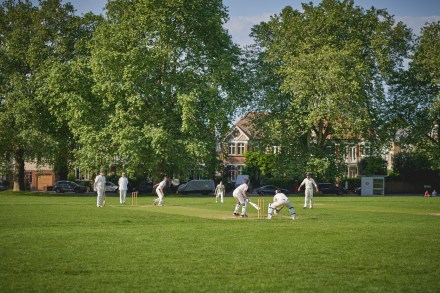
Does cricket suffer from ‘institutional racism’?

From our UK edition

What a strange document the Independent Commission on Equity in Cricket (ICEC) has produced, in its ‘Holding up a mirror to cricket’ report. Rambling, explicitly political, antagonistic and poorly-argued, it ignores some obvious explanations for the ills it discusses, and fixates on irrelevancies. The authors situate their conclusions within the world of intersectionality and other well-worn academic buzzwords. This limits the usefulness of its conclusions because every problem is shoehorned into a particular framework, rather than being carefully considered on its own terms. Take, for example, the identification of a severe decline in cricket participation by black Britons.

Can the spiritual element of the coronation survive?

From our UK edition

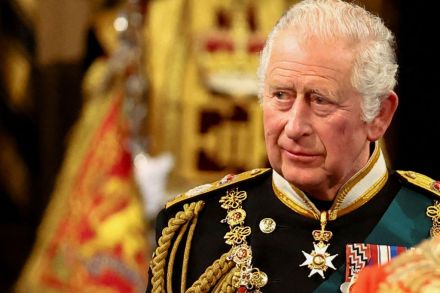
Almost as soon as Charles III acceded to the throne last September, we began to hear whispers and speculation about what exactly his coronation would look like. Many of these stories were alarming to traditionally-minded people. The King wants a slimmed-down ceremony, with less flummery and fewer fancy costumes, insisted those ever-available knowledgeable insiders. Others fretted about his long-ago musing that he would like to be Defender of Faith, not Defender of The Faith (an important definite article, that). A few months ago, it was reported that the coronation procession would feature NHS key workers and representatives of the ‘Windrush generation’, those two mythic cornerstones of the implied national refounding in the years after the second world war.

The problem with holding Iftar in Manchester Cathedral

From our UK edition

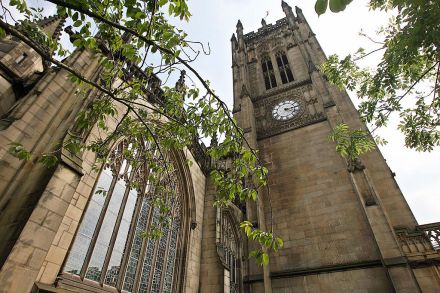
During Ramadan, which began last week, sunset finds observant Muslims taking their iftar, a ceremonial breaking of the rigorous fast, involving specific prayers. Often this is done as a community. Pictures of mosques hosting iftar bring to mind the parish festivities which were a common feature of pre-Reformation England, before the Protestants decided that attendees at such beanfests were having far too much fun. For reasons that remain unclear, it seems to have become fashionable for Christian churches in Britain to make themselves available as venues for the iftar. This year Manchester Cathedral, no less, opened its doors one evening for the local Muslim community, causing a brief stir on social media. I must confess to being among those who raised a sceptical eyebrow.

The tragic decline of political rhetoric

From our UK edition

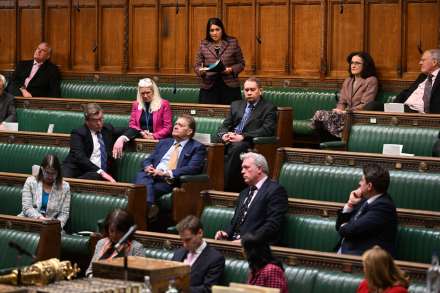
After the first regular BBC TV broadcasts in 1930, it took the House of Commons 60 years to agree to televise its proceedings. Proposals to do so were discussed on a regular basis from the 1960s onwards, but repeatedly rejected; as late as 1985 the idea was voted down by 275 to 263. Not until 1990 did MPs vote in favour of making the broadcasts permanent. One theme constantly reiterated by MPs opposed to televising the Chamber was that TV cameras would fundamentally change the nature of Parliament, encouraging Members to think of themselves as performers and to reach for soundbites rather than arguments. Gerald Howarth put it this way during the 1985 debate: ‘The television cameras would intrude; the intimacy of the Chamber would be lost. It would become a studio or theatre.

Boris is no conservative

From our UK edition

The current Tory breakdown is all the more remarkable given how quickly it has happened. As recently as last September they led comfortably in the polls. Keir Starmer was widely derided as an ineffectual centrist bumbler with no charisma. At the start of this parliament, in early 2020, the Tories looked invincible, holding an 80-seat majority having won 43.6 per cent of voters. And now, at the peak moment of crisis, there is serious talk of bringing back Boris. Well-informed commentators seem to think he could still garner the support of more than 100 MPs, and perhaps even be back in Downing Street in time for Guy Fawkes Night. The Emperor slips away from Elba and marches north to Paris, attracting the old veterans of his great campaigns. One more shot at glory.

How to waste an 80-seat majority

From our UK edition

Cast your mind back to Channel 4’s election night programme. The 2019 exit poll results flash up on screen. Realising the size of the Tory majority, hosts Krishnan Guru-Murthy and comedian Katherine Ryan, along with pundits Amber Rudd and Tom Watson, all look crestfallen: the Conservatives had won and Brexit was secured.  However, nearly two and a half years on from that night, the joy of the Channel 4 clip feels a bit empty. Very little has been done with that huge parliamentary advantage. Instead, the government’s big announcement this week is that they’re privatising the broadcaster. Fine. No problem with that; it’s probably a good thing. Except it doesn’t seem to be part of a wider programme for government. https://www.youtube.com/watch?

Barack Obama helped create cancel culture. Now he condemns it

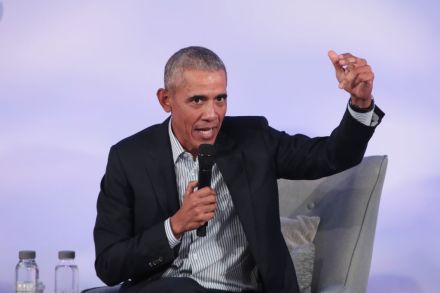
Like many others, I was very struck by recent footage of Barack Obama criticizing cancel culture. Less than three years since he left the White House, he already feels like a figure from another age. No doubt this is partly due to the contrast between his demeanor and that of his successor, which could hardly be more marked. As the now-viral video comparing Trump’s speech on Sunday to Obama’s statement on the death of Bin Laden shows, Obama played the statesman role well. Donald Trump just seems to relish being at the heart of a 24-hour traveling circus of provocation and outrage. But there is another reason why Obama has a slightly old-fashioned feel, so soon after leaving office. The right has changed, yes – but so has the left.

barack obama