Niall Gooch

Niall Gooch is a writer who has appeared in the Catholic Herald and UnHerd.

Ian Hislop’s elite blindspot

From our UK edition

A common argument against populist politicians such as Nigel Farage or Donald Trump is that their attacks on elites are in some sense inauthentic because they themselves are members of those same elites. Trump is, after all, a billionaire who has been prominent in New York corporate circles for almost half a century. His social milieu has included Wall Street titans, very senior politicians, and key figures in the world of entertainment. Fundamentally, Hislop is far more entangled with, and sympathetic to, our true elites than Nigel Farage Our Nige, meanwhile, may not be a billionaire, but he attended Dulwich College, a prominent public school, and made a good living as a commodities trader in the City. He has wealthy allies, such as the pro-Brexit businessman Arron Banks.

We can’t eliminate all risk for children

From our UK edition

The classic book The Railway Children contains several episodes that must seem almost incomprehensible to modern children. None perhaps are more shocking to the modern mind than the incident where some public schoolboys on a cross country run are directed through a tunnel on a working public railway. Unsurprisingly, this does not end well, with one of the boys – Jim – breaking his leg and almost being hit by a train. We must ask whether more rules are always the right response to these kind of tragedies If I remember correctly, there is little hint in the novel of anybody regarding the decision to let the boys run through the tunnel as a bad thing in and of itself, which is even more remarkable given that the author Edith Nesbit was a prominent and vocal social reformer.

Lee Anderson is a convenient distraction

From our UK edition

If some great challenge or difficulty is looming in the near future, it is human nature to want to change the subject, to busy ourselves with displacement activity to avoid the confrontation. This is perhaps even more true of groups than individuals. Everybody might be aware on some level that a crisis is brewing, but being the first to speak out is hard. Often we prefer calm and superficial harmony to dealing with the truth. Studied indifference to the elephant in the room has been the order of the day across much of the British political class during the last week or so. Last Wednesday saw extraordinary events in the House of Commons, as long-standing conventions were overturned, allegedly because of threats made to the safety of Labour MPs.

Why is the New Scientist defending cannibalism?

From our UK edition

Most law students in the English-speaking world will have come across R v Dudley and Stephens, from 1884, which established the precedent that necessity is not a defence for murder. The case has a particular grisly attraction, as the defendants were sailors who had resorted to cannibalism after being cast adrift on a lifeboat for nearly three weeks. Such scenarios, though rare, had occurred at sea before, and with public opinion apparently favourable to Messrs Dudley and Stephens, they were finally sentenced to only six months in prison. Strong taboos against cannibalism have been widely shared in sophisticated societies throughout recorded history. However, as the New Scientist pointed out this week, they have not been universal.

Say no to Labour’s citizens’ assembly

From our UK edition

A spectre is haunting Westminster – the spectre of the citizens’ assembly. This unkillable bad idea is making the headlines again because of the suggestion that, when Labour comes to power, citizens’ assemblies could be used to develop new policy proposals to put before Parliament. Fittingly, given its essentially anti-political and anti-democratic nature, this idea has been mooted by Sue Gray, Keir Starmer’s 'chief of staff', a woman who has wielded enormous power but who holds no elected office and has never offered herself for any public vote, rather than by Starmer or any of his frontbenchers. Creating such assemblies may not be official Labour policy.

Rewild the churchyards

From our UK edition

In the village where we used to live, the churchyard was just over the road from our cul-de-sac. I often used to potter around on my lunchbreaks, or pass through on walks. The oldest gravestone I managed to find, if I remember correctly, was for a local chap who had died in his seventies around the year 1750, which meant that he had been born towards the end of the reign of Charles II, some three hundred years before my own birth. There is a quiet consolation in the long continuity of communities There was a strange comfort in thinking that the man whose mortal remains lay – or had once lain – beneath my feet had walked the same hills and fields as me, had known the same church and the same valley.

The problem with Kneecap – and the arts blob

From our UK edition

When I was about 14 or 15, someone sent me a birthday card with the words: ‘Teenagers – tired of being harassed by your stupid parents? Act now! Move out, get a job, pay your own bills, while you still know everything.’ I don’t think it was personal, not least because I was fairly strait-laced, and I enjoyed the joke. I have never had much time for the idea of the teenager as heroic nonconformist, engaged in idealistic rebellion against the stultifying bourgeois conformity of suburbia. Even when I was in my teens – an alarmingly long time ago now – I found it all a bit self-aggrandising.

Who will oppose Labour’s racial dystopia?

From our UK edition

Britain’s ruling class are currently conducting an enormous experiment – perhaps not consciously or intentionally, but with great enthusiasm – to discover the effects of extremely high levels of immigration on British society. We will not be sure of the result for some time yet. In the meantime, we need to be doing all we can to ensure that our multi-ethnic society remains as harmonious and peaceful as possible. Our overriding aim ought to be reducing and minimising, rather than heightening, the salience of ethnicity as a political issue. Once upon a time, this appeared to be the goal of self-proclaimed anti-racists.

The importance of marshland mindset

From our UK edition

We have in our kitchen a mug purporting to belong to ‘Romney Marsh Mountain Rescue’. There is, of course, no such organisation – the mug is a reference to a long-standing family joke, about how my brothers and I love mountaineering despite having grown up in one of the lowest, flattest parts of England. The Marsh has a handful of small hillocks – really just bumps with delusions of grandeur – but overall it is very flat. My Ordnance Survey map does not mark a single contour line from Rye in the south west to Hythe in the north east and from the Royal Military Canal to the Channel. Winter gales come roaring up the Channel with startling regularity After a quarter of a century away, I returned to live here with my wife and children last summer.

The Turner prize doesn’t make sense anymore

From our UK edition

In 1950 the American critic Lionel Trilling suggested, in his book The Liberal Imagination, that there was no meaningful right-wing philosophy in the US. ‘The conservative impulse and the reactionary impulse do not… express themselves in ideas but only in action or in irritable mental gestures which seek to resemble ideas.’ He was giving voice to a venerable, and continuing, strain in left-liberal thought which regards conservatism as little more than incoherent grumbling about inevitable and irresistible change. In this view, such change is, naturally, best managed by those clever, mature left-liberals.

In defence of a ‘British culture’

From our UK edition

From time to time, a would-be edgy Tweeter or columnist will shock us all by stating or suggesting that the boring white people who until the last third of the twentieth century made up almost the entire population of the United Kingdom, have no real culture to speak of. There is a twofold implication to this rhetorical ploy: that indigenous Britons should fall on their knees in eternal gratitude for the hitherto unknown liveliness and dynamism of the various diaspora communities who have made their homes here, and also that the demand that newcomers integrate into our way of life is meaningless because there is nothing into which the new Britons can integrate.

Can Remembrance survive?

From our UK edition

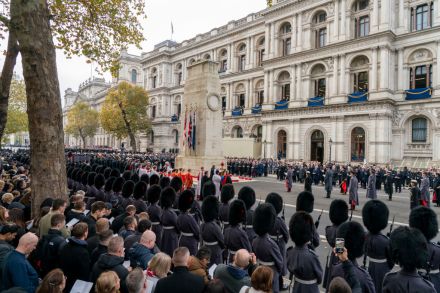
This week the BBC interviewed the last of the Few. Group Captain John Hemingway, 104, is apparently the only remaining RAF pilot who fought in the Battle of Britain. This brings home how long ago the second world war was. The year the war broke out, 1939, is closer to the battle of Gettysburg than today. There is a tangible sense in modern Britain of something ancient and grand slipping away, to be replaced by something shinier, louder, and more comfortable, but also shallow and brittle For people of my age, this chronological distance has sometimes been obscured by the war remaining, until quite recently, a powerful cultural presence in British life.

The Tories’ biggest missed opportunity

From our UK edition

In about a year’s time, maybe less, the British people will collectively hand the Tory government their P45s. Rishi Sunak will be mildly disappointed for about five minutes and then move on to a cushy billet in a Silicon Valley tech firm. The Cabinet members will mostly return to the backbenches. Some of them will be able to wangle regular gigs in the newspapers or on TV, where they will argue for the red meat policies that they failed to pursue in office. And so will pass one of the most incredible missed opportunities in British political history. A Tory majority of a size not seen since the Thatcher years has been used to achieve a great deal of nothing at all.

The night my friends went missing on a Spanish train

From our UK edition

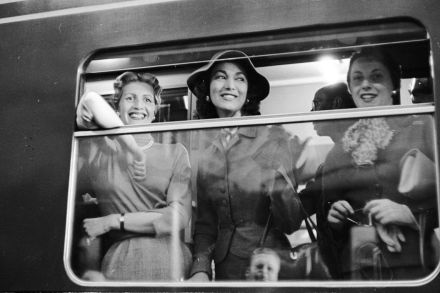
Twenty years ago, the Spanish railway company RENFE stole my girlfriend’s father. There were four of us – my girlfriend, her dad, and a university friend of ours. We had been in Spain for more than a month, walking the Camino de Santiago. Now it was time to head home, first by train to Bilbao and then on to Stansted by air. Once we found our seats on the train, in the rearmost carriage, I settled in for the long haul – the journey is ten hours – with my battered copy of Herodotus, which I was determined to finish before the start of the new academic year. I was soon absorbed in the father of history’s delightful tall tales about, among other things, giant gold-mining ants.

The rise and rise of the centrist bore podcast

From our UK edition

It doesn’t seem like 13 years since I strolled down to the Cabinet Office after work on a May evening to enjoy a bit of protest tourism. A largeish crowd of the usual malcontents – students, crusties and the Socialist Workers’ party – had gathered to harangue the Tory and Lib Dem representatives who were hammering out the coalition agreement. The government that emerged from those talks made reducing the deficit its priority, and in those far-off halcyon days, before Brexit and Corbyn and Covid, when Donald Trump was still hosting The Apprentice, ‘austerity’ was the great political battleground. And for almost all of the subsequent five years, it was Ed Balls and George Osborne who fought each other over government spending.

The terribleness of a progressive Bond

From our UK edition

The latest Bond villain is Nigel Farage. Not literally, of course. But he was clearly a major inspiration for the chief antagonist in the most recent James Bond book, On His Majesty’s Secret Service. This master of international skulduggery is known as Athelstan; a former City trader with a Kentish accent, he espouses a boisterous, saloon-bar English nationalism of the kind usually ascribed to the former Ukip leader. The men drawn to Athelstan’s scheme are preposterous caricatures of the kind of people whom Higson dislikes – i.e. people who have any kind of reservations about any aspect of progressive politics The author, Charlie Higson, has had a certain amount of commercial success with his Young Bond novels.

Michael Parkinson and the lost art of the interview

From our UK edition

Two or three years ago, the Tory MP Jonathan Gullis was ridiculed for describing himself as ‘someone who grew up on Dad’s Army and Porridge and loves those traditional programmes of the past’, even though he was born in 1990. The suggestion was that if you weren’t old enough to vote when Tony Blair left office, then it was rather strange to retain a fondness for sitcoms which completed their original runs in the late seventies. This is not right, however. I know from personal experience that if you were raised in a household with traditional media tastes then even an eighties and nineties childhood – before the fragmentation of audiences driven by digital TV and the internet – could leave you with an enduring affection for the classic shows and personalities of a previous era.

Walthamstow FC and the contradiction of William Morris

From our UK edition

In 1884, William Morris gave a lecture to the Hampstead Liberal Club with the title of ‘Useful Work Versus Useless Toil’. His remarks were typically damning of what he saw as the crude philistinism of Victorian capitalism with its mass production of fripperies and of what Marxists call the alienation of labour – the psychological and material disconnection between the worker and the product of his work. Morris offered an alternative, utopian vision, in which everyone would have access to fulfilling, productive work suited to their skills and nature and where there would be no idle rich and no boss class stealing the value of the labour of the working classes. In other lectures and in his writings he lamented the decline of the individual craftsman caused by the industrial revolution.

Does cricket suffer from ‘institutional racism’?

From our UK edition

What a strange document the Independent Commission on Equity in Cricket (ICEC) has produced, in its ‘Holding up a mirror to cricket’ report. Rambling, explicitly political, antagonistic and poorly-argued, it ignores some obvious explanations for the ills it discusses, and fixates on irrelevancies. The authors situate their conclusions within the world of intersectionality and other well-worn academic buzzwords. This limits the usefulness of its conclusions because every problem is shoehorned into a particular framework, rather than being carefully considered on its own terms. Take, for example, the identification of a severe decline in cricket participation by black Britons.

Can the spiritual element of the coronation survive?

From our UK edition

Almost as soon as Charles III acceded to the throne last September, we began to hear whispers and speculation about what exactly his coronation would look like. Many of these stories were alarming to traditionally-minded people. The King wants a slimmed-down ceremony, with less flummery and fewer fancy costumes, insisted those ever-available knowledgeable insiders. Others fretted about his long-ago musing that he would like to be Defender of Faith, not Defender of The Faith (an important definite article, that). A few months ago, it was reported that the coronation procession would feature NHS key workers and representatives of the ‘Windrush generation’, those two mythic cornerstones of the implied national refounding in the years after the second world war.