Michael Tanner

Marriage minefield

From our UK edition

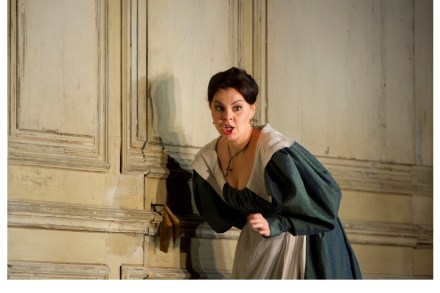
There are two places in Le Nozze di Figaro where the music undergoes a brief but potent change, which indicates how much deeper the undercurrents are than the busy actions we are witnessing. If either of these is short-changed or mismanaged, the whole work is rendered less moving and serious than it really is. The first and less conspicuous is in the finale to Act II, when the Count is trying to trap Figaro about the letter of assignation. The Count says he can tell from Figaro’s face that he is lying, and Figaro replies that in that case his face is the liar. The music to which he sings that disappears briefly, but then reappears as a kind of prayer or hymn to which Susanna and Figaro, with the support of the Countess, ask the Count to bless their marriage.
Troy story

From our UK edition

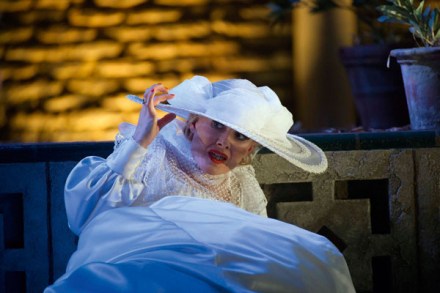
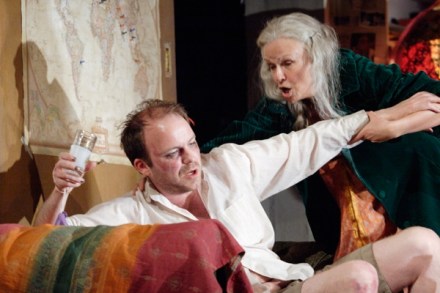
In the late 1970s the Royal Opera announced that it would be performing Berlioz’s Les Troyens and Wagner’s Ring in alternate years, the idea being that the two great 19th-century operatic epics would prove equally popular. We never found out whether they would have done, since while the Ring cycles continued, Les Troyens never got off the ground, and has not been performed complete at Covent Garden for 40 years. My hopes for the new production were extremely high, and only moderately dashed by Jonas Kaufmann’s withdrawal from the role of Enée, one of grand opera’s least rewarding: as a character he is no less unsympathetic than Aeneas always is, and most of his music, especially his big aria of remorse and self-justification, is strenuous and unconvincing.

Best of Britten

From our UK edition

This week’s opera-going afforded one example of truly great art, and one of its plausible counterfeit. To deal with the latter first: no one can deny that Billy Budd is one of Britten’s most accomplished pieces, a virtuoso exercise in the use of large orchestral forces, and in restriction to male post-pubescent singers. And musically it is done almost complete justice in the new production by English National Opera, conducted with staggering ferocity, tenderness and occasional sluggishness by Edward Gardner. The chorus was the most lusty I have heard in the past 35 years at the Coliseum, with the opening of Act II sounding like the gathering of the Gibichungs — uncannily like it, in fact.

Royal treatment

From our UK edition

Welsh National Opera’s new production of La Bohème, which I saw last week in Birmingham, is striking in a variety of ways, but its outstanding feature is the conducting of Carlo Rizzi. One tends to think that of all operas Bohème can look after itself, and up to a point that is true. Bashed out metronomically on a pub piano, or dispersed underneath the arches at Waterloo, or most absurdly of all made into a DVD and set in ‘real’ locations, with actual snow falling, it remains inviolate, though that isn’t perhaps the first word to use in connection with anything Puccinian. Yet every now and then it gets the royal treatment, and how much more satisfying it is when it does.

Disturbing relationships

From our UK edition

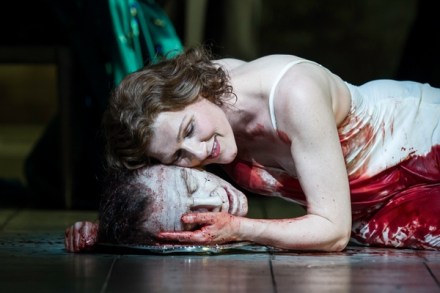
It struck me for the first time at the latest revival of David McVicar’s production of Richard Strauss’s Salome that this opera, Strauss’s first to maintain a place in the repertory, and its successor Elektra are, for all their differences, companion pieces. Even before reading the late Patrick O’Connor’s excellent article ‘Happy Families’, the best and least pretentious in the programme book, I’d been reflecting on how the two operas deal with the classic issue of the powerful and disturbing relationship between father and daughter: in the case of Salome, it is a stepfather in love with his stepdaughter, but that hardly alters the point; while in Elektra it is a daughter obsessed with her father.

Star quality | 2 June 2012

From our UK edition

English Touring Opera ended its spring tour in Cambridge this year with three performances of The Barber of Seville and two of Eugene Onegin, both in English translation, the former done without surtitles, the latter with. Neither of them really needed them, since the Arts Theatre is small and most of the singers enunciated with a clarity one hopes they retain in the careers one hopes some of them go on to have. Barber was moderately successful, Onegin almost wholly so. Comedy is much harder to pull off than tragedy, as everyone knows, but singers don’t necessarily remember and act on that when they come to perform, and too much of this production, directed by Thomas Guthrie, consisted of people doing funny walks, sticking their stomachs out and other trappings of absurdity.

Learning to love Falstaff

From our UK edition

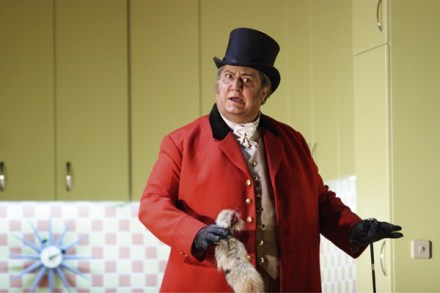
It’s taken me a shockingly long time to realise how great Verdi’s Falstaff is, and I still wouldn’t agree that it is his greatest opera, which fully paid-up Verdians tend to think. It may be a measure of my progress, though, that I got a lot of pleasure out of the new production at Covent Garden, by Robert Carsen, even while recognising that it is a shallow, wilfully unsearching account of a work much of whose magic is extraordinarily subtle, not only for Verdi, but for anyone. Carsen’s production, and the musical side, too, are on a level with the Shakespeare play from which Falstaff derives, which is agreed by everyone to be a potboiler.

Period piece

From our UK edition

Opera North’s latest and most ambitious outreach project is a new production of Rodgers and Hammerstein’s Carousel, which will end its tour with a month’s run from mid-August at the Barbican. The second performance in the Grand Theatre Leeds went down very well, and I’m sure that the whole run will be a great success.  My own fairly negative reaction seemed so discrepant that I have been watching and listening to various versions since, but with no more favourable reaction. The Opera North programme book, lavish but unhelpful, put my back up by quoting more than once an American critic’s assertion that ‘if it weren’t so enjoyable, one might be tempted to call it opera’.

All at sea | 12 May 2012

From our UK edition

Pharmaceutical considerations were uppermost in my mind as I made my way to the Barbican Hall for Philip Glass’s Einstein on the Beach, a production which began touring in Michigan in January and ends in Hong Kong next March. I imagine that marijuana is probably the best preparation and accompaniment for seeing it, but that makes me feel merely giggly and stupid, so I took a modafinil, primarily intended for shift workers, insomniacs and examinees, to aid concentration and combat sleeplessness, clearly an indispensable medicament for opera critics too. But in this case it didn’t work. Einstein, which lasts about four and a half hours, has no interval, so the audience was invited to come and go as it felt fit.

Elemental force

From our UK edition

The new production of Wagner’s first indisputable masterpiece The Flying Dutchman by English National Opera is a decided success, the best account of what contemporary producers make strangely heavy weather of that I have seen in decades. For some reason they find it hard to focus on the title role, and make it all a dream of Senta, or the Steersman. Jonathan Kent presents the Dutchman on Wagner’s terms, even though he can’t resist beginning the opera — and during the Overture, absurdly — with Senta as a small child being put to bed by her father Daland, and reading the story of the Dutchman, while projected mighty waves and a vast hulk loom excitingly.

Return to mystery

From our UK edition

Weber’s Der Freischütz is the finest neglected opera in or hovering on the edge of the canon. It’s not entirely bewildering why it should be, but there are ways of coping with structural defects, which is what it suffers from. Yet I don’t think there has been a UK performance of it since Edinburgh in 2002 (not counting the Berlioz version last year at the Proms), when Jonas Kaufmann sang Max in a concert performance. Perhaps concert performances are the best idea, since the one last week at the Barbican, under Sir Colin Davis, was thrilling and moving.

Role reversal

From our UK edition

Considering how close, if mysterious, the links are between being gay and loving opera, it could seem surprising that there are almost no operas explicitly on gay subjects. Many of Britten’s operas heave with homoerotic subtexts, but his only opera to come out is his last, Death in Venice, and that’s paedophiliac. Tippett, always wackier and more courageous, has a gay couple in The Knot Garden, but they’re tangential. There is Harvey Milk, but that is best forgotten. Perhaps it isn’t so surprising, since what seems to appeal most to the gay sensibility is the suffering diva, suffering preferably both in life and art.

Thrills and chills

From our UK edition

Lightning struck, after what must surely be one of the most dreary seasons at the Royal Opera, with a revival of Rigoletto. You never know. I haven’t been an admirer of John Eliot Gardiner, either in the pre-classical repertoire in which he made his name, or in his excursions into more recent orchestral and operatic music, for instance Puccini’s Manon Lescaut at Glyndebourne. With the opening bars of Rigoletto, however, it was immediately clear that his tight grip on proceedings was going to have thrilling results, even though the orchestra took a little time to settle. David McVicar’s production of decrepit Mantua is itself looking pretty decrepit by now, and the opening orgy sorely needed a generous hand-out of Viagra.

Standing room only | 7 April 2012

From our UK edition

Of all the operatic ventures that have sprung up in England in the past 20 years, Birmingham Opera Company may well be the most remarkable. Its artistic director is Graham Vick, who is well acquainted with opera at its most elitist — he was artistic director of Glyndebourne from 1994 to 2000. BOC is at the other extreme, in that productions now regularly take place in a disused steel foundry on the outskirts of the centre of Birmingham, and the aim is to involve as many local inhabitants as possible. Over the past few years there have been impressive performances of Verdi’s Otello (it was televised, and survived the scrutiny extremely well), Idomeneo and, most movingly to me, Ulysses Comes Home, a wonderful version of Monteverdi’s greatest opera.

Straying from the brief

From our UK edition

‘Praising! That’s it!’ Rilke exclaims in one of his ecstatic Sonnets to Orpheus. It seems to be an unconditional injunction, but he hadn’t tried being an opera critic, and I’d like to see anyone even try plausibly to praise either  of the two productions I saw this week. One was new and absolutely terrible, the other was old, neglected and may or may not be good — it wasn’t easy to judge. Tête à Tête is an opera company and enterprise that I have often admired and enjoyed, but its speciality is very brief works, which could hardly be staged alone, and which don’t demand of their librettist and composer that they write an extended piece with all the problems that involves.

Fatal flaw | 24 March 2012

From our UK edition

Judith Weir’s Miss Fortune, whose UK première was at the Royal Opera last week, has received the severest critical panning I can recall for any new opera. It is no masterpiece, but I wonder why it has been rounded on when so many new — not to mention old — pieces with no more going for them, so far as I can tell, get greeted warmly or at least tepidly. Admittedly, it takes an ambitious subject — Fate — and treats it in a largely unpretentious way. But Verdi’s La Forza del Destino takes the same subject and treats it in an utterly preposterous way, and has some dreadful passages of music, yet has survived for a century and a half.

The unkindest cut | 17 March 2012

From our UK edition

Tristan und Isolde is a perfect opera, but where are the perfect performers and, just as important, the perfect listeners to do it justice? What very often happens to me in a fine performance is that I am wholly caught up in the drama of Act I, which, for all its revolutionary musical means, is a readily comprehensible confrontation of two people who half-know what they feel but are determined to conceal it, until that is no longer possible. Then in Act II, when we meet a quite different Isolde, equally determined but now ecstatically lyrical, the exorbitant demands the work makes on me are ones I can rarely meet, because for the most part conflict is replaced by unimaginable rapture.

Reflections on guilt

From our UK edition

There can be no doubting the nobility of John Adams’s intentions in writing The Death of Klinghoffer to a text by Alice Goodman, nor ENO’s courage in putting it on, though they do have a captive audience for minimalist and near-minimalist operas. The work is conceived, as all commentaries tirelessly tell us, in the spirit of Bach’s Passions, in which a dramatic narrative thread alternates with arias of reflection and choruses of penance and grief. Yet Bach’s purpose was different in kind from Adams’s.

Cold at heart

From our UK edition

‘A masterpiece comparable with the last great plays of Shakespeare’, ‘a veritable turbocharged dynamic of music’, ‘a cliffhanger’, ‘a rollercoaster of a drama’ — which opera deserves these and many more ecstatic epithets? They all occur in the brief programme notes to last week’s concert performance at the Barbican of Mozart’s La Clemenza di Tito, though also quoted there, as an example of outdated hostility to the work, is Charles Rosen’s ‘it’s difficult to convey how unmemorable it is’. Try as I might and have with Clemenza, I am on Rosen’s side.

Sturdy specimen

From our UK edition

A few weeks ago I was speculating anxiously on the possibility that even the greatest masterpieces, in opera or other art forms, might be exhaustible, or that anyway I might not be able to find anything fresh in them, and therefore might succumb either to a state of mild boredom, or else, like some critics, irritably demand that every production ‘break new ground’, as if it is the job of directors and performers to cater primarily to jaded palates.