Michael Tanner

Scandal at court

From our UK edition

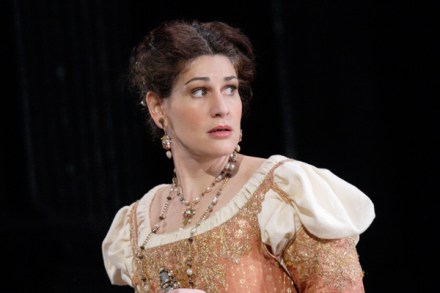
The way the director James Conway sees it, Monteverdi’s last opera L’incoronazione di Poppea is about that most delicate of subjects, adult abuse by youngsters. That isn’t what he says in his programme note for his production at the Royal College of Music, where he claims that the opera is about power, ‘love, yes, but love’s power’. That is tendentious: you might as well say that Otello is about the power of jealousy, which is true, but that doesn’t make it ‘really’ about power; or that Wozzeck is about the power of powerlessness, etc. Poppea is about several things, power among them, but also love, jealousy, ambition, ruthlessness, the abuse of power.

Decline and fall

From our UK edition

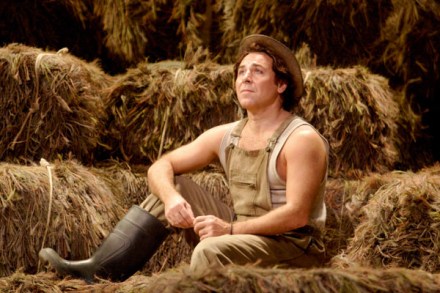
Some operas become, thanks partly to the frequency with which they are produced, victims of their own popularity. The most obvious sufferer is Carmen, which is a no-winner for singers and directors alike. As soon as the curtain rises and you see lemon trees and swaying hips, your heart sinks and you spend the interval agreeing with everyone that it’s just another tired old cliché; while if the scene is a mortuary or a garage you complain — and fairly — that it’s wholly inappropriate for the drama and the music that gives it substance. Last time it was produced at ENO, in 2007, it failed on all scores and it’s almost unseemly to mention it.

Change of heart | 22 November 2012

From our UK edition

I think I have developed a crush on Donizetti’s L’elisir d’amore, which is strange, considering that it is so evidently adorable a work that most opera-goers fall for it straight away. I have never been averse to it, in the way that I am to quite a lot of Donizetti’s work, but in the light of the last two performances I’ve seen, within a few weeks, it has risen in my estimation to the level of being a masterpiece. The first was the Met’s broadcast, delightful in all respects, but with an interestingly unusual balance of sympathy towards the characters. Now, at the Royal Opera, Laurence Pelly’s production is revived for the second time, the revival director being Daniel Dooner, who has been unusually active, unless my memory fails me.

Slow progress

From our UK edition

As usual on the rare occasions when Vaughan Williams’s last and largest opera, The Pilgrim’s Progress, is performed, the new production at English National Opera has been greeted antiphonally, with cries of ecstasy mingled with indignation that it is so little performed from one side, and moans of boredom and weariness from the other. Though I am temperamentally disinclined or even unable to take a compromise position on almost any subject, in this case that is what I find myself doing. It seems to me that there are long stretches where The Pilgrim’s Progress is serene, noble, elevated, radiant and life-giving, others where it stalls, nothing much happens (in the music more than on stage) and it belies its title: progress is just what, sometimes, we don’t get.

Triple time

From our UK edition

The Guildhall School of Music and Drama is outdoing itself in putting on a triple bill of little-known operas, two by Massenet and one by Martinu. What is still more remarkable is that GSMD has put them all on before, though I think in different productions. This time round the designer Yannis Thavoris has produced a set of which the main ingredient, a heap of miscellaneous broken or discarded objects, remains throughout the evening, while other props are introduced that are sufficiently striking to create a quite different mood as the curtain rises on the three little operas. The first, Massenet’s La Navarraise, goes so against everything we associate with the composer that it must have been written partly in order to demonstrate how wide his range was.

Creeping confusion

From our UK edition

The legend of Faust is perhaps the dominant one in post-Renaissance Europe, yet it resists satisfactory artistic realisation. The most celebrated versions of the legend, such as Marlowe’s and Goethe’s, seem to me to be utter messes aesthetically, retaining their status through the great passages they include rather than through any coherence. Thomas Mann’s Dr Faustus is a very great novel with a fundamental structural flaw.

No laughing matter | 25 October 2012

From our UK edition

About two of the operas I saw in Leeds this week there is a serious question as to whether or not they are comedies. The third, Gounod’s Faust, is clearly not meant to be; I’ll be writing about it next week. The new production of Mozart’s Don Giovanni by Alessandro Talevi is jokey and fast — or, anyway, the arias and ensembles are fast, the recitatives less so — but it’s not particularly funny, and what humour there is would certainly not have been available to da Ponte and Mozart: peasants rocking and rolling in the finale to Act I, for instance.

Dazzling Donizetti

From our UK edition

The Met Live in HD series for 2012–13 got off to a brilliant start with a new production of Donizetti’s L’Elisir d’Amore, the most warm-hearted of comedies — in fact, a work so genial that I’m always surprised it doesn’t lapse into insipidity. This production by Bartlett Sher made that seem less of a danger than usual, because although it would be an exaggeration to say he had rethought the piece, he did make it into a more three-dimensional work than usual, Donizetti edging more towards Bellini and away from Rossini, whereas Don Pasquale is the other way round. There are fewer laughs in Sher’s production than you might expect, but far more involvement with the characters.

Accentuate the positive

From our UK edition

How should you feel at the end of a Ring cycle, before — at any rate if you’re a reviewer — starting to list the pros and cons? Nothing very simple, obviously, but some kind of exaltation, of however confused or complex a kind. Famously Wagner had severe problems with the conclusion to the cycle: in the very first version he had Brünnhilde freeing the Nibelungs, including Alberich, and leading Siegfried and Grane up to Valhalla, where the gods, too, were to survive.

Realising Wagner’s power

From our UK edition

There is no experience faintly comparable to sitting in an opera house at the opening of Wagner’s Ring cycle, knowing you will be watching and listening to the whole thing in the space of a week. The opening E flat, especially when it emerges as it does at the Royal Opera in total darkness, the pit as well as the auditorium, is thrilling beyond belief, and as the music slowly begins to move the sense of being in at the beginning and not knowing what will happen is overwhelming, however familiar you may be with the Ring. Wagner’s dynamic instructions are very specific — at no point in the prelude should the sound rise above piano, though that is a direction that no conductor, almost, obeys.

Dream on

From our UK edition

‘Tell a dream and lose a reader’ was one of Henry James’s most immediately practical if obvious pieces of advice to fellow authors. Dying in 1916, he didn’t have much chance to experience surrealism in its numerous manifestations, and one can’t imagine his responding positively if he had. For the abandonment of memory, of motive, of logic, of any of the categories by which we make sense of experience is gleefully embraced by surrealists — and by no one more thoroughly than Georges Neveux, in his play Juliette, or the key of dreams.

A time for reflection

From our UK edition

As any regular opera-goer knows, next year is uniquely one for three major operatic centenaries, two of them, Verdi’s and Wagner’s, bicentenaries, while Britten was born only 100 years ago, but seems to have been dead for a very long time. So we can expect numerous series — of performances, recordings, broadcast radio and TV features — and probably quite a few biographies and critical studies.

New light

From our UK edition

The third concert I went to at Lucerne last week was under two aegises: first ‘Faith’, the theme of this year’s Festival, and second ‘Pollini Perspectives’. Maurizio Pollini coined this phrase or concept several years ago, as indicating his project of giving concerts in which he combines music we know and love with music we don’t know and hate — not that he put it in those terms, but that’s what it amounts to. The latter is always in the first half, naturally. At Lucerne it was not Maurizio, but his gifted pianist son Daniele who took part in the first half, which was the first performance of Carnaval Nos 10, 11 and 12, by the distinguished Italian composer Salvatore Sciarrino.

Keeping the faith | 6 September 2012

From our UK edition

Faith is the theme of this year’s Summer Festival in Lucerne. Not that I would have guessed it from the three concerts I went to in the Concert Hall on consecutive evenings last week. But the programme books insist on it, and there are, besides the musical events, lectures and discussions on Faith, with a cardinal and theologians participating. Why the need to justify having a festival, inflated prices for tickets, hotels, etc. being taken for granted by the majority of the well-heeled patrons? And how many of the patrons are led to reflect more intensely than they normally do on the nature of Faith, or of their faith if they have one?

Four play

From our UK edition

Going to the Riverside Studios in Hammersmith for the annual season of Tête à Tête is a chancy affair, though one can be sure of a very high standard of performance, both vocally and instrumentally. It helps, of course, that none of the studios is large, so the singers can produce their voices at conversational level, though many of them choose not to. As always, there is a big range of operas to choose from, so the choice of the pair I shall be discussing was based on no principle other than that the subject of one of them intrigued me, and while I was about it I saw another. In fact, I saw two more, but they were very brief, about ten minutes each, and performed in the Riverside Studios foyer, as a warm-up for the audience.

Brief encounter

From our UK edition

Glyndebourne’s last offering this season is one of the most stylish things it has done for a very long time, Ravel’s two brief operas directed by Laurent Pelly, who was responsible for its brilliant Hänsel und Gretel in 2008. It may seem odd that Ravel’s pair — though they were conceived quite separately, and years apart — don’t get done more often, but they both demand elaborate sets, and would just be boring if not unintelligible without them. Actually, I find L’heure espagnole, first performed in 1911, boring anyway, but that seems to be a minority view.

Dorset cream

From our UK edition

My first visit to Dorset Opera, last year, left me very impressed. If anything this year was even better, though I found one of the three operas dull. In last year’s programme, I seem to remember, we were promised an Olympically themed opera, Jesse Owens, but that didn’t materialise, nor was there any mention of it.  As usual, after ten intensive days of rehearsal, with all concerned living in Bryanston School, Dorset Opera puts on one opera the first night, another one (this year two) the second, the first on the third, and on the last day the first is a matinée. This year’s mainstay was Il Trovatore, an opera that I have never seen satisfactorily performed, despite its musical unsinkability.

Striking gold

From our UK edition

If I said what I really thought about Götterdämmerung at the Longborough Festival, of which I saw the last of four performances, anyone who wasn’t there would think I was madly exaggerating; but anyone who was there would agree — I have run into several people who were at one or another of the performances, and they were all breathless with excitement and admiration for this astounding achievement. Raving doesn’t make for enjoyable reading, I realise, so I’ll try to be a bit more specific. In the first place it was a tremendous team effort with, at its centre, the fanatical dedication and experience of the conductor, Anthony Negus, colleague of Reginald Goodall but very much his own man in particular points of interpretation.

Talent show | 28 July 2012

From our UK edition

The Royal Opera season concluded, as is now customary, with an evening in which the participants in what used to be the Vilar Young Artists programme, in the light of events renamed the Jette Parker Young Artists, are paraded to show their progress. They make a truly international team, as the slip inside the programme indicated: ‘Ji-Min Park has withdrawn...the role of Il Conte di Libenskof will be sung by Ji Hyun Kim...the role of Zefirino...will now be sung by ZhengZhong Zhou.’ For the first time the programme consisted of a single work; previously it has been made up of excerpts from several.

Exploiting agony

From our UK edition

Verdi’s art reaches its summit in Otello, and in doing so reveals both his greatness and a paradox that seems inseparable from it. The plot is harrowing, more so than any of his other operas, and Verdi exploits its agonising capacities to the full. The glorious love duet which concludes Act I is something to make the most of, for that is the end of happiness, as the act’s final bars suggest. From then on it is a series of dreadful scenes in which the chief characters, deliberately or not, create as much suffering as possible — suffering which, at least at crucial points, the audience is bound to share in a satisfactory performance.