Michael Tanner

Did the Proms’ Billy Budd turn a mystery into a mess?

From our UK edition

The many opera performances at the Proms this year have all been so successful, especially the Wagner series, that I hope it doesn’t require a centenary to include them in future seasons. One of the things that has made them so vivid to the audiences in the Albert Hall has been the immediacy of the contact between singers and public, despite the hall’s vast spaces. It would be nice, but vain, to think that the present breed of directors, with their concepts and conceits, might learn that the simpler the productions they mount, the more their audiences are likely to respond to the works; but the tendency in opera houses is to regard the opera as written by the librettist and composer as mere raw material to be twisted into any shape that might make it relevant and shocking.

Do I wish I’d gone to see Peter Grimes on the beach at Aldeburgh? No

From our UK edition

With a tidal wave of Peter Grimeses about to engulf us — performances in London, Birmingham and Leeds in September alone — there is also, from 5 September, the film of the celebrated Peter Grimes on Aldeburgh Beach at more than 80 cinemas in the UK.  The film was made in June during the three live performances that occasioned ecstatic reviews from all who saw and wrote about them. I didn’t go to any of them, for rather cowardly reasons. But now, having seen the film of the occasion, do I wish I had?

Mark Elder and the Hallé surpassed any other account of Parsifal that Michael Tanner has heard

From our UK edition

The Proms season of Wagner operas — pity they didn’t do them all; Die Meistersinger would have been specially welcome, since no one else is doing it either — concluded appropriately with Parsifal, conducted by Sir Mark Elder. The conducting at all these performances has been remarkably good, but in some respects Elder was the most striking of all. Working with his orchestra, the Hallé, he produced an account of this miraculous score which, for a combination of passion and precision, surpassed any other that I have ever heard. Without for a moment stinting on climaxes, Elder and the Hallé explored and expounded the refinements and economies of Wagner’s subtle masterpiece to a point that would have left Boulez open-mouthed with admiration.

Six hours with Stockhausen

From our UK edition

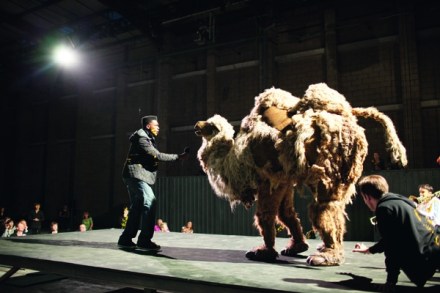
Arriving for the world première of Stockhausen’s opera Mittwoch aus Licht (Wednesday from Light), we were greeted by the sight of two Bactrian camels, delightful and patient creatures, standing almost immobile for at least an hour while many visitors inspected them, before leaving in Joseph’s Amazing Camels coach. The one we saw later on stage was a pantomime camel, out of which, unzipped, a man stepped, after the animal had done an elaborate dance and been offered champagne. Zany and utopian, this is characteristic Stockhausen as I remember his works from the 1970s, before his long semi-eclipse, as people lost patience with his pretensions, his extreme prolixity, the tiresomeness of his childish sense of humour, the sheer datedness of what he was producing.

Tippett’s Midsummer Marriage is an opera of exuberant genius — but forget about the text

From our UK edition

Whenever Michael Tippett’s first opera, The Midsummer Marriage, is revived, there is a chorus of voices, including mine, complaining that it should be done much more often, for it is a work of exuberant genius, full of wonderful musical invention, and life-affirming in the way that Britten’s operas never are (with, I think, the exception of Albert Herring). Yet the Prom performance, semi-staged, it was claimed, but rather less than that, did make clear, while doing justice to Tippett’s score, why Marriage is always likely to be something of an outsider.

Wagner at the Proms

From our UK edition

It would be interesting to know why Tristan und Isolde was placed in the Proms programme in between Siegfried and Götterdämmerung. You might as well programme Othello between acts four and five of King Lear. Wagner wrote Tristan and Die Meistersinger between acts two and three of Siegfried, and to be really chic some company should have mounted the Ring and the two others in that order. But dramatically it makes no sense, and that partly accounts, I think, for the lukecool reception that the performance of Tristan has had in the press. All told, I found it one of the more striking performances I have heard of Wagner’s masterpiece in recent decades.

Is this the best Ring ever?

From our UK edition

The first complete performance of Wagner’s Ring cycle at the Proms is already, less than a week after its conclusion, being hailed as historic and will soon be mythic, an appropriate status and designation for this amazing and amazingly great work. Even Radio 3 ‘presenters’ who have music degrees but have always quailed at the thought of anything so daunting have breathlessly confessed that it was among the very greatest musical experiences of their lives. Some of us have been saying that for quite a time, without making much impression other than that we are the members of a weird and even sinister cult. Still, better late than never.

Michael Tanner’s Glyndebourne experience is ruined by the traffic

From our UK edition

What could be more delightful than going to Gyndebourne with someone who has never been before, arriving in time for a Figaro or Ha-Ha Tea at the Mildmay Hall, taking a stroll round the grounds, which incidentally have been considerably changed this year, and for the better (though the slightly alarming jungle near the opera house is still thriving in its sinister way), then going in for the first half of the opera, suitable exclamations from the newgoer about how enchanting it is, what wonderful sightlines, perfect temperature, and so forth, then in the long interval going to the Nether Wallop for the superb buffet, returning unbuttoned for the second half, and driving — in my case, being driven — tired but relaxed and stimulated home? That’s what one imagines.

A formidable cast for Covent Garden’s Capriccio

From our UK edition

Richard Strauss’s operatic swansong Capriccio made an elegant and untaxing conclusion to the Royal Opera’s season. It was done in concert, but there was a fair amount of acting, more from some of the participants than others. Renée Fleming as the Countess, who feels she has to choose between a poet and a composer, wrung her hands, strode around as much as her fabulous silver and black gown allowed, and in the final scene smote her brow in best distraught Joan Crawford manner; the others huffed and flounced and strode off into the wings, and there was, as much as there can be in this strange opera, a sense of people interacting rather than just singers doing their thing.

Opera review: Longborough’s tiny stage takes on the Ring – and wins

From our UK edition

There are no two ways about it: Wagner’s Ring cycle, the biggest challenge that any opera company can face, has been mounted with triumphant success in Longborough, and now presumably has been laid to rest. Nine years ago, at the Cambridge Arts Theatre, I saw the first attempt to stage it, in Jonathan Dove’s drastically cut version, and with skeletonic orchestration, and though there was some decent singing, on the whole I was unimpressed.

Opera review: Verdi should be as controversial as Wagner

From our UK edition

I’m not the first person to remark that Verdi is getting oddly little attention in this his bicentenary year, especially when compared with his contemporary Wagner who, despite the usually much greater demands his works make in almost all respects, is not only receiving plenty of performances, but is also the subject of even more books than usual, not all of them about his alleged faults of character. Yet Verdi shouldn’t be less controversial a figure than Wagner; it’s just that Wagner stimulates people to react in such intense ways, while they placidly accept Verdi as an energising tunesmith and a decent patriot, ardent for the unification of Italy in contrast to Wagner’s shameful nationalism.

Opera: I am dreading the thought of Götterdämmerung if Opera North maintains the standard it has set with Siegfried

From our UK edition

Siegfried is, everyone agrees, the hardest of the Ring dramas to bring off. The first and almost insurmountable problem is that the title role is one that almost no one can sing, and one of which even on recordings there are very few wholly satisfactory accounts. Lauritz Melchior, the only tenor with the adequate size and beauty of voice, and the sensitivity, when he could be bothered, to employ them to the full, never recorded the role complete, his only ‘live’ preserved performance being heavily cut. The most one can hope for is a more-or-less decent account, and they are rare.

Opera review: Britten’s Gloriana may be a failure but it still manages to shock

From our UK edition

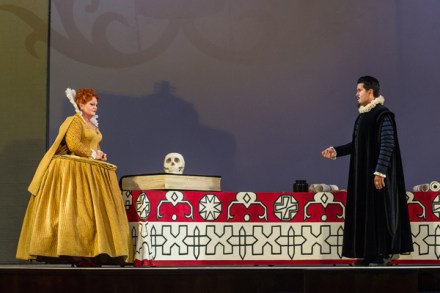
The most surprising thing about Benjamin Britten’s coronation opera Gloriana, for me, is that it merely fell rather flat at its first performance. The composer, we read, had insisted on its virtually official status as part of the coronation proceedings, and it seems to have been his major bid to be accepted as an establishment figure, and not merely as the most significant of the younger generation of composers. But to have chosen, at the suggestion of the Earl of Harewood, the nearest relation to the royal family with any serious pretensions to being artistically cultivated, Lytton Strachey’s Elizabeth and Essex, with its characteristically world-weary deflating view of human affairs and affaires, was surely a piece of ill-judged mischief at least.

Opera review: Deborah Warner’s production of Death in Venice is everything that a production should be, Lohengrin

From our UK edition

Thomas Mann, Gustav von Aschenbach, Benjamin Britten, united in a common interest, one the expression of which is still taboo, yet which Mann succeeded in writing a bestseller about, and Britten his last testament. Mann surmounted the interest, just, by fantasising and remaining amazed that people actually ‘do it’, if his reaction to Gore Vidal’s The City and the Pillar is anything to go by. Aschenbach is so enthralled that he dies rather than separating from his pubescent beloved, and never has the courage to speak to him. About Britten things are still a bit unclear, and are likely to remain so.

Opera review: Crying with the heroine in WNO’s Lohengrin

From our UK edition

In Act II of Lohengrin, after the villainess Ortrud has interrupted the procession to the Minster, and sown the seeds of doubt in Elsa’s mind about the provenance of her rescuer, Lohengrin himself appears and comforts Elsa, saying, ‘Come! Let your tears of sorrow become ones of joy.’ That is followed by a solemn quiet passage, only 11 bars long, and unrelated to anything we have heard before or will hear subsequently, but of such grave beauty that it makes you, too, cry. This kind of pathos and nobility permeate Lohengrin, and though each of Wagner’s dramas has its own feel and colour, those of this opera are so wonderful that it’s impossible not to wish that Wagner had continued in the same vein for one more.

Opera: Is Philip Glass’ trying to bore his way into immortality?

From our UK edition

First nights at English National Opera are, in the main, matters for a sociologist rather than an opera critic. That emphatically wasn’t the case with Wozzeck, but that is an acknowledged grim masterpiece, though still, nearly 90 years on, enough to put off casual opera goers and trendies. But the succession of vacuous new works that ENO has mounted in the past few years has attracted audiences, at any rate first-nighters, of a kind that one doesn’t see at any other operatic performance. They arrive early to kiss and shout and drink champagne, they trickle into the auditorium very slowly, stopping for many hugs on the way to their seats, and their talk in the interval is about anything other than the performance they are at.

Ariadne auf Naxos at Glyndebourne – how can an opera go so wrong?

From our UK edition

Richard Strauss’s Ariadne auf Naxos should be the perfect Glyndebourne opera, not too long, not too demanding, a unique and cunning mixture of seriousness and comedy, plenty to think about if you’re inclined to do that, nothing to oppress you, almost no longueurs — though I might take that back later; and a giddy ending.

Opera review: La donna del lago, Dido and Aeneas, The Lighthouse

From our UK edition

Rossini’s La donna del lago, based on Sir Walter Scott’s poem, is a relatively late work in his brief and unbelievably industrious period of operatic composition. It has its passionate admirers — it is the only opera that Maurizio Pollini has conducted and recorded. The Royal Opera was seething with excitement on the first night of the production by John Fulljames, and the roar of acclamation at the end, which had been preceded by many during the performance, showed that the fashionable and expensive audience was well pleased with what it had seen and heard.

Opera: Wozzeck, Die Zauberflöte

From our UK edition

At the close of the first night of Wozzeck at the Coliseum there was a longer dead silence than I can remember after any operatic performance I have been to, and when applause began it sounded reluctant. Everyone was stunned by the intensity and involvingness of the preceding 100 minutes, the work having been performed straight through, no interval. Virtually every element in the production contributed to this shattering effect, and any shortcomings would be easily corrigible and with one exception trifling.

Joshua, Opera North, Don Carlo, Royal Opera House

From our UK edition

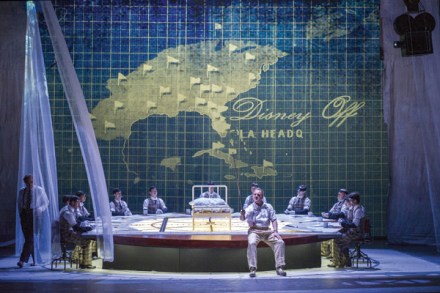
Why stage a Handel oratorio, or anyone else’s for that matter? The recent urge to do it, with Bach’s Passions — even, I’m told, with Messiah — suggests a further incursion of TV into our lives, the inability to absorb anything that isn’t partly or primarily visual. At least Handel’s Joshua, which Charles Edwards directs and designs in a new Opera North production, is bellicose so there is a fair amount of action, though the most indelible parts of it are the choruses, some of them, strangely, sung with scores in hand, some not. The setting is post-second world war, yet another production with an excuse for dressing the characters in dowdy clothes suggestive of a Ken Loach movie.