Michael Simmons

Michael Simmons

Michael Simmons is The Spectator's economics editor.

Is Reform brave enough to take on the pensions triple lock?

Will any political party ever take on the triple lock? The answer from Reform’s Robert Jenrick yesterday appeared to be no.  At a press conference where Jenrick, Reform’s Treasury spokesman, appeared to junk nearly everything Reform had previously said on economic and fiscal policy. He chucked overboard what was in many ways a left-leaning approach to both economic and fiscal policy and adopted a list of proposals that would be right at home in a Tory manifesto. That included committing to keeping the triple lock – which guarantees the state pension rises by the highest of earnings, inflation or a floor of 2.5 per cent.


Is Reform now part of the ‘orthodoxy’?

It is Robert Jenrick’s big day out today. The newly-minted Reform ‘shadow chancellor’ made his first speech this morning, where he had the chance to show what kind of chancellor he would be and – sporting a snazzy pair of specs – he had plenty of soothing words to calm the jitters of the bond markets. The top news lines from his presser was his decision to kill Reform’s two-child benefit cap – Nigel Farage’s big offer to Labour voters last summer – and the announcement that he he would support the independence of the OBR and the Bank of England. Is this a missed opportunity for Reform UK? Oscar Edmondson speaks to Michael Simmons and Tim Shipman. Produced by Oscar Edmondson.

Is Reform now part of the ‘orthodoxy’?

Inflation is down – but for how long?

Britain seems to be turning a corner. Figures just released by the Office for National Statistics show the rate of inflation fell to 3 per cent in January, having risen to 3.4 per cent at the end of last year.  This downward trend is in line with forecasts from the Bank of England which expect inflation to hit its 2 per cent target in April. If that trend holds true, then the slowdown in prices won’t just be welcomed by struggling shoppers. This government – whichever ‘phase’ it is now in – has pegged its success and failure to addressing the cost-of-living crisis.

Ed Miliband and Andy Burnham’s Britain doesn’t exist

With Sir Keir Starmer’s premiership in perpetual peril, it seems instructive to pay closer attention to his potential successors. On that, there have been two noteworthy interventions this week. The first from Ed Miliband who told the Today programme: ‘I tell you what angers Keir most about this country, it’s class. It’s the class divide.’ Not to be outdone, Andy Burnham then told a Resolution Foundation think-tank event that the focus of British politics needed to switch to lower earners. They present a Britain where capital exploits cheap labour, resulting in profound and widespread poverty. But that’s not the Britain we’re in Both men seem to want to focus on a country that does not exist.

Is there a silver lining in Britain’s dismal growth figures?

Wes Streeting was bang on when he told Peter Mandelson the government had ‘no growth strategy at all’. The Health Secretary's claim seems to have been confirmed by figures, just released by the Office for National Statistics (ONS), which show Britain’s economy grew by just 0.1 per cent in the last three months of 2025. On a per capita basis the numbers were even worse: we're in recession. What is worrying given the make up of our economy is that there was no services growth at all, and construction contracted by 2.1 per cent. The only area of the economy that expanded (by 1.2 per cent) was production.

Keir Starmer has done nothing for Britain’s young

10 min listen

This week Keir Starmer faced the greatest challenge to his premiership yet. What will this Prime Minister will be remembered for? Policies which hurt young people. From student loan debt crisis, tax thresholds, ISA allowances and the pensions triple lock, what hope is there for young Brits? Michael Simmons has the data.

Keir Starmer has done nothing for Britain's young

Britain’s economic upturn won’t save Starmer

By the end of last week, it was clear the Prime Minister is a goner – the debate moved to the pace of his demise. That sped up yesterday with the resignation of Morgan McSweeney, his chief of staff. Starmer’s prospects looked very bleak indeed when I turned on the Today programme this morning to hear a defence of the PM being mounted by Baroness Smith of Malvern. I wouldn’t pretend to understand the government's communications strategy, but it doesn’t exactly scream confidence when the most senior spokesperson offered up for the morning media round is a junior skills minister from the Lords. A few hours later, the man in charge of that media strategy (and the fourth person to hold the job in 12 months), Tim Allan, jacked his job in and followed McSweeney out the door.

Keir’s worst week – but Kemi’s best?

10 min listen

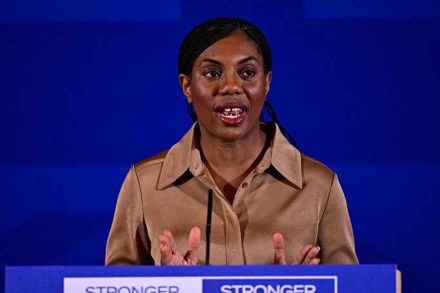
The sun is setting on Keir Starmer’s worst week in No. 10 – but potentially Kemi’s best. We go into the weekend with MPs publicly calling for his most senior aide, Morgan McSweeney, to step down because of his role in the botched vetting of Peter Mandelson, and with huge questions remaining about how much the Prime Minister knew about Mandelson’s association with Epstein. All of this means that the upcoming by-election on the Labour party’s patch in Gorton and Denton is poised very precariously. Meanwhile, Kemi has seized the opportunity to capitalise on Labour’s woes – but are she cutting through enough? And with her position looking more assured, and fiscal responsibility as their rallying cry, could it nearly be over for her shadow chancellor, Mel Stride?

Keir's worst week – but Kemi's best?
Peter Schiff on the dollar: America's bust is the world's boom

Peter Schiff on the dollar: America’s bust is the world’s boom

25 min listen

Michael Simmons speaks to American economist Peter Schiff about the surge in gold prices, the weakness of the US dollar and why he believes the next major economic crisis is approaching. Schiff argues that recent dips in precious metals are a buying opportunity, warns that years of low interest rates and money printing have created a 'bubble economy' and explains why he thinks cryptocurrencies are 'speculative mania'.

The Bank cuts growth prospects by a quarter

The Bank of England’s Monetary Policy Committee (MPC) has just voted to hold interest rates at 3.75 per cent. While market expectations and pundit’s predictions overwhelmingly foresaw a hold, the vote came in slightly tighter than expected at five against four. The decision came alongside new forecasts from the Bank that predict inflation falling back to the 2 per cent target from April, in what will be a relief to the government and indeed the rest of us. In even better news for Rachel Reeves, in the Bank’s ‘Monetary Policy Report’, also released today, it gave the government some credit for ‘developments in energy prices including from Budget 2025’.

Why the housing crisis is far worse than Labour wants you to believe

8 min listen

Housing minister Steve Reed has been boasting about Britain’s housing market since Labour came into office – but is he right to celebrate? The country’s housing crisis seems to be delivering the worst of both worlds. Young people trying to get on the property ladder are being priced out by stubbornly high costs, while older homeowners looking to downsize find themselves trapped, with too few buyers able to afford their homes. Michael Simmons takes a look at the data.

Why the housing crisis is far worse than Labour wants you to believe

The Waspis never deserved a payout

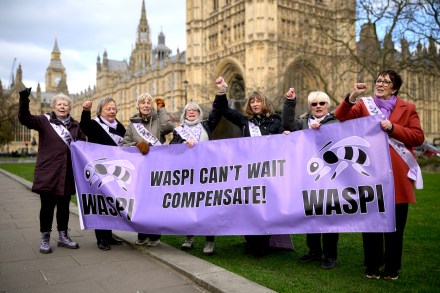
I want to congratulate the Department for Work and Pensions. They’ve made the excellent decision to – once again – refuse compensation to the Waspi women. The cohort of 3.6 million women born in the 1950s claim to have not been informed that their state pension age would rise – bringing it into line with the male retirement age. Their campaign group (Women Against State Pension Inequity) have led one of the most vocal but ridiculous campaigns in modern British history. Despite leaflets being individually written, information campaigns in doctors’ offices, and relentless TV and online adverts, the group claims that they were not adequately informed of the pension age change, and thus should be compensated from the pockets of the rest of us.

Andy Burnham’s bond blip, scrapping the OBR & why Rishi Sunak deserves more credit – James Nation

30 min listen

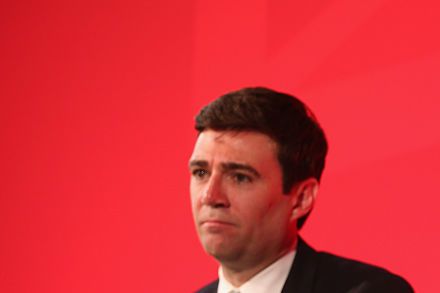
When Andy Burnham put forward his bid to stand in the Gorton & Denton by-election, the bond markets wobbled. What does this say about the state of Labour and their reputation with the markets? Michael Simmons speaks to former Treasury and Downing Street advisor James Nation about Labour leaders and fiscal policy, why Rishi Sunak was right on inflation and what he has learnt in the private sector since leaving the Treasury.

Andy Burnham’s bond blip, scrapping the OBR & why Rishi Sunak deserves more credit – James Nation

Under 50? You’re never getting a state pension

Last week the Bank of England was warned to prepare for a financial crisis triggered by the discovery of extraterrestrial life. But the really worrying scenario isn’t aliens. It’s us. A century ago the state pension as we know it was introduced. Taxes from employers and their staff were used to pay out benefits to the elderly once they hit retirement age. There was no means-testing, and this benefit for all removed the stigma associated with claiming welfare. It was a roaring success. But it won’t see another 100 years. It’s always been wrong to call it a pension. It’s a benefit paid out of current taxation like any other. There’s never been an investment pot built up or paid into. The state pension runs more like a Ponzi scheme.

Why inflation is up again

Inflation has crept back up. Figures released by the Office for National Statistics (ONS) show that the Consumer Prices Index (CPI) rose by 3.4 per cent in December. That’s up slightly from the 3.2 per cent rise in prices recorded in November – though it is roughly in line with what markets had expected.  The main drivers of the CPI rise – the first increase of the rate in six months – were Christmas plane tickets and the government's hike in tobacco duty. Nevertheless, it’s a move in the wrong direction and worrying news for a government whose sole aim, we’re told, is tackling the cost of living.  Responding to the figures Rachel Reeves said: ‘There’s more to do, but this is the year that Britain turns a corner.

Rachel Reeves: destroyer of jobs

Rachel Reeve’s jobs collapse is trundling on. Figures just released by the Office for National Statistics (ONS) show that 155,000 payroll jobs were wiped out in the year up to November. Some 33,000 were lost in a single month. In total, over 200,000 jobs have disappeared since the Chancellor’s first Budget when she announced a £25 billion raid on employer National Insurance.  In response to that tax hike, and throughout the uncertainty in the run-up to Labour’s second Budget last year, business paused their hiring plans and stopped replacing staff as they left. They don’t appear to have begun rehiring. Flash estimates for December (which are very likely to be revised) show a further drop of 43,000 jobs.

Trump slaps Britain with tariffs over Greenland

Donald Trump has announced that he will impose tariffs on goods from the UK, Denmark and other European countries. The 10 per cent levies on exports to the US will apply to ‘all or any goods’ and come into force from the beginning of next month.  The move is in response to Europe’s opposition to his plan to take over Greenland. It’s worth looking at his explanation which was posted on his twitter clone Truth Social: If no deal is reached by June the tariffs will be hiked again to 25 per cent and remain there until an agreement is reached for the US to purchase Greenland from Denmark.

Britain’s economy is standing still under Labour

Britain’s economy is standing still. Figures just released by the Office for National Statistics show GDP grew by just 0.1 per cent in the three months to November. The numbers were dragged down by the construction sector, which saw a contraction of 1.1 per cent – its largest fall in nearly three years. GDP grew by just 0.1 per cent in the three months to November There were much better figures for the month of November alone though, which saw growth of 0.3 per cent following a fall of 0.1 per cent in October. That was thanks to services growth of 0.3 per cent and production growth of 1.1 per cent. The Chancellor Rachel Reeves will be hoping that these month-on-month figures – which have come in stronger than economists had expected – will hold out over the long term.

Who’s to blame for Britain’s water crisis?

24 min listen

Thousands of homes across the South East have been without water for four consecutive days. South East Water’s record on water supply interruptions is one of the worst in the sector. Ofwat, the regulator, has placed it in the bottom three companies for disruptions each year from 2020 to last year. What has happened to the water industry in the past decade? And would nationalisation fix it? Michael Simmons is joined by The Spectator's business editor Martin Vander Weyer.