Michael Simmons

Michael Simmons

Michael Simmons is The Spectator's economics editor.

The Covid Inquiry is exposing lockdown’s dodgy models

From our UK edition

Did we lock down on a false premise? Yesterday was Ben Warner’s turn at the Covid Inquiry. He was an adviser, and one of the ‘tech bros’ brought in by Dominic Cummings to advise No. 10 on data. He was present at many of the early Sage – and other – meetings where the government’s established mitigation (herd immunity) plan was switched to the suppression (lockdown) strategy.  In Cummings’s evidence to the inquiry last week, he said that models didn’t play a big part in moving the government towards lockdown. Part of the written inquiry evidence supplied by his data man, Ben Warner’s, supports that too.

We’re still recovering from lockdown’s impact on children

From our UK edition

Some 140,000 children missed more than half of the school days they should have attended this spring. Research by the Children’s Commissioner, published today, finds that only 5 per cent of these ‘severely absent’ kids go on to achieve five GCSEs. For year ten and 11 pupils who are persistently absent – meaning they miss one day of school a fortnight – just over a third get the minimum five GCSEs. For rarely absent children the figure is 78 per cent. The Commissioner, Dame Rachel De Souza, is calling for attendance league tables to be set up.  It’s no surprise that attendance dropped during Covid. But after lockdown many children just simply didn’t come back to school, as Harriet Sergeant pointed out in a cover piece for the magazine earlier this year.

Dodgy data risks breaking Universal Credit

From our UK edition

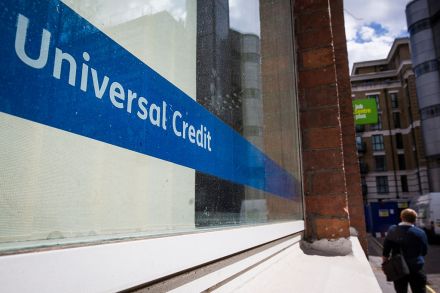
As many as one in 20 Universal Credit payments to working Brits are wrong. Claimants are at risk of destitution when they’re underpaid and accused of fraud when they’re overpaid, as the Department for Work and Pensions has been using a flawed data stream provided by HMRC to calculate Universal Credit payments. This week The Spectator revealed how HMRC’s PAYE earnings data is error strewn and fundamentally unreliable. Now it has emerged this system, used to calculate Universal Credit, risks criminalising benefit recipients and automated computer systems make it impossible for claimants to put the record straight. Insiders warn of a scandal waiting to happen – one that officials seem unaware of.

The taxman’s dodgy data

From our UK edition

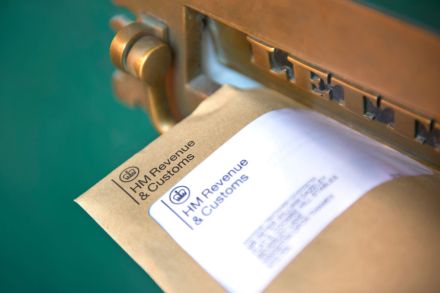
Ten years ago, HMRC unveiled what was billed as ‘the biggest change’ to the tax system since PAYE began in 1944. The taxman mandated employers to report their workers’ pay every time they ran payroll. Introduced to support Universal Credit by providing earnings data in close to real time, it has since been used to support a raft of other public policies too, including Covid furlough. But this change to PAYE Real Time Information (RTI), as HMRC calls it, has been a disaster for households on Universal Credit, taxpayers, public finances and confidence in HMRC and the senior civil service, as the quality of tax data has effectively collapsed. At the root of the problem is dodgy data on the earnings of the UK’s 30 million employees.

What can we hope to learn from the Covid inquiry?

From our UK edition

16 min listen

This week there have been some interesting developments in the public Covid-19 inquiry where scientists and mathematical modellers have been giving testimony on how prepared the government was to tackle the pandemic and how they used expert advise.  Within the sessions, WhatsApp messages revealed that Dame Angela McLean – who at the time was chief scientific advisor to Ministry of Defence – sent a secret message referring to Rishi Sunak as 'Dr Death the chancellor' in reference to the public health impacts of the 'eat out to help out' scheme. What were some of the other revelations? Did we get any clarity on how these mathematical models were produced and implemented? And what can we hope to learn from what promises to be a long and protracted inquiry?

The Covid inquiry asked the wrong questions of Neil Ferguson

From our UK edition

SPI-M-O are at the Covid inquiry this week. They’re the shadowy group of mathematical modellers who contributed – more than most – to the evidence that backed up lockdown. On Monday we heard from Professor Mark Woolhouse of Edinburgh University. Surprisingly – for an inquiry that seems from the outset to be focused on the deaths of the vulnerable and how we should have ‘locked down sooner’ – Professor Woolhouse focused his evidence on the mistakes of lockdown. Lockdown was ‘disproportionate, unsustainable and not as effective as was being claimed’, he told the inquiry. He also said they were ‘a failure of public health policy’. Blame lay with the government, who had simply failed to ask the modellers to come up with anything different.

It’s official: we don’t know how many people are unemployed

From our UK edition

For perhaps the first time in its history, the Office for National Statistics does not know how many employed, unemployed and economically inactive people there are in the country. This morning, the monthly labour market figures were due to be published. But late last week news slipped out that the employment portion of the release would have to be delayed. The reason: plummeting survey response rates. You simply cannot make decisions about which levers to pull if we do not know how many people are in work Each month, Britain’s statisticians work out how many people there are in the workforce based on responses to a national ‘Labour Force Survey’. But for the last few years, the quality of that survey has diminished.

Why has it taken the SNP so long to act on Scotland’s drug deaths?

From our UK edition

Britain’s first ‘drug consumption room’ will get the go-ahead later today. A health centre in the east end of Glasgow (where nearly 200 people died from drugs last year) is expected to be used for a pilot project. It will offer nurse-led supervision for drug users while they take heroin, cocaine and other illegal drugs. Sterile needles will be provided too. The NHS and Glasgow City Council, who proposed the scheme, hope that the ‘400 to 500 people [regularly] injecting drugs in public places in Glasgow’ will move off the streets and into the consumption room.

How the SNP botched Scotland’s census

From our UK edition

Scotland’s first census results have finally been released: just 444 days after England managed to publish theirs. The once-a-decade count of the population was disastrous at worst and botched at best. As the first deadline for returning the census loomed last April, some 700,000 households – a quarter of the country – were threatened with £1,000 fines for not completing it. It had taken over a month to reach a 74 per cent response rate. Eleven years ago it took just ten days. Now that the results are in, the final response rate was 89 per cent: well short of the official target of 94 and the 97 per cent achieved in England and Wales. When the first deadline was extended, the SNP did not apologise.

Scotland’s drug deaths shame

From our UK edition

Scotland continues to suffer drug deaths at levels unseen anywhere else in the UK or Europe. Three Scots die as a result of drugs every single day. That is nearly three times worse than any other country for which records exist. This scandalous figure has just been updated, and shows that, although the number of drug deaths in Scotland fell by a fifth in 2022, it is still nearly double what it was when the SNP came to power. It is also four times as high as it was at the turn of the century. A fall, the government says, is progress. But why so slow? Why did more than 8,000 Scots lose their lives to drugs before the numbers began to drop? The figures show drug-related deaths have fallen to 1,051 – 279 fewer than the year before and the lowest level since 2017.

Degrees of failure: is university still worth it?

From our UK edition

33 min listen

This week:  The cover of The Spectator magazine looks at whether after years of Covid-based disruption, rising cost and lecturer strikes, university students are getting what they paid for. The Spectator’s data editor Michael Simmons writes a sidebar in which he rails against some of the changes that are happening to university freshers’ week and joins the podcast alongside Emma de Saram, Guild president at the Exeter University Student’s Guild. (01:26)  Also this week: In the magazine we are running an interview by The Spectator's special projects editor Ben Lazarus with professor Jim Skea – the new head of the UN intergovernmental panel on climate change (IPCC) and arguably the most important man in climate science.

In defence of drunken freshers’ weeks

From our UK edition

I don’t remember much of freshers’ week at Edinburgh. Friends have helped to fill in the blanks. I vaguely recall a police officer handing out vodka shots to show how easy it was to fail a breathalyser test. A famous DJ had his set in the union cut short because he played the song ‘Blurred Lines’. It had been banned by student politicians. I have hazy memories, too, of my first interactions with posh English women. One assumed I must be gifted since I’d made it into university from a Scottish state school. Another asked if I was limping because I’d overdone it at the ‘introduction to reeling event’ (I have cerebral palsy). Posh English men were no better. At a party exclusively made up of Old Harrovians, I was laughed at when I got out my Android phone.

Will Rishi hit his inflation target?

From our UK edition

5 min listen

Today we had the – seemingly – good news that the headline rate of inflation for July has come down to 6.8%. This is in line with Bank of England targets which suggest that Rishi could be set to meet his pledge to halve inflation. Is this cause for celebration in Number 10? Or should we be wary? Cindy Yu speaks to Michael Simmons, The Spectator's data editor. Produced by Cindy Yu and Oscar Edmondson. Check out The Spectator's data hub: https://data.spectator.co.

Public sector pay pushes wage growth to record high

From our UK edition

Public sector pay growth has jumped 9.6 per cent, the fastest rate since current records began 22 years ago. Private sector wage growth, meanwhile, is slightly more modest at 7.9 per cent. The NHS bonus – a one-off payment of between £1,650 and £3,500 given in June – helped lift overall wages up by 8.2 per cent, higher than inflation (at 7.9 per cent), the first time that has happened since March last year.  That bonus was agreed by the government in an attempt to put an end to industrial action among health workers. Around 160,000 working days were lost in June alone, the majority in the NHS. But with the bonus and the sheer size of the NHS payroll (at 1.4 million, it’s the largest workforce in Europe) overall national pay figures have been pushed up.

Rishi’s target creeps away as NHS backlog climbs

From our UK edition

Yet another of Rishi Sunak’s five targets looks to have slipped out of reach. Waiting lists for NHS treatment in England have climbed to another record high and now stand just shy of 7.6 million. There was a slight improvement for the longest waits: those waiting more than a year dropped slightly but still stand at a staggering 383,000. A very unlucky 314 have found themselves languishing on the lists for more than two years. Ministers gave the NHS a target to clear waits of more than 65 weeks by April next year, but there’s been little progress on those either. NHS managers were quick to blame strike action – Junior Doctors are set to walk out again over pay tomorrow from 7a.m. The health services’ figures point to over 100,000 appointments being postponed in June alone.

If Rishi halves inflation, will you feel richer?

From our UK edition

14 min listen

Rishi Sunak is likely to hit his target of halving inflation by the end of the year, according to the latest Bank of England forecasts. But is that enough to make people feel better off, and will the Tories reap any political benefits for doing it? Cindy Yu speaks to Katy Balls and Michael Simmons. Produced by Cindy Yu and Max Jeffery.

Seven graphs that show the challenge for the Tories at the election

From our UK edition

The Tories have avoided total wipeout in last night's triple by-election. Rishi Sunak dodged the embarrassment of becoming the first Prime Minister in 50 years to lose three by-elections in a single day. While the Lib Dems won Somerton and Frome and Labour secured victory in Selby and Ainsty, the Conservative candidate in Uxbridge, Steve Tuckwell, managed to hold onto Boris Johnson’s old seat with a much reduced majority of 495 votes. The result in Selby and Ainsty meanwhile, where Labour candidate Keir Mather took the seat, was the biggest majority the Labour party has ever overturned in a by-election: the Tories had previously held the seat with a majority of over 20,000.

Sunak’s debt target is slipping out of reach

From our UK edition

Threadneedle Street will have all the economic limelight this week as the Bank of England sets interest rates tomorrow. With this morning’s grim inflation update, a rate rise looks all but certain. But this morning, the Office for National Statistics (ONS) released an update on Rishi Sunak’s third pledge: to get debt falling. The figures show another target quickly escaping Sunak.  Public sector borrowing in the month to May rose to some £20 billion, almost £11 billion more than the same month last year. That makes it the second most expensive May on record. Meanwhile, in the first couple of months of this financial year, the government borrowed just under £43 billion – some £20 billion more than April and May last year and £2.

Record pay deals will worry the Bank of England

From our UK edition

Wages are slowly closing the gap with inflation, up 7.2 per cent in the year to April versus inflation of 8.7 per cent. It adds up to a real-terms decrease. It's the 18th real-terms fall in a row – though the fastest nominal rise on record outside the pandemic. The new minimum wage (up nearly 10 per cent to £10.42 an hour) was a factor. The economy created 250,000 more jobs with the number in employment rising to 33.1 million. This shows signs of the worker shortage crisis softening a bit – the number of people either in work or looking for it rose to 34.4 million, the highest since October 2020. Meanwhile, the number of vacancies softened to 1.05 million – down a tad from 1.08 million but still almost twice as high at any point in the previous decade.