Michael Simmons

Michael Simmons

Michael Simmons is The Spectator's economics editor.

Keir Starmer is right about the NHS

From our UK edition

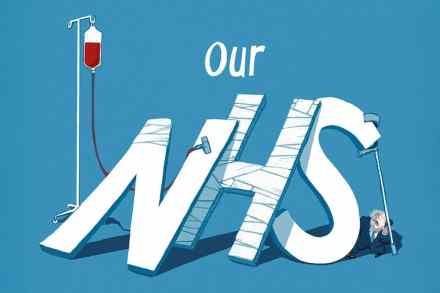
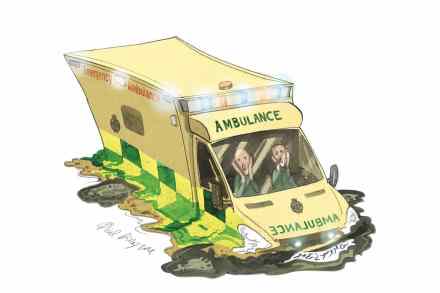
Keir Starmer's diagnosis of the NHS is correct. 'If we don’t get real about reform, the NHS will die,' he says. The Labour leader, and odds-on favourite to be next PM, has called for an ‘unsentimental’ shake-up of a service that is undeniably failing. Millions are waiting for treatment, ambulance waits are so long they are stretching the axis on graphs and good luck even getting your GP to answer the phone. ‘The idea that the service is still “the envy of the world” is plainly wrong,’ he wrote in the Daily Telegraph. Two thirds of us now consider the NHS to provide a bad service So why have we not seen meaningful reform yet? Starmer points to the esteem in which the health service is held.
A nightmare month for the NHS

From our UK edition

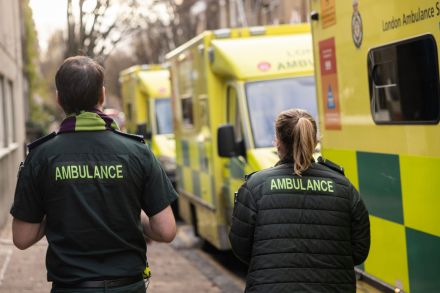
The NHS is struggling. In December, English A&Es saw their busiest month on record: 170,000 people waited more than four hours to be admitted and nearly 55,000 waited more than 12 hours. These are the highest figures ever recorded. Ambulance response times were their worst ever too: the average wait for emergency call-outs was 93 minutes. Things are also bad in Scotland. Last night, NHS Greater Glasgow and Clyde (the country's biggest health board) ‘paused’ elective surgeries to focus on emergencies and cancer treatment. The NHS as Glaswegians knew it is simply no more. Wards are being converted into ‘flu zones’ in scenes many thought we’d left behind in the pandemic.

Sturgeon is irresponsible to blame Scotland’s NHS crisis on patients

From our UK edition

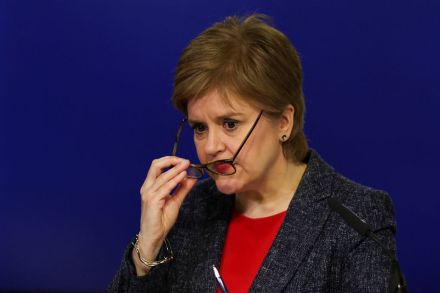
Nicola Sturgeon has blamed ‘unnecessary attendances’ at hospital for the mounting crisis within Scotland’s health service. In a speech defending Health Secretary Humza Yousaf this morning, she said ‘hospitals right now are currently almost completely full’. Turn to Facebook and her government is running a series of adverts where the government’s clinical director, Jason Leitch, advises patients to seek help online as well as more messaging saying the country is facing ‘unprecedented’ levels of flu and Covid. But is Scotland’s NHS really seeing more demand than ever before? Statistics on hospital attendances suggest not. In the week to Christmas day, 22,892 Scots turned up at A&E departments.

Crime does pay: Why are so many criminals escaping justice?

From our UK edition

Crime hit a 20-year-high in Britain this year, yet more of these offences than ever are going unsolved. The stark reality is that, if you’re robbed, mugged or a victim of fraud, it’s less and less likely the police will catch those responsible. This year, in England and Wales, just 5 per cent of reported crimes resulted in anyone being charged or summoned to court; it’s a big drop from the 15.5 per cent of suspects charged in 2015, when records began. The criminal justice system’s inability to catch and punish criminals has effectively decriminalised many crimes. Villains now operate in broad daylight with little fear of being caught.

Why the rising unemployment rate might not be such bad news

From our UK edition

Is unemployment beginning to bite? Or are the workless trying to rejoin the economy? That’s the key question after the unemployment rate rose to 3.7 per cent today.  Figures released by the Office for National Statistics this morning reveal that even though unemployment is up, ‘economic inactivity’ is starting to fall, having previously grown by some 565,000 people since the pandemic and lockdowns. A city of workers the size of Manchester had stopped working and weren’t looking for jobs either, meaning they weren’t counted in the official unemployment figures. But this trend away from work might be beginning to reverse.  The number of people who are economically inactive has now fallen by some 76,000 compared with the previous three-month period.

Are NHS failures making us poorer?

From our UK edition

The NHS has a crisis every winter, but this year’s is on a different scale. Before a wave of strikes puts patients and care at risk, stats released by NHS England this morning show a health service already on the brink. Last month, the number of 12-hour waits in A&E departments in England exceeded 37,800, having hit almost 44,000 the month before: a decrease, but a worrying number still. Waiting lists for consultant-led treatment have grown by 74,000 cases and now stand at 7.2 million. Ambulance waiting times are still far higher than they should be too: now at 48 minutes. All of this before the going really gets tough. Here’s what this morning’s monthly NHS statistical release tells us: 1.

Ian Blackford resigns as SNP Westminster leader

From our UK edition

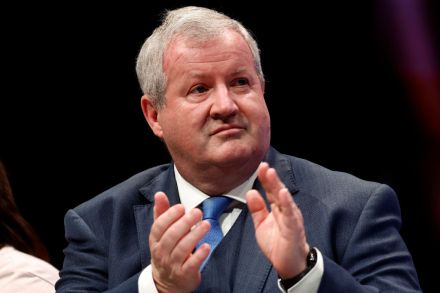
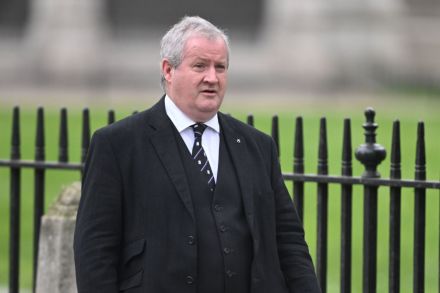
Ian Blackford has resigned after five years as Westminster leader of the SNP. In a statement he said the time was right for ‘fresh leadership’ and that he will not be standing for reelection at the group’s AGM next week. The announcement comes just a fortnight after the Ross, Skye and Lochaber MP survived an attempted coup. He is continuing as an MP. Just weeks ago Blackford survived a challenge from the Aberdeen South MP, Stephen Flynn, who attempted to overthrow him. SNP backbenchers had grown unhappy with Blackford’s leadership after several scandals during his tenure. Flynn had been on manoeuvres against Blackford for months.

House prices fall (again) – but is it the time to buy?

From our UK edition

House prices have fallen for the second month in a row, according to Nationwide – following wider predictions of a 9 per cent fall in the market. Nationwide’s house price index fell 1.4 per cent last month after falling 0.9 per cent the month before. That’s still up 4.4 per cent year-on-year but (pandemic excluded) it’s the first significant drop in property prices since the 2008 crash. Earlier this week, data from Zoopla suggested a 44 per cent drop in demand. The Bank of England, too, said mortgage approvals are at their lowest since June 2020. Nationwide now puts the average house price at £263,788, nearly £4,500 less than in October.

Scotland is getting sicker

From our UK edition

For Scotland to stay at its current levels of health in 20 years’ time it would have to entirely eradicate cancer. That’s according to the Burden of Disease study published this morning by Public Health Scotland.   The report found that although the country’s population is projected to fall in the next two decades, its annual ‘disease burden’ – the impact of morbidity and mortality on population health – is forecast to increase by some 21 per cent. ‘In order to achieve a similar level of disease burden as 2019’, they say it would need to be reduced by 17 per cent by 2043 – ‘which is equivalent to eradicating the entire disease burden of cancer in 2019.

Ian Blackford clings to power following attempted coup

From our UK edition

Last night was shaping up to be a night of the long sgian dubhs for the SNP’s Westminster leader Ian Blackford. SNP backbenchers have grown unhappy with Blackford's leadership after several scandals during his tenure. Yesterday a challenge briefly emerged from Aberdeen South MP Stephen Flynn, though Blackford has managed to survive the attempted coup.  Flynn has reportedly been on manoeuvres against Blackford for months. Yesterday he made his move, informing the party’s compliance officer Ian McCann he planned to challenge Blackford at the Westminster group's AGM in December. The next step of the plan was for a gang of so-called men in grey kilts, led by culture spokesman Brendan O’Hara, to tell their leader he had to go before the meeting.

The NHS is at breaking point – and it’s about to get worse

From our UK edition

Last month, the number of twelve-hour waits in A&E departments in England exceeded 40,000 for the first time ever – an increase of 11,000 in one month. Waiting lists for consultant-led treatment have grown by some 70,000 patients, having passed seven million in September. Ambulance response times, too, are back up over an hour on average. The latest NHS statistics come a week after ONS figures revealed that, on average, the number of excess deaths is currently higher than during the pandemic. This is at least in part due to treatment delays during the pandemic – delays which show no sign of improving anytime soon.

Why are excess deaths higher now than during Covid?

From our UK edition

More people are dying every week than during Covid’s peak years. Last month there were 1,482 more deaths than average each week – known as excess deaths – compared with just 315 two years ago and 1,322 last year. In the week to 21 October (the most recent week of data) ONS figures reveal there were some 1,646 excess deaths alone. As has been reported before, excess deaths are most stark at home: with deaths in private homes nearly a third above average. Meanwhile in hospitals and care homes they’re just 15 and 10 per cent above average. The shift to dying at home, and the health service ceasing to function, continues.  What’s causing these deaths? It isn’t Covid: just 27 per cent of excess deaths in England for the most recent week have Covid as the underlying cause.

The metrics that will decide the next PM’s fate

From our UK edition

Gone in a flash, Liz Truss becomes the shortest serving prime minister in British history. As it stands, she’s 75 days short of George Canning, who lasted some 119 days in office before dying from tuberculosis. If Truss’s successor wants to avoid joining her and Canning at the lower ends of the Wikipedia, they’ll need to keep a close eye on these seven metrics: 1. The value of the pound Kwasi Kwarteng’s (and Liz Truss’s) mini-Budget caused the pound to fall to its lowest ever level at just above $1.03. At the time there were fears it may even pass parity with the dollar. Since then it regained its losses and stands at $1.13. Much of the pressure against the pound was really due to a strengthened dollar.

Six graphs that could seal Liz Truss’s fate

From our UK edition

When Britain crashed out of the European exchange rate mechanism on Black Wednesday, prime minister John Major phoned the Sun editor Kelvin McKenzie to ask how the day’s events would be covered. McKenzie is said to have responded: ‘Prime minister, I have on my desk in front of me a very large bucket of shit which I am just about to pour all over you.’ With the Bank of England ending its emergency support for pension funds this afternoon, what newspaper editors are saying about the present Prime Minister by market close could come down to the ebbs and flows of these six graphs: 1. It’s all about gilts. Yesterday gilts were going in the right direction. Five-year yields finished the day 0.31 percentage points lower than where they started.

NHS waiting list exceeds record-breaking seven million

From our UK edition

NHS waiting lists have exceeded seven million people for the first time since records began. That means nearly 12 per cent of people in England are waiting for consultant-led treatment. A&E waiting times broke records too: nearly 33,000 people waited more than 12 hours from decision to admit to admission. The target is four hours. This all adds to a difficult week for the health service. Staff shortages affecting the whole economy – a record 2.5 million people are not working due to long-term sickness – are now being felt in the NHS too. Recently some hospitals have experienced a shortage of blood because of donation centres having to close due to problems getting enough staff.

More Britons than ever are out of work due to long-term sickness

From our UK edition

Some nine million working-age people are out of work and are not looking for it either. Figures released by the Office for National Statistics this morning reveal this number has grown by 630,000 since before the pandemic began. This is an increase from the previous quarter and from the same time last year too. Now over a fifth of working age people find themselves economically inactive. Rising inactivity has been driven by long-term sickness since the pandemic. Today’s figures reveal those inactive due to illness hit a record high of two and a half million people. There’s debate around what’s causing this with some pointing to long Covid, the state of the NHS and poor mental health.

Kate Andrews, Anthony Whitehead and Michael Simmons

From our UK edition

16 min listen

This week: Kate Andrews laments how Truss is hurting the free-market cause (00:51), Anthony Whitehead explains the 'arrogance' of the latest environmental activist movement the Tyre Extinguishers (06:42) and Michael Simmons reads his notes on barcodes (12:54).Produced and presented by Oscar Edmondson.

How likely are the lights to go out this winter?

From our UK edition

Britain will make it through the winter without the lights going out. That’s the view of the National Grid, which is responsible for Britain's energy system. You'd be forgiven for thinking otherwise based on the BBC's headline: 'Homes face winter power cuts in worst-case scenario, says National Grid'. But Fintan Slye, executive director of the grid, offered some words of reassurance:  ‘Under our Base Case we are cautiously confident that there will be adequate margins through the winter period.’  In other words: the lights won’t go out. In the scenario considered most likely, we’ll be left with a small margin of six per cent – or just under four gigawatts (GW) of unused capacity.

The barcode revolution

From our UK edition

Beep-bop. The sound of the supermarket checkout – a noise Morrisons felt the need to mute after the Queen’s death – is made possible by an invention which turns 70 this week: the barcode. On 7 October 1952, a patent was granted to American inventors Bernard Silver and Norman Woodland. Four years earlier, a shopkeeper in Pennsylvania went to the local university begging for help. He needed a way to get customers through his store quickly because logistics were stopping him meeting demand since typing in product numbers and prices into tills was cumbersome. An electronic system wasn’t possible, said the university. Silver overheard the conversation, set up shop in his parents’ apartment and enlisted Woodland.

How will Sturgeon respond to Kwarteng’s budget?

From our UK edition

Kwarteng’s £45 billion tax cuts will have given Nicola Sturgeon a headache. She has power over income tax and has indicated that she won’t replicate his cuts (especially for the best paid). Which means that Scots could end up paying hundreds of pounds more in income tax next year. Already, there is talk about Scottish tax exiles heading to London (with a particular focus on Edinburgh’s financial service industry.) The Chartered Institute of Taxation has run the figures. If the 1p cut to the basic rate isn’t passed on in Scotland, anyone earning more than £14,732 will pay more tax than those in the rest of the UK. Those earning £30,000 will pay nearly £200 more each year.