Michael Henderson

Goodbye, Claudio Abbado. You helped us glimpse eternity

From our UK edition

Fellini’s credo ‘the visionary is the only true realist’ could also be applied to the life of Claudio Abbado, who died earlier this week in Bologna at the age of 80. It would be wrong to think of Abbado as a dreamer, for conducting at the angelic heights to which he ascended is a matter of serious thought, but he had the gift, rarer than is commonly supposed, of liberating musicians. Being liberated, they gave performances of such beauty and emotional power that those who heard them will consider their lives enriched; in many cases transformed.

Music in Vienna

From our UK edition

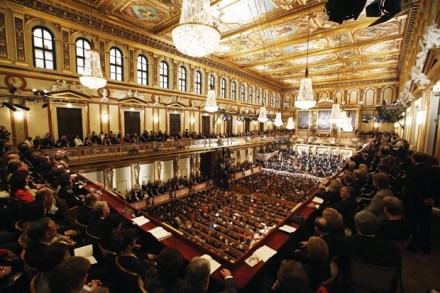
There is no finer city in which to hear music than Vienna. Or, to put it more felicitously, there is no finer city in which to listen to music for, as music-lovers know, there is a world of difference between hearing and listening. In the Imperial City, where most of the great composers in the Austro-German tradition lived and worked, you are on your mettle. As the Italian guide said to the American tourist who had popped into the Uffizi gallery in Florence to find out if there was anything worth seeing: ‘Here, signore, it is not the paintings that are on trial.’ In Vienna there is no greater musical pleasure than sitting in the golden hall of the Musikverein, particularly when the Vienna Philharmonic is playing.

The splendour of the English carol

From our UK edition

The most celebrated Christmas carol, ‘Silent Night’, belongs to Austria. Father Joseph Mohr, the priest at Oberndorf, a small village near Salzburg, wrote it in 1818. Set to music by Franz Xaver Gruber, it was sung on Christmas Eve at the church of St Nicholas: Stille Nacht, heilige Nacht. It is the most celebrated carol for it captures the stillness of a winter night, the wonder of Christ’s birth, and the hope of all mankind for peace. But when it comes to the celebration of that birth nothing surpasses the English tradition. On Christmas Eve millions of people all over the world will tune in not to Oberndorf but to King’s College, Cambridge, where the choristers take us, as they have since 1918, through the Festival of Nine Lessons and Carols.

Chorus of approval

From our UK edition

Is there anything more essential to one’s well-being than the sound of an English choir at evensong? Is there, for that matter, any word in our language more beautiful than ‘evensong’, with its evocation of architecture, music and the Anglican liturgy? This is the season to reflect on such matters. On Christmas Eve, Cambridge once again becomes the centre of the world for two hours as the choristers of King’s College celebrate the famous festival of carols and lessons and two days before, in St John’s, Smith Square, the choir of Trinity College will perform Bach’s Christmas Oratorio with the Orchestra of the Age of the Enlightenment. Moreover, they will be singing from memory.

Don’t flog a dead parrot – leave Monty Python in the past

From our UK edition

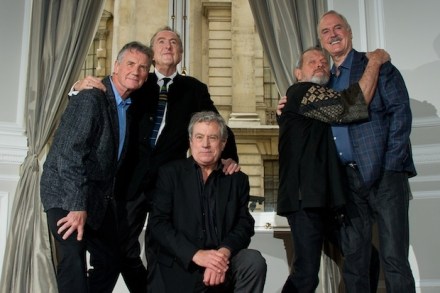
You can’t go home again, as the Americans say. It’s worth running that adage, taken from Thomas Wolfe’s unfinished novel of 1938, past those zealots who snapped up 20,000 tickets for Monty Python’s reunion at the O2 Arena in 43 seconds when they went on sale this week. Four more dates were immediately inked in, with more to follow, one feels certain, as Python fever covers the globe. What a horrible prospect. The Python team are not horrible. Goodness gracious, no. In four BBC series between 1969 and 1974 they were often outstandingly funny, in a way that nobody had been funny before.

Berlin: The best bar in the world

From our UK edition

‘You were at the Fish, I hear,’ a Berlin friend told me. ‘I didn’t know you were an old hippie.’ Reputations can cling to places as they do to people. Zwiebelfisch, the Berlin inn he was referring to, has not been a haunt of hippies — radicals, more like, ‘the class of ’68’ — for at least two decades. Now it is a home for all-comers; because, in the eyes of some of us who have spent years staring through a glass darkly, it is the finest bar in Christendom. Sited on the northwest side of Savignyplatz, west Berlin, it may not strike the person wandering along Grolmanstrasse as a world classic. That is part of its charm. Zwiebelfisch does not draw attention to itself.

‘I was an arrogant 18-year-old’: Daniel Harding on growing up

From our UK edition

‘Have a look at this,’ says Daniel Harding, goggle-eyed, between mouthfuls of salmon. The pictures on his smartphone show Claudio Abbado, one of his mentors, conducting the Berlin Philharmonic in Schumann’s Scenes from Faust, a work that gets closer to Harding’s musical personality than any other, which he has just recorded with the Bavarian Radio Symphony Orchestra, and which he will conduct in Berlin in December. ‘Doing his prep’, you might call it. If ever a conductor was a child of his time it is Harding, who, at 38, remains engagingly youthful and ever curious, hence the use of technology to augment his preparation. It is 20 years now since the schoolboy trumpeter left Chetham’s School in Manchester, trailing clouds of glory.

The Morrissey myth

From our UK edition

Drinking in Corbières, a dingy basement bar just off St Ann’s Square, 30 years ago, you could bump into any number of groovy young Mancunians clustered round the jukebox, talking about the bands they were going to form. One night, as the jukey played ‘The Cutter’ by Echo & the Bunnymen, all evening long it seemed, there was talk of an odd duck from Stretford called Steven Morrissey. Nobody knew him but his name was in the wind. Soon he had formed The Smiths with a guitar player, Johnny Marr, whose sweet pop sound complemented, or supplemented, his partner’s predominantly sour words. For three years the collaboration worked, so long as you felt, as many teenagers have always felt, that the world was jolly unfair, and your place in it uncertain.

Blitz Requiem première in St Paul’s

From our UK edition

Of all folk memories the Blitz remains one of the most enduring. In the autumn of 1940 the Luftwaffe strafed London on 57 consecutive nights, leaving (if that is the word) 20,000 dead and whole streets pounded to rubble. ‘You do your worst,’ Churchill told the Hun, ‘and we shall do our best.’ Noël Coward put it another way: ‘Every blitz, your resistance toughening, from the Ritz to the Anchor and Crown. Nothing ever could override the pride of London town.’ London prevailed, and the spirit of the capital was captured in the memorable image of St Paul’s Cathedral standing proudly untouched amid the smoke and fire of a city under nightly bombardment. Francis Warner was only three when Hitler’s hordes came calling that September.

Has Test Match Special lost its wits?

From our UK edition

There’s a 13th man at the table at Lord’s this week as England resume the Ashes contest with Australia, which began so thrillingly at Trent Bridge, where England prevailed by 14 runs. For the first time in half a -century, -Christopher Martin-Jenkins is not present to renew one of the great rituals of the English summer. ‘CMJ’, who passed away on New Year’s Day at the less than grand age of 67, was always going to be missed and listeners to Test Match Special, the programme he adorned with his balanced commentaries, are cursing Time for being so vicious in his reaping. The graveyard, it is said, overflows with people once thought to be irreplaceable.

Interview with the musician Paul Lewis

From our UK edition

Being an English pianist must be a lonely calling at times. There is no native tradition like the ones that, say, German or Russian musicians are heir to, so many superb pianists have been unjustly overlooked. It used to be said of John Ogdon that, had he been born Ogdonski, in Minsk rather than Mansfield, his profile would have been greater. Perhaps; but would he have been a finer musician? If you were born in Huyton, the son of a docker, the odds against gaining international recognition are greater still. Yet, in his 42nd year, that is where Paul Lewis stands today as he approaches the final furlong of a three-year survey of Schubert.

The Hagen Quartet: Bracing Beethoven

From our UK edition

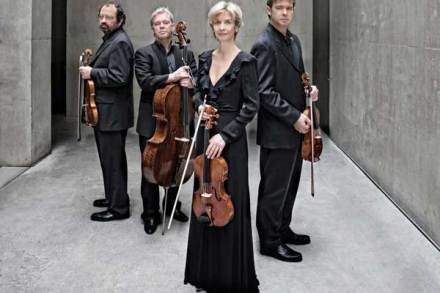
Established 32 years ago in Salzburg, the Hagen Quartet can fairly be described as venerable. It may be said equally fairly that brothers Lukas and Clemens Hagen, their sister Veronika, and Rainer Schmidt, are playing better than ever. The opening pair of concerts in their Beethoven cycle at Wigmore Hall in January were remarkable for the freshness as well as the beauty of their playing, and their return next week (19 and 20 April) to the world’s greatest hall for chamber music should not be missed. Now that the Alban Berg Quartet is no more, the Hagen, along with the Takács, are the supreme performers of Beethoven. There is a high-born, almost patrician quality to their music-making, which has sometimes been mistaken for emotional detachment.

Parsifal at Salzburg Easter Festival

From our UK edition

To hear Christian Thielemann conduct the Dresden Staatskapelle in Wagner’s ‘stage consecration play’, in Salzburg at Easter, proved a musical experience that could only deepen anybody’s love of this extraordinary opera. To see it was another matter, as it often is. But let us first praise the musicians who, guided by their conductor, gave it wings. At six minutes under four hours (battle-hardened Wagnerians will appreciate the timings) this was not a long Parsifal.

Tom Courtenay vs fame

From our UK edition

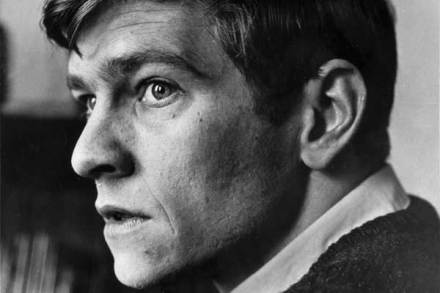
‘You can’t talk about what might have been,’ says Tom Courtenay, reflecting on an acting career that blazed like a meteor the moment he left drama school and is now in its sixth decade. ‘The things you might have done, the films you might have made. I just didn’t feel comfortable with the world of international cinema. I saw a bit of it, the so-called hellraising and what have you, and realised it wasn’t for me’. Not talking about the things he chose not to do doesn’t mean there is nothing to talk about.

In praise of Bryan Ferry

From our UK edition

Francis Lee, the barrel-chested footballer who banged in goals for Bolton Wanderers and Manchester City, was my first idol. Billy Wilder, Johnny Mercer and Philip Larkin rank among the heroes of my maturity, though nobody will ever displace Chekhov and Schubert at the head of the table. But the vicar’s son who went up to public school in 1972, hoping to find a pop group he could call his own, stumbled upon the man who lit up his adolescence 40 years ago this month: Bryan Ferry. On the first day of November that year, during the half-term break, I walked into Rare Records in Manchester and handed over £1.75 for the first LP by Roxy Music. I hadn’t heard a note, yet it seemed the right thing to do.

What Federer isn’t

From our UK edition

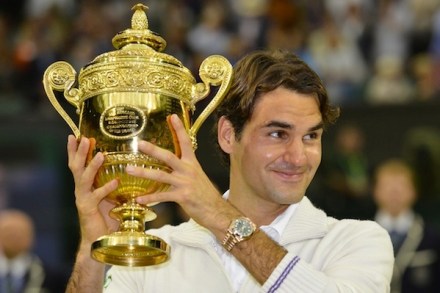
This summer, like so many others in the past decade, belongs to Roger Federer. By reclaiming the men’s singles title at Wimbledon, after giving Andy Murray a set start, the peerless Swiss revealed what true greatness looks like in sporting togs. Seven times a Wimbledon champion, 17 times a winner of Grand Slam events: his record compels not so much admiration as awe, and it will surprise nobody if, next month, he retains the Olympic title he won four years ago. He is, by general assent, the greatest of all tennis players, standing a cubit taller than Rod Laver, the Australian champion of the Sixties, who was at centre court to witness Federer’s latest achievement.

Notes from Salzburg

From our UK edition

Gratefully we cast our bread upon the blue-green waters of the Salzach to give thanks to this festival city. Across the river the famous castle stands fortress over the old town. On the terrace of the Cafe Bazar one hears the tongues of France, Italy and Spain as well as Austria, because this is old Europe. Not ‘European’ as defined by the EU, European as in the Arnoldian sense, handing on from one generation to another the best that has been thought, or said, or done. There is a European way of living, and it is easy to find it here. ••• No city of comparable size (150,000 souls) enjoys so elevated an international ranking. That Mozart was born here has something to do with it, even if he longed to get away.

The alternative Olympic song book

From our UK edition

The song list drawn up for the opening ceremony of the Olympic Games is a disgrace. Surely everybody knows that by now, but then what can you expect when the selection is made by a pair of disc jockeys? There is nothing that reflects our nation's love affair with the sea, no acknowledgement of our bawdy humour, no hymn or carol, no G and S, and the brass band appears somewhat bathetically only in the theme tune to Coronation Street. You could pop into any snug bar in the kingdom, and find a pair of sozzled old topers who could run up a better list. The obsession with pop music of the past 20 years has blinded this hapless pair to the immense treasure-trove of British music, going all the way back to Tallis and Byrd.

Whispering death

From our UK edition

It is midsummer, and England are playing the West Indies at cricket. The teams have completed a three-Test series, which England won 2-0, and they are now playing five matches of 50 overs a side, a form of the game that suits the big-hitting Caribbean batsmen. You would have thought that West Indian supporters would be flocking to the ground, yet they are staying away in their thousands. At Lord’s, Trent Bridge and Edgbaston, which staged the Test matches, the West Indian supporters could have arrived on a decent-sized bus. Returning to Lord’s last week, for a one-day game against Middlesex, played in excellent weather, you could count the black faces on the fingers of four hands.

Roy of the reader: swapping novels with my friend Roy Hodgson

From our UK edition

The last time I met Roy Hodgson, at Le Café Anglais, Rowley Leigh’s restaurant in Bayswater, I drew a king from the pack. I presented Roy — the West Bromwich Albion and now England manager — with Colm Tóibín’s wonderful novel The Master. Roy smiled as he laid down an ace: ‘Is this the one about Henry James? I’m afraid I’ve read it.’ Make that one-all. At a previous lunch I had given him Stefan Zweig’s masterpiece, Beware of Pity, a novel so close to my Habsburg heart that I wanted him to love it, too. It is the sort of book that defines character, never mind literary taste. ‘Magnificent,’ he told me a few weeks later.