Michael Henderson

What pundits could learn from Sky cricket

From our UK edition

A great Test match at Headingley on Tuesday, the first of five this summer against India, brought a famous victory for England’s cricketers. Required to make 371 – a target they had surpassed only once in history – they got there at 6.30 p.m. on the fifth afternoon for the loss of five wickets. It was a thrilling occasion, to which the Indians contributed five centuries. No team, in any first-class match, had ever supplied five century-makers and lost. What a triumph for Ben Stokes, the captain, who asked India to bat on the first morning. No challenge, it seems, is beyond them.

The pretentiousness of the pop critics

From our UK edition

Pop music criticism, said Frank Zappa, was the work of people who can’t write, about people who can’t talk, for people who can’t read. Half a century later and he’s still right. Although pop is essentially a juvenile art form – its clearest strength and most obvious weakness – that doesn’t stop reviewers pumping up performers as though Johann Sebastian Bach had decided to form an all-star band with Beethoven and Brahms. The Three Bs! Sign ’em up! The current pop reviewers for the Times and the Telegraph, Will Hodgkinson and Neil McCormick, clearly think they bear witness to giants. Like Pinky and Perky, these mature teenagers can trill ‘we belong together’, batting balls over the net in a contest of perfumed superlatives.

The bitter end of bitter

From our UK edition

‘Another pint of bitter, love, when you’re ready.’ To those of a certain age the request slips off the tongue like the opening line of a sonnet. A pint of bitter is as English as the first cuckoo of spring or the last rose of summer. It brings to mind a pub, the people in it, and that social phenomenon which binds us to those we trust – the round. And, of course, one pint may lead to another. Television adverts used to be full of jolly pint-swillers. Whitbread ‘Big Head’ Trophy Bitter was ‘the pint that thinks it’s a qua-art’. Tetley of Leeds, a big player in those days, introduced viewers to their ‘Bittermen’, with the declaration: ‘You can’t beat ’em.

The glorious elitism of Glyndebourne

From our UK edition

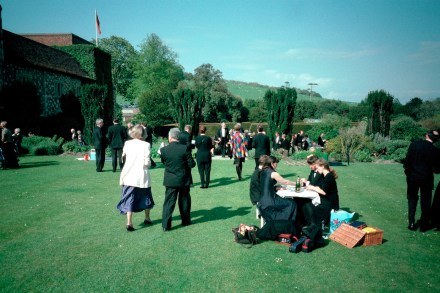
There is nowhere in May more beautiful than England with the hawthorn out, the clear light and a thousand shades of green. And there is nowhere more beautiful in England than Glyndebourne, the Sussex opera house between the Downs and the coast. Every visit to the ancestral pile of the Christie family brings joy and we lucky folk who caught the new production of Parsifal were granted double rations. Wagner’s final music drama is a first for Glyndebourne and completes a triptych of the Master’s late work, following productions of Tristan und Isolde and Die Meistersinger von Nürnberg. As Larkin wrote of Sidney Bechet: ‘Oh play that thing!

Trent Alexander-Arnold and the wrath of Anfield

From our UK edition

Trent Alexander-Arnold is a gifted footballer. Twice he has helped Liverpool become champions of England. He was also an important member of the team that became champions of Europe, and he has played 33 times at right back for England. Alexander-Arnold is still only 26. His race is nowhere near run. He has, one may safely say, power to add. And how did Liverpool supporters receive him when he came on as a second-half substitute against Arsenal over the weekend? Touched by the sun, thousands hooted their disapproval. The ‘Anfield faithful’, to borrow one of those sentimental phrases that come so easily to lazy scribes, let the player know that he could, in fact, walk alone. Charmers all.

What happened to BBC Radio 3?

From our UK edition

The decline of Radio 3 makes a sad story. Established in 1967 to reflect the world of classical music, and high culture in general, it has become a swamp of mediocrity, peopled by presenters who might feel more comfortable on a pick ’n’ mix stall. Every day, in almost every way, it seems determined to forfeit the goodwill of listeners who remember what public service broadcasting used to sound like. Last week, building up to International Women’s Day, the station fluttered its feathers like a randy peacock. The Kanneh-Mason family, those latter-day Von Trapps, were on parade, and there were lashings of featherweight female composers. In the case of Florence Price, a favoured daughter, featherweight is possibly a division too steep.

Simon Schama is a bore

From our UK edition

When Herbert von Karajan was at his celestial height in the 1960s, juggling conducting duties at the Berlin Philharmonic, the Vienna State Opera and the Salzburg Festival, his musicians liked to tell a joke. ‘Karajan gets in a taxi, and the driver asks, “Where to?” Karajan says, “It doesn’t matter, they want me everywhere.”’ Not bad for a German joke. You want to dump on Trump? Send for Schama! A fresh look at Rembrandt? There’s a professor at Columbia who knows everything! Who is the Karajan of our day, hopping from gig to gig with the assurance of the born maestro? It must be Simon Schama, historian supreme, and transatlantic darling of the telly. You want to dump on Trump? Send for Schama! A fresh look at Rembrandt?

Erling Haaland could never match Denis Law

From our UK edition

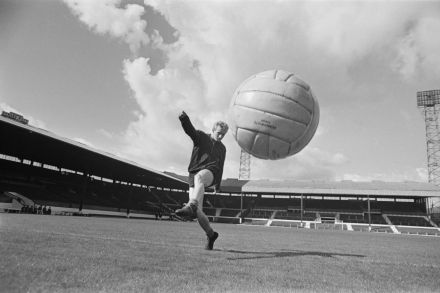
‘Talent is plentiful’, said Laurence Olivier. ‘Skill is much rarer’. Although the great actor was talking about the stage he was really acknowledging the nature of what Ken Tynan called ‘high definition’ performance. And in the world of football, there were few performers so highly defined as Denis Law. The tributes paid to ‘the Lawman’, who died on Friday at the age of 84, may surprise those too young to have seen him play for Manchester United. He kicked his last ball 51 years ago, retiring in 1974 after representing Scotland at the World Cup. Fans raised on that overheated global phenomenon, the Premier League, must take on trust the evidence supplied by those who caught him in his pomp.  Was he that good, the once and future ‘King’ of Old Trafford? Oh yes.

So long, Bob Dylan

From our UK edition

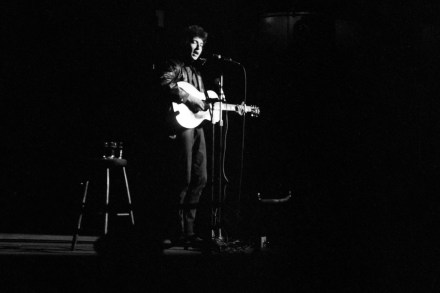
‘We have heard the chimes at midnight, Master Shallow.’ Bob Dylan took his leave of our shores last week at the Royal Albert Hall, with 5,000 people cheering him on a victory lap. Dylan is 83 and too frail to stand unsupported for long. He occasionally needs notes for his lyrics, but he will never surrender. I’m a performer, he seemed to say throughout every minute of the hour and 40 minutes he was on stage, and performers perform. I’m a performer, he seemed to say throughout every minute of the hour and 40 minutes he was on stage, and performers perform It's fairly clear we won’t see him again. The three nights at the Kensington Bowl ended the British leg of his Rough and Rowdy Ways tour, which seems to have been going on since the relief of Mafeking.

Man City’s ‘victory’ against the Premier League leaves me cold

From our UK edition

‘The Premier League has the champions it deserves’, read the message from an old pal in May, after Manchester City’s footballers had won the title for the fourth year running. Like many of England’s leading clubs, City are the playthings of foreign billionaires We were both born within two miles of Maine Road, where ‘the City’ played until 2003. We used to attend matches at that grim yet strangely characterful home, standing in ‘the Kippax’, a cavernous terrace which ran the length of the field. In the days before football became fashionable many grounds were lavatorial.  City didn’t win anything in those days.

Is the Proms safe with the BBC?

From our UK edition

We’re approaching the home straight at the Proms. There are three weeks to go at the world’s greatest festival of music, and Prommers are counting down the days until the famous orchestras of Berlin, Munich and Prague reach the Royal Albert Hall. The friendly foreign invasion has become the traditional climax to eight weeks of music-making. It’s been a better season in the hall than the one which appeared on paper, though the opening night was vin ordinaire. Clara Schumann’s pretty piano concerto turned out to be pretty dull. It’s not a piece that should open a festival of this pedigree. The pianist was a poor choice, too, but we shall come to Isata Kanneh-Mason anon.

Real fans will be cheering the Netherlands

From our UK edition

Ian Chappell, the flinty Australian captain, has said that after giving cricket to the world the English did nothing further to develop the game. That original gift, it might be argued, was a fairly significant bequest, but Chappell could point to postwar history. In his lifetime, cricket has been shaped by Australians, West Indians, and Indians. Oh, the ghastliness of English football! The dim players, detached from the world in their grim mansions It is harder to challenge the view that the English, who codified the laws of Association Football in 1863, have spent the last century resting on their oars. The national team has won the World Cup once, in 1966, when the country served as host, and has never won the European Championship, though that may change this week.

Now’s the time to join the Garrick

From our UK edition

Amelia ‘Milly’ Gentleman, the Guardian’s fearless investigative reporter, has ‘exclusively’ revealed some of the Garrick Club’s filthy secrets. It’s ‘the final gasps’ of ‘a declining patriarchal elite’, she writes. ‘A lonely slice of an England that forgot to modernise’. All over the country, fair-minded folk must be thinking ‘woo, when can I join?’   Clubmen tend to talk about the subject that occupies people wherever they gather: the crooked timber of humanity What is the club’s original sin? To be an all-male enclave deep within the Establishment, which draws its members from the Inns of Court, Whitehall, Westminster, the City, and the West End. What? Judges, senior civil servants, bankers, and famous mummers quaffing and scoffing at the Garrick!

Has Bazball rescued — or ruined — cricket?

From our UK edition

The date 6 June 2021 was a grim day for cricket. As the world was adjusting to life after the pandemic, a Lord’s Test with a full house felt like ‘the promised kiss of springtime’. And so it was, until the final afternoon, when New Zealand challenged England to make 273 in 75 overs. The gesture was recognised as generous by all except the faint souls in the England dressing room, rendered frit by the possibility of defeat. Thousands of spectators, bewildered by five hours of fearful prodding, withdrew their consent. Cricket has witnessed more profound changes in the past decade than in the previous 100 years With ‘the Hundred’ looming like a pirate’s galleon, caution was inexplicable.

In praise of burning pianos

From our UK edition

How are non-conformists assimilated within the cloistered walls of tradition? Richard Wagner supplied the best answer to the age-old question in Die Meistersinger von Nürnberg, when Hans Sachs, the cobbler-poet, reconciles youthful ardour with the wisdom bestowed by experience. Learn from the masters, he tells the townsfolk, if you want to start afresh. It was a lesson absorbed by all the great modernists. Stravinsky, Joyce, Eliot, Picasso, Kandinsky and the rest of the gang understood thoroughly what had come before. Alas, it is a lesson as yet unlearned by Kate Molleson, whose pleading on behalf of ten musical misfits is unlikely to ‘open our ears’, despite her best intentions. For who do we open them to?

The hateful Hundred is putting cash before cricket

From our UK edition

The cricket at Cheltenham last week was reassuringly old--fashioned. In the last session of the fourth day, Gloucestershire’s bowlers took a flurry of wickets to beat Middlesex by 164 runs, watched by spectators who assemble at the college ground each July from all over England to renew a much-loved ritual. ‘Proper cricket,’ said a chap from Slad. They were joined, as ever, by dozens of retired cricketers, fed and watered in one of the tents which ring this most evocative of grounds. Little wonder those former players choose to hold their annual gathering in Cheltenham. Here they can bear witness to championship cricket as they once played it; a traditional sport matured over 150 years of custom. The Cheltenham festival is almost a definition of England in high summer.

Down by the bayou

From our UK edition

The king of crime fiction doesn’t need a crown and sceptre. Every page proclaims his majesty. James Lee Burke has now written 22 books about Dave Robicheaux, but readers will never grow tired either of him, his friend, Clete Purcel, or the bayou. The New Iberia Blues should be greeted with a fanfare of trumpets: it is a masterpiece. As his admirers know, Burke is no mere crime novelist. His lifelong subject is the fall of man, and Louisiana is his demi-Eden. The swamp maples and mossy oaks, the pinks of dawn and the crimson hues of twilight are all here again, though the mood is autumnal, for Robicheaux’s sand is ‘shrinking, shrinking’. It is appropriate to quote the man from Dorset, because Burke’s bayou is no less evocative than Hardy’s Wessex.

The jewel in the Renaissance

From our UK edition

‘Remember, signor,’ the gateman at the Uffizi Gallery is reputed to have told the sceptical American tourist who wondered whether it was worth popping in for an hour before lunch; ‘here it is not the paintings which are on trial.’ Florence has never been on trial. It passed the test centuries ago, when America was a land of forest and sage bush. Whatever sins its citizens have committed, the world will never withhold its thanks from a city-state that has come to define civilisation, and still tries to uphold civilisation. The world beats a path to Ghiberti’s baptistry doors but Florence remains Florence: proud, to the point of rudeness and indomitable.

Forever stumped

From our UK edition

‘There can be no summer in this land without cricket’, wrote Neville Cardus, whose rhapsodic vision of the game lies at the heart of its mythology. Hardly a week goes by without somebody borrowing a phrase or two from Cardus to emphasise what cricket means to England — or used to mean, for the modern landscape is very different. When England play their 1,000th Test match this week, against India at Edgbaston, it will be the only first-class cricket to be found anywhere in the kingdom. Between 28 June and 19 August, seven plump weeks at the height of summer, spectators have only one round of championship matches to enjoy, so dominant has the one-day (‘white ball’) game become.

A man of many parts | 24 May 2018

From our UK edition

A most excellent fellow, Roger Allam. On the stage he brings dignity to all he does, in the noblest traditions of the British theatre. Off it he is a fully paid-up member of the human race, admired by his comrades as a man no less than as an actor. Some mummers, eager to let off steam, occasionally let the side down. Allam is the sort of chap — star and team player — who brings the profession into repute. Three times a winner of an Olivier award, twice for best actor, he is currently to be found on the West End stage in The Moderate Soprano, David Hare’s touching portrait of John Christie, Etonian, commissioned officer, eccentric and founder of Glyndebourne Festival Opera on the family estate in Sussex. ‘I’ve grown to love the man,’ says Allam.