Michael Henderson

Spirit of Schubert

From our UK edition

Every December, for the past decade, I have laid a red rose on Schubert’s grave in Vienna’s southern cemetery. What began as a gesture has become a custom, a way of giving thanks to the most lovable of all composers. Schubert may not be as great as Bach or Beethoven, who established the musical language of an entire culture, but no musician has touched so many hearts. Blessed Franz, holy Franz, immortal Franz: nobody, not even Mozart, has inspired such love. The details of Schubert’s last days are well known. In March 1827 he walked behind Beethoven’s coffin and, upon repairing to a local inn to toast the memory of the older man, raised his glass ‘to the one who shall follow him’.

Man about the House

From our UK edition

They are lighting the candles at Covent Garden to honour one of the great singers of our age. Thomas Allen (as he was then) first appeared on the stage of the Royal Opera House in 1972, as Donald in Billy Budd, when Benjamin Britten was alive and his opera not nearly so highly thought of as it is today. This month he returns as a long-standing knight of the realm and, so far as our major house is concerned, a monarch to boot. He may have been born a commoner in County Durham 68 years ago but the baritone’s stellar international reputation granted him regal status many moons ago, particularly in the great Mozart roles.

Those I have loved

From our UK edition

It is one of Kenneth Tynan’s most-quoted observations. After seeing the first night of Look Back in Anger at the Royal Court Theatre in May 1956, the mustard-keen young critic could not contain his enthusiasm for John Osborne’s play. ‘I could never love anybody,’ he wrote, ‘who did not want to see Look Back in Anger.’ On reflection it says rather more about Tynan’s eagerness to be recognised than about the play’s merits, but the phrase has entered the language. From this distance Look Back in Anger does not look particularly lovable. It was important, certainly, in the sense that there were English plays before, and after, and they were not the same. Tynan was the first man to spot Osborne’s talent, and wanted others to know it.

Top of the pops

From our UK edition

Michael Henderson talks to John Wilson, whose obsession with songs from the golden age of musicals led him to form his own band ‘People think I am an expert on musicals,’ says John Wilson, in his pleasing Geordie voice, ‘but that is something I am certainly not. I am obsessed with songs, written by professional songwriters for professional singers in the golden age of popular music.’ It is a nice distinction, to restore the original meaning of that adjective, and Wilson, who is currently touring the country with the orchestra that takes his name, is proving as good as his word. This is a fruitful time for the Gateshead-born conductor, one year short of his 40th birthday.

Deadly game

From our UK edition

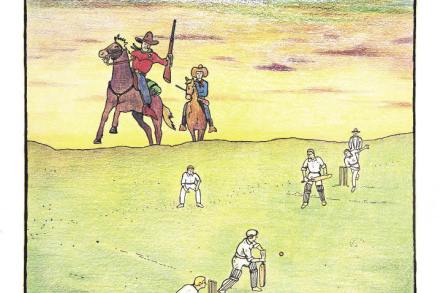
When, two decades ago, the cricket historian David Frith published his study of cricketing suicides, By His Own Hand, the book carried a foreword by Peter Roebuck. As an opening batsman, Roebuck had represented Millfield School, Cambridge University and Somerset, where he was the club captain. In his second life he proved to be a quirky, provocative journalist, initially for the Sunday Times and eventually for several newspapers in Australia, where he lived by choice. Now he too is dead, at 55, by his own hand. What is it about cricket and suicide? In his research Frith found more than 80 cricketers who snuffed out their life-light, including some of the most celebrated men who have adorned the game. Arthur Shrewsbury, immortalised by W.G.

Let’s hear it for elitism

From our UK edition

Last month, on the most glorious of autumnal days, the world of music paid its last respects to Robert Tear. St Martin in the Fields was packed and the singing, as you can imagine, was magnificent. Sir Thomas Allen gave us Kurt Weill’s ‘September Song’, Sir John Tomlinson contributed Sarastro’s aria from Zauberflöte, and Dame Janet Baker read a poem by Emily Dickinson. It was some send-off. Bob deserved no less. As well as being one of the finest tenors of the past half-century, he was a man of many accomplishments, not the least of which, as his agent Martin Campbell-White said in a splendid address, was being ‘effortlessly friendly’. A fellow of King’s, Cambridge, he was utterly without malice or pomposity.

Let’s hear it for elitism | 26 October 2011

From our UK edition

The latest issue of The Spectator is out tomorrow, but we thought that arts blog readers might appreciate a very special preview of one of its articles. It's by Michael Henderson, and takes umbrage with Katherine Jenkins' recent comments about opera and elitism: Last month, on the most glorious of autumnal days, the world of music paid its last respects to Robert Tear. St Martin in the Fields was packed and the singing, as you can imagine, was magnificent. Sir Thomas Allen gave us Kurt Weill’s ‘September Song’, Sir John Tomlinson contributed Sarastro’s aria from Zauberflöte, and Dame Janet Baker read a poem by Emily Dickinson. It was some send-off. Bob deserved no less.

Great expectations | 1 October 2011

From our UK edition

Talent, said Laurence Olivier, was plentiful; skill much rarer. Genius in a performing artist is rarer still, but Olivier had it, and so does Christian Gerhaher, the Bavarian baritone, who presented Schubert’s three song-cycles last week in a series of concerts that brought splendour to Wigmore Hall. This was singing of exceptional quality and, just as important, exceptional intelligence. Expectations were high, yet Gerhaher met them in full.  By the time he concluded Schwanengesang, with its terrifying vision of Der Doppelgänger, he had taken the audience on an emotional journey they will hold dear when winter nights draw in, and for many winters to come. Daniel Harding, the English conductor, calls Gerhaher ‘the greatest musician I have ever worked with’.

One day at Headingley

From our UK edition

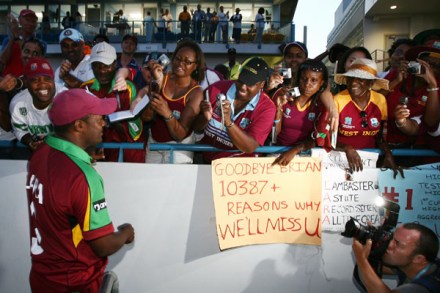
The cyclist sipping wine on the terrace of a Thames-side pub may not look much like an English hero, but anybody who loves cricket knows that he ranks only slightly lower than the angels. Thirty years ago Bob Willis bowled England to the most astonishing victory in the history of Test cricket, taking eight for 43 on a mad Monday in Leeds that held the nation entranced. Three decades later, not even the superb performances of the current England players, who are facing India at the Oval this week as the No. 1 team in the world, can efface the memories of ’81.‘Botham’s Ashes’, they call that series, with reason.

Seeking closure

From our UK edition

What makes an appropriate encore? And when should they be performed? Michael Henderson on the art of finishing well After a recital at Wigmore Hall earlier this year András Schiff performed an encore, as pianists often do. Normally a Bach prelude or a Schubert impromptu will round the evening off. It is part of the unspoken contract between performer and listener, to prove that both parties have been paying attention. On this occasion, however, Schiff played the arietta that closes Beethoven’s last — and greatest — sonata, the Op. 111 — all 18 minutes of it! It made thematic sense, because he had devoted the concert to sets of variations by five composers. So, he clearly thought, I shall conclude matters with the most famous variations of them all.

The great game

From our UK edition

Some of the best writing about sport in recent years has been done by journalists who tend their soil, so to speak, in another parish. Peter Oborne’s biography of the Cape Town-born England cricketer Basil D’Oliveira was a deserved prize-winner, and another political scribe, Leo McKinstry, has done justice to Geoffrey Boycott, the Charlton brothers and Sir Alf Ramsey. Now he has turned his attention to a batsman whose career, measured in statistics, goes a long way to justifying the subtitle of this latest book, ‘England’s Greatest Cricketer’. Born in a modest Cambridge home, admired by all who played with him for his decency as well as his skill at the crease, Hobbs was the first professional cricketer to be knighted.

Philip Roth is a genius

From our UK edition

Carmen Callil isn’t ‘Prizes are for little boys,’ said Charles Ives, the American composer, ‘and I’m a grown-up’. That, most sensible people will agree, is a proper response to the world’s follies. But when a gong is struck for outstanding work over a lifetime then there can be merit in it, which is why we should give three resounding cheers to the judges who last week awarded the Man International Booker Prize to Philip Roth. Those bent on mischief might go further, and offer an additional cheer to those judges who, by nominating Roth, outraged their fellow arbiter Carmen Callil.

Never say goodbye

From our UK edition

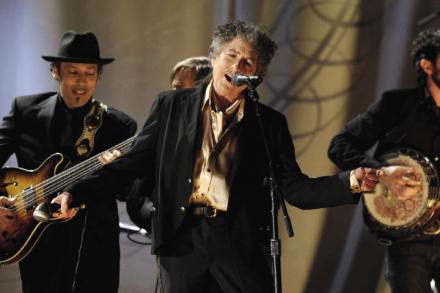
Michael Henderson considers the perennial appeal of Bob Dylan Bob Dylan turns 70 next week, and from Duluth to Derby they will blow out the candles. The Minnesotan troubadour, who rolled into New York the year Kennedy became president, will pay no attention. As he wrote in one of his better songs, ‘Me, I’m still on the road, heading for another joint.’ Like Ken Dodd, a different kind of minstrel, he will stop performing only when they put him in a box. It would not be unkind to say he has been crooning like a 70-year-old for some while. His voice, which was never an instrument of beauty, lost whatever shape it may have had at least a decade ago.

Unexpected passion

From our UK edition

Michael Henderson talks to Alfred Brendel about his favourite films ‘I belong to no tribe,’ says Alfred Brendel, taking tea at his home in Hampstead, surrounded by some of the books that constitute his vast library. ‘I follow no creed, subscribe to no ideology, and I despise nationalism. I have lived in many places but wherever I go I am a paying guest.’ If you wanted a single statement to do justice to this extraordinary man, that would do pretty well. It is the expression of a well-travelled, well-read, well-versed man in language that is by turns serious and playful. With his immense learning, worn lightly, and a highly developed sense of irony and absurdity, Brendel is every inch a central European.

Acting up | 9 April 2011

From our UK edition

‘We’re asked to console with each tremulous soul who steps out to be loudly applauded. Stars on opening nights weep when they see their names in lights. Though people who act, as a matter of fact, are financially amply rewarded, it seems while pursuing their calling their suffering is simply appalling.’ The mummers couldn’t deceive Noel Coward. The Master knew all their ways, for he lived among them, as dramatist, actor, director and — as we have seen — songwriter. What a shame he’s not still with us, for the furore surrounding the ‘savage cuts’ announced last week by the Arts Council of England might have prompted him to add a few more humorous verses about the vanity of certain thesps. Not all; by no means.

The great redeemer

From our UK edition

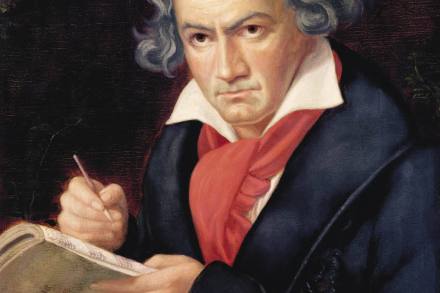
Assailed on all sides by cultural vacuity, we are more than ever in need of the life lessons of Beethoven, argues Michael Henderson We do not, as a rule, meet all our loves at once. Those things which mean so much to us in our emotional maturity did not always strike us as special presences. Indeed, we may have been suspicious of, or felt hostility towards, some of the supreme works of art, and the minds that created them: many an indentured Wagnerian had first to leap through the magic fire of his initially forbidding music dramas. Last week, therefore, as I sat in the drawing-room of a house in central London, and watched Gábor Takács-Nagy, founder of the Takács Quartet, supervise another superb ensemble, the Belcea, as they played through Beethoven’s Op.

Ravishing beauty

From our UK edition

For a composer who gave so much delight to so many, Ravel occupies a peculiar position in 20th-century music. Stravinsky’s famous description, ‘the most perfect of Swiss clockmakers’, still brings a chortle of recognition, though it might be better to think of him as a jeweller. In the words of one critic, writing in 1906, his music conceals tenderness ‘beneath a surface of flashing, kaleidoscopic precious stones’. Either way, he has probably been patronised by kind words more than any other great composer. Some listeners, it is clear, never forgave him for not being Debussy. Even the famous piano concerto, premiered in 1932, five years before his death, was damned by Constant Lambert as being ‘in painfully good taste throughout’.

Speaking for England

From our UK edition

Three decades ago, when his voice still carried some weight, Malcolm Muggeridge reckoned that social historians of the future would be puzzled by the middle-class death wish that took root after the second world war. It isn’t hard to see what he meant. Some time in the Sixties, politicians and other public figures who had been educated at private schools started to feel ashamed at their good fortune, and moved heaven and earth to deny those who followed the advantages they had enjoyed. Today the consequences are evident wherever one looks. Thousands of lives have been blighted by the doctrine of bogus egalitarianism, and we are all weaker for it. But it is not just schools and universities where standards have been eroded.

Bookselling for illiterates

From our UK edition

Books, we are continually told, particularly by people who rarely read them, are going the way of the dodo. The shops that sell them are closing at an alarming rate, as the dreaded Kindle takes over, and public libraries are being encouraged to turn themselves into noisy ‘resource centres’, designed to attract the feckless young. One might think that the places continuing to sell such glorious, old-fashioned things would be eager to put their best foot forward. So a post-Christmas visit to the biggest bookshop in Europe, as Waterstone’s in Piccadilly likes to call itself, was an eye-opener. It’s a shop that evokes happy memories. I have been buying books there for years, including a complete set of Proust, which is not so much a purchase as an investment for life.

Life of pie

From our UK edition

‘To tell the truth,’ says Peter Myers, his Cumbrian baritone untouched by four decades of life in Manhattan, ‘I’m glad it’s all over.’ By ‘it’ he means Christmas and new year, when Myers, the sausage-knotter and purveyor of pies to New Yorkers, is at his busiest. ‘It was bedlam. They began to queue up outside the shop ten days before Christmas for their mince pies. We were making thousands a day. Bedlam, I tell you’. Myers of Keswick, the shop on Hudson Street that bears the name of his birthplace, is not your average butcher’s.