Michael Henderson

Philip Roth was a genius

From our UK edition

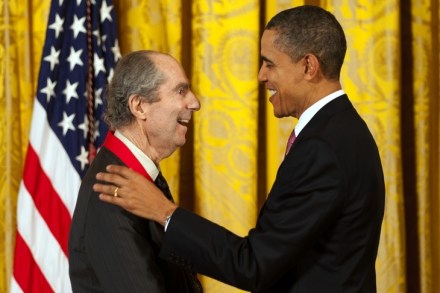
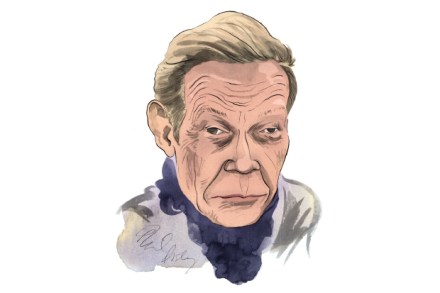
Philip Roth has died at the age of 85. Here Michael Henderson pays tribute to the American author: It became a cliché to call him the finest living American novelist, but that is what he was. Philip Roth stands without embarrassment alongside the major figures of American fiction, going back to Mark Twain, and while few literary reputations are set in stone it is a fair bet that his novels will be read generations from now by book-lovers who want to understand something of Jewish American life in the second half of the 20th century. It is certainly true that only Jewish America could have produced a writer like Roth.

A familiar Ring

From our UK edition

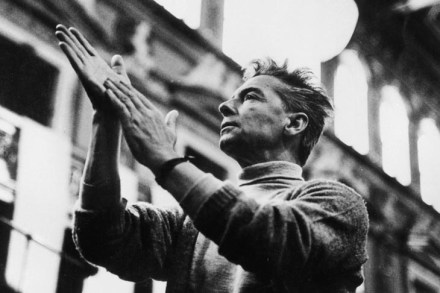
Herbert von Karajan established the Easter Festival in Salzburg 50 years ago with a production of Die Walküre that is now considered legendary. In the sense that legends are rooted in memory, and mythological in substance, that much is true. Which is not to damn it with faint praise. This revival, staged by Vera Nemirova, was an old-fashioned representation of Wagner and many Wagnerians, having endured too many modern presentations of the Master, who has suffered more than any other composer from the curse of Regietheater, would say that that is No Bad Thing. A giant ash tree, in whose hollowed-out trunk reside Hunding and Sieglinde, was the single, simple prop for the first act.

The ghastly truth

From our UK edition

Paul Johnson once wrote that the ability to say ‘really’ in 12 different ways was the birthright of every true Englishman, or woman. Really rather awkward. Really dreadful. Really good effort. Really went to town. I know him really well. Did she really mean that? I mean, really! One word, many meanings. ‘Ghastly’ is another thoroughly English word, in tone and application. Its meaning is implicit, rather than explicit. It’s a word shared by people of similar (that is to say, well-brought-up) backgrounds, which makes it all the more surprising that Tatler magazine, which likes to present itself as a guide for metropolitan smarties, has declared ghastly to be ‘unfashionable’.

Hit for six | 5 January 2017

From our UK edition

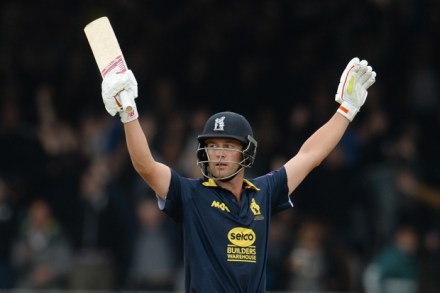
Frankie Howerd, the great, if troubled, comedian, was once asked whether he enjoyed performing. ‘I enjoy having performed,’ he replied. Many top-level sportsmen would say something similar. The satisfaction often comes from having done, not always from doing. Performing offers great rewards, but it can also leave scars that heal slowly, and sometimes not at all. Jonathan Trott was a good cricketer in a strong England team that beat Australia in three successive series between 2009 and 2013. Batting at No. 3, he made a century on his Test debut, and became a dependable, if minor-key player in the side that vanquished the Aussies Down Under two winters later. Then, frightened by the view, he fell off that high wire.

Kenneth Clark was much better at opening people’s eyes to great art than Marxist John Berger

From our UK edition

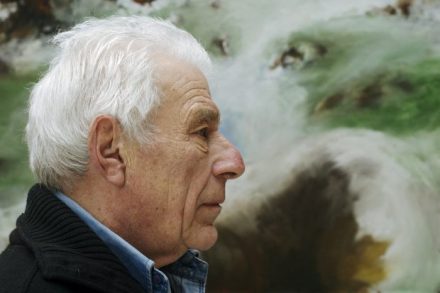
It is one of those interesting quirks of postwar cultural history that John Berger, who has died at the age of 90, could have presented Civilisation. Millions of viewers who saw that unsurpassed – unsurpassable – series when its 13 programmes were screened in 1969, or who have seen it in the years since, associate Civilisation with Kenneth Clark – Lord Clark of Civilisation, as he came to be known. But Berger might easily have got the nod. It was Clark himself who suggested to Michael Gill, Civilisation's producer, that he might find a more congenial ally in Berger, who, of course, three years later presented Ways of Seeing as a counter-argument to Clark's magisterial televisual essays. Who knows?

What is it with luvvies wanting to be ‘thoroughly European’?

From our UK edition

There's always room for one more on the Ship of Fools, and Tom McCarthy has just booked his passage. The English novelist (no, I'd never heard of him, either) has written a column of such fifth-form puerility in the Guardian that it marks him down as a dunce of exceptional plumage. Make way, Hadley Freeman. Step aside, Zoe Williams. There's a chap out there who can give you five yards and still beat you to the tape. McCarthy, of Dulwich College and Oxford (just right for the Guardian), is in a frightful bate because he has been invited to a bash at the Royal Academy to celebrate British art and feels insulted: 'Like all English-language writers, I'm thoroughly European'. To prove it he refers to Shakespeare and Joyce, who, like him, would have voted to remain part of the European Union.

A pint of Landlord

From our UK edition

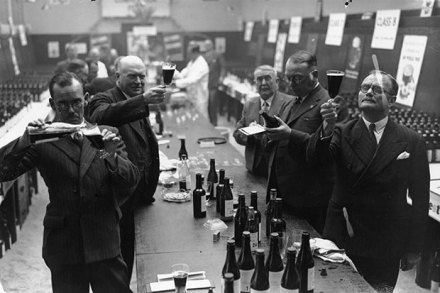
Down a lane in Keighley, in the old West Riding of Yorkshire, they brew the greatest ale in the world. Timothy Taylor, the brewery is called, or Timmy Taylor’s, should you feel sufficiently familiar. And if you are not familiar with the ales brewed by these modest Yorkies, you’re clearly not an ale-drinker. And if you’re not an ale-drinker then you’re not properly English. Modest Yorkies, you may say: that’s a new one. Well, they are. If you excel as they do, you don’t need to blow your own trumpet. Paul Tortelier, the great French cellist, was once asked to nominate his favourite composer. ‘Bach,’ he replied. ‘And if any musician tells you different, he is lying.

Munich notebook

From our UK edition

It has been a strange week in Munich; a week of deceptively cool mornings, afternoons hot enough to fry eggs and thunderstorms at twilight that have turned streets into streams. A week of reflection, too, capped last Sunday by a service of remembrance in the cathedral, attended by Chancellor Merkel, to honour the nine young lives taken in the shooting at the shopping centre which sent a tremor through Freistaat Bayern, and through the nation. One more tremor. It has been the summer of terror in Bavaria. Würzburg, Ansbach, Munich. But the Münchners have taken it well, in as much as one ever takes these things well. Along Maximilianstrasse, where the rich play; by the banks of the River Isar; in the lush acres of the Englischer Garten, life has gone on.

Northern overexposure

From our UK edition

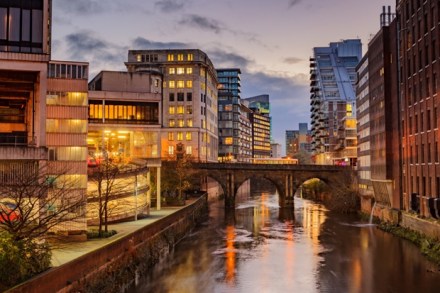
‘The shortest way out of Manchester,’ it used to be said, ‘is notoriously a bottle of Gordon’s gin.’ But that was a long time ago, when ‘Cottonopolis’ was the pivot of the Industrial Revolution, the British empire was expanding and life was cheaper. They tend not to drink gin any more in the bars on Deansgate. It’s cocktails, a tenner a pop. The hub of George Osborne’s ‘Northern Powerhouse’ is a much-changed city. Now they’re queuing to get in, even though the super-duper HS2 rail link may go no further than Crewe, which is in Cheshire, and only southerners think Cheshire is in the north. Andy Burnham is the latest chap to set his cloth cap at the rainy city.

Anarchy in the EU

From our UK edition

It is 40 years since the band in which Paul Cook banged the drums, the Sex Pistols, detonated a bomb called punk in post-war Britain. The shards are still visible. ‘We didn’t have a manifesto, but we wanted to shake things up,’ he says. ‘We didn’t know how much we would shake things up. Music, art, design, films, books. Punk is part of our social and cultural history.’ We’ve come a long way from 1976, when Johnny Rotten and ‘Anarchy in the UK’ put the pestilential Pistols on the front pages, and a prime-time television exchange with Bill Grundy, the celebrated ‘fucking rotter’ interview, kept them there. The band were banned from concert venues, denounced in every bully pulpit, damned as ‘illiterate sub-humans’.

Elite sport

From our UK edition

England’s cricketers won a remarkable Test match inside three days in the bearpit of Johannesburg, a victory that put them 2-0 up in the four-match series, with only the final Test to play. It is a remarkable achievement by Alastair Cook’s team because, before a ball had been bowled, most judges expected South Africa, the No. 1 ranked team in the world, to claim another triumph by right. In particular it was a wonderful tribute to the public schools which sharpened the skills of the star players. Stuart Broad, who took six prime wickets for only 17 runs on that tumultuous third day, reducing South Africa’s second innings to rubble, was educated at Oakham. Joe Root, who scored a superb century to set up the bowlers, was a sixth-former at Worksop College.

My Schubert cruise was a transport of delight

From our UK edition

'Blessed Cecilia, appear in visions to all musicians, appear and inspire…' Auden wrote his words for the young Benjamin Britten, who was born on St Cecilia’s Day, and who set them to music, but his poem would also be a tribute to the composer that Britten admired above all others except Mozart. Franz Schubert was born in Vienna in 1797, and died there 31 years later. ‘Let us honour the memory of a great man,’ he said, raising a glass after attending Beethoven’s funeral in March 1827, ‘and drink to the man who shall be next.’ Schubert died in November the following year, having heard only one concert in his lifetime dedicated to his own work. It is the greatest loss in the history of music, yet what riches he left behind!

Alastair Cook is world class. Steven Gerrard isn’t

From our UK edition

This time last year, England’s cricketers were 2-0 up against Australia, two thirds of the way towards their third consecutive series victory in sport’s longest-established international contest. Not quite top of the world, they were nevertheless a good team in the prime of life. The winter before, they had beaten India on their dusty pitches, quite an achievement. What a falling-off there has been. Since the turn of the year, England have lost Graeme Swann, Jonathan Trott and Kevin Pietersen, three senior players, to retirement, mental fragility and banishment. They have also lost seven of their last nine Test matches, the latest against India at Lord’s by 95 runs after they had won an important toss.

The glorious bohemia of Prague

From our UK edition

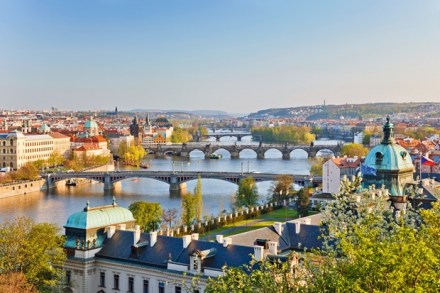
Prague, ‘Golden Prague’, is rich in music, architecture, glassware, pilsner and natural beauty. It is one of those places where laughter — innocent laughter, not laughter in the dark — seems a natural response. It is a playful city, and the people are playful, gentle, ironic. Above all, it is a writer’s city. The Czechs, be they Bohemians or Moravians, have literature in their blood. Tomas Masaryk, the first president of Czechoslovakia, was a philosopher. Vaclav Havel, first president of the Czech Republic, was a playwright. And the most famous Czech of all, Franz Kafka, whose name has entered the language, was a novelist; a Prague novelist. ‘The spirit of Prague’, Ivan Klima has called it.

Michael Gove and the Ship of Fools

From our UK edition

It lies rigged and fully masted in the harbour, the Ship of Fools, and soon it will be crewed by some of our favourite smarties. Is that Shami Chakrabarti charging down the gangway? It surely is. Those sharp elbows can be identified at a hundred paces. And is she being followed by Hanif Kureishi and Jeanette Winterson, eyes bulging like bulldog's whatsits? Yes, they're on parade too. Oh look, they've brought a chaplain, the Rev Giles Fraser. All shipshape and Bristol-fashion. Now they can cast off. If a person may be judged by the quality of his enemies then Michael Gove currently rests only slightly lower than the angels.

Why Ken Loach hasn’t made a decent film since Kes

From our UK edition

‘If you want to send a message,’ said Sam Goldwyn, one of the men who invented Hollywood, ‘try Western Union.’ It is such a well-known remark one might have thought every film-maker of the past 50 years would have acted upon it. Not Ken Loach. After half a century of fighting the good fight on behalf of the poor, down-trodden working class, the grumpy Oxford graduate releases his latest film this week. Don’t all rush at once. Jimmy’s Hall, it will surprise nobody who has followed Loach’s work over the years to learn, pits an Irish socialist recently returned from America against the local priest.

Robin Ticciati interview: ‘Glyndebourne is a festival where the established and the fresh exist together’

From our UK edition

Glyndebourne, the great Sussex opera house, celebrates its 80th anniversary this summer. Hurrah! There is a new music director, too, 31-year-old Robin Ticciati. Hurrah! And he opens the season next week with a new production of Der Rosenkavalier directed by Richard Jones. Hurrah! Summer has begun. There are few finer plots of land to be on a summer evening in England than Glyndebourne, one of those rare places where the frame matches the picture. In a way Glyndebourne defines England, and summer, and the way the English take their pleasures. Certainly there is no place like it anywhere else. People at other festivals may love music just as much, and swank even more, but Glyndebourne, with or without black tie, is a world apart.

Notes on… Venice

From our UK edition

For Henry James it was ‘the repository of consolations’. Wordsworth, an earlier visitor, called it ‘the eldest child of liberty’. Ruskin, a self-professed ‘foster child of Venice’, dedicated his life to study of its buildings. Wagner and Browning died there, and Stravinsky left instructions to be buried there, in the island cemetery of San Michele, near the resting place of his friend and mentor Sergei Diaghilev. La Serenissima, which held the East in fee, is a city like no other. The Republic of Venice may have been ground under Bonaparte’s jackboot in 1797 but its independence of mind and spirit lives in the hearts and minds of all who have fallen under the spell of Saint Mark’s winged lion.

What now for ENO?

From our UK edition

It has been a bracing start to the year at English National Opera. David Alden’s production of Peter Grimes, praised to the skies for the musical performance under Edward Gardner, returned to the Coliseum. Next up is Rigoletto (reviewed on page 50), directed by Alden’s twin, Christopher. Then comes Rodelinda, in another new production (or co-production, as is often the way these days) by Richard Jones. Audiences will be particularly keen to see the Rigoletto, and not shy of making comparisons with the celebrated production by Jonathan Miller, which has finally been stood down after three decades. Hanging over everything, though, is the realisation that Gardner’s time at the helm is drawing to a close.

And the prize for most fatuous awards ceremony goes to…

From our UK edition

‘Prizes are for boys,’ said Charles Ives, the American composer, upon receiving the Pulitzer in 1947, ‘and I’ve grown up now.’ He was using humour to make a serious point, but it would be lost on many people today. Never has there been a lusher time for self-congratulation; when all, as in Alice in Wonderland, must have prizes. Not all prizes are bad. Nathan Filer, who collected the Costa last month for his first novel, The Shock of the Fall, was granted the kind of recognition that evades most first-time authors. The Costa, formerly the Whitbread, has a reputable tradition that values quality of writing above commercial considerations. Good for them. There was a time when you could say something similar about the Evening Standard drama awards.