Michael Gove

Michael Gove

Michael Gove is editor of The Spectator.

Labour’s ‘Sabrina Carpenter’ Budget

18 min listen

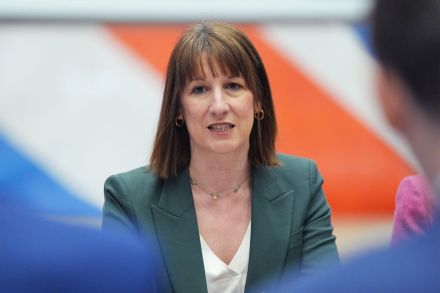
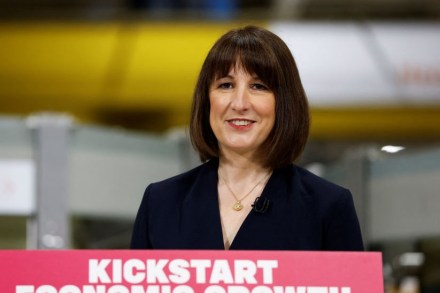
This afternoon, Rachel Reeves made good on her promise to deliver only one fiscal set piece per calendar year by announcing what is widely being considered a Budget... this precedes a spending review in the summer and an actual Budget in the autumn. The headline is that the Chancellor had to find £15 billion in spending cuts to restore her headroom and keep within her own ‘ironclad’ fiscal rules. This comes after the Office for Budget Responsibility (OBR) confirmed that the £9.9 billion margin she left herself in the autumn has disappeared. The OBR has also halved its growth projections – bleak news for the government.
Were we right to lock down? Michael Gove vs Toby Young

31 min listen

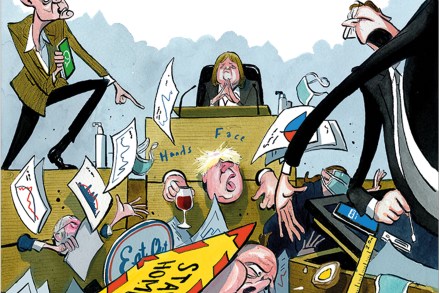
On 23 March 2020, then-Prime Minister Boris Johnson announced the unprecedented decision to put the UK into lockdown. To mark the 5th anniversary of that announcement this weekend, we have brought together our editor Michael Gove – then a cabinet minister under Boris – and our associate editor Toby Young – an ardent critic of the decision – to answer the question, was the government right to lockdown? Was the decision a necessary and reasonable health measure based on the available evidence at the time, or a significant and avoidable violation of civil liberties by a government that was meant to champion liberal freedoms? You decide. Produced and presented by Patrick Gibbons.

Can the Tories save their education legacy?

13 min listen

Bridget Phillipson's schools bill is back in the Commons today. The scope of the legislation is twofold: firstly, looking at the welfare of children in schools and secondly at fundamentally changing the landscape of secondary education by doing away with academies (and with it the legacy of the previous Conservative government on education). The plan has been read by many – including former head of Ofsted Amanda Spielman, who joins today's podcast – as Labour pandering to the unions and perhaps even prioritising the adults (union members) over the children. Amendments to the bill will be debated this afternoon, including a Tory amendment that would ban phones in schools, although it doesn't seem that Labour is in the mood to make any concessions. What is motivating Labour?

Is Keir Starmer a Tory?

19 min listen

Slashing the winter fuel allowance, maintaining the two child benefit cap, cutting international aid, cutting the civil service, axing NHS bureaucracy, possibly slashing welfare expenditure... you'd be forgiven for thinking the Conservatives were in power. But no, these are all policies pursued by the current Labour government. So on today's Saturday Shots Cindy Yu asks Michael Gove and James Heale, is Keir Starmer a Tory? While Michael admits to giving Starmer a 'painful' two cheers, he does say there is historic precedent for Labour governments enacting right-leaning measures: from Jim Callaghan's migration policies to the economic ones of Ramsay MacDonald. How has Starmer got away with it? And what does his premiership of pragmatism tell us about the future direction of Labour?

Colin Freeman, Harry Ritchie, Max Jeffery, Michael Gove and Catriona Olding

35 min listen

On this week’s Spectator Out Loud: Colin Freeman explains how Islamic State tightened its grip on the Congo (1:23); Harry Ritchie draws attention to the thousands of languages facing extinction this century, as he reviews Rare Tongues: The Secret Stories of Hidden Languages by Lorna Gibb (8:00); Max Jeffery highlights the boxing academy changing young lives (13:20); Michael Gove reflects on lessons learned during his time as education secretary (20:30); and, Catriona Olding introduces the characters from her new Provence-based memoir club (29:27).  Produced and presented by Patrick Gibbons.

Why Labour are abolishing NHS England

10 min listen

It was widely briefed that the main focus of Sir Keir Starmer’s speech in Yorkshire today was his plan to do away with Whitehall red tape. What was kept under wraps was the Prime Minister’s plans for the NHS – specifically to scrap NHS England. In a bid to tackle bureaucracy in the health service, the PM this morning told reporters that the ‘arms-length NHS’ needed to go – adding that the move will ‘shift money to the front line’ and free the health service to ‘focus on patients’. What's the point of abolishing NHS England? And are Labour 'doing the things that the Tories only dreamed of'?  Lucy Dunn speaks James Heale and Michael Gove.  Produced by Oscar Edmondson and Megan McElroy.

The lessons I learned as education secretary

Education secretary really is the best job in government, though sometimes it doesn’t feel that way. Lives can be transformed – hopefully for the better – as a direct consequence of the decisions you make. But you are also firmly in the firing line. There’s no other area of public policy in which everyone is an expert. Only a minority of us have fought in battle, studied the impact of nitrates on chalk streams or contemplated what the correct approach to sanitary and phyto-sanitary standards should be in a trade agreement. But we’ve all been to school. And we all have views – sometimes deeply entrenched and emotional – about what constitutes a good education and therefore sensible education policy.

Who would be a Conservative? – Kate Andrews vs Michael Gove

25 min listen

It’s a special (and emotional) edition of Coffee House Shots this Saturday because it is the last with Kate Andrews on this side of the Atlantic. She joins our editor Michael Gove and political correspondent James Heale for a debate on ideology. Kate – a liberal, in the classical British sense – explains exactly why she is not a Conservative and the various tenets that distinguish liberalism from conservatism, whilst Michael makes the case for being a 'pessimistic' conservative.  So, what makes a liberal? What makes a conservative? And was Hayek right in saying that while there isn’t much to choose between these two political creeds, ultimately, they need each other.  Produced by Cindy Yu and Oscar Edmondson.

Could spending cuts herald a ‘winter of discontent for Labour’s left’?

15 min listen

With reports of ‘billions’ of spending cuts earmarked for the Chancellor’s Spring Statement, taking place later this month, Michael Gove and Kate Andrews join Katy Balls to discuss what exactly Rachel Reeves could cut. With little fiscal headroom and sluggish forecasts of growth, Reeves doesn’t appear to have many options. It’s likely that welfare will be targeted, and there are reports that Labour’s opposition to new North Sea oil & gas licences may be relaxed to stimulate growth. One area that appears off the table is defence – following the Prime Minister’s pledge to cut international aid in order to fund new defence spending.  But if all these reports are true, where does that leave Labour ideologically?

Coffee House Shots Live with Robert Jenrick and Jonathan Ashworth

70 min listen

The Spectator’s Katy Balls, Michael Gove and Kate Andrews were joined by special guests Robert Jenrick and Jonathan Ashworth for a live podcast, recorded at the Emmanuel Centre in Westminster. The main topic of discussion was, of course, Donald Trump, whose inauguration has ushered in a new world disorder. His ‘shock and awe’ foreign policy has sent Europe scrambling as it tries to work out who will be responsible for ensuring its security in the future. We have seen a move away from the idealism that has defined foreign policy in the last decade and towards ‘realism’, with countries committing to boots on the ground and greater defence spending. Are Labour right to increase their defence pledge?

Is Kemi Badenoch a ‘realist’?

15 min listen

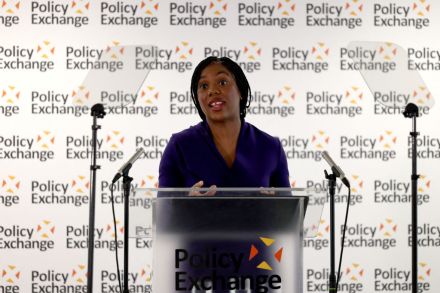
Kemi Badenoch has today given a major speech outlining the Conservatives’ commitment to ‘realism’ in their foreign policy. She said, ‘You cannot help others if you cannot help yourself’, and that the sovereignty and strength of Britain matters 'above all'. She also pressed Keir Starmer to push defence spending north of the 2.5 per cent target and – as if it was all choreographed – the prime minister dutifully has, announcing in the Commons that defence spending will reach 3 per cent of GDP by the end of the next parliament. This will come at the expense of the foreign aid budget, another suggestion that the leader of the opposition made in her speech today. What is realism? Is it right to forgo our commitment to overseas aid?

Starmer’s Scottish headache

11 min listen

'What does a party get after nearly two decades in office, collapsing public services, an internal civil war and a £2 million police investigation? Re-election again - perhaps with an even bigger majority', writes James Heale in The Spectator this week. He's talking about the SNP, whose change in fortunes has less to do with their leader John Swinney and more to do with the collapse of support for Scottish Labour and their leader Anas Sarwar. Who could benefit from the increased fragmentation of voters in Scotland? Will demands for more time, money and attention cause even more issues for Rachel Reeves? As Scottish Labour meets for its conference in Glasgow this weekend, James and editor Michael Gove join Katy Balls to discuss the dynamics between Holyrood and Westminster.

New world disorder, cholesterol pseudoscience vs scepticism & the magic of Dickens

48 min listen

This week: the world needs a realist resetDonald Trump’s presidency is the harbinger of many things, writes The Spectator’s editor Michael Gove, one of which is a return to a more pitiless world landscape. The ideal of a rules-based international order has proved to be a false hope. Britain must accept that if we are to earn the respect of others and the right to determine the future, we need a realist reset. What are the consequences of this new world order? And is the Trump administration reversing the tide of decline, or simply refusing to accept the inevitable? Michael Gove joined the podcast alongside the geopolitical theorist Robert Kaplan, author of the new book Waste Land: A World in Permanent Crisis.

Get real: the harsh lessons of our new world disorder

Sir Roger Scruton may not be the Prime Minister’s favourite author. Apparently Keir Starmer prefers Victoria Hislop. But as he prepares to travel to Washington next week, the PM could scarcely spend his time more wisely than burying his nose in The Uses of Pessimism – and the Dangers of False Hope, one of Scruton’s most powerful works. ‘Hope untempered by the evidence of history is a dangerous asset,’ says Scruton. ‘And one that threatens not only those who embrace it, but all those within range of their illusions.’ That is the correct, pessimistic, cast of mind with which to approach not just the war in Ukraine, and America’s ongoing commitment to Europe, but to international affairs overall.

Keir Starmer and the lost art of political oratory

31 min listen

From Churchill to Thatcher to Blair to Farage, Parliament has seen some truly fantastic rhetoricians over the years. But last week came the news that – in a bid to improve his own oratorical skill – Keir Starmer employed a voice coach: former actress Leonie Mellinger. Mellinger has been at the centre of a fresh COVID-19 row, as the Prime Minister considered her to be so important that she qualified as a ‘key worker’ in 2020, visiting Labour headquarters in a mask on Christmas Eve 2020 to advise Starmer. It is not an unusual practice to employ a voice coach to improve a politician’s public speaking, and on the podcast Michael Gove is joined by his own former coach Graham Davies, to recover the lost art of political rhetoric.

The inside story of Labour under Starmer

23 min listen

This week saw the publication of Patrick Maguire and Gabriel Pogrund’s new book Get In: The Inside Story of Labour Under Starmer. It’s the second in their tell-all series of books on the Labour Party’s ups and downs and has caused quite a stir in Westminster. From the revelations about Keir Starmer’s voice coach causing a fresh lockdown row to Michael Gove’s secret dinner with Morgan McSweeney, there is a high-density of scoops and disclosures. Can Labour blame the failures of their first 100 days on Sue Gray? And is there such a thing as ‘Starmerism’? Patrick and Gabriel sat down with Katy Balls and Michael Gove to discuss. Produced by Megan McElroy and Oscar Edmondson.

Labour’s Irish insurgent, Germany’s ‘firewall’ falls & finding joy in obituaries

48 min listen

As a man with the instincts of an insurgent, Morgan McSweeney, Keir Starmer’s chief of staff, has found Labour’s first six months in office a frustrating time, writes The Spectator’s editor Michael Gove. ‘Many of his insights – those that made Labour electable – appeared to have been overlooked by the very ministers he propelled into power.’ McSweeney is trying to wrench the government away from complacent incumbency: there is a new emphasis on growth, a tougher line on borders, an impatience with establishment excuses for inertia. Will McSweeney win his battle? And what does this mean for figures in Starmer’s government, like Richard Hermer and Ed Miliband? Michael joined the podcast alongside Starmer’s biographer Tom Baldwin. (1:04) Next: can the AfD be stopped?

Morgan McSweeney is urging Keir Starmer to go for the kill

Morgan McSweeney, the Prime Minister’s Chief of Staff, does not immediately display the demeanour of a disruptor. He speaks softly, picks his phrases with care, and cultivates an unassuming image. But underneath the sober blue suit are the scars of a streetfighter. As a young man, McSweeney came to political maturity fighting the hard left in Lambeth and the far right in Dagenham, winning back working-class voters to a Labour party that had forgotten its roots. He went on to secure last year’s landslide, gifting Keir Starmer a majority large enough to remake Britain. His style as an insurgent owes something to his background. He grew up in Ireland with parents who were activists in Fine Gael, the party that venerates the IRA mastermind Michael Collins as its founder.

Migration mystery, Ipso’s trans muddle & are you a ‘trad dad’?

46 min listen

This week: why don’t we know how many people are in Britain?How many people live in the UK? It’s a straightforward question, yet the answer eludes some of the nation’s brightest statistical minds, writes Sam Bidwell for the cover this week. Whenever official figures are tested against real-world data, the population is almost always undercounted. For example, in England alone, nearly 64 million patients are registered with GP practices – higher than the Office for National Statistics (ONS)'s estimated population of 58 million. Sam argues there are serious consequences for our society at large, including for tax, housing and our utilities. Who is to blame for this data deficiency? And why is Britain so bad at tackling illegal migration?

‘Props to Rachel’

12 min listen

Today was the day for Rachel Reeves, as she delivered her big growth speech in Oxfordshire. This was not this government’s first attempt to pivot towards a more business-friendly, growth-generating narrative, but it was its best effort. The headline announcement is, of course, a third runway at Heathrow, throwing her support behind the ‘badly needed’ expansion. However, a lot of what was announced will sound familiar to recently departed Tories, who laid the groundwork for Labour’s plans to properly connect the South East (or the ‘Oxford–Cambridge Arc’, as it has been repackaged). Will Rachel Reeves get her growth? Katy Balls speaks to Michael Gove and Kate Andrews. Produced by Oscar Edmondson.