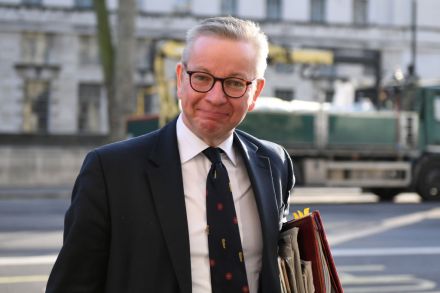
Michael Gove

Michael Gove

Michael Gove is editor of The Spectator.

Farmers won’t be quick to forgive Labour

12 min listen

Thousands of farmers descended on Westminster today to protest the inheritance tax changes proposed in Labour’s Budget. Amidst a sea of tweed and wellington boots, speeches and support came from the likes of Kemi Badenoch, Ed Davey, Nigel Farage and Jeremy Clarkson. To what extent is this just a fringe issue that the government will be able to brush off? Or has the issue exposed a rural blind spot for Labour? And how lasting could the damage be? Katy Balls and Spectator editor Michael Gove discuss with James Heale.  But first, William Moore has been out and about getting the views of farmers directly from the protest... Produced by Patrick Gibbons, Cindy Yu and Megan McElroy.

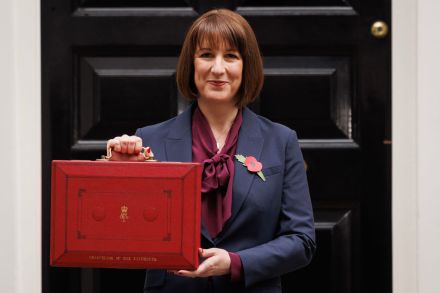
Taxes, tariffs and Trump: What lies ahead for Labour?

63 min listen

The Spectator's Michael Gove, Katy Balls, and Kate Andrews are joined by Paul Abberley, Chief Executive of Charles Stanley, to discuss and unpack Labour's first budget in 14 years. Now the dust has settled from the policies, key questions continue to arise. Can Labour create the growth it desperately needs? Why are farmers so upset with the budget? And can they define a working person yet?

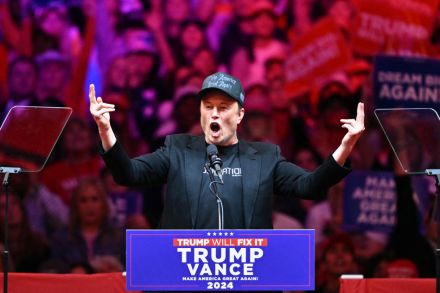
Labour vs Elon Musk

14 min listen

As Trump announces the appointment of Elon Musk to tackle US government efficiency, James Heale speaks to Katy Balls and editor Michael Gove about the dynamics of Labour's relationship with the tech billionaire. Musk had a public spat with Labour figures over the UK summer riots, the Center for Countering Digital Hate - co-founded by Starmer's Chief of Staff Morgan McSweeney - is facing a congressional investigation, and some Labour figures are even calling on the party to quit X/Twitter. Should Musk's closeness to president-elect Trump worry the Labour government? But first, the team discuss Health Secretary Wes Streeting's proposed NHS changes, and Liberal Democrat attacks on Labour's National Insurance employer increase. Produced by Patrick Gibbons.

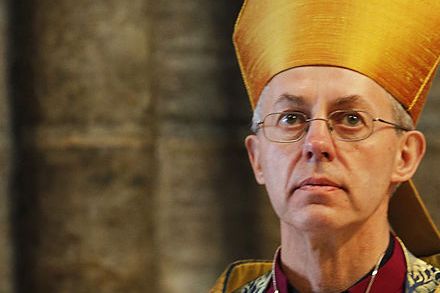
Welby resigns: crisis at the Church of England

18 min listen

After mounting pressure, the Archbishop of Canterbury Justin Welby has resigned. His resignation comes days after a damning report into the child abuser John Smyth who was associated with the Church of England. Welby was apparently made aware of the allegations in 2013, yet Smyth died in 2018 before facing any justice. Since the report was published, Welby and the Church have faced questions about the failure to act and the lack of urgency. The Spectator’s editor Michael Gove joins Damian Thompson to discuss what Damian calls ‘not just a shocking moment in the history of the Church of England, but in the history of English Christianity’.   Produced by Patrick Gibbons and Natasha Feroze.

Badenoch’s Trump card

16 min listen

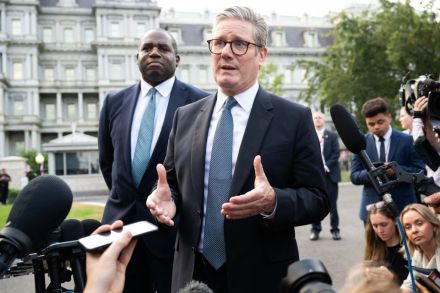
It’s happened. The scenario Labour politicians hoped would not come to pass is now a reality: Donald Trump is heading back to the White House. The official line from Labour is that everything is fine – they will work with whoever hold the office of president. That was the message from Keir Starmer at Prime Minister’s Questions as he congratulated president-elect Trump, and made a point of mentioning they had recently had dinner together. However – Kemi Badenoch focused on David Lammy’s past criticisms of Trump at PMQs. Is this a unique tension for the Labour government? James Heale discusses with Michael Gove and Katy Balls.

Badenoch wins: what next?

18 min listen

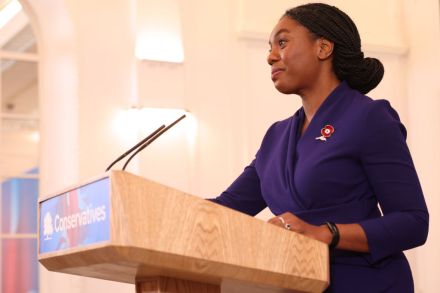
Kemi Badenoch has won the Tory leadership election. She beat Robert Jenrick in a tight race, winning 53,806 votes against his 41,318. What will a Badenoch opposition look like? What are her strengths? Her weaknesses? Cindy Yu speaks to Michael Gove and Katy Balls.

Labour’s low growth Budget

15 min listen

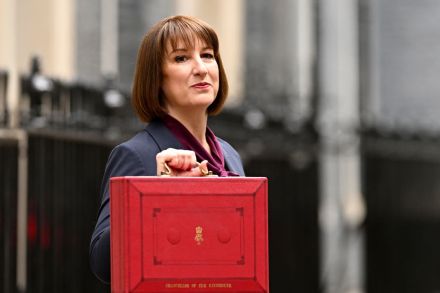
Rachel Reeves has announced that taxes will rise by £40 billion in Labour’s first Budget for 14 years. The headlines include: an increase in employers’ National Insurance contributions from April to 15 per cent, raising £25 billion; that the freeze on income tax and National Insurance thresholds will not be extended past 2028; that the lower rate of capital gains tax will be raised from 10 per cent to 18 per cent, and the higher rate from 20 per cent to 24 per cent; that fuel duty will remain frozen for the next two years; and the introduction of VAT on private school fees from January. The Chancellor didn’t want to surprise anyone with this Budget.

Sale of the century: why is the Kirk selling off hundreds of churches so cheaply?

27 min listen

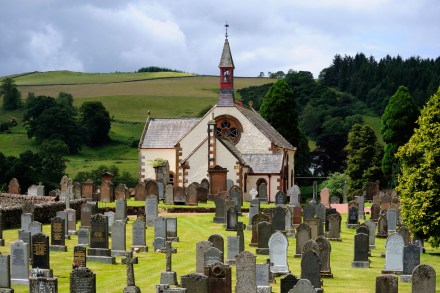
In this week’s Spectator, William Finlater reveals that some of the Church of Scotland’s most precious architectural heritage is being flogged off quickly, cheaply and discreetly. Most western denominations are being forced to close churches, but the fire sale of hundreds of Scottish churches is unprecedented in British history. In this episode of Holy Smoke, Damian talks to William about the Kirk’s apparently panicky reaction to losing half its members since 2000, and asks new Spectator editor Michael Gove – once a Church of Scotland Sunday School teacher – why his former denomination is staring into the abyss. Produced by Oscar Edmondson and Patrick Gibbons.

Michael Gove on prisons: Starmer is in the position of Bane

14 min listen

Another 1100 prisoners have been released today through the early-release scheme. How has this measure landed? With the news that former Conservative minister David Gauke will lead a review of prison sentencing, new Spectator editor Michael Gove joins Natasha Feroze and Katy Balls to discuss Labour's long term strategy. Can Labour learn lessons from America? Produced by Megan McElroy and Patrick Gibbons. Join The Spectator's Deputy Editor Freddy Gray for a special live recording of Americano on Thursday 24 October. You can buy tickets at spectator.com/electionspecial.

National Insurance: Starmer’s first big U-turn?

14 min listen

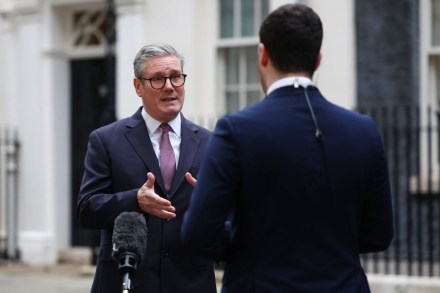
The Budget is not due for a fortnight, yet with every day that passes its contents seem to become clearer. This morning Keir Starmer gave an interview to the BBC where he twice refused to rule out a rise in employer’s national insurance contributions in the Budget. Instead, he repeatedly stressed that Labour’s manifesto promise was specifically that it would 'not raise taxes on working people'. Can Rachel Reeves afford a national insurance hike?  Oscar Edmondson speaks to Katy Balls and Michael Gove.  Produced by Oscar Edmondson.

Michael Gove, Max Jeffery, Christopher Howse, Robert Jackman and Mark Mason

31 min listen

On this week’s Spectator Out Loud: new Editor Michael Gove discusses his plans for The Spectator (1:08); Max Jeffery heads to Crawley to meet some of the Chagossians based there (5:44); Christopher Howse reads his ode to lamp lighting (12:35); Robert Jackman declares the Las Vegas Sphere to be the future of live arts (19:10); and Mark Mason provides his notes on the joy of swearing (26:50).  Produced and presented by Patrick Gibbons.

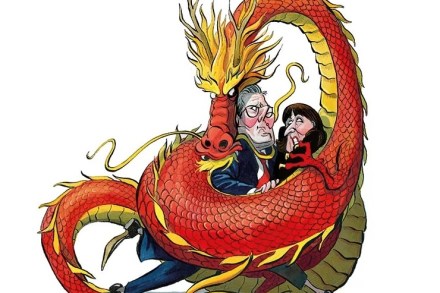
Labour’s China pivot, Yvette Cooper’s extremism crackdown & the ladies who punch

48 min listen

Successive governments have struggled with how to deal with China, balancing them as a geopolitical rival yet necessary trade partner. Recent moves from Labour have sent mixed signals, from the free speech act to the return of the Chagos Islands. Further decisions loom on the horizon. As Rachel Reeves seeks some economic wiggle room, can Labour resist the lure of the Chinese market? The Spectator’s Katy Balls, and visiting fellow at the European Council on Foreign Relations (ECFR) James Crabtree, join the podcast to discuss further (02:05). Plus: as the first issue under The Spectator’s new editor Michael Gove, what are his reflections as he succeeds Fraser Nelson? He reads an excerpt from his diary (19:05).

My plans for The Spectator

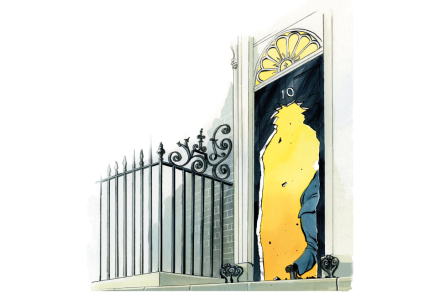
Shortly after Boris Johnson was selected as the Conservative candidate for Henley, he invited me to lunch at The Spectator. It was, he said, to be an intimate affair. The magazine’s then proprietor, Conrad Black, had made it known that he expected Boris to stand down as editor now that he was embarking on a political career. Speculation as to who might succeed him was intense among ambitious young journalists. And I was one of those at the time who harboured secret hopes. Was this invitation a sign of favour, a laying-on of hands, the anointing of an heir? On arriving at lunch I discovered that there were other guests. Three of them. All of whom were fellow hacks who had also been either tipped as Boris’s successor or had welcomed their names being canvassed.

Tory leadership: what on earth just happened?

13 min listen

Westminster is reeling from the shock result that James Cleverly has been knocked out of the Conservative Party leadership race, only a day after coming first in the previous round. Kemi Badenoch topped the poll, with Robert Jenrick second and only one vote behind her; Cleverly lost two votes. What on earth happened? To try and make sense of it all, Cindy Yu is joined by Katy Balls and new Spectator editor Michael Gove. Having worked with them all, what's his assessment of the candidates? Produced by Patrick Gibbons and Megan McElroy.

Politics as Ripping Yarns: the breathless brio of Boris Johnson’s memoir

It is, perhaps, hard to imagine a collaboration between Virgil and Captain W.E. Johns, a fusion of the Aeneid and Biggles Pulls It Off, but that is how Boris Johnson’s memoir reads. Our intrepid hero travels round the world, wooing Gulf potentates, sticking it to Vladimir Putin, snatching submarine contracts from under Emmanuel Macron’s snooty Gallic nose and then makes it home in time for some uniting and levelling up before settling down to a well-deserved glass of Tignanello. He also, like Aeneas, endures a thousand ordeals and makes himself father of the world’s greatest city (while also making some truly dreadful puns: ‘Was it H.J. Eysenck who gave me that idea? Eysenck it was...’).

How the Tories should address Britain’s future

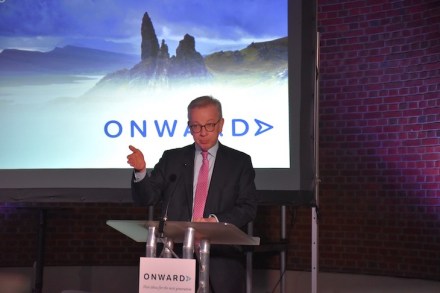
Michael Gove gave a speech at the thinktank Onward for the launch of its Future of Conservatism project today. Here is the text of his speech in full: The essence of Tory modernisation is to be true to the core principle of Conservatism – to deal with the world as it is, not as we might wish it to be. Conservative modernisation means applying enduring Conservative principles to our changing times and adapting policy to an altered world. The problems faced by Margaret Thatcher and Nigel Lawson – and indeed George Osborne and David Cameron – are different from the crises and challenges we face today. Today I want to outline four key challenges that I know the Onward team will wish to rise to. First, the world economy has changed.

‘It’s not conservative’: Gove’s verdict on Liz Truss’s economic plan

It was right of the Prime Minister to acknowledge that the fiscal event (the mini Budget) needs to be revisited. There needs to be a recognition of mistakes. But it’s still the case, on the basis of what the Prime Minister said this morning, that there is an inadequate realisation at the top of government at the scale of change required. So, yes: the energy package was the most important thing in the fiscal event. But 35 per cent of the additional money that we are borrowing is not to cut energy costs; it is for unfunded tax cuts. I’m profoundly concerned about that because there are two major things that are problematic with the fiscal event. The first is the sheer risk of using borrowed money to fund tax cuts. That is not conservative.

My Ibiza diary

You wait 11 years for a Tory leadership election and then three come along in quick succession. The first in which I had a vote was in 2005. In August of that year my candidate, David Cameron, was being told to fold his tents. The final choice was a foregone conclusion: it would be a battle between the big beasts, David Davis and Ken Clarke. The Cameroon cohort in parliament at that point was more notable for quality – Boris Johnson, George Osborne, Oliver Letwin, Nick Soames – than for quantity. They may have made a fine first eleven but it was a struggle to find a twelfth man (or woman). Cameron, however, was convinced he had to make his case; to tell the truth, do or die. He was determined the party had to modernise. Ditch its nostalgic bring-backery on grammar schools.

The privilege of public service

Michael Gove gave the Ditchley Annual Lecture on Saturday in which he discussed the responsibility of government and the need for Whitehall reform. The full speech is below. Writing in his Prison Notebooks, ninety years ago, the Italian Marxist thinker Antonio Gramsci defined our times. “The crisis consists precisely of the fact that the inherited is dying – and the new cannot be born; in this interregnum a great variety of morbid symptoms appear”. Gramsci’s analysis was developed between 1929 and 1935. The stability of the Edwardian Age – of secure crowns, borderless travel, imperial administrative elites and growing economic globalisation – was a memory. The inherited world of aristocratic liberalism had gone.

How I could get a better Brexit deal

There are things that we can do which will change the way in which we leave the European Union. I think that, critically, one of the issues that caused me particular concern has been the backstop. And it's caused me concern for two reasons. One: as a unionist I didn't like the idea of any part of our United Kingdom being treated differently. And secondly, as someone who wants all the benefits of a full Canada-style free trade agreement I don't want to have some of the customs restrictions that are implicit in the backstop. At the last meeting at Strasbourg, the EU committed to working alternative arrangements that could obviate the need ever to go into the backstop or could ensure that we actually replace it.