Melanie McDonagh

Melanie McDonagh

Melanie McDonagh is an Irish journalist working in London.

Yes, let’s have a debate about teenage sex and the age of consent

Whenever a public figure says ‘we need a debate here’, as Professor John Ashton, president of the Faculty of Public Health, has done, it doesn’t need much in the way of translation to interpret this as ‘let’s change the law to my way of thinking’. Alas, the debate he started so promisingly about lowering the age of consent to 15, with the pundits all nicely worked up, has been nipped cruelly in the bud by Downing Street. David Cameron, possibly taking the view that he has upset social conservatives quite enough with the gay marriage issue, has said the government isn’t going there.

The man who made it OK to talk about immigration

It takes a lot to make the subject of immigration respectable for liberals, at least if you’re pointing out its problematic aspects. But Paul Collier, an Oxford economist specialising in the world’s bottom billion, has, in the 270-odd pages of his new book Exodus, opened up the issue for the left — well, for all comers, actually. Which, for a book suggesting among other things that, left to itself, there is no natural limit to immigration, is quite something. ‘The overwhelming reaction I’ve had,’ he told me, from his Oxford berth at the Centre for the Study of African Economies, ‘is that people thank me for making the subject discussable.

Peter Tatchell’s shameful treatment of Valery Gergiev, and others

Did anyone else feel a bat-squeak of embarrassment, a ‘Not in My Name’ sort of feeling, at the barracking of a Russian composer at the Barbican last night? The only bit of the catcalls from the 60 or 70 protesters I could make out was ‘Shame!’ but it was vicarious shame I felt at the bullying of Valery Gergiev who was presumably here to direct the LSO at their invitation and who probably expected a courteous reception for his take on Berlioz, not sustained and disruptive harassment from Peter Tatchell and his acolytes. It was bullying; no more acceptable for being self-righteous, self-congratulatory bullying, and it has no place in a concert hall.

The Catholic bishops of England need Damian McBride’s help

Most Coffeehousers are probably profoundly and justifiably cynical about anything masquerading as a consultation exercise in politics, so it might spread a little cheer to see how the Catholic Church goes about it. There’s been a surprising fuss – BBC news coverage; leader in The Times – about Catholic bishops consulting the laity about matters relating to the family. But although it is indeed quite something for the laity to be asked about anything (their views, mind you, aren’t conclusive, so nothing new there) the manner in which the bishops are doing it is fabulously anachronistic, gloriously uncompromising.

Richard Dawkins is right: Osama bin Laden has made air travel insufferable

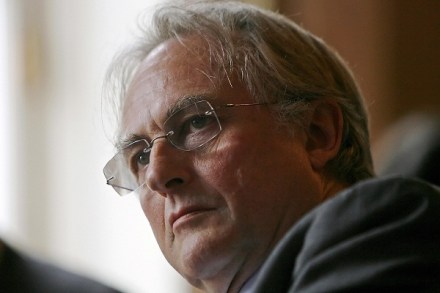
It’s not that often I feel a real bond with Richard Dawkins but no sooner did I read his diatribe about Osama bin Laden having won the global war on terror because he, Prof Dawkins, had had a jar of honey confiscated at the airport, than I realised that here was a kindred soul. The prof declared on Twitter over the weekend: Bin Laden has won, in airports of the world every day. I had a little jar of honey, now thrown away by rule-bound dundridges. STUPID waste. — Richard Dawkins (@RichardDawkins) November 3, 2013   Ah yes, I’ve been there. Except the jar of forest honey – raw, lovely, village stuff – confiscated from me on my way back from Kosovo wasn’t little at all; it was full-size.

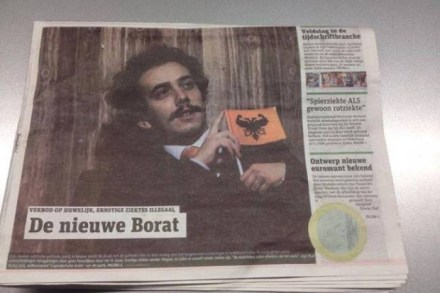
Visar Arifaj is Kosovo’s answer to Borat and Beppe Grillo – only funny

Kosovo held regional elections over the weekend...and it rather looks as if the Serbs in the north of the country, in Mitrovica, stayed away in droves, notwithstanding the instructions from Belgrade that they should participate in the elections. The Serbian government stance is in turn dictated by Coffee Housers' favourite EU politician, Britain's own Cathy Ashton. She has intimated that Serbia's bid to join the EU will depend on its support for the elections, which in turn is linked to the implementation of her EU plan for a Serbia-Kosovo deal.

Lisa Jardine and Mary Warnock – Britain’s answer to Machiavelli

The outgoing chair of the Human Fertilisation and Embryology Authority, Lisa Jardine, has been paying graceful tribute to the woman whose report enabled the Authority to be set up: Dame Mary Warnock. She was, observed Prof Jardine, in an aural essay on Radio 4’s A Point of View, regarded as something of a philosophical plumber to the establishment, a woman who cleared away all the tiresome impediments in the way of getting things done with her practical, no-nonsense approach. And the Warnock Report of 1984 on in vitro fertilisation and its attendant moral problems was a case in point. Now, Dame Mary’s utility to the establishment as someone who can put a useful philosophical spin on any liberal consensus has indeed been invaluable.

When it comes to postage stamps, you’re always dealing with a monopoly

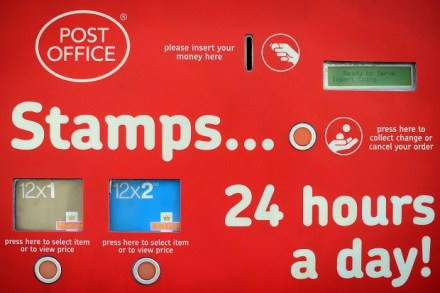
Well, the whole Royal Mail privatisation is going terrifically well, isn’t it? I’m not talking about the pricing of the issue which has obsessed most of the pundits. I’m talking about users. The latest exciting new development from this privatised company with the Queen’s head on the product is that it is to use new technology to let companies know that their promotional material – junk mail as it’s affectionately known to its recipients – has been safely put through the door, so they are now free to cold call households to follow up the delivery. Nice! But it’s the impact on the price of stamps that really gets me going.

Will Prince George work his magic on the Church of England?

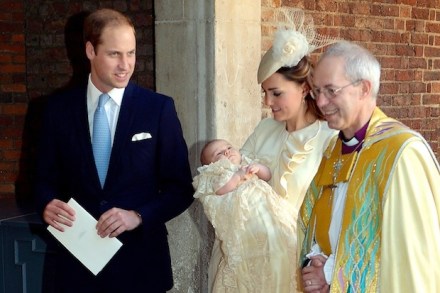
Well, Prince George has already done his bit for the Church of England. Simply by getting baptised he will bolster a sacrament that pretty well defines Christianity and is, like the state church which he may yet be head of (assuming disestablishment never happens), in sharp decline. In 1950, nearly 70 per cent of the population was baptised into the CofE, with most of the remainder christened into other denominations; in 2010 it was fewer than 20 per cent, and falling. Perhaps Kate Middleton can do for baptism what she does for Reiss dresses – bring it back into fashion.

Why do we cringe at the term ‘third class’?

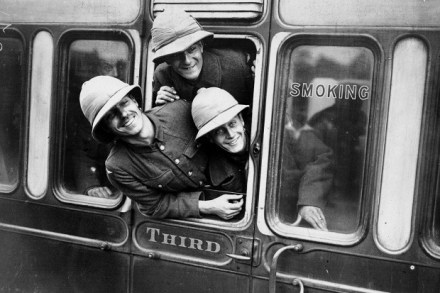
Alas, it looks like the return to third class travel won't happen. The papers had got terrifically excited about what seemed like a rolling back of 56 years, when British Rail finally ditched its working class fare. The story was on the back of the privatisation of the East Coast Line from Aberdeen to London, for which it seemed at least one of the bidders had envisaged another tier of fares, though it appears the Department of Transport has been thinking along the same lines for the last year. But of course it wouldn't have happened, a return to third class tickets. At least, not described in that dramatically honest and comprehensible way.

Why bother to switch energy provider?

The Prime Minister and the Energy Minister, Ed Davey, were unanimous in their response to the British Gas price hike this week by 10 per cent, about four times the rate of inflation – described judiciously by the PM as 'disappointing'. Shop around! they said. 'We need more competition!' cried Mr Davey. They haven’t yet recorded their opinion of today’s price increase from little Co-op, another energy provider, at about twice the rate of inflation, but I expect it will be much the same.

Helen Fielding has lost her touch

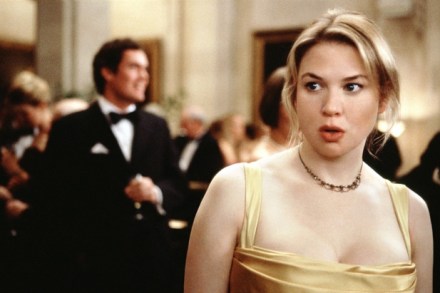
To understand quite how disgruntled the reviews of the latest Bridget Jones diaries have been, you have to recall quite what she meant to her readers first time round. It wasn’t just the way she seemed to sum up the female condition for unmarried women in their thirties — indeed, she put a name on it, the singleton — who were torn between theoretical commitment to feminism and a creeping dread of never settling down and dying alone and getting eaten by Alsatians. It was her eye for the insecurities in which women specialise — the calorie and weight counting, the weakness for self-help books — and the girl-bonding in bars.

Britain’s stated aim of getting Turkey to join the EU is mad

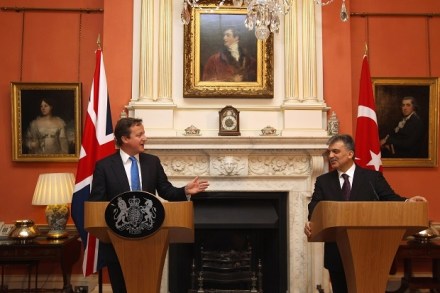
Rather to my embarrassment, I find that I missed last night’s episode of the BBC2 three-part series on The Ottomans, Europe’s Muslim Conquerors, in which I briefly featured. So Heaven knows what I actually said in it; it’s been a while since filming. But I’m rather hoping that the point I wanted to get across did, viz, that it’s nuts, barking mad, insane, away with the fairies, for Britain to be agitating for Turkey to be part of the EU. On David Cameron’s last visit to Turkey in 2010, he expressed anger at the delay in Turkey’s admission to the Union and blamed opponents for playing on fears of Islam in order to advance their case. Which more or less mirrors the rhetoric from Labour on the same subject.

The BBC’s bias on abortion in Northern Ireland is breathtaking

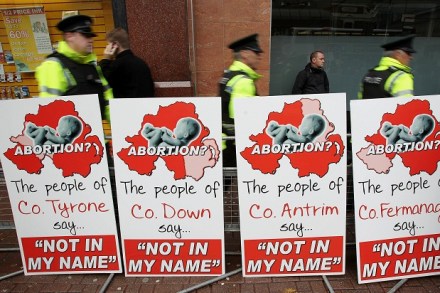
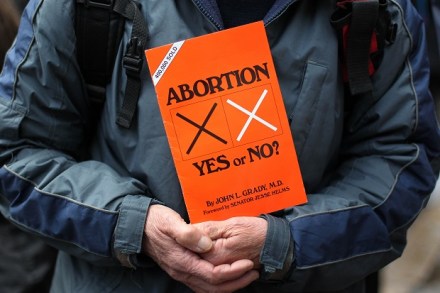
The establishment has a target in its sights; you can always tell from the tone of the Today programme. In this case, it's Northern Ireland’s abortion law. The occasion is the genuinely tragic case of Sarah Ewart, who travelled to Britain this week in order to abort a foetus with the most severe case of spina bifida, which meant it didn’t have a head. She didn’t want to carry the pregnancy to term and Northern Ireland’s abortion laws at present don’t allow for abortions where the foetus does not actually threaten the life of the mother. Not unlike the intention behind the 1967 abortion law here, then, which is meant only to sanction an abortion where the risk to the mental or physical health of the mother is greater than if the pregnancy continued.

Less sex please, we’re British

Jeer if you will, but I was shocked by the latest Bridget Jones book, Mad About the Boy. I was shocked by the sex. No, honestly. Compared with its predecessors, including a one-off series about how Bridget got pregnant but wasn’t sure by whom, this latest book ratchets up the raunch quite markedly. Granted, Bridget is having it off with a boy of 29 (to her 51), but there weren’t any passages from her previous diaries like this: ‘Oh God. What was I thinking having sex all night? The whole makeup/breakup thing somehow whipped Roxster and me up into a sexual frenzy and neither of us could stay asleep. Was actually hanging upside down from the side of the bed with Roxster holding both my legs in the air whilst thrusting in between them when suddenly —’.

Britain’s abortion laws are inherently absurd

The Director of Public Prosecutions, Keir Starmer, yesterday declared that it was right not to prosecute doctors who authorised abortions which, according to a Telegraph investigation, were requested because of the gender of the foetus. It seems that the women mentioned more than one reason for the abortions so it wasn’t possible to isolate the gender selection element from the other factors. ‘The only basis for a prosecution would be that although we could not prove these doctors authorised a gender-specific abortion, they did not carry out a sufficiently robust assessment of the risks,’ he said. And just what might a ‘robust’ assessment of risk amount to?

If you think the House of Lords is bad for democracy, try the Irish senate

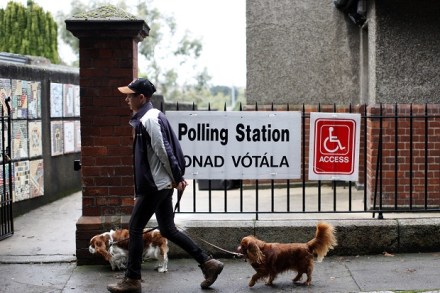
Waves of apathy, a tsunami of indifference, engulfed Ireland for today’s constitutional referendums. When I was over there last week, I was more interested in the thing than anyone I met; the turnout in some places was one in ten – miles lower than in high-octane votes, like the ones affecting the EU. The main issue is the government’s proposal to do away with the upper house, the Seanad, or Senate, which reached its zenith of interest and relevance when WB Yeats was a member (his views on contraception and divorce make notable reading) and has failed ever since to capture the remotest public affection. If you think the House of Lords doesn’t really register with voters, well, it begins where the Irish Senate leaves off.

Our rulers don’t seem to care that the National Lottery fleeces the poor

Now the latest on the Politicians Keeping In Touch front. It’s funny how it’s the wives who take the brunt of the endeavour. It was Samantha Cameron yesterday who had to parade at the Tory party conference in a teal £42 polyester dress from Asos.com…no question, then, of Mr Cameron being asked to take a turn in an M&S suit. Alas, Mrs C did what every sensible person does who has to wear something from Asos or Florence and Fred (and may I say, given their modest cut when it comes to fabric only skinnies can carry this off) and replaced their belt with one of her own. It was a matter of minutes before the eagle-eyed girls in the fashion departments of our finest newspapers outed this slim black number as from Emilia Wickstead, retailing at £196.

Women think that David Cameron is out of touch for good reason

Well, the great breadmaking debate hots up. David Cameron neatly sidestepped the heffalump trap that Nick Ferrari put in his path in an interview on LBC when he asked him the price of a Value Loaf in Tesco or Sainsbury. As you and I know, dear reader, Mr Cameron would no more eat that stuff than his own fingernails, and I for one applaud his good sense. If you can afford not to, don’t. But his elegant solution to the problem of not knowing that loaf-shaped carbohydrate costs 47p (he thought bread costs ‘north of a pound’, which is true of the kind he eats, only double that) was to say that he makes his own bread, from flour milled in the Cotswolds, a process which takes all of 30 seconds in a breadmaker as a way of getting his children to eat granary loafs.

Do women want what they say they want?

What do women want? You might have thought the Wife of Bath had got this one sorted, but Daniel Bergner has brought science to bear on the perennial question. And the answer from this book is that what women want is not just sex but sex outside the confines of monogamy. You know the received wisdom about women needing relationship security and emotional commitment before they feel right about having intercourse? It’s all hokum, apparently. What women want when it comes to sex is, it seems, at odds not just with societal expectations but with what they — we — say they want. Actually, do you mind if I talk about women as ‘they’ in what follows? You’ll see why.