Melanie McDonagh

Melanie McDonagh

Melanie McDonagh is an Irish journalist working in London.

Witches, dragons and the Terrible Deev: a choice of this year’s children’s books

Now here’s a combination you never thought you’d see, not least because one of them is dead: Maurice Sendak and Stephen King. But there they are in Hansel and Gretel (Hodder Children’s, £20). Who knew that Sendak had illustrated Grimm, or that Mr Horror wrote fairy tales? It turns out that Sendak created sets for the Humperdinck opera, and King writes to these illustrations, which loom large and dramatic. King says that he has always been attracted both to fairy tales and to Sendak, and that one image especially that spoke to him was the infamous candy house becoming a terrible face. I thought: this is what the house really looks like, a devil sick with sin, and it only shows that face when the kids turn their backs...

Would you pay £65 for toothpaste?

Time was, you didn’t look forward to going to the dentist. Even for routine stuff, your highest aspiration would be to get it over as quickly as possible with as little unpleasantness as possible. Most of the procedures seem pretty mechanical, including having the most sensitive bits of your teeth scraped with a metal thing. That was what I thought before I encountered Anti-Ageing Dentistry at the Nejati clinic in Belgravia, where the founder – it seems wrong to call Brandon Nejati a mere dentist – talks about ‘pampering’. This is where a really expensive luxury spa meets dentistry and it’s the most obvious example of how oral care is changing.

BBC in crisis, the Wes Streeting plot & why ‘flakes’ are the worst

36 min listen

Can the BBC be fixed? After revelations of bias from a leaked dossier, subsequent resignations and threats of legal action from the US President, the future of the corporation is the subject of this week’s cover piece. Host William Moore is joined by The Spectator’s commissioning editor, Lara Brown, arts editor, Igor Toronyi-Lalic, and regular contributor, Melanie McDonagh. They also discuss the drama of this week’s Westminster coup plot, and Melanie’s new book about why Catholicism attracted unlikely converts throughout the twentieth century. Plus: what’s the most bizarre excuse a friend has used to back out of a social engagement?

A treasure chest of myths: The Poisoned King, by Katherine Rundell, reviewed

You wait ages for an intelligent, literate children’s book, then two come along at once. There’s Philip Pullman’s The Rose Field and Katherine Rundell’s The Poisoned King. Of the two, Rundell’s is easier on the wrist: 336 pages to Pullman’s 621. She is an accomplished writer, the author of a study of John Donne. A scholarly background is all to the good here, for she has a treasure chest of myths and stories to rummage in. Her Impossible Creatures series (of which The Poisoned King is the second) is based on an archipelago, Glimouria, which holds the endangered creatures of mythology. A map of the islands, in Tomislav Tomic’s illustration, is faintly reminiscent of Pauline Baynes.

Catherine Connolly’s victory was no landslide

Query: what kind of electoral landslide is it when most of the electorate doesn’t turn up? Not quite a landslide, I’d say – more the shifting of shingle. To put it another way, in the Irish presidential election, fewer than half of voters turned out (45.8 per cent). Three in four electors did not vote for Catherine Connolly, the United Left candidate. There wasn’t much of a turnout in the previous election, of course, but that was because the sitting president, Michael D. Higgins, was such a shoo-in. This time, the stay-at-homes, at 55 per cent of voters, were way ahead of those who could be bothered.

The issues that will haunt the new Archbishop of Canterbury

We have it on the best authority that the meek shall inherit the earth and in the meantime in the case of Sarah Mullally, Bishop of London, it’s the See of Canterbury. She is a modest, very nice woman. I like her. I’ve met her a few times and she was always pleasant, decent and unassuming. On one occasion, she told me about being patronised on account of her dyslexia, which makes it tricky for her to negotiate sermon texts. She gave the impression that she’s used to being rather looked down on, though the men who do so may now take a different approach. She’s not an intellectual and wouldn’t pretend to be. She is, as she said in her acceptance speech, a listener; the trouble may come if she goes into a different mode, acting on decisive issues.

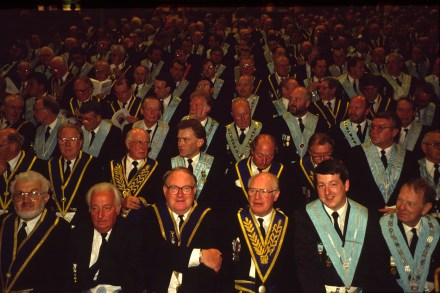
There’s something vulgar about Freemasons

Goodness, isn’t there something a bit hoary about the notion that members of the Metropolitan Police may have to declare if they’re Freemasons? The idea has come up recently in the context of discussion on ‘declarable associations’ – those organisations you’re obliged to admit to belonging to if you’re a London copper.

Why I like Pope Leo

The Pope has given his first interview, with the news agency, Crux, and the nice thing about it is there are no surprises. Pope revolted at obscene wealth and the growing gap between rich and poor? Jesus Christ wasn’t keen on the rich either.  Or, as Leo put it when he was asked about growing polarisation in society: ‘One [factor] which I think is very significant is the continuously wider gap between the income levels of the working class and the money that the wealthiest receive… Yesterday, the news that Elon Musk is going to be the first trillionaire in the world. What does that mean and what’s that about? If that is the only thing that has value anymore, then we’re in big trouble.

In Our Time won’t be the same without Melvyn Bragg

The education system may produce ignoramuses (my daughter finished school in June, never having been taught a thing about Napoleon, the French Revolution, Julius Caesar, the Industrial Revolution, or any basic geography), but there was solace out there for the unlearned and undereducated: they could always listen to In Our Time, Melvyn Bragg’s radio exploration of fabulously random assorted subjects with three (formerly two) specialists in the field. Bragg has announced today he is stepping down from the show, which he has hosted since it was created in 1998.

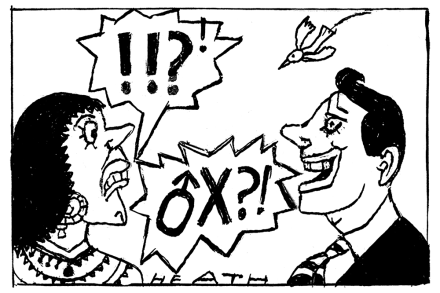
Down with exclamation marks!

Punctuation is a gendered thing. I’ve been trying to stop myself overusing exclamation marks and it’s been difficult. Exclamation marks are girly because they’re a way of taking the sting out of what you say; they make any pronouncement seem more tentative, less serious. They’re the equivalent of a disarming smile, the marker that says: ‘No offence!’ You add them at the end of a sentence to prevent anyone thinking that you’re being bossy or critical. They’re an economical form of non-confrontation. Women use them far more than men. Almost 20 years ago, a study in Journal of Computer-Mediated Communication found that women used nearly three-quarters of the exclamation marks in electronic messages, but it identified the tic as ‘markers of friendly interaction’.

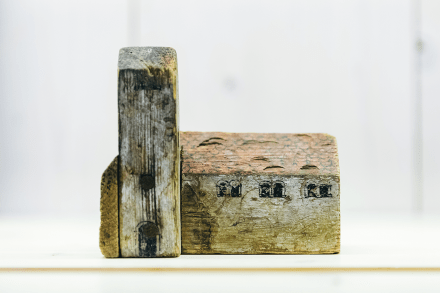
The masterpieces of Sussex’s radical Christian commune

Ditchling in East Sussex is a small, picturesque village with all the trappings: medieval church, half-timbered house, tea shops, a common, intrusive new housing developments down the road, a good walk from the nearest train station and the Downs on its doorstep. But the resonance of the place owes much to the remarkable artistic activity that has bloomed since Eric Gill moved his family there in 1907. It was part craft commune, part lay monastery, a living experiment in distributism, the radical Christian political philosophy that held that land should be distributed as widely as possible. It was an attempt to resurrect the medieval guild.

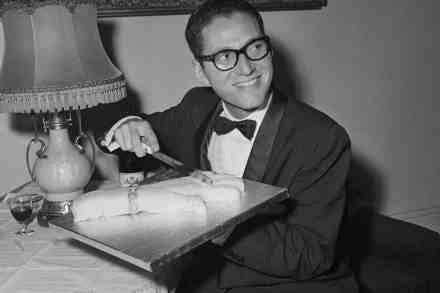
The subversive genius of Tom Lehrer

The greatest living American until this week has died at the age of 97. I refer to Tom Lehrer, the finest satirist of the 20th century. He’s the one who observed that satire became obsolete when Henry Kissinger was awarded the Nobel Peace Prize. He was the genius who put the entire periodic table of the elements to the tune of ‘I Am the Very Model of A Modern Major-General’ (Gilbert and Sullivan was his childhood obsession). He was a mathematician who could be as funny about maths and science as about poisoning pigeons in the park (yes he did) or contemporary pieties (‘National Brotherhood Week’).

We should be outraged by Lily Allen’s ‘four or five’ abortions

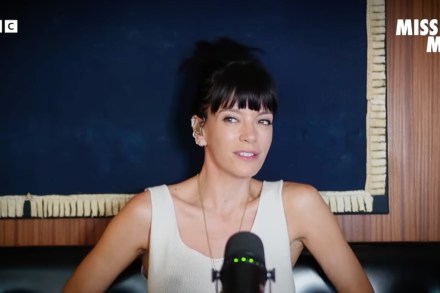
If we want to understand why thousands of women a year in England and Wales have an abortion – 251,377 in 2022, so probably way more now – we could do worse than consider the musings of the singer Lily Allen on the subject. In a podcast chat with her friend Miquita, this took a musical turn. She began singing to the tune of Frank Sinatra’s ‘My Way’: ‘Abortions I've had a few... but then again... I can't remember exactly how many'. Giggling, she continued: ‘I can't remember. I think maybe like, I want to say four or five.’   https://youtu.be/8i7v7lpYFN8?

Should Chris Coghlan be denied Holy Communion?

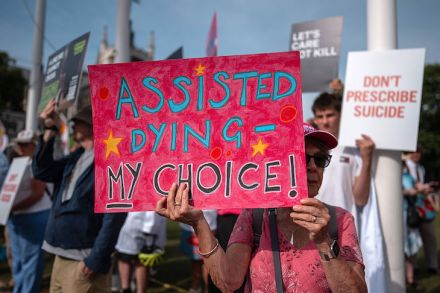
It is not, it’s fair to say, a universal view among Catholic priests that MPs who vote the wrong way on assisted dying and the decriminalisation of abortion up to birth should be punished by excluding them from communion. But so it has turned out with Chris Coghlan, the Lib Dem MP for Dorking and Horley. He voted for assisted suicide and didn’t vote at all on the Antoniazzi amendment allowing women to abort up to birth. Now he’s complaining that his parish priest is intent on denying him communion at mass. Or as he put it on X: My Catholic Priest publicly announced at every mass he was denying me Holy Communion following the assisted dying vote. Children who are friends of my children were there. This followed a direct threat in writing to do this four days before the vote.

Diane Abbott’s masterful Assisted Dying speech will come back to haunt us

If yours is a sentimental bent, you’ll have been terrifically moved by the spectacle of Jess Phillips MP giving Kim Leadbeater a big hug after the Assisted Dying Bill was passed. Ms Leadbeater has a tendency to look agonised at the best of times. When MPs paid tribute to her in the course of the debate for her compassion, she looked as if she was on the verge of bursting into tears. Now, it’ll be tears of joy – at least for her.

MPs have opened the door to infanticide

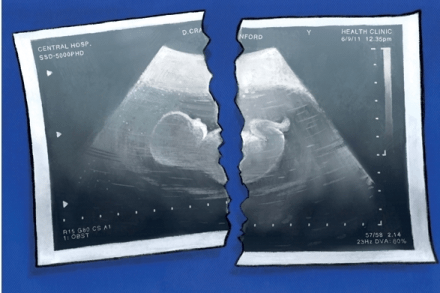
Well, it’s hello to prenatal infanticide now that Tonia Antoniazzi’s amendment to the Crime and Policing Bill has passed the Commons after all of two hours’ debate with 379 MPs voting in favour. Can we get our heads round what that means? Nothing a woman does in relation to her own pregnancy can make her liable to prosecution. At the same age of gestation when premature babies are admitted to neonatal wards with a very good chance of survival, less fortunate foetuses can be killed with impunity by their own mothers. So anyone like Carla Foster, who aborted her baby Lily at 32 weeks’ gestation, will now get off free. There are, in other words, no sanctions for those who kill a foetus at any time right up to birth, so long as it’s your own foetus you’re killing.

Why isn’t the BBC telling us what caused the Ballymena riots?

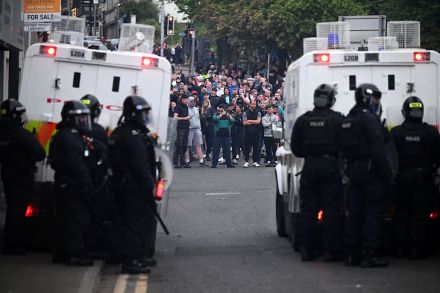
Does anyone know what’s actually happening in Ballymena, in Northern Ireland? If you’ve just been following the news on the BBC, it’s actually quite hard to work out what has led to the violence which has injured at least 32 police officers. The initial news bulletins told us that there rioting youths were protesting about a sexual attack on a girl and that two teenage boys were in custody facing charges. My first thought – reverting to the Troubles – was that there was a sectarian element to the whole thing. But we also learned that the police condemned the riots as racist thuggery; so, not sectarianism, it seems, but something to do with race. A few further details came to light yesterday. We found out that the rioters were still rioting.

Olenka Hamilton, Melanie McDonagh, Hannah Moore, James Delingpole and William Atkinson

31 min listen

On this week’s Spectator Out Loud: Olenka Hamilton ponders whether Poland’s revival is a mirage (1:24); Melanie McDonagh asks who killed the postal service (9:52); Hannah Moore argues that family cars aren’t built for families any more (14:35); James Delingpole reviews Careme from Apple TV and Chef’s Table from Netflix (21:15); and, William Atkinson provides his notes on Thomas the Tank Engine (26:48).  Presented by Patrick Gibbons. Produced by Oscar Edmondson and Patrick Gibbons.

Pope Leo probably isn’t that liberal

Frankly, most people knew little about Robert Prevost before his election as pope, so there's been a scramble to unpick Leo XIV's past record to judge where he might take the papacy. ‘The promotion of gender ideology is confusing, because it seeks to create genders that don’t exist,’ he told journalists We know already that he's not terribly keen on the US President's repatriation of illegal migrants, nor on J.D. Vance's particular take on social issues. And he's got the whole Francis programme on putting the poor centre stage. There are other Francis touches; when he did visitations to Augustinian communities as head of the order, he'd help with the washing up after dinner. He seems, in fact, a genuinely humble sort.

Does Leo see himself as an American Pope?

In theory, we’ve got the first American Pope, Robert Prevost. Born and raised in Chicago, university educated in Philadelphia. Parents French/Italian and Spanish – hence his command of four languages. Did Leo XIV so much as mention the US during his first speech from the balcony? He did not. Maybe conscious that being an American cuts less ice in the church than being Latin American, he mentioned the Peruvian pilgrims in St Peter’s Square and the Peruvian church (where he ministered as a bishop) during his address, and spoke to them in Spanish. But zilch about his country of origin, nada in the English language. It would have been fascinating to hear American-inflected English from that balcony. But we didn’t. This is significant.